Guides / Accessories and upgrades
Accessories and upgrades
What is worth fitting to a buggy, what it changes, and what it costs you in weight, range or safety.
The accessory market for small electric vehicles is large, cheerful and largely silent about trade-offs. A lift kit gains ground clearance and loses stability. A hard cab keeps the weather out and the condensation in. A rear seat turns two seats into four and changes how the machine brakes. None of that is a reason not to fit them, and all of it is a reason to know before you do.
These guides take the accessory categories one at a time and say what each genuinely changes: weather protection, seating and capacity, load carrying, lighting and visibility, comfort and on-board power. Where a fitting has a safety consequence, that is the first thing said about it rather than a footnote.
Two questions run through the whole cluster. The first is fitting: who does it, and what it does to a warranty or an insurance position if the answer is you. The second is specification at order, because several of these decisions are far cheaper taken when a machine is built than retro-fitted afterwards.
13 guides
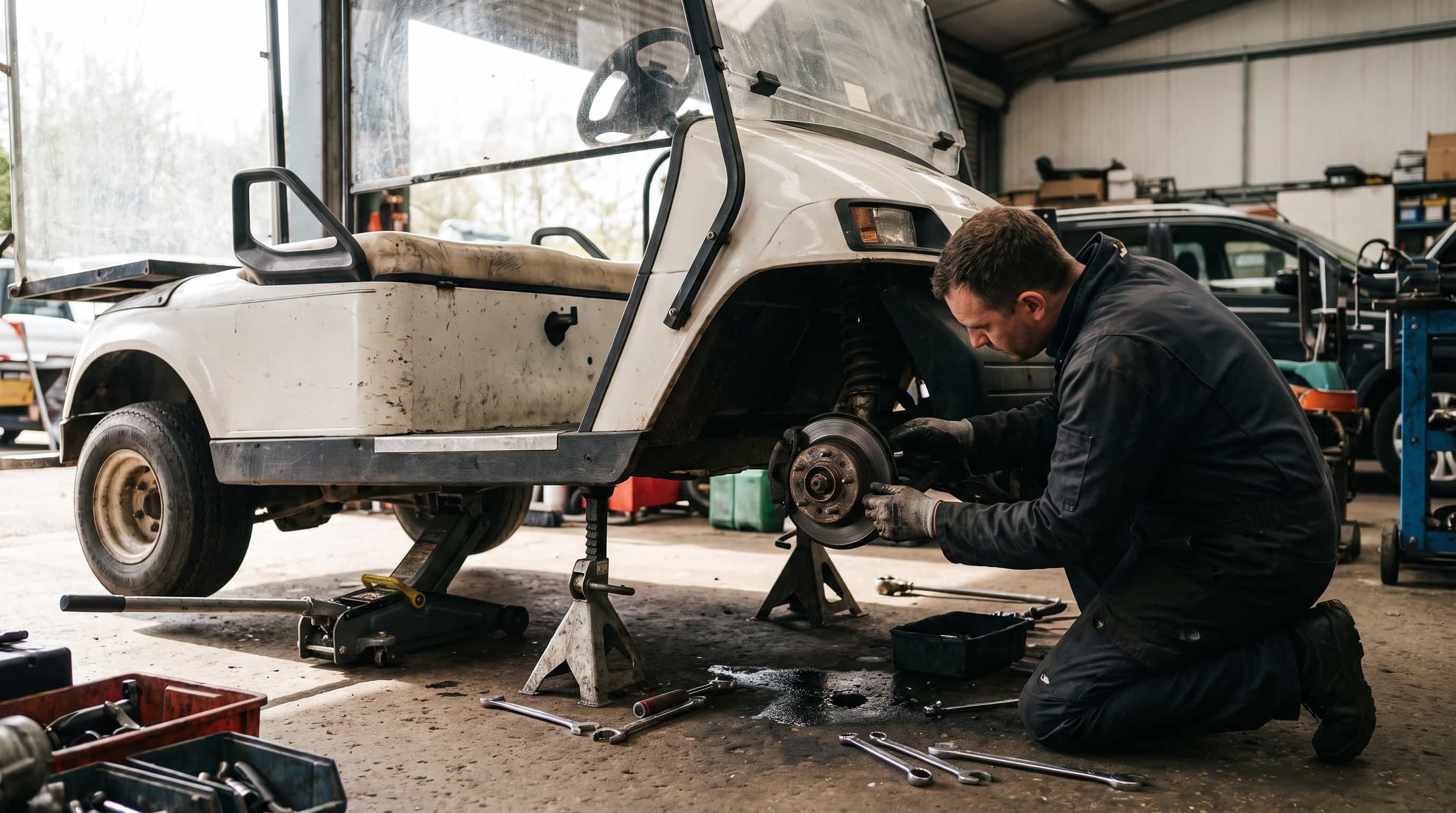
Golf buggy accessories: what is worth fitting
10 minute read

Weather enclosures and cab doors for a buggy
10 minute read

Lift kits and larger wheels: what changes
10 minute read
Rear flip seats and seat kits explained
10 minute read

Cargo boxes and load beds for a buggy
9 minute read

Buggy lighting upgrades for private sites
10 minute read
Mirrors, horns and warning devices on a buggy
10 minute read

Tyre choices: turf, all-terrain and road patterns
10 minute read
Buggy roofs compared: standard, extended and hard tops
10 minute read
Fitting GPS and telematics to a buggy
9 minute read
USB sockets, phone mounts and on-board power
9 minute read
Winter screens and heaters for a buggy
10 minute read
Wraps, decals and livery on a buggy you own
9 minute read