Lift kits and larger wheels: what changes
By James Brown · Updated 29 August 2026 · 10 minute read

A lift buys ground clearance and room for a taller tyre, and it charges for both. The body rises while the track stays where it was, so the machine leans further and reaches its tipping point sooner on a side slope. A bigger tyre gears the drive taller, which costs pulling power on hills and lengthens stopping distance. The step in gets higher, which matters if the passengers are the reason you own the buggy. Where the ground is genuinely rough a lift is right, and where the job is load or hills a different machine usually is.
Key takeaways
- A larger tyre lifts the body by half the change in its diameter, so wheels on their own are a modest lift.
- Raising the body without widening the track brings the tipping point closer, and buggies fail sideways.
- Taller gearing costs torque at the wheel, so a lifted machine climbs worse and draws more current doing it.
- Brakes sized for the original wheel work at a disadvantage against a bigger one, and stopping distances grow.
- A spindle lift keeps the suspension geometry nearer standard than a block or spacer lift does.
- Step-in height is the change owners regret most, particularly where passengers are older or less mobile.
- Tell your insurer and check the venue's policy, because a modified machine is not always accepted.
What a lift is, and the two ways to get one
There are two separate changes that both get called lifting, and they behave differently. The first is a lift kit proper, which raises the body and chassis relative to the wheels by altering the suspension: spacers or blocks between the spring and the axle, longer or repositioned links, or replacement spindles that move the hub down relative to the strut. The second is simply fitting a larger diameter tyre.
The tyre route lifts less than people expect. A wheel and tyre grows equally at the top and the bottom, so the axle rises by half the increase in overall diameter, and only that half reaches the body. Everything gained is under the axles rather than under the frame. It does, however, bring all the gearing and braking consequences described further down, which is why a tyre change is never only a tyre change.
Kits also differ in quality of engineering rather than only in height. A spindle lift, which relocates the hub carrier itself, tends to keep the suspension arms working through something close to their designed arc. A block or spacer lift is cheaper and disturbs more, because it moves the whole assembly without changing the geometry that was set around its original position.
What you actually gain
The honest list is short and real. More clearance under the frame, the battery tray and the rear axle, which is what stops a buggy grounding on a rut, a field entrance or a kerb. Better approach and departure angles, so the machine climbs over an obstacle instead of hitting it with the bodywork. And room for a taller, more open tread that clears mud instead of packing with it.
Two of those are worth separating. Clearance is about what the machine can pass over, and it is the reason a buggy stops dead astride a rut it could have driven through. Traction is about what the tyre can grip, and it is a tyre question rather than a height one. Owners often buy a lift when the second is the actual complaint, and the tyre alone would have solved it.
- Clearance under the frame and axles, which is what actually strands a standard buggy on rough ground.
- Room for a larger or wider tyre, which usually helps more than the lift itself does.
- Better approach and departure angles at ruts, ditch crossings and field gateways.
- A tread pattern that sheds mud rather than filling and going smooth.
- A wider tyre spreads the load, which helps on soft ground and reduces marking.
Stability, and the way buggies fall over
Buggies do not usually crash. They tip, and they tip sideways, typically on a slope, in a turn, or with a wheel dropping into a rut. That failure depends on where the centre of gravity sits relative to the track width, and a lift raises the first without touching the second. The margin that existed before is smaller afterwards, on the same slope, at the same speed.
The effect is worse than the numbers suggest, because it compounds with the other changes people make at the same time. A rear seat puts weight up and back. A canopy and enclosure add weight high. A cargo box behind the axle does both. Lift the whole assembly and the machine that felt planted on a bank now leans further before the tyres let go, and it does so with less warning.
Some kits offer a wider track or wheel spacers as an answer. They do help, and they also load the wheel bearings and stub axles further out than the designer intended, which is a durability question rather than a stability one. If the reason for lifting is to carry passengers across a sloping site, be honest about whether the site is the problem rather than the machine.
Steering geometry and the ride
Suspension components are designed to move through an arc, and the steering linkage is arranged to move with them. Change the ride height by a large amount and those two arcs stop agreeing. The usual symptom is bump steer: the machine tugs at the wheel as a front tyre rises over an obstacle, because the track rod is describing a different path from the suspension arm.
Camber and castor change too, which shows up as uneven tyre wear across the tread and as steering that either wanders or refuses to self-centre. A quality kit accounts for this, which is one of the things you are paying for, and a cheap spacer kit generally does not. After any lift the alignment wants setting properly rather than eyeballing, and the fasteners want rechecking after the first few hours of use.
Ride quality is a mixed result. Larger tyres at lower pressure absorb small bumps well, so the machine can feel better on rough ground and worse on smooth, where the taller sidewall makes it feel vague. If the complaint that started this was a harsh ride, look at dampers, pressures and load before assuming a lift is the fix. Those three are quick to check and cost almost nothing to put right.
Gearing, brakes and the drivetrain
A larger rolling radius gears the machine taller. The motor turns fewer times for each metre travelled, which raises the theoretical top speed and reduces the pulling force at the tyre. On the flat you may notice very little. On a climb you notice a lot, because the motor and controller are drawing more current to do the same work, running hotter, and taking longer to get there.
Braking moves the same way. A drum or disc sized for the original wheel now has more leverage working against it, so the same pedal effort produces less retardation and stopping distances lengthen. That change arrives at the same time as the higher centre of gravity, which is an unhelpful pairing on a downhill turn. Anyone lifting a machine used on slopes should check the brakes properly rather than assume.
The rest of the drivetrain feels it too. Wheel bearings, stub axles, half shafts and the transaxle all see more leverage from a bigger tyre, and heavier wheels add unsprung and rotating mass. None of that breaks a machine immediately, and it does shorten the interval before things need attention. Any manufacturer limit on wheel and tyre size exists for these reasons and is worth respecting.
If yours is doing this and the checks here have not settled it, we diagnose and repair buggies, including a callout to wherever it is.
Getting in and out, and who the machine is for
This is the change owners regret most, and it never appears in the advertising. Raising the body raises the floor and the seat, so the step in gets higher and the grab handle ends up in a less helpful place. On a machine used by golfers with a bad knee, by residents at a retirement site, or by wedding guests in formal shoes, that single change can make the buggy harder to use than it was before it was improved.
It is worth testing before committing. Sit someone who finds the standard machine borderline into a lifted example and watch what happens. If the answer is a scramble, the lift is solving a problem the site has while creating one the passengers have, and a step, a grab rail or a different machine is the better trade. It is a fair question to put to the supplier too, because a dealer who sells both standard and lifted machines will have watched customers try both.
Where a lift is the right answer
There are real cases. A smallholding or a farm where the buggy crosses rutted tracks and gateways. Forestry and estate work with roots and stone. A site where the machine regularly grounds out on the same obstacle, which is a specific, diagnosable problem rather than a general wish for capability. In those cases a modest, well-engineered lift with an appropriate tyre genuinely extends what the machine can do.
The cases where it is the wrong answer are just as clear. If the job is carrying loads, towing, or climbing steep ground repeatedly, the limits are the drivetrain and the brakes, and lifting makes both worse while making the machine look more capable. A utility vehicle built for that work has the gearing, the suspension travel and the braking specified for it. Buying the right machine is usually cheaper than modifying the wrong one.
Tyre choice deserves separating from the lift entirely. A great deal of what people want from a lift is really traction, and a turf tyre on wet grass is the thing that is failing. An all-terrain pattern in the standard size often solves it without touching the geometry, and it is far cheaper to try first. The offsetting cost is turf damage, which is exactly why a golf club will have a view.
Doing it properly, and who needs telling
If you go ahead, buy a complete kit designed for that model from one source rather than assembling parts, because the geometry corrections are the part that separates a good kit from a bad one. Have it fitted by someone who will set the alignment afterwards, and go back over the fasteners after the first few hours, since anything newly loaded tends to settle.
Then tell the people who need to know. A modification of this kind is exactly the sort of detail an insurer expects to be disclosed, and a golf club, holiday park or venue may have a policy about modified machines on their ground. It also affects resale, in both directions: a tidy, documented lift on a working machine can help, while an undocumented one on a passenger buggy narrows the market.
- Use one complete kit made for the model rather than mixing parts from several sources.
- Check the manufacturer's maximum wheel and tyre size before ordering anything.
- Set the alignment after fitting, and recheck all fasteners after the first few hours of use.
- Check the brakes and adjust them, because the bigger wheel has changed what they are working against.
- Tell your insurer, and check the venue or club policy before the machine turns up lifted.
Common questions
- How much does a lift kit raise a golf buggy?
- It depends entirely on the kit, and the maker states the figure for theirs. The point worth understanding is that a larger tyre contributes only half its diameter increase to body height, because the wheel grows at the top and the bottom equally. Kits are sold in a range of heights, and a modest lift causes far fewer geometry problems than a tall one.
- Does a lift kit make a golf buggy less stable?
- Yes, unless the track is widened to match. The centre of gravity rises while the wheels stay where they are, so the machine leans further in a turn and reaches its tipping point on a shallower slope. Buggies typically fail by rolling sideways, so this is the trade-off to weigh most carefully if your ground has banks or side slopes.
- Will bigger tyres make my buggy faster?
- They gear it taller, which raises the theoretical speed and reduces the force at the tyre. In practice most owners notice the loss of pulling power on hills before they notice any gain on the flat, and the motor and controller run hotter doing the same work. Stopping distances also increase, because the brakes have more leverage working against them.
- Do I need to tell my insurer about a lift kit?
- Yes. A change to ride height, wheels and tyres alters the vehicle from the one that was insured, and undisclosed modifications are a common reason for a claim to be examined closely. Tell them what was fitted and who fitted it, and keep the invoice with the machine's paperwork so the position is clear later.
- Can I fit larger wheels without a lift kit?
- Often, up to a point, and the manufacturer sets that point. The limits are rubbing on the bodywork at full steering lock and under suspension compression, and the strain a bigger tyre puts on bearings and the drivetrain. Check the maximum size the maker allows before buying, and check clearance on full lock with a passenger aboard rather than on an empty machine.
- Is a lifted golf buggy allowed at a golf club?
- That is the club's decision, and several have a view. Their concern is usually the tyre rather than the height, because an aggressive tread marks turf and greenkeepers deal with the result. Ask before turning up, and expect a club with soft ground or a strict buggy policy to specify what tyres it will accept on the course.
Still not right
We diagnose and repair golf buggies, service them on a plan, and send an engineer out to where the buggy is. Tell us the symptom and we will say what it usually means.
Related pages
Related guides
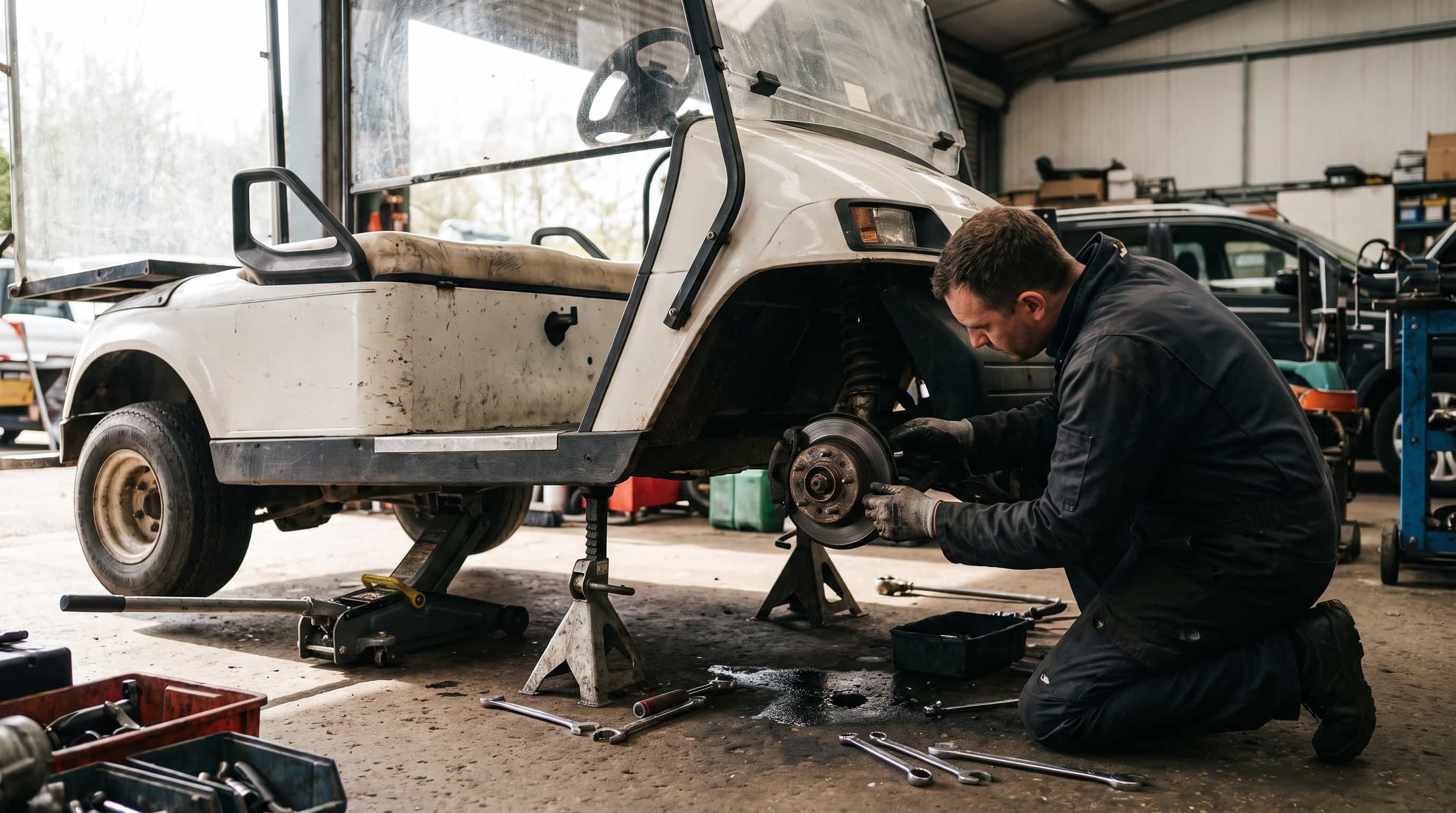 Golf buggy accessories: what is worth fitting10 minute read
- Rear flip seats and seat kits explained10 minute read
 Cargo boxes and load beds for a buggy9 minute read
 Tyre choices: turf, all-terrain and road patterns10 minute read
- Golf buggies for hilly or uneven ground5 minute read
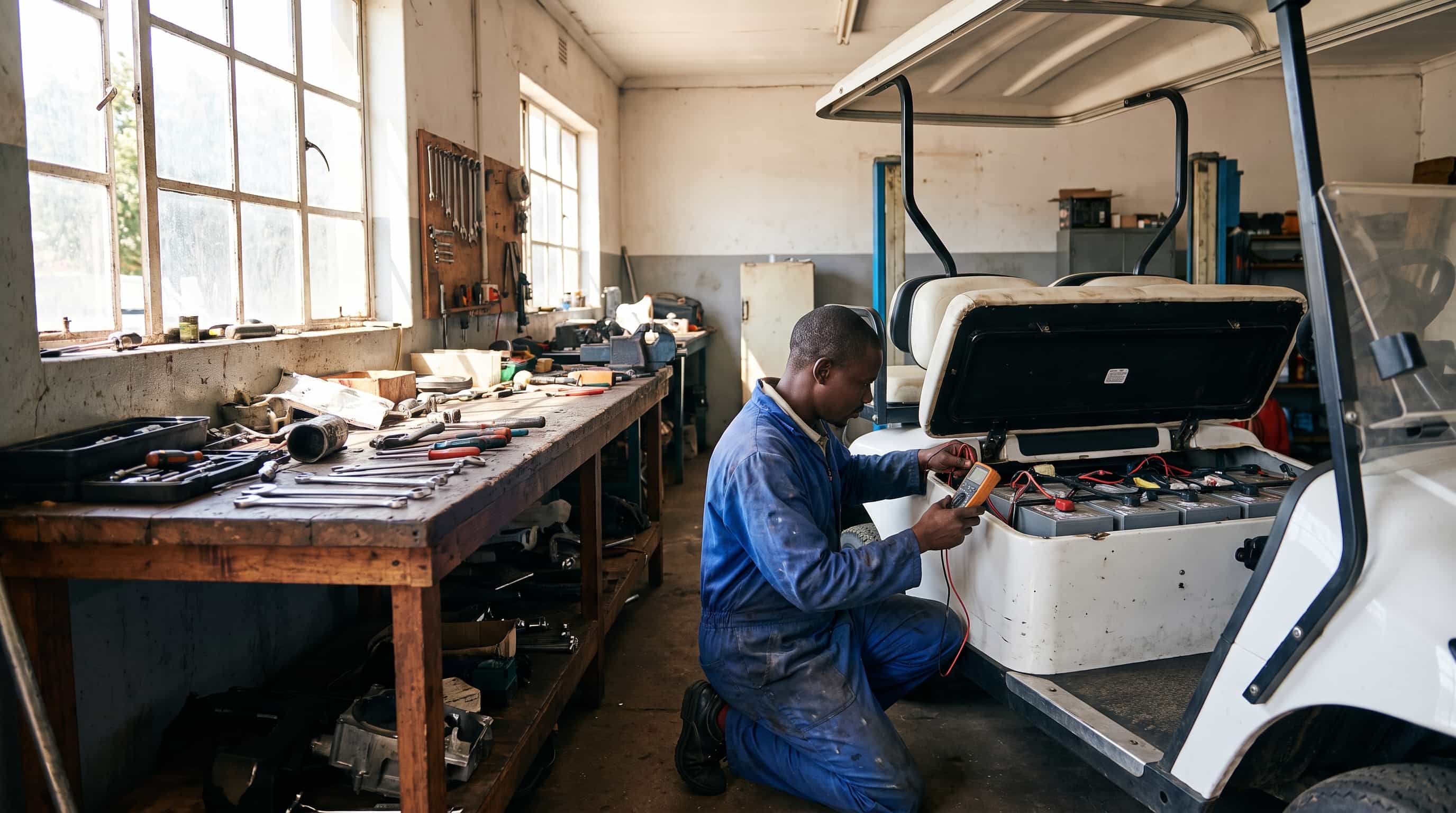 Golf buggy bounces or rides harshly4 minute read