Yamaha Drive2 and The Drive: the generations explained
By James Brown · Updated 29 August 2026 · 10 minute read

The golf line from this marque reads as a sequence: a long-running G-series identified by a G number, then the generation sold as The Drive, then Drive2. Each step changed the body, the chassis details and the controls rather than the basic idea. For a UK used buyer the split that matters more is petrol against electric, because Yamaha kept a serious petrol offering going long after the question had gone quiet elsewhere, and a good deal of used stock here is petrol.
Key takeaways
- The line runs from a numbered G-series to the generation sold as The Drive and then to Drive2.
- Both naming conventions are still in use on used adverts, so the plate identifies a machine and the listing does not.
- Yamaha kept a serious petrol offering, so the UK used market holds more petrol machines than buyers expect.
- Petrol brings fuel storage, engine servicing and noise; electric brings a supply, a charging window and an ageing pack.
- Older generations are simpler to fix and newer ones are easier to get parts for, which is the real trade.
- A machine sold without its matched charger is incomplete, and the wrong charger will spoil a good pack.
- Standardising a small fleet on one generation saves more trouble than picking the ideal generation does.
How the generations follow one another
The golf line reads as a sequence rather than a set of unrelated models. For a long stretch the machines carried a G number, and the number went up as the generation changed. After that the marque moved to names, with the generation sold as The Drive and then the one sold as Drive2. The underlying idea stayed constant throughout: a golf platform offered in both petrol and electric forms.
The problem for a buyer is that both naming conventions are still in circulation at once. A used advert may quote a G number, a name, both, or neither, and sellers who deal in mixed stock frequently guess at it. Treat the words in a listing as a starting point and nothing more than that. That is not usually dishonesty. It is a trade in which machines pass through several hands, and the description travels with the photographs rather than with the vehicle.
What settles it is the plate on the machine. Yamaha carries a model code and a serial number, and a dealer for the marque can read both and tell you exactly which generation and which drivetrain you are looking at. Photograph that plate before you travel to view anything, because the one photograph answers more than an hour of questions to a seller will.
What a buyer notices moving through the generations
Step between generations and the differences are the ones you would expect of any long-running vehicle: the bodywork changes, the seat and dash arrangement moves on, the controls get tidier and the machine feels less agricultural. Newer generations generally feel more car-like to sit in and to drive, and that matters if guests or members will be riding in them rather than staff.
Older generations have compensations that are easy to overlook. They are simpler, there is less to go wrong electronically, and the people who fix buggies for a living have been fixing them for years. For a machine that will live outdoors on a working estate and take knocks, simple is a virtue and cosmetics are not a consideration at all.
Parts availability is the practical axis rather than the aesthetic one. As a rule, the further back you go the more selective the supply becomes, and the more it depends on the individual supplier rather than on the marque. That is not a reason to avoid an older machine. It is a reason to find out what is stocked in the UK before you buy one.
The petrol and electric split, and why it bites harder here
On most marques a used buyer in Britain can assume electric and be right most of the time. This is the exception worth knowing about, because the marque kept a serious petrol offering going through the generations rather than quietly retiring it. The consequence is a used market here that contains far more petrol machines than a buyer coming from the golf world expects to find.
That is not a warning. A petrol machine is the right answer on plenty of sites, particularly where a long working day, a remote corner of an estate or an absent power supply makes charging awkward. What it is not is the same machine with a different badge: the servicing, the storage, the noise and the site rules that go around it are all different.
The practical instruction is simple. Confirm the drivetrain before you travel, in writing, from the plate rather than from the advert. Machines get relisted, descriptions get copied between listings, and the words petrol and electric are among the details that go astray most readily. If you are buying more than one machine at a time, confirm each of them separately, because a mixed batch is exactly where a petrol machine ends up in an order meant to be entirely electric.
Running a petrol machine on a UK site
A petrol machine brings a fuel supply onto your site, and that is the part people underestimate. Fuel has to be stored somewhere suitable and secure, handled by someone who has been shown how, and kept away from the places it should not be. Your own risk assessment and your insurer set what that looks like, and it is better settled before the machine arrives than after.
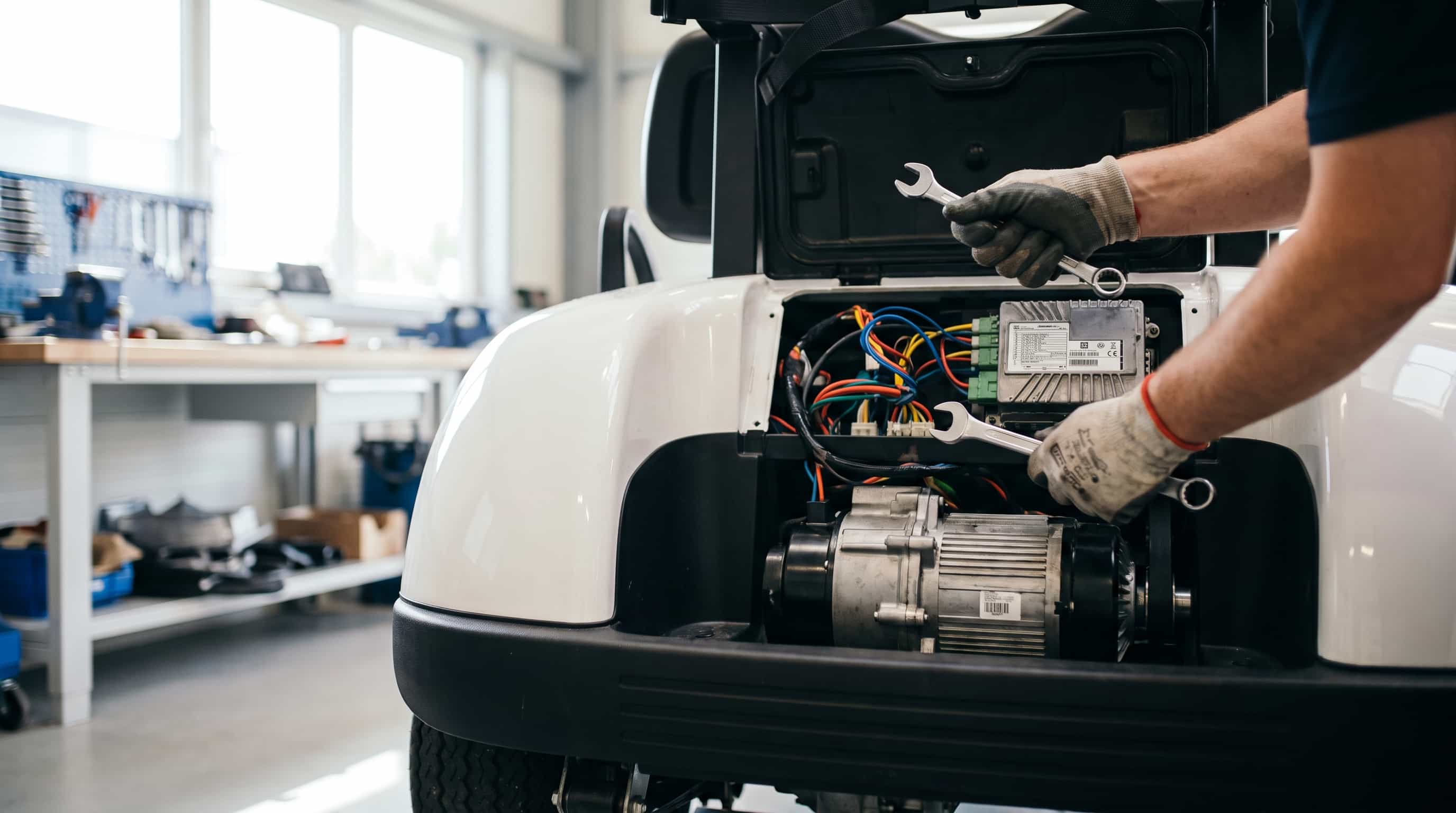
The engine also brings a maintenance schedule that an electric machine does not have. Oil, filters, plugs and belts come round on the maker's intervals, and those intervals are in the manual for the model rather than something to work out from a general rule. Someone has to own that schedule, and on a small site that someone is usually a contractor rather than a member of staff.
- Noise carries on a quiet morning, which matters near guest rooms, a clubhouse or a green.
- Exhaust rules out indoor use and enclosed loading bays entirely.
- Fuel storage, handling and a spill kit belong in the site risk assessment before delivery.
- Servicing intervals come from the maker's manual for the model, not from a rule of thumb.
- Cold mornings and long idle spells are harder on a petrol machine than on an electric one.
If yours is doing this and the checks here have not settled it, we diagnose and repair buggies, including a callout to wherever it is.
What an electric machine asks of you instead
An electric machine moves the problem from fuel to supply and timing. The daily question is whether the pack can do your day and be charged again before the next one, and the duty decides that rather than the badge. A machine doing short repeated runs with a full load all day is a quite different proposition from one doing a quiet round each morning.
Pack type sets the routine. Lead-acid packs need topping up on a schedule, want ventilation while charging and dislike being left flat. Lithium packs need neither watering nor ventilation and tolerate partial charging, and they price differently. Whichever is fitted, the pack is a large part of what you are paying for on a used machine, so ask its age and its history before anything else.
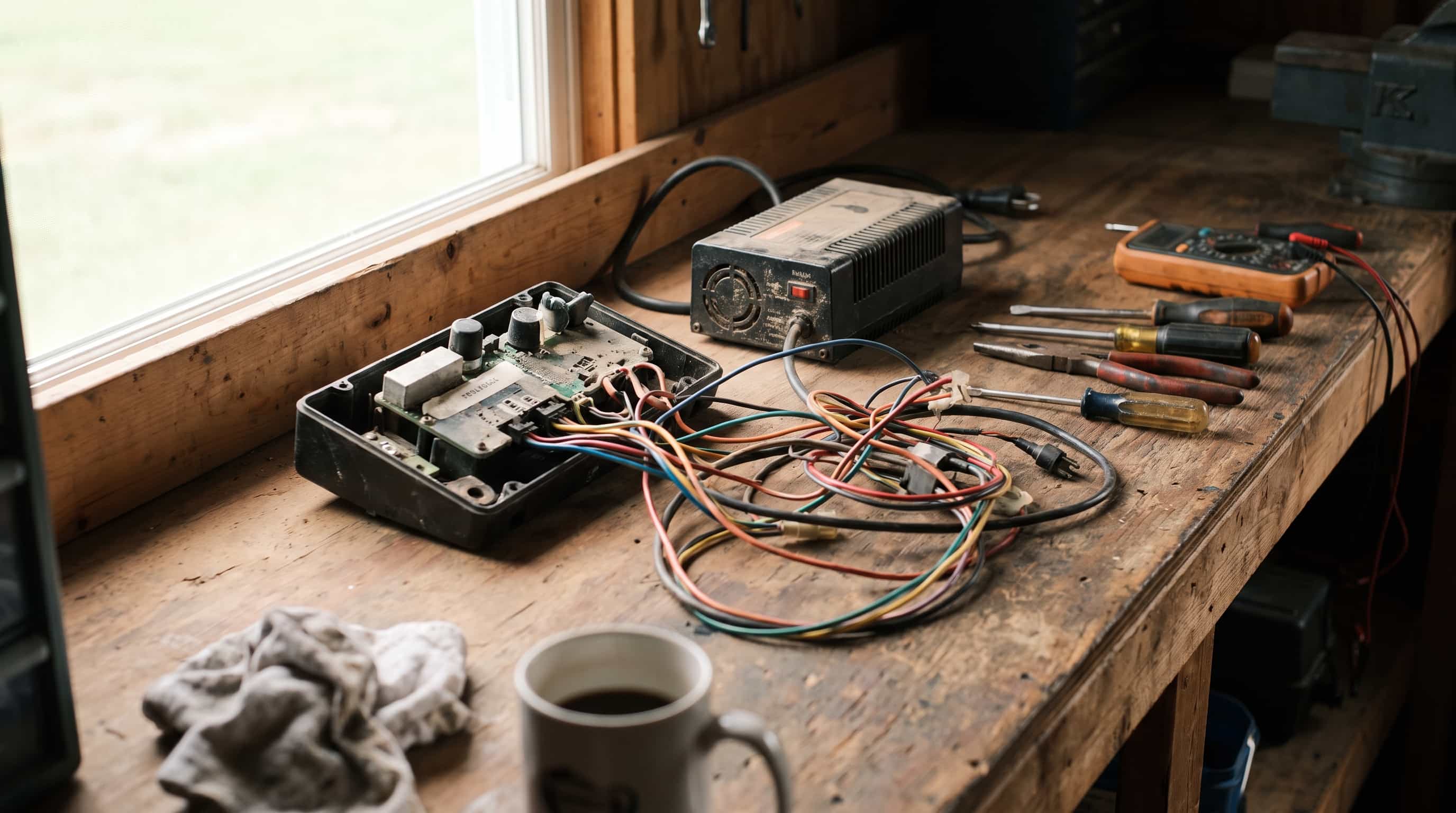
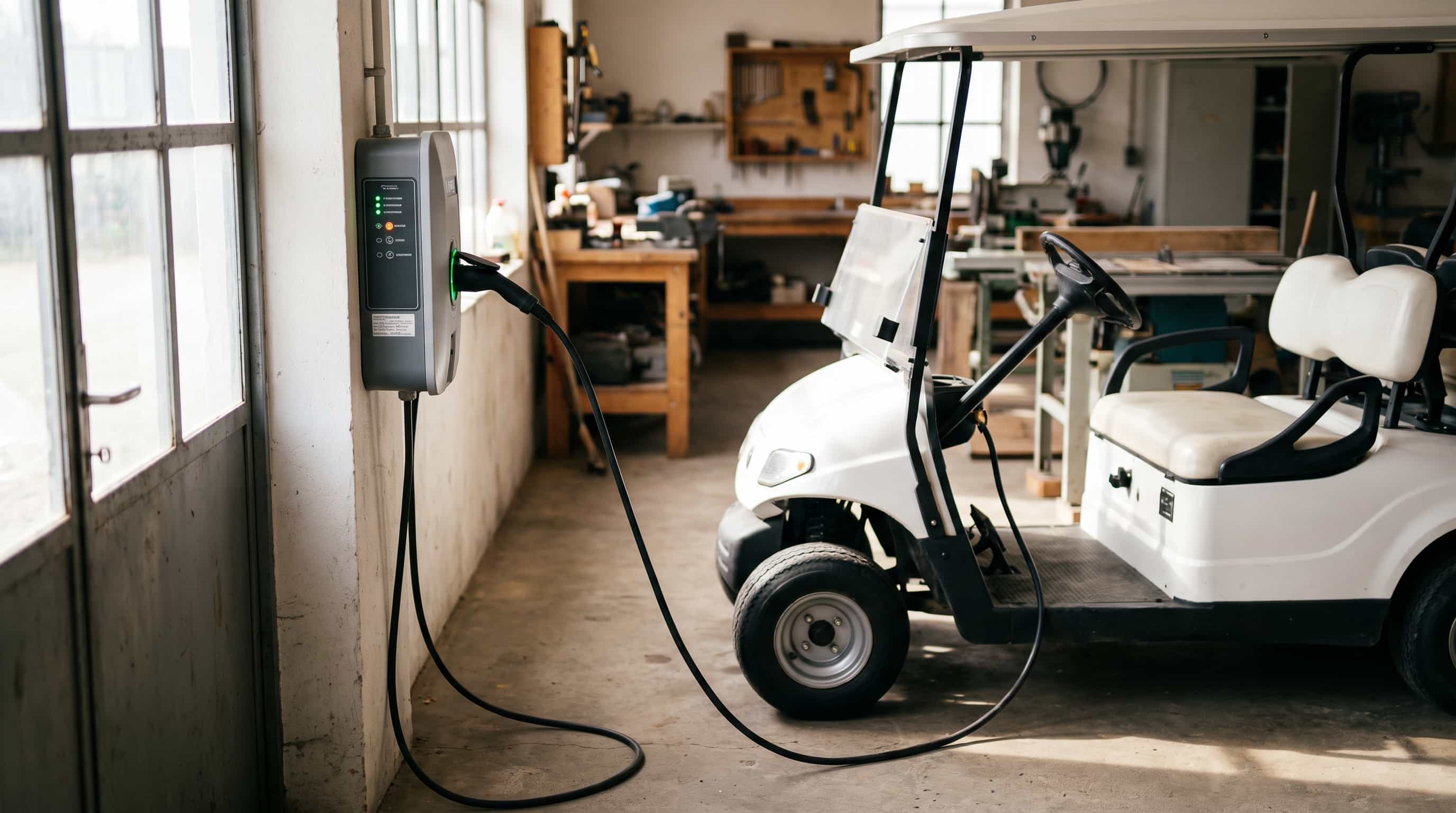
Ask for the charger too. A machine bought without its matched charger is not a complete machine, and the wrong charger is a reliable way to spoil a good pack. If the seller cannot produce it, treat that as part of the price rather than as a detail to sort out later. The same applies to the lead and the connector, which vary between generations and pack types, and to any timer or management box sitting between the socket and the machine.
Checking a used machine before you travel
A wasted journey is usually avoidable with a few photographs: the plate, the charger or the engine bay, and the underside of the rear end. Those tell you what it is, whether it is complete, and whether it has spent its life somewhere wet. Ask what the machine did for a living as well, because a course fleet machine and an estate machine wear out in different places.
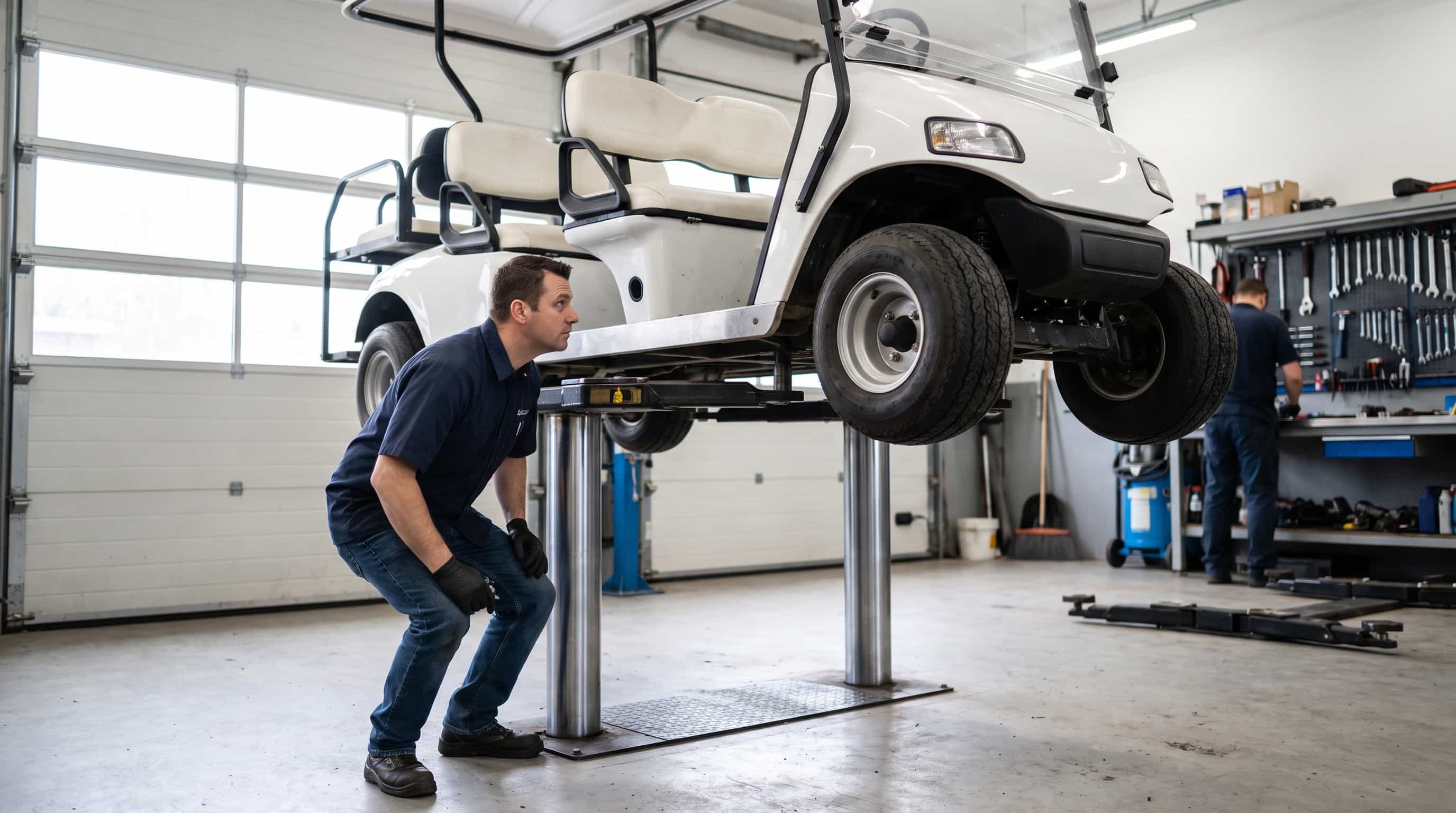
When you get there, drive it on a slope rather than round a flat yard. A tired pack, a dragging brake and a worn rear end all hide on level ground and all announce themselves on a hill, loaded, with the machine warm. Take somebody heavy with you and put them in the passenger seat. Do it twice, because a pack that manages one climb comfortably can struggle on the second without a rest in between.
Finish on the paperwork. Ask when it was last serviced and by whom, ask whether the pack has been replaced and when, and ask for the manual. None of those are deal breakers on their own. A seller who has none of them at all is telling you something useful about how the machine was run. Ask as well whether the machine has been standing, and for how long, because a pack left flat over a winter rarely recovers fully.
Matching a generation to the job
For guest-facing work the newer generations make the stronger case: they look current, they are quieter to sit in, and parts are straightforward to get. For grounds work, an older machine that already looks used is often the better buy, because the first scratch has already happened and nobody on the team is precious about it. The same logic applies to how the budget is split: a newer machine kept for guests and an older one kept for staff usually beats two middling machines doing both jobs indifferently.
If you are running more than one machine, standardising matters more than which generation you land on. A pair from the same generation share a charger type, share wearing parts and share the knowledge of whoever maintains them. A yard with three different generations in it spends its life ordering three of everything and waiting on the slowest. It is also easier to teach. One set of controls, one charging routine, and one place to look for the plate.
Where a machine is needed for a season or for a run of events rather than permanently, the generation question largely disappears. A short hire puts the servicing, the fuel or charging arrangement and the winter storage problem on somebody else's site, and what you are choosing becomes a size and a set of dates rather than a machine. It is also the honest way to find out whether a machine suits the site at all before committing to owning one.
Common questions
- Is the Yamaha Drive2 the same as The Drive?
- No, they are successive generations of the same line. The Drive came first and Drive2 followed it, and the changes between them are the usual generational ones in body, fittings and detail rather than a change of concept. Adverts use the two names loosely and sometimes interchangeably, so identify a machine from its plate, or ask a dealer for the marque to decode the model code.
- How do I tell which Yamaha buggy generation I have?
- Find the plate carrying the model code and the serial number, photograph it, and take that to a dealer for the marque. It identifies the generation and the drivetrain in one step. Body styling, seat shape and dash layout are helpful clues but they mislead, because panels get swapped and machines get rebuilt from more than one donor across a long life.
- Should I buy a petrol or an electric golf buggy?
- The site decides this rather than the badge. Petrol suits long working days, remote corners and places with no sensible power supply, and it brings fuel storage, engine servicing and noise along with it. Electric suits guest-facing work, indoor use and anywhere a charging point is easy, and it puts a large share of the machine's value into a pack that ages. Work out your worst day first.
- Are Yamaha golf buggy parts easy to get in the UK?
- It depends on the generation and the drivetrain more than on the marque. Current and recent generations are generally straightforward, and the further back you go the more it comes down to the individual supplier. Give a UK parts supplier the model code and serial before you buy, and ask specifically about brakes, controllers and engine parts, since those are what keep a machine off the road.
- Can a petrol golf buggy be converted to electric?
- It can be done, and it is rarely the cheap route people hope for. A conversion touches the frame, the weight distribution, the braking and the charging arrangement, and it leaves you with a machine no maker supports. Get the whole scope in writing, ask your insurer whether they will cover the result, and compare it honestly against buying a machine that was electric from new.
- Does a golf buggy need an MOT or road tax?
- A machine used only on private land sits outside the road testing and registration regime, so the question does not arise. Using one on a public road is a different matter with its own requirements, and DVLA is the authority on what applies to a given vehicle. A petrol machine still needs servicing to the maker's schedule, which is maintenance rather than a test.
Still not right
We diagnose and repair golf buggies, service them on a plan, and send an engineer out to where the buggy is. Tell us the symptom and we will say what it usually means.