Common Yamaha buggy faults and fixes
By James Brown · Updated 21 July 2026 · 6 minute read
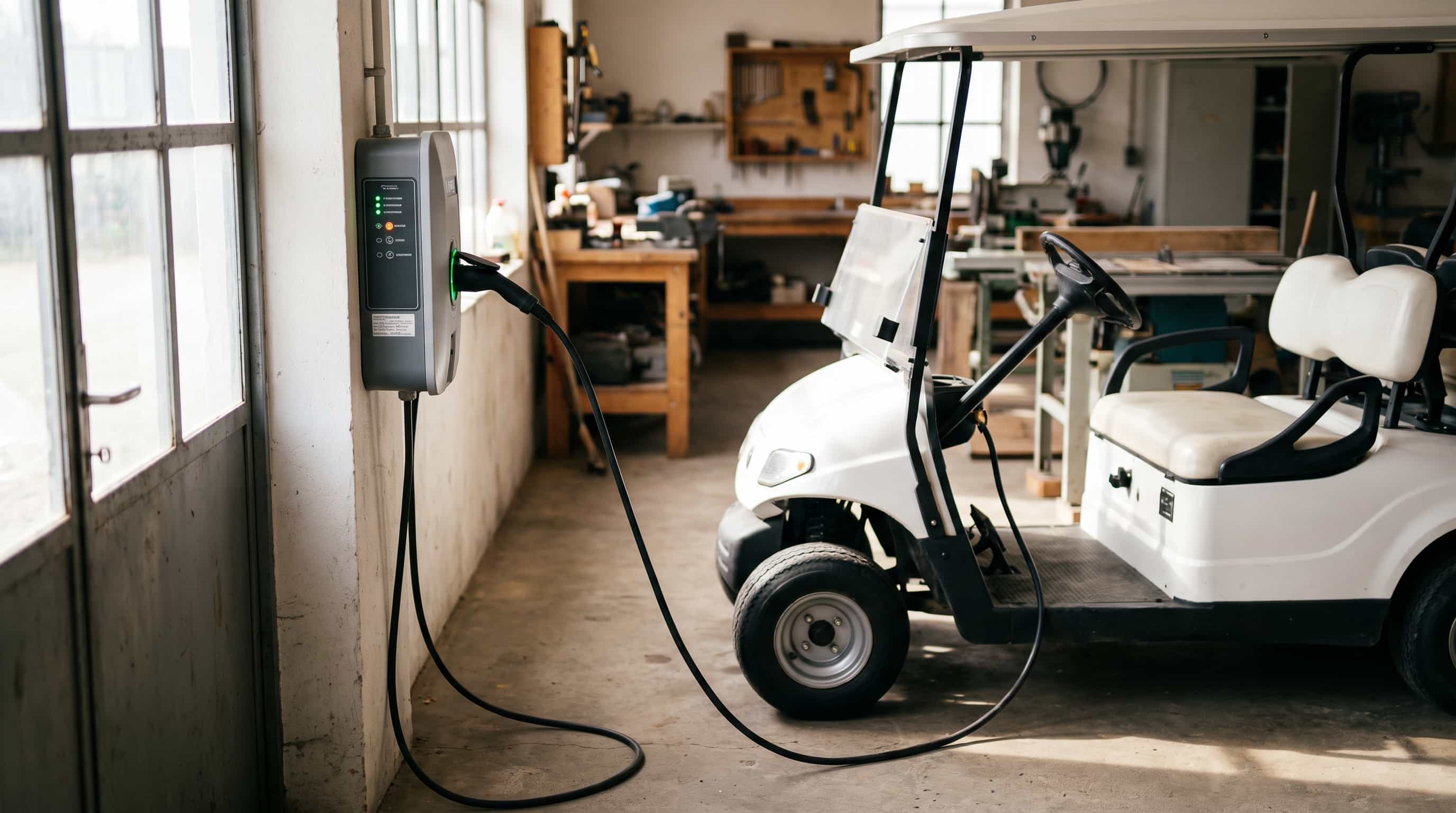
Yamaha is a common make of golf buggy, and the faults owners meet on them are the same categories as any electric buggy: batteries and connections, the solenoid, the controller, the throttle, and wear in the brakes, steering and suspension. The make is named factually with no affiliation implied, and the general diagnostic guides in this knowledge base apply directly.
Key takeaways
- Yamaha is named factually as a common make; no affiliation or endorsement is implied.
- The faults are the ordinary electric-buggy categories, so the general guides apply.
- Batteries and connections are the most common faults and the first place to look.
- Both electric and petrol models exist, so establish which you have before diagnosing.
- Model details differ, and safety-critical faults go to an engineer on any make.
Naming the make honestly
Yamaha is one of the makes UK owners commonly have, so its faults are searched for by name, and addressing that is reasonable. We name the make only to be useful, with no partnership or endorsement implied. As with every brand guide here, we will not publish model specifications or figures we cannot verify, since the honest source for those is the maker's documentation for your exact model, and an invented figure would mislead.
The point that carries across is that a Yamaha buggy's faults are, in category, the faults of any buggy of its type, so the diagnostic thinking here transfers directly.
Electric or petrol, establish it first
One useful distinction with this make is that both electric and petrol buggies exist, and they fault differently, so the first step is to know which you have. An electric buggy's faults are the battery, solenoid, controller and throttle story told throughout this knowledge base. A petrol buggy adds an engine, with its own fuel, ignition and starting faults that an electric buggy simply does not have. Diagnosing an electric fault on a petrol machine, or the reverse, wastes time, so confirm the type from the maker's plate or manual before you start, and then use the relevant guides.
For electric models, everything in the general symptom guides applies as written. For petrol models, the battery and electrical guidance still helps with the starting and accessory circuits, while the engine itself is a different discipline.
The systems that need attention
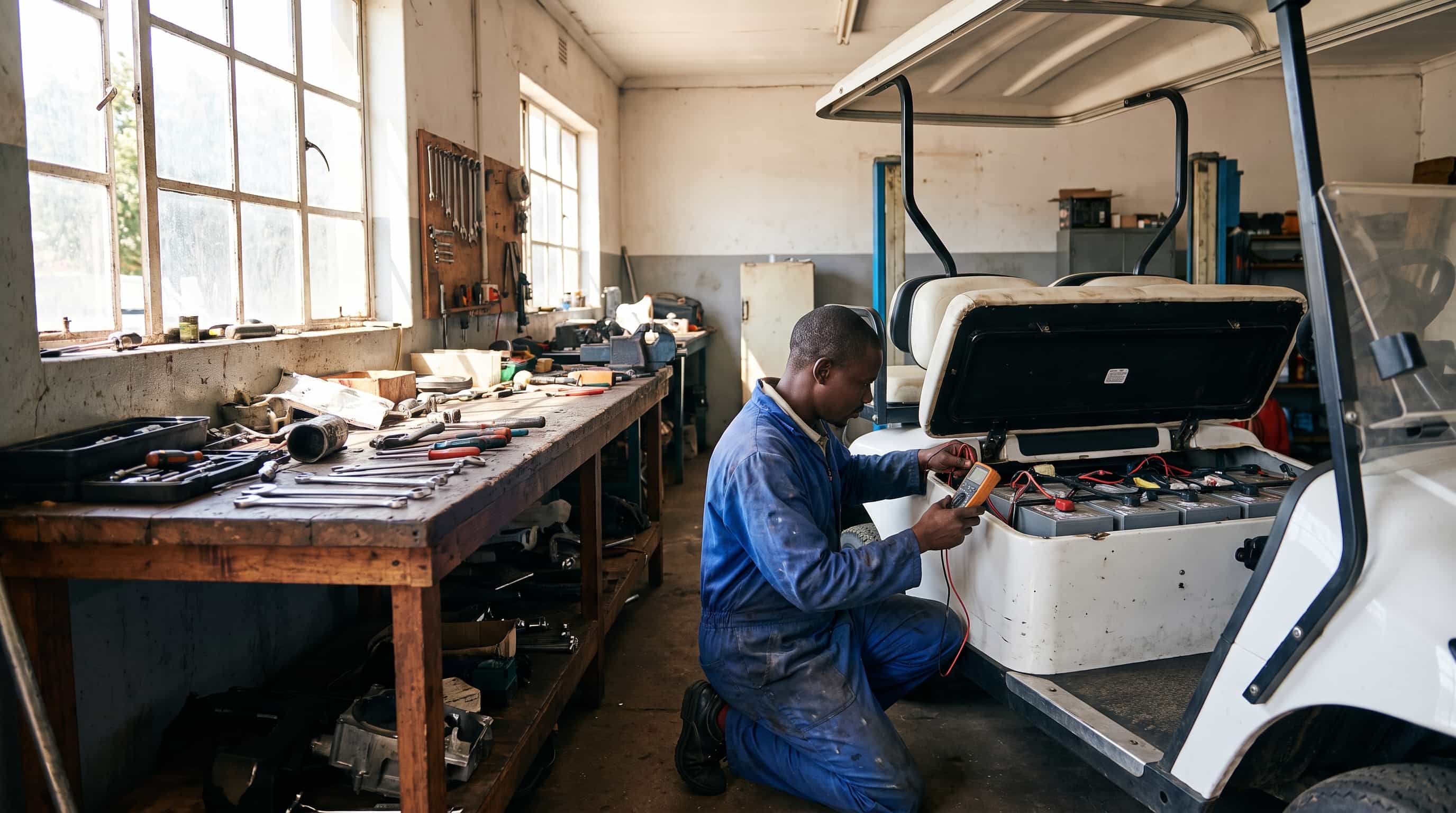
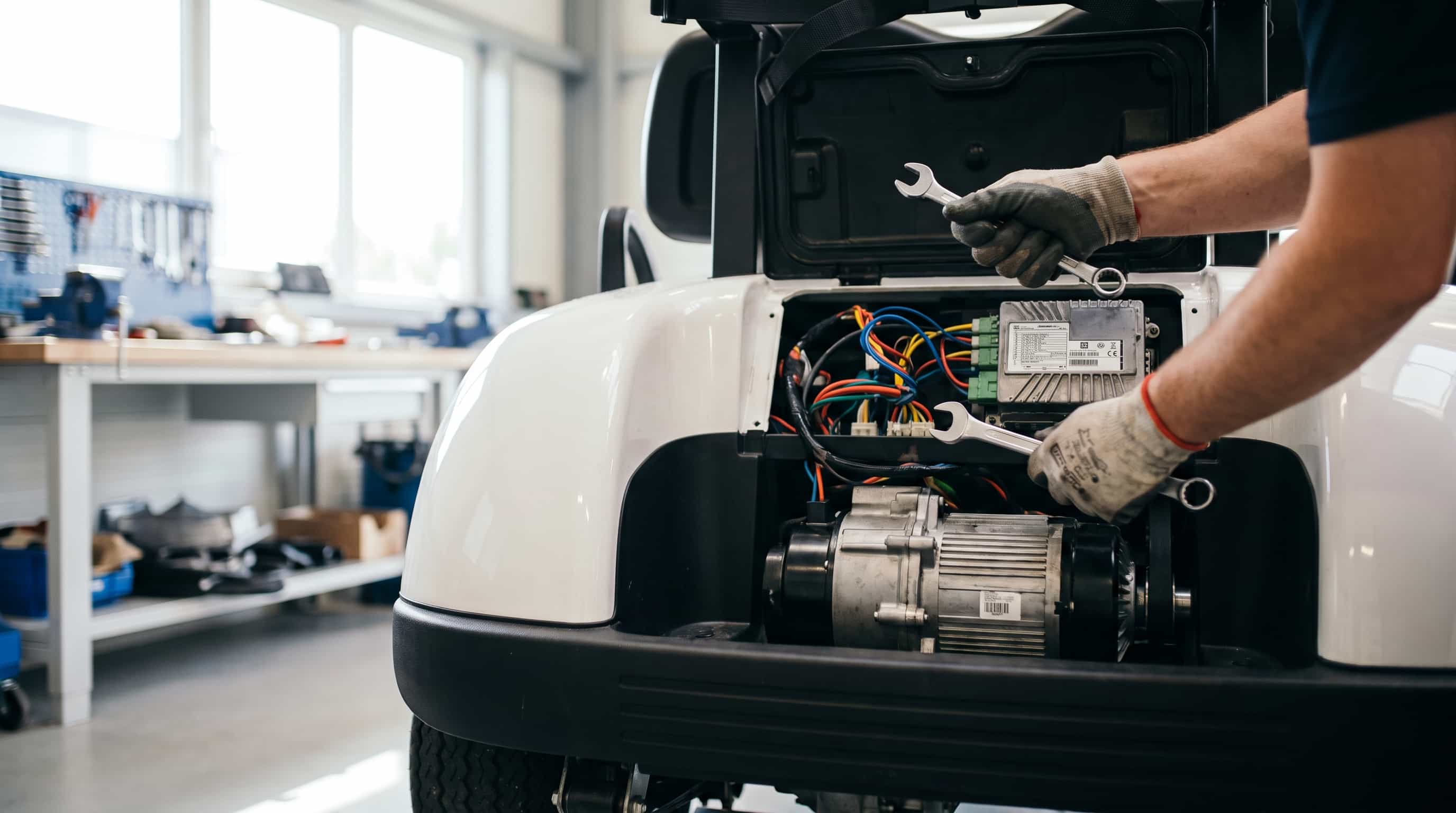
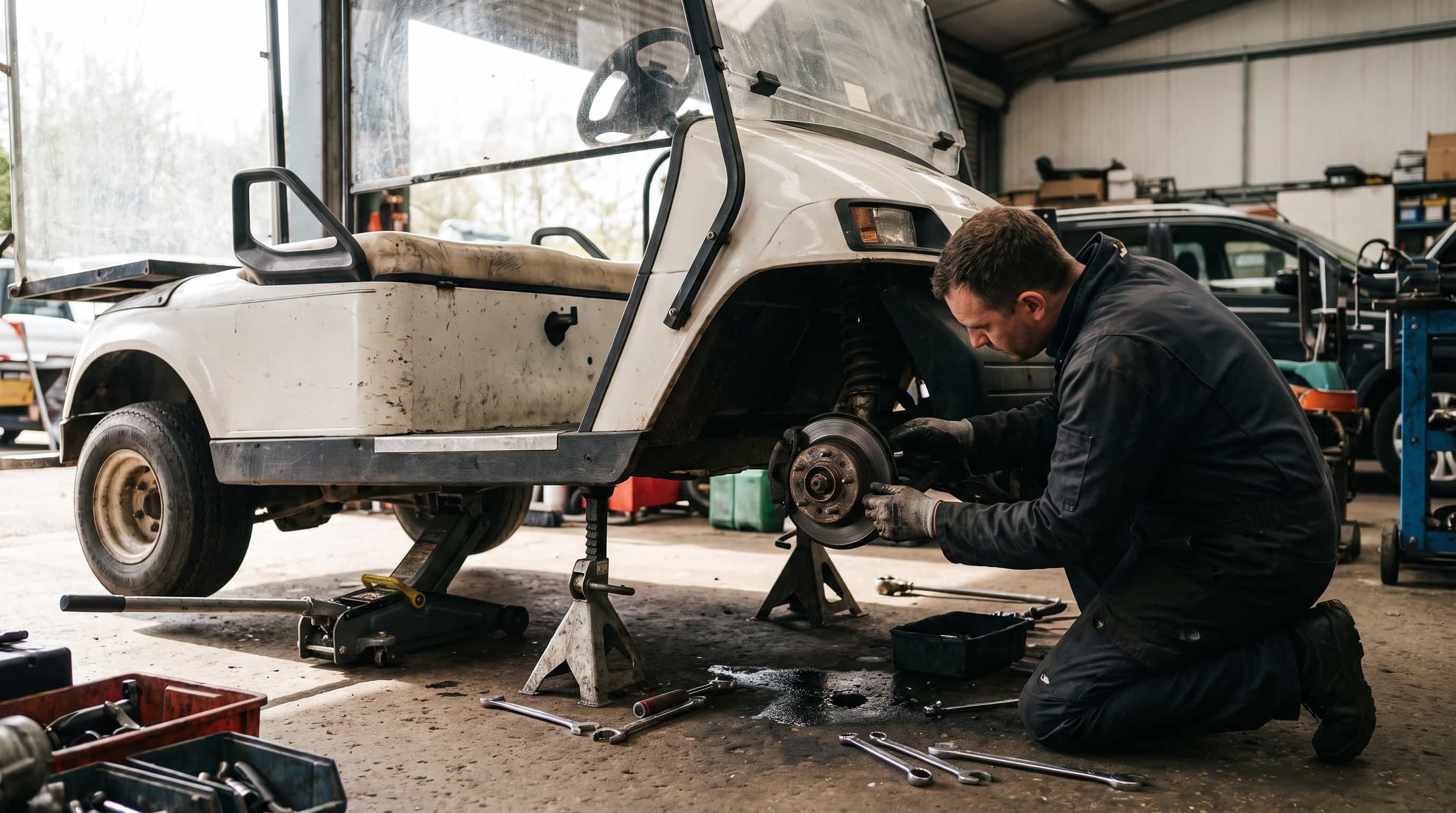
On the electric models, the familiar order holds. Batteries and connections first, since a dead, weak or fading buggy is usually a tired set or a corroded terminal. The solenoid for the click and chatter symptoms. The controller, which protects itself more often than it fails and reports through error behaviour. The throttle sensor behind surging and hesitation. And the brakes, steering, tyres and suspension wearing with use. The make changes the specific parts and the error-code list, not these categories, which is why the general guides do the diagnostic work and the maker's documentation supplies the exact detail for your model.
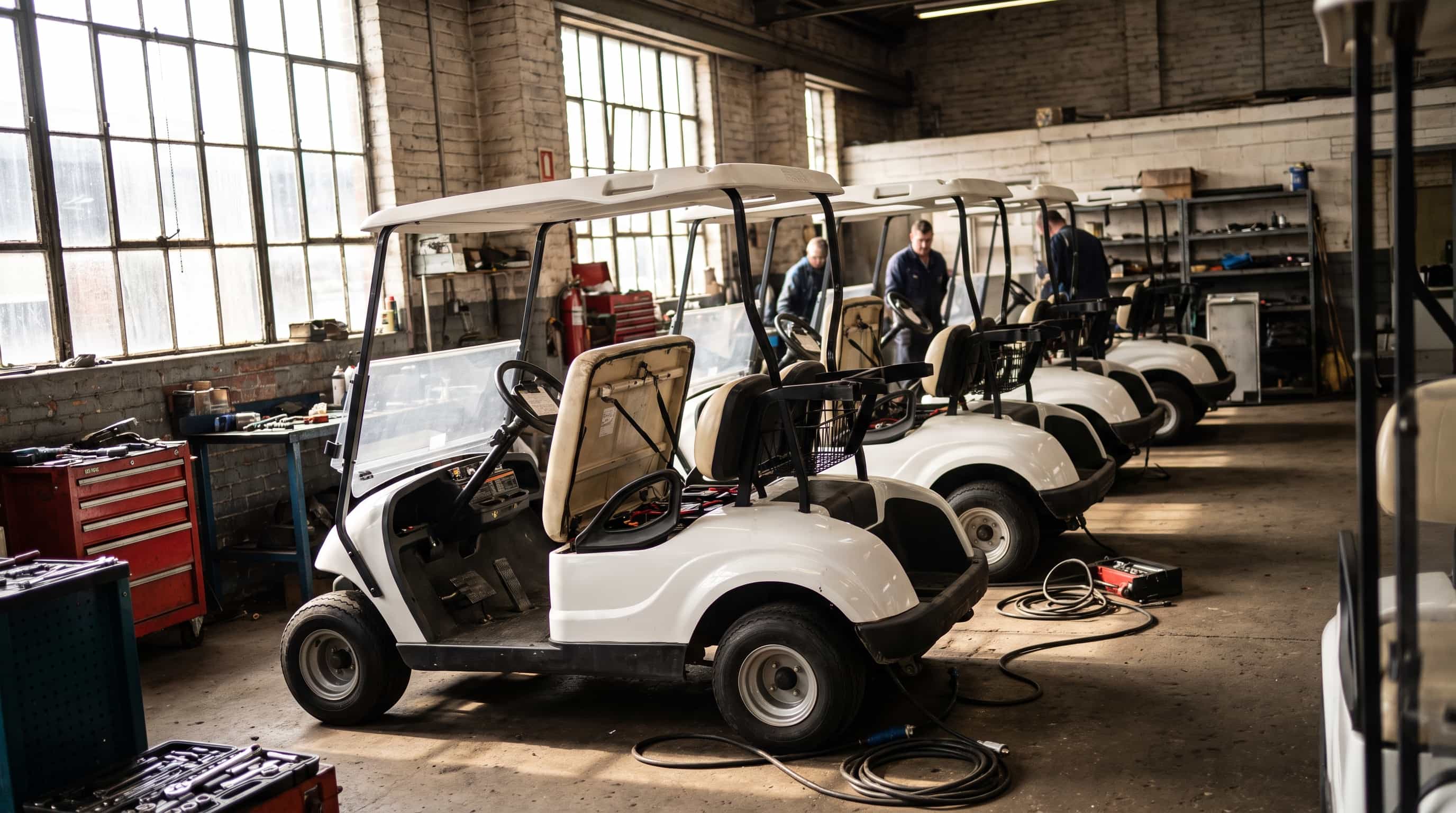
If yours is doing this and the checks here have not settled it, we diagnose and repair buggies, including a callout to wherever it is.
The safety line, unchanged
As on every make, the safety line does not move. Brakes, steering, a burning smell, or a swollen or damaged battery go to an engineer, whatever the badge and however well you know the buggy. Those faults are not for the yard, and the Repair Centre sends them straight to an engineer with no self-fix, on a Yamaha exactly as on anything else.
Common questions
- Is my Yamaha buggy electric or petrol
- Both exist, so check the maker's plate or manual, because it changes the whole diagnosis. Electric models fault through the battery, solenoid, controller and throttle. Petrol models add an engine with fuel, ignition and starting faults an electric buggy does not have. Knowing which you have before you start saves chasing the wrong system.
- Do the general fault guides apply to a Yamaha
- For electric models, yes, directly, since the systems are common to electric buggies. For petrol models, the battery and electrical guidance still helps with the starting and accessory circuits, but the engine is a separate discipline. Either way, diagnose the category with the general guides and use the maker's documentation for the specifics.
- Where do I get the correct specifications
- From the maker's documentation for your exact model and generation, since details differ and we will not invent figures we cannot verify. That is the reliable source for error codes, settings, fuse positions, parts, and, for petrol models, the engine specifics. Keeping it with the buggy pays off the first time a fault needs the exact detail.
Still not right
We diagnose and repair golf buggies, service them on a plan, and send an engineer out to where the buggy is. Tell us the symptom and we will say what it usually means.