Common Club Car faults and fixes
By James Brown · Updated 21 July 2026 · 6 minute read

Club Car is a common make of golf buggy, and the faults owners meet on them are the same categories as any electric buggy: batteries and connections, the solenoid, the controller, the throttle, and wear in the brakes and steering. Nothing here implies any affiliation with the maker. The value is in knowing which areas tend to need attention and how to approach them.
Key takeaways
- Club Car is named here factually as a common make; this is not an affiliation or endorsement.
- The fault categories match any electric buggy: batteries, solenoid, controller, throttle, brakes.
- Battery and connection faults are the most common, as on any buggy, and the first to check.
- Have the exact model and its documentation to hand, since details differ across the range.
- Safety-critical faults, brakes, steering, burning smells, go to an engineer regardless of make.
A note on naming the make
Club Car is one of the widely used makes of golf buggy in the UK, so owners search for its faults by name, and it is reasonable to write about it. To be clear, we name it only to be useful, and imply no affiliation, partnership or endorsement. We also will not print model specifications or figures we cannot verify for a given machine, because the honest source for those is the maker's own documentation for your exact model, and inventing them would help nobody.
What is genuinely useful is this: the faults you meet on a Club Car are, in category, the faults of any electric buggy, so the diagnostic thinking in the rest of this knowledge base applies directly.
The areas that tend to give trouble
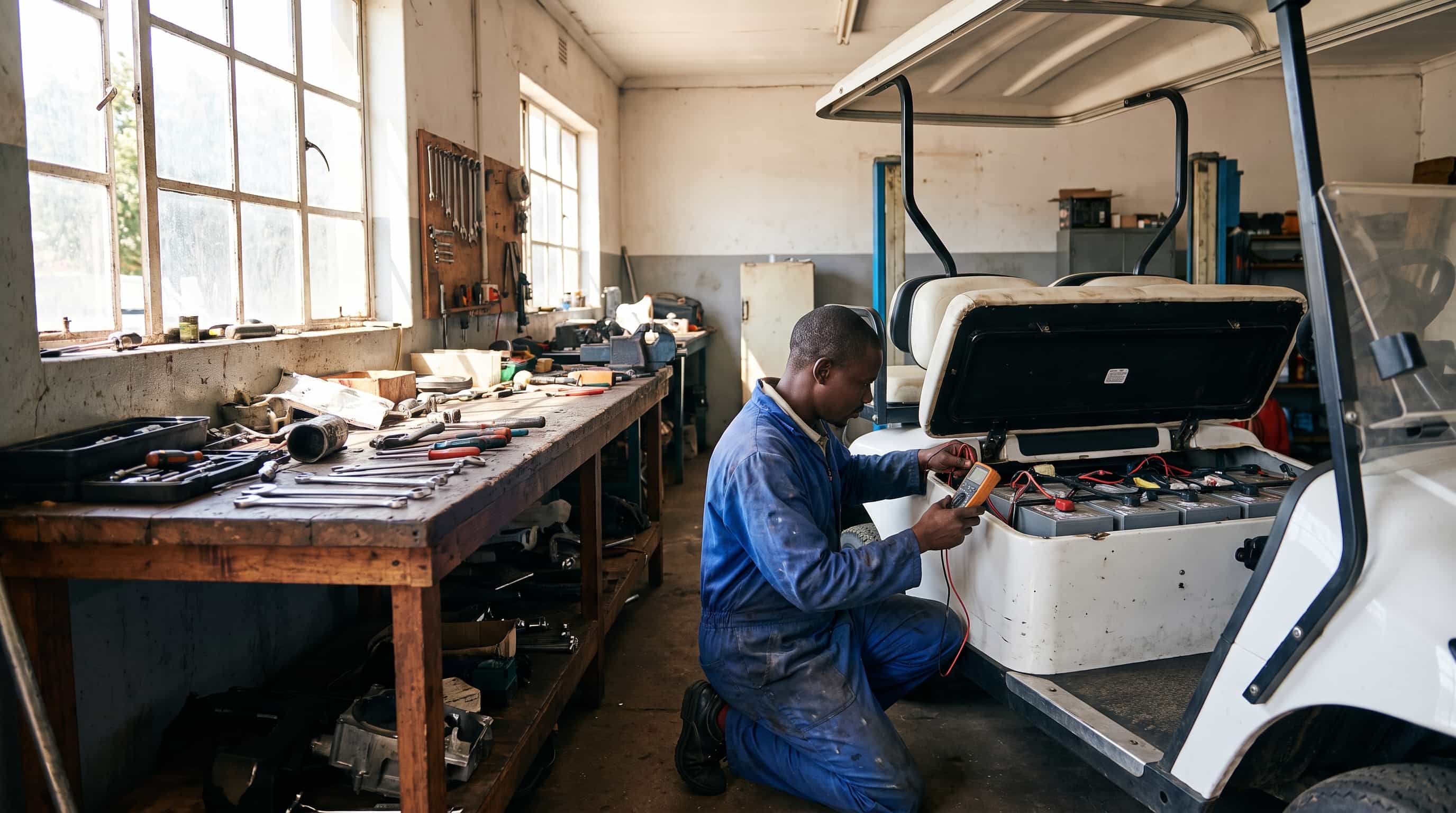
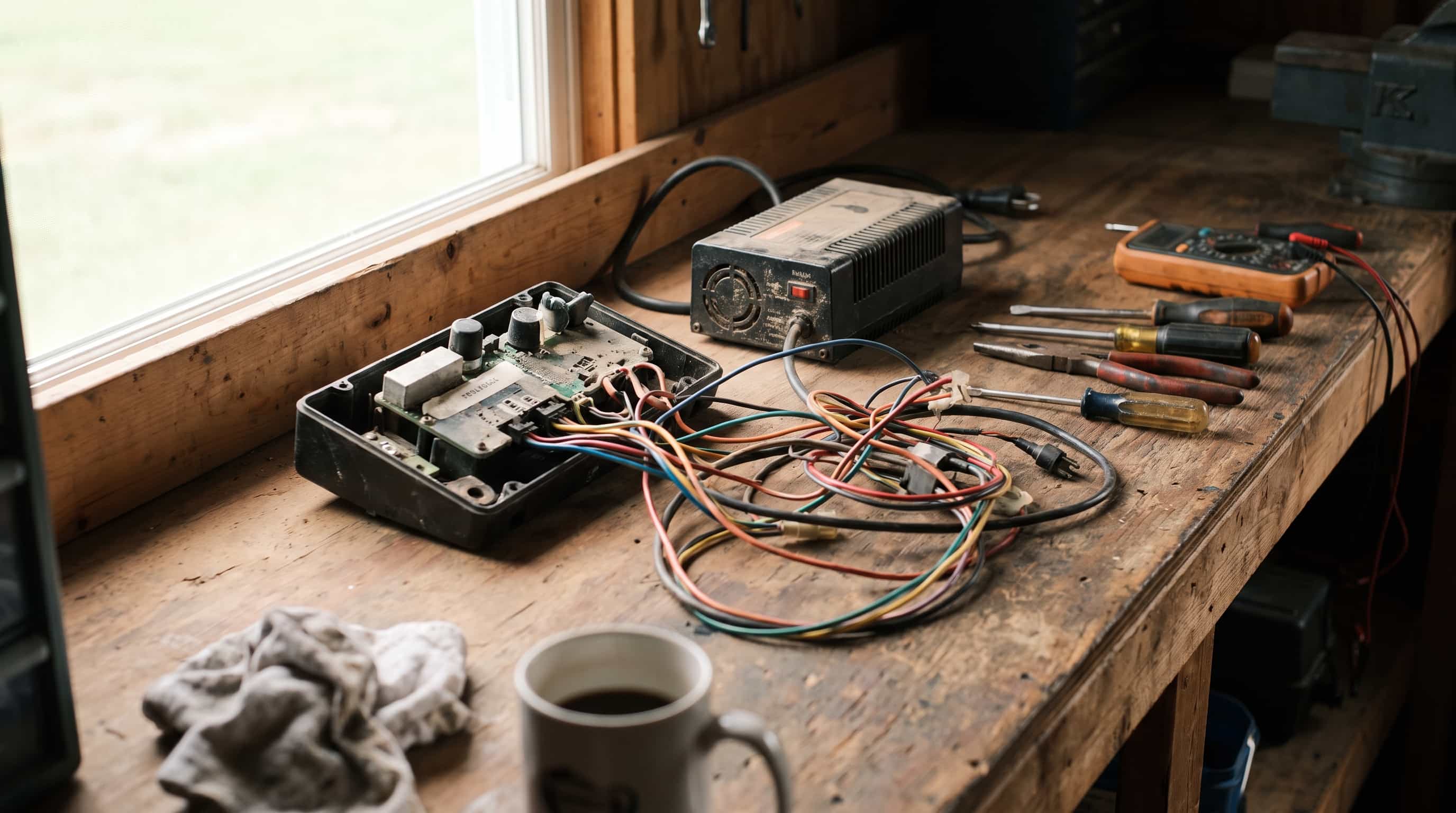
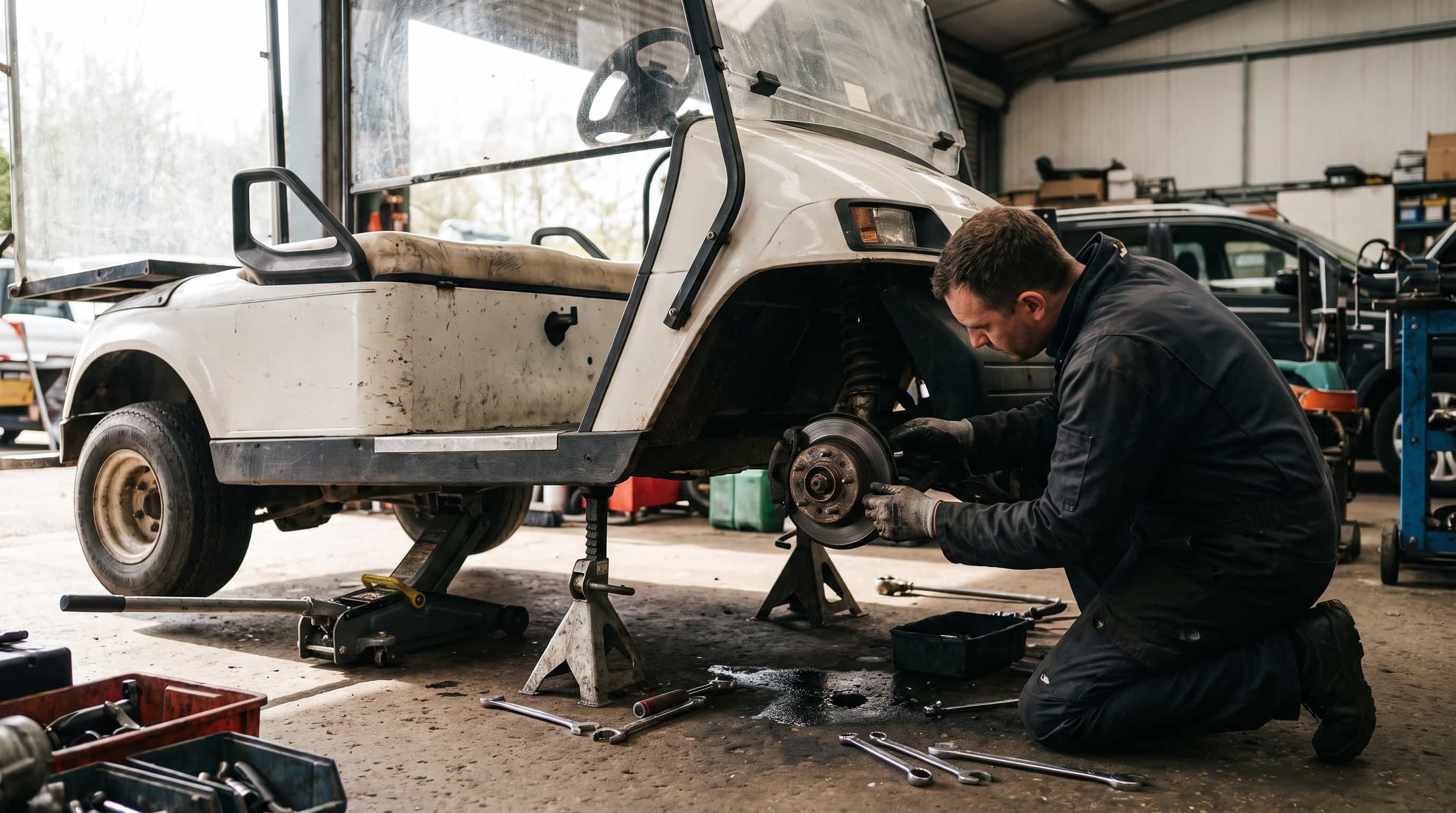
As with any electric buggy, batteries and their connections lead the list. A buggy that is dead, weak, or slowing on hills is far more often a tired set or a corroded terminal than anything model-specific, so that is where diagnosis starts. The solenoid, the main contactor, is a common wear item across buggies and gives the classic clicks, no-clicks and chatter covered in the solenoid guide. The controller manages the drive and, as everywhere, more often protects itself than fails, reporting through its own error behaviour. The throttle sensor and its wiring cause the surging and hesitation faults. And the brakes, steering and suspension wear with use exactly as they do on any make.
Knowing that lets an owner use the symptom guides here, on starting, power loss, noises and the rest, without needing a make-specific manual for every fault, because the physics does not change with the badge.
Where the make does matter
The make matters for the details rather than the categories. The exact layout, the controller fitted, the error-code list, the fuse positions and the service specifics differ across models and generations, which is why the maker's documentation for your exact machine is worth having. When you read a fault code, adjust a setting, or order a part, that model-specific information is what you need, and it is the reliable source rather than a general figure. So the practical approach is to diagnose the category using the general guides, then use the correct documentation for your specific model for the exact detail.
If yours is doing this and the checks here have not settled it, we diagnose and repair buggies, including a callout to wherever it is.
The line that does not move
One thing is the same on every make: the safety line. A fault touching the brakes or steering, a burning smell, or a swollen or damaged battery goes to an engineer regardless of how familiar the buggy is or how confident you feel. Club Car or any other make, those faults are not the ones to work through in the yard, and the Repair Centre routes them to an engineer for exactly that reason.
Common questions
- Are Club Car buggies particularly unreliable
- No make claim is made here either way. The faults owners meet on a Club Car are the ordinary faults of any electric buggy, batteries, connections, solenoid, controller, throttle, brakes and steering, and they respond to the same diagnosis. Reliability depends far more on maintenance and age than on the badge.
- Can I use the general fault guides for my Club Car
- Yes. The symptom guides here, on starting, power loss, noises, charging and the rest, apply because the underlying systems are common to electric buggies. Use them to diagnose the category, then turn to the maker's documentation for your exact model for the specific detail, such as an error-code list or a fuse position.
- Where do I get the right specifications for my model
- From the maker's own documentation for your exact model and generation, since details differ across the range and we will not invent figures we cannot verify. That documentation is the reliable source for error codes, settings, fuse positions and parts, and it is worth keeping with the buggy.
Still not right
We diagnose and repair golf buggies, service them on a plan, and send an engineer out to where the buggy is. Tell us the symptom and we will say what it usually means.