Golf buggy motor brushes explained
By James Brown · Updated 21 July 2026 · 4 minute read
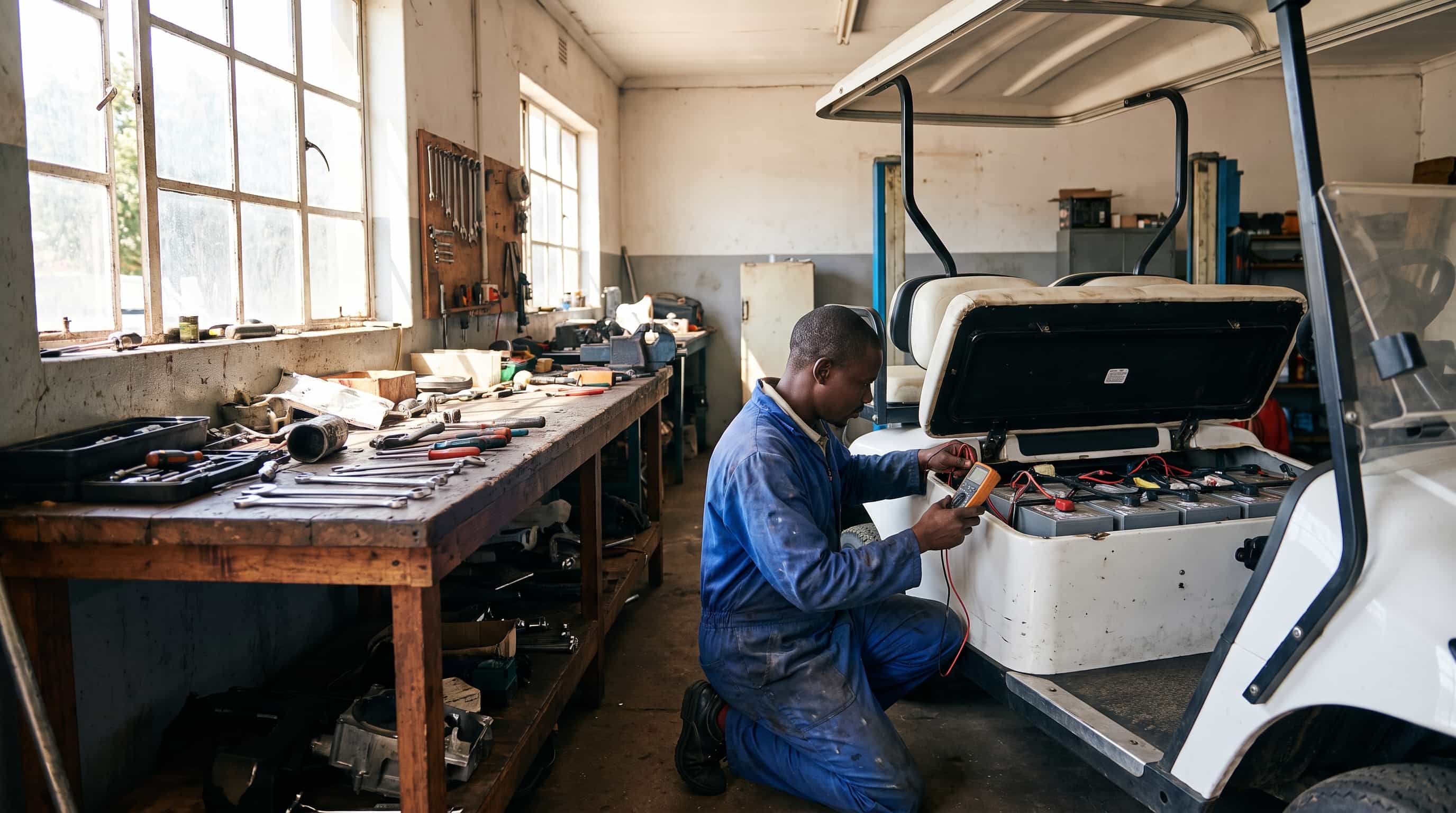
Brushes are small carbon blocks in older direct-current motors that carry current to the spinning part through contact. They wear down with use, and worn brushes cause reduced power, arcing, and sometimes a smell. Many newer buggies use brushless motors that have none. If your buggy has a brushed motor, worn brushes are a recognised cause of gradual power loss.
Key takeaways
- Brushes are carbon contacts in older DC motors that carry current to the spinning part.
- They wear down with use and are a normal wear item on a brushed motor.
- Worn brushes cause reduced power, arcing, and sometimes a smell from the motor.
- Newer brushless motors do not have brushes and do not have this wear.
- Brush work is inside the motor, so it is generally an engineer job.
What brushes do
In an older direct-current motor, current has to get from the fixed part of the motor to the spinning part, and it does this through brushes: small blocks, usually of carbon, held in contact against a rotating surface as the motor turns. They are called brushes because they sweep against that surface while it spins, carrying the current across the moving join. It is a simple, proven arrangement, but it has one built-in consequence: because the brushes are in constant rubbing contact, they wear away over time, which makes them a maintenance and wear item on any motor that has them.
How worn brushes show
As brushes wear down, the contact they make deteriorates, and the symptoms follow. The motor delivers reduced power, because the current is no longer passing cleanly. There can be arcing at the worn contact, sparking that you might see or that leaves marks inside the motor. And a worn, arcing brushed motor can give off a smell, which as the motor guide notes crosses into the take-it-seriously category if it becomes a burning smell. The decline is usually gradual, matching the gradual wear, so a brushed motor slowly losing power over a long period, with the battery and controller ruled out, can be worn brushes reaching the end of their life.
Brushed versus brushless
Not every buggy has brushes, and knowing which you have matters. Many newer buggies use brushless motors, which carry the current to the spinning part without physical brushes, so they simply do not have this wear item and cannot suffer worn-brush faults. If your buggy has a brushless motor, brushes are not part of your maintenance or your fault-finding at all. If it has an older brushed motor, brushes are a genuine wear item to be aware of. The maker's documentation for your model tells you which type it is, and it is worth knowing, because it decides whether worn brushes are even a possible explanation for a gradual power loss.
If yours is doing this and the checks here have not settled it, we diagnose and repair buggies, including a callout to wherever it is.
The repair
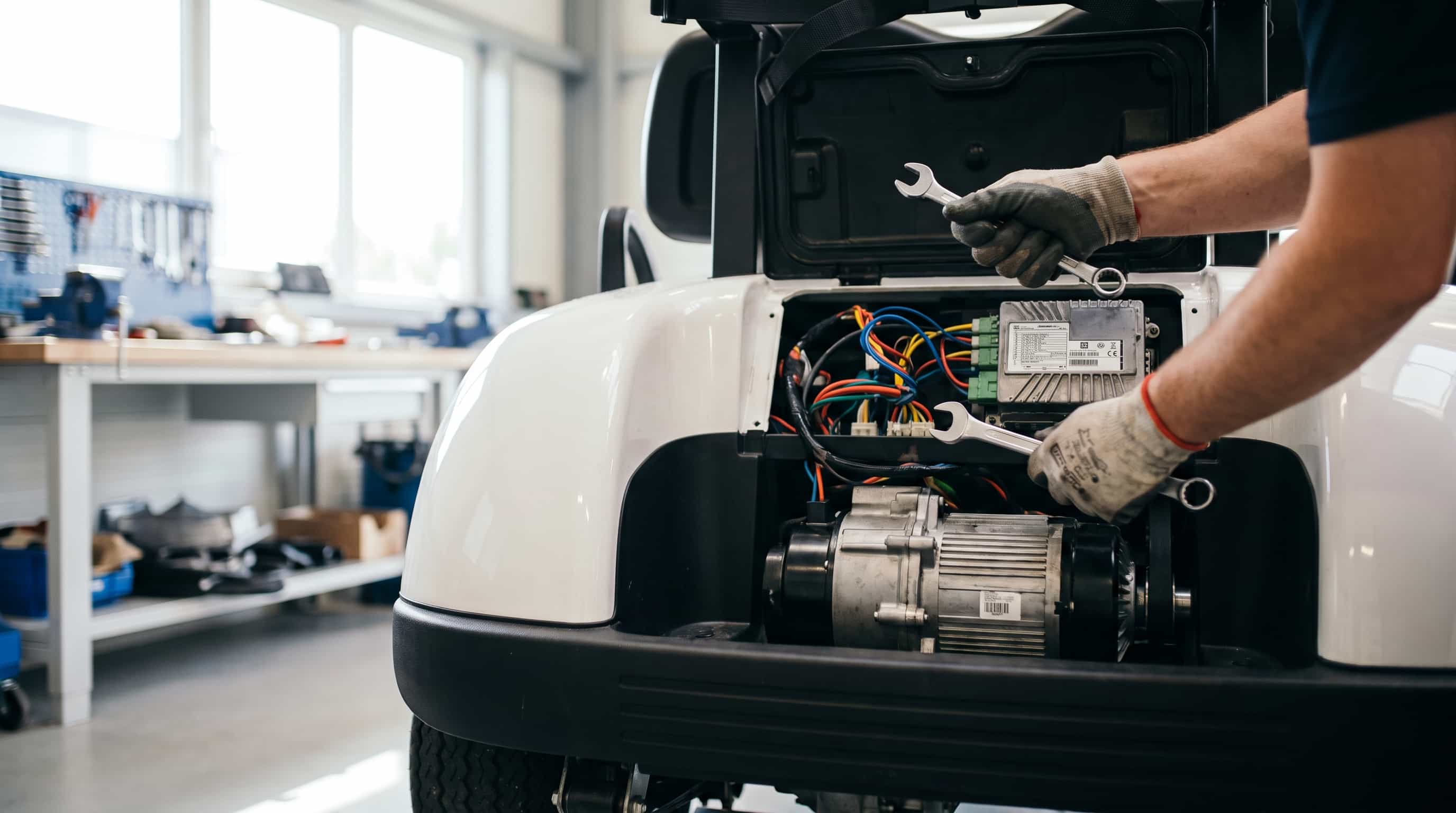
Brush work happens inside the motor, and that places it largely with an engineer. Inspecting, measuring and replacing brushes means opening the motor, knowing what good and worn look like for that motor, and reassembling it correctly, which is skilled work rather than a casual job, and it involves the buggy's main drive. On some motors brush replacement is a recognised service item that restores a tired brushed motor without a full replacement, which is worth knowing because it can be cheaper than assuming the whole motor is finished. But the diagnosis, is it worn brushes or something else, and the work both belong with someone equipped to open and assess the motor. The owner's useful part is the same as with any motor fault: rule out the battery and controller first, note the gradual power loss and any smell or arcing, and let an engineer confirm whether the brushes are the cause.
Common questions
- What are motor brushes and does my buggy have them
- Brushes are carbon contacts in older direct-current motors that carry current to the spinning part through rubbing contact, and they wear over time. Many newer buggies use brushless motors that have none. The maker's documentation for your model tells you which type you have, which decides whether worn brushes could explain a gradual power loss.
- How do I know if the brushes are worn
- Worn brushes cause gradual reduced power, arcing inside the motor, and sometimes a smell, once the battery and controller are ruled out. The decline matches the gradual wear. Confirming it means opening the motor to inspect the brushes, which is engineer work, so the owner's part is ruling out the battery and controller and describing the gradual loss and any smell.
- Can worn brushes be replaced or does the motor need replacing
- On many brushed motors, brush replacement is a recognised service item that restores a tired motor without a full replacement, which can be cheaper than assuming the motor is finished. But inspecting and replacing brushes means opening the motor and belongs with an engineer, who can also confirm whether the brushes, rather than something else, are actually the cause.
Still not right
We diagnose and repair golf buggies, service them on a plan, and send an engineer out to where the buggy is. Tell us the symptom and we will say what it usually means.