Golf buggy bushings and kingpins
By James Brown · Updated 21 July 2026 · 4 minute read
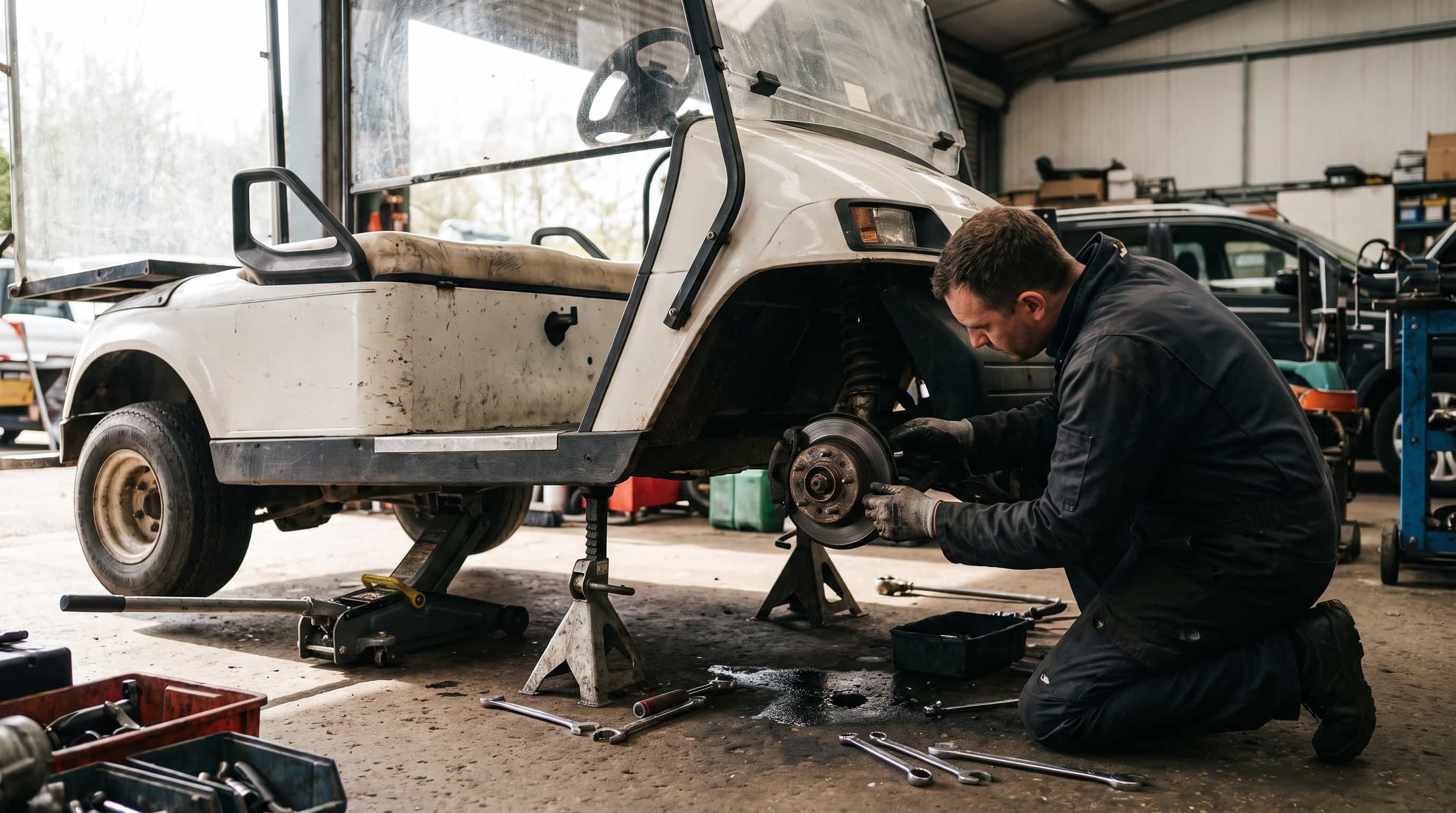
Bushings are the sleeves that let suspension and steering parts pivot, and kingpins are the pivots the front wheels steer around. Worn or dry, they cause knocks over bumps, squeaks, and vague or heavy steering. Some need periodic lubrication; when worn out they need replacing. Both jobs affect steering and handling, so replacement belongs with an engineer.
Key takeaways
- Bushings let suspension and steering parts pivot; kingpins are the front steering pivots.
- Dry bushings and kingpins squeak and stiffen; worn ones knock and give vague steering.
- Some are designed to be lubricated periodically, which prevents dry wear.
- A dry kingpin can make steering heavy, a fixable cause worth ruling out.
- Replacement affects steering and handling, so it belongs with an engineer.
What they are
Wherever a suspension or steering part needs to pivot, there is usually a bushing, a sleeve, often of rubber, plastic or metal, that lets the part swivel smoothly while holding it located. The kingpins are a particular pivot: the front wheels steer by turning around them, so they carry both the steering movement and a share of the buggy's weight. Together, bushings and kingpins are what let the front end steer and the suspension move, and being pivots under load on a machine used over rough ground, they wear and can dry out.
Dry versus worn
These parts fail in two related ways, and the symptoms differ. When they go dry, losing the lubrication that lets them move freely, they squeak or creak as they pivot, and they stiffen, which can make the steering feel heavy, one of the causes worth ruling out when steering effort rises. When they wear, developing clearance, they knock, especially over bumps as the joint moves through its new slack, and they let the steering feel vague as the front end no longer pivots precisely. A creak points at dryness; a knock or vagueness points at wear.
Lubrication, where it applies
Some bushings and kingpins are designed to be greased periodically, with points to do it, and keeping up that lubrication is genuinely preventive: a dry pivot wears far faster than a lubricated one, so the squeak you ignore today is the knock you pay for later. Where your buggy has lubrication points, servicing them is part of keeping the front end healthy and quiet, and it is the kind of task a regular service covers. Not every bushing is greasable, some sealed ones are replace-when-worn, so the maker's guidance for your buggy says what needs lubricating and how often.
If yours is doing this and the checks here have not settled it, we diagnose and repair buggies, including a callout to wherever it is.
When to replace, and who
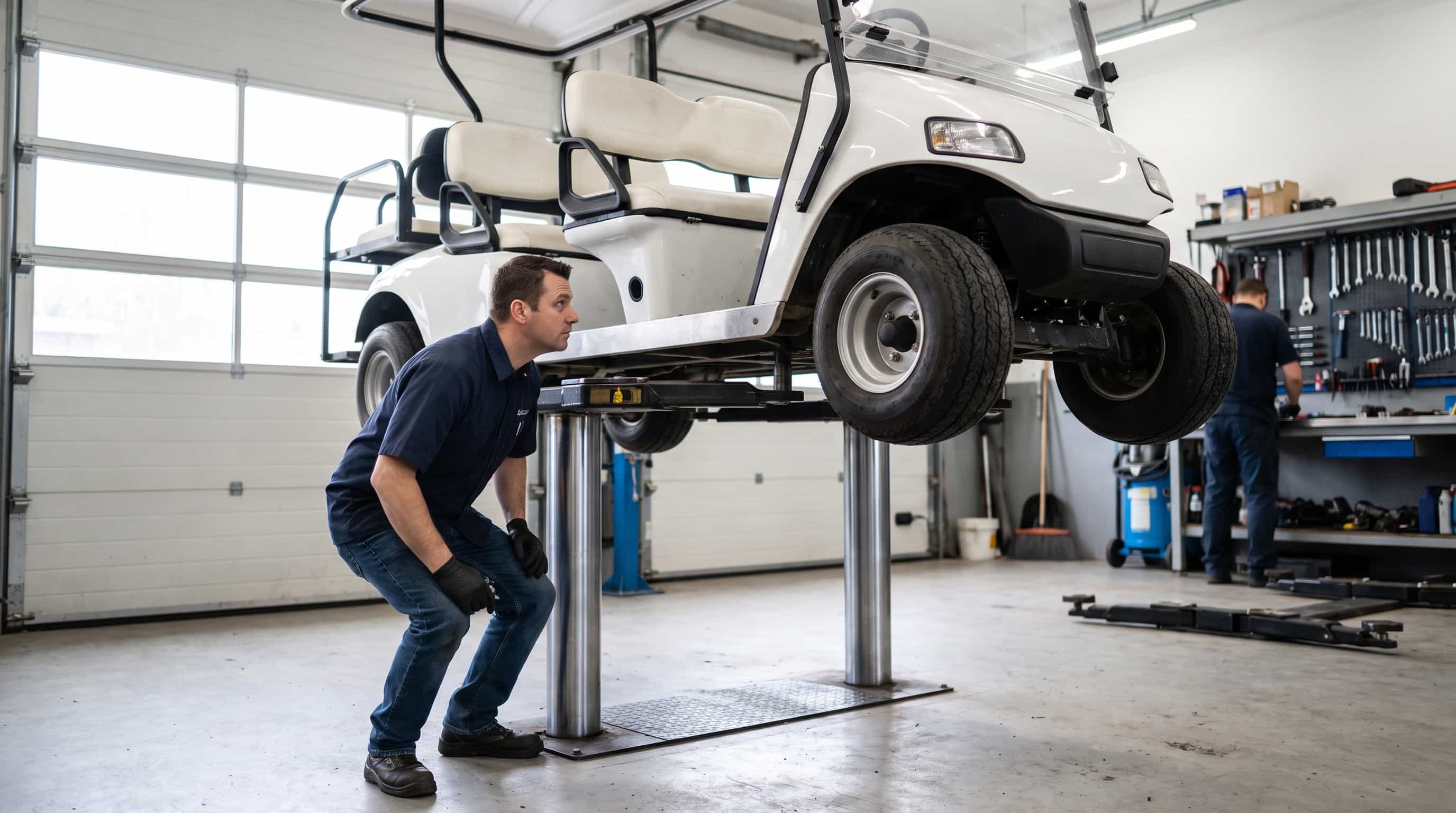
A dry pivot that is caught and lubricated may be saved. A pivot that is genuinely worn, knocking and letting the steering wander, needs replacing, and this is where it goes to an engineer. Replacing bushings and kingpins often means supporting the front end, pressing parts in and out, and getting everything back correctly, and because these are steering and suspension parts, a poor job affects how the buggy handles and steers. Checking for play and noticing a squeak are fair owner observations; the replacement, and confirming the steering is right afterwards, belongs with someone equipped to do it properly.
Common questions
- There is a squeak from the front when I go over bumps
- A squeak or creak from a pivoting part is often a dry bushing or kingpin that has lost its lubrication. Where your buggy has lubrication points, greasing them may cure it and prevent further wear, since a dry pivot wears fast. If it knocks rather than squeaks, the pivot is likely worn and needs replacing rather than lubricating.
- Could a kingpin make my steering heavy
- Yes. A dry or stiff kingpin adds friction to the steering, which can make the wheel harder to turn, so it is one of the causes worth ruling out when steering has gone heavy, alongside low tyre pressures. If lubrication where provided does not free it, a worn or damaged kingpin may need replacing, which is engineer work.
- Can I replace bushings myself
- It belongs with an engineer. Replacing bushings and kingpins usually means supporting the front end and pressing parts in and out, and because they are steering and suspension components, a poor job affects handling and steering. Checking for play and lubricating greasable points is fair owner work; the replacement and the check that steering is right afterwards belong with an engineer.
Still not right
We diagnose and repair golf buggies, service them on a plan, and send an engineer out to where the buggy is. Tell us the symptom and we will say what it usually means.