How to check a golf buggy fuse, step by step
By James Brown · Updated 21 July 2026 · 4 minute read
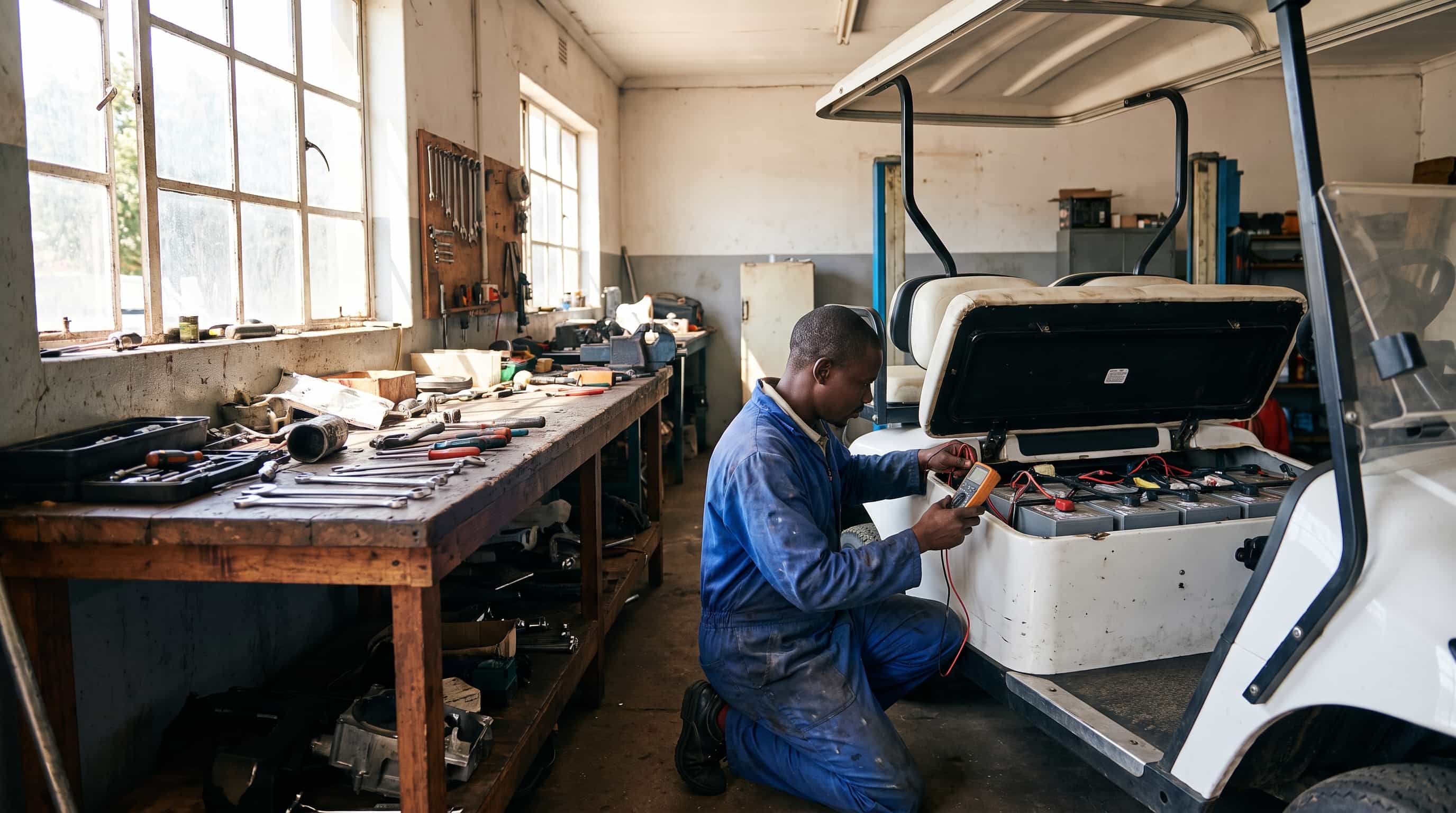
When an accessory stops working, a blown fuse is the first cheap thing to check. Find the fuse for that circuit, usually near the dashboard or under a panel, remove it, check whether the element inside is broken, and replace a blown one with the same rating. If it blows again straight away, there is a fault behind it to find, so do not fit a bigger fuse.
Key takeaways
- A dead accessory with the buggy still driving is often a blown fuse, the first cheap check.
- Fuse locations vary by model; often near the dashboard, under a panel, or by the converter.
- Check a blade fuse by eye for a broken element, or with a meter on continuity.
- Replace a blown fuse with the same rating, like for like, never a higher one.
- A fuse that blows again immediately means a fault behind it to find, not a bigger fuse.
When to reach for this
Do this check when an accessory, a light, the horn, the indicators, a gauge, has stopped working while the buggy still drives normally. That pattern places the fault on the accessory side, and a blown fuse is the commonest and cheapest cause, so it is the first thing to check before suspecting anything bigger like the converter. Have a few spare fuses of the correct ratings with the buggy, since that turns a dead accessory into a two-minute fix.
Step by step
1. Switch the buggy off. Find the fuse for the affected circuit: locations vary by model, so check the maker's documentation, but fuses commonly sit near or under the dashboard, under the seat, or by the converter. 2. Identify the fuse that protects the dead accessory. The documentation or the fuse holder's markings usually say which fuse is which. 3. Remove the fuse carefully. A blade fuse pulls straight out; use the right tool or a gentle grip rather than forcing it. 4. Check it: hold a blade fuse up to the light to see whether the thin metal element inside is intact or broken, and confirm with a meter on continuity if you have one. A broken element means it has blown. 5. Replace a blown fuse with one of exactly the same rating, like for like. The rating is chosen to match the wiring, so the correct value restores the protection as intended. 6. Refit and test the accessory. If it works, the fuse was the fault and you are done.
The fuse that blows again
There is one outcome that changes everything: a new fuse that blows again straight away. That is not a weak fuse; it is a fuse doing its job, because there is a fault behind it drawing too much current, usually a short from chafed wiring or a corroded connector. The dangerous mistake here, and it is a common one, is to fit a larger fuse so it stops blowing. Do not. A bigger fuse removes the protection and lets the wiring take the current the fuse was saving it from, which risks overheating and fire. Keep the correct rating in and find the fault.
If yours is doing this and the checks here have not settled it, we diagnose and repair buggies, including a callout to wherever it is.
When to call an engineer
Replacing a blown fuse is squarely an owner job. Finding the fault behind a fuse that keeps blowing is often not, because tracing a short through the wiring needs the diagram for your model and patience, and it can involve the harness. So if a correct-rating fuse blows again immediately and the cause is not obvious, that is the point to request an engineer to trace it, rather than fitting fuse after fuse or, worse, a bigger one. And if the whole accessory side is dead rather than one circuit, the converter may be involved, as its own guide covers.
Common questions
- How do I know if a fuse has blown
- Hold a blade fuse up to the light and look at the thin metal element inside: intact means good, broken means blown. A meter on continuity confirms it. Do this when an accessory has died while the buggy still drives, which points at the accessory side, where a blown fuse is the commonest and cheapest cause.
- Can I fit a bigger fuse if it keeps blowing
- No, and this matters. A fuse that keeps blowing means a fault is drawing too much current, and a bigger fuse removes the protection rather than fixing the fault, letting the wiring overheat and risking a fire. Keep the correct rating in and find the fault behind it, or have an engineer trace it.
- Where are the fuses
- It varies by model, so check the maker's documentation for the exact position, but they commonly sit near or under the dashboard, under the seat, or by the converter, and mostly protect the accessory circuit. Keeping spares of the correct ratings with the buggy makes a blown accessory fuse a quick fix.
Still not right
We diagnose and repair golf buggies, service them on a plan, and send an engineer out to where the buggy is. Tell us the symptom and we will say what it usually means.