Lights and electrics not working
By James Brown · Updated 21 July 2026 · 5 minute read
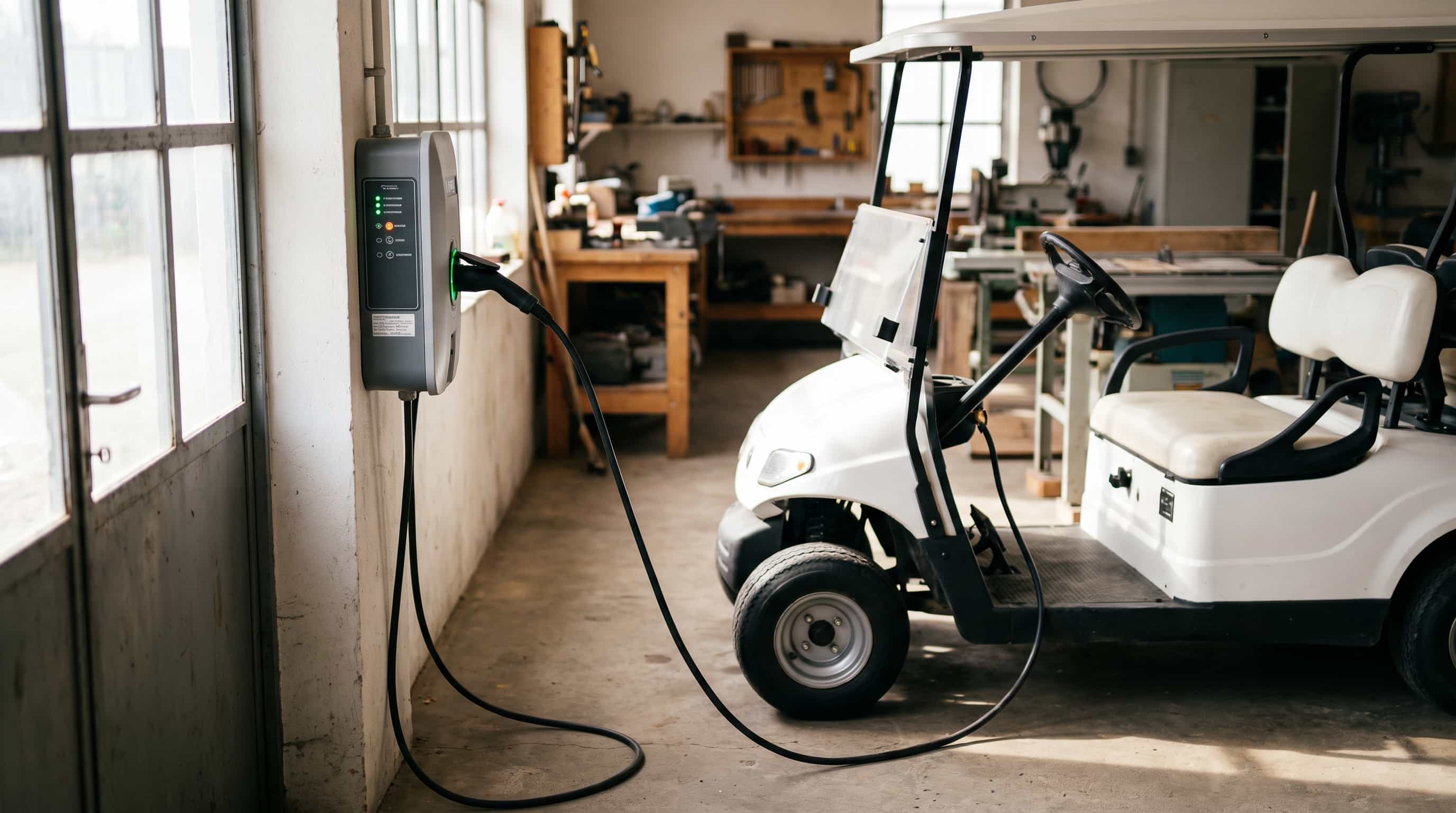
Lights and accessories run off a low-voltage supply separate from the drive, so when they fail but the buggy still drives, look at the accessory side: a blown fuse, the converter that feeds it, bulbs, and their connections. A single dead light is usually a bulb or connection; everything accessory dead at once usually means a fuse or the supply feeding them.
Key takeaways
- Lights and accessories run on a lower voltage than the drive, often through a converter.
- One dead light is usually a bulb, holder or connection; check those before anything bigger.
- Everything accessory dead at once points at a fuse or the supply feeding the whole accessory side.
- A converter that feeds the accessories can fail and take all the low-voltage items with it.
- Corrosion at bulb holders and connectors is a common and cheap cause on an outdoor machine.
Two systems, not one
It helps to know that a buggy usually has two electrical worlds. The drive system runs at the full battery voltage and moves the buggy. The lights, horn, indicators, and other accessories run at a lower voltage, often fed through a converter that steps the battery pack down to what the accessories need. Knowing this shapes the diagnosis: if the buggy drives fine but the lights are dead, the drive system is clearly working, so the fault is on the accessory side and you can ignore the motor, controller and solenoid entirely.
One thing dead, or everything
The pattern points you straight at the level to look at. If a single light or accessory is dead while the rest work, the fault is local to that item: a blown bulb, a corroded or loose bulb holder, or a broken connection at that fitting. That is the cheapest and most common case, and it is squarely owner territory. Check the bulb, check the holder for corrosion, check the connector, and you will fix most single-item failures.
If everything on the accessory side is dead at once, the fault is shared: a blown fuse that protects the accessory circuit, a failed converter feeding it, or a break in the main accessory supply. That is a different search, higher up the system.
Fuses and the converter
For an all-accessories-dead symptom, the fuse is the first suspect, because a fuse exists precisely to fail before the wiring does. Finding and checking the accessory fuse, covered in the fuses guide, is the natural next step, and a blown one is a cheap fix, though a fuse that blows again immediately is telling you there is a fault behind it to find rather than simply another fuse to fit.
If the fuse is sound and the whole accessory side is still dead, the converter that feeds the low-voltage system is a strong suspect. A failed converter takes all the accessories with it while leaving the drive untouched, which matches the symptom exactly. That is a part to diagnose properly rather than assume.
If yours is doing this and the checks here have not settled it, we diagnose and repair buggies, including a callout to wherever it is.
Corrosion, the quiet cause
On a machine that lives outdoors, corrosion is behind more electrical faults than any dramatic component. Damp gets into bulb holders, connectors and switch contacts, and a green or white deposit there raises resistance until the item works intermittently or not at all. Cleaning connections back to bright metal and protecting them cures a surprising share of accessory faults, and it is worth checking before condemning any part.
Common questions
- Only one of my lights has stopped
- A single dead light is almost always local: a blown bulb, a corroded or loose bulb holder, or a broken connection at that fitting. Check the bulb first, then the holder and connector for corrosion or looseness. This is a cheap, common fix and well within owner territory.
- All the lights and accessories are dead but it still drives
- That splits the fault cleanly onto the accessory side, since the drive is clearly fine. Look first at the fuse protecting the accessory circuit, then at the converter that feeds the low-voltage system, since a failed converter takes all the accessories out while leaving the drive working.
- The fuse blows again as soon as I replace it
- A fuse that blows immediately is doing its job: there is a fault behind it, often a short from chafed wiring or a corroded connector, drawing too much current. Do not fit a bigger fuse to stop it blowing, because that removes the protection. Find and fix the short, which may need an engineer to trace.
Still not right
We diagnose and repair golf buggies, service them on a plan, and send an engineer out to where the buggy is. Tell us the symptom and we will say what it usually means.
Related pages
Related guides
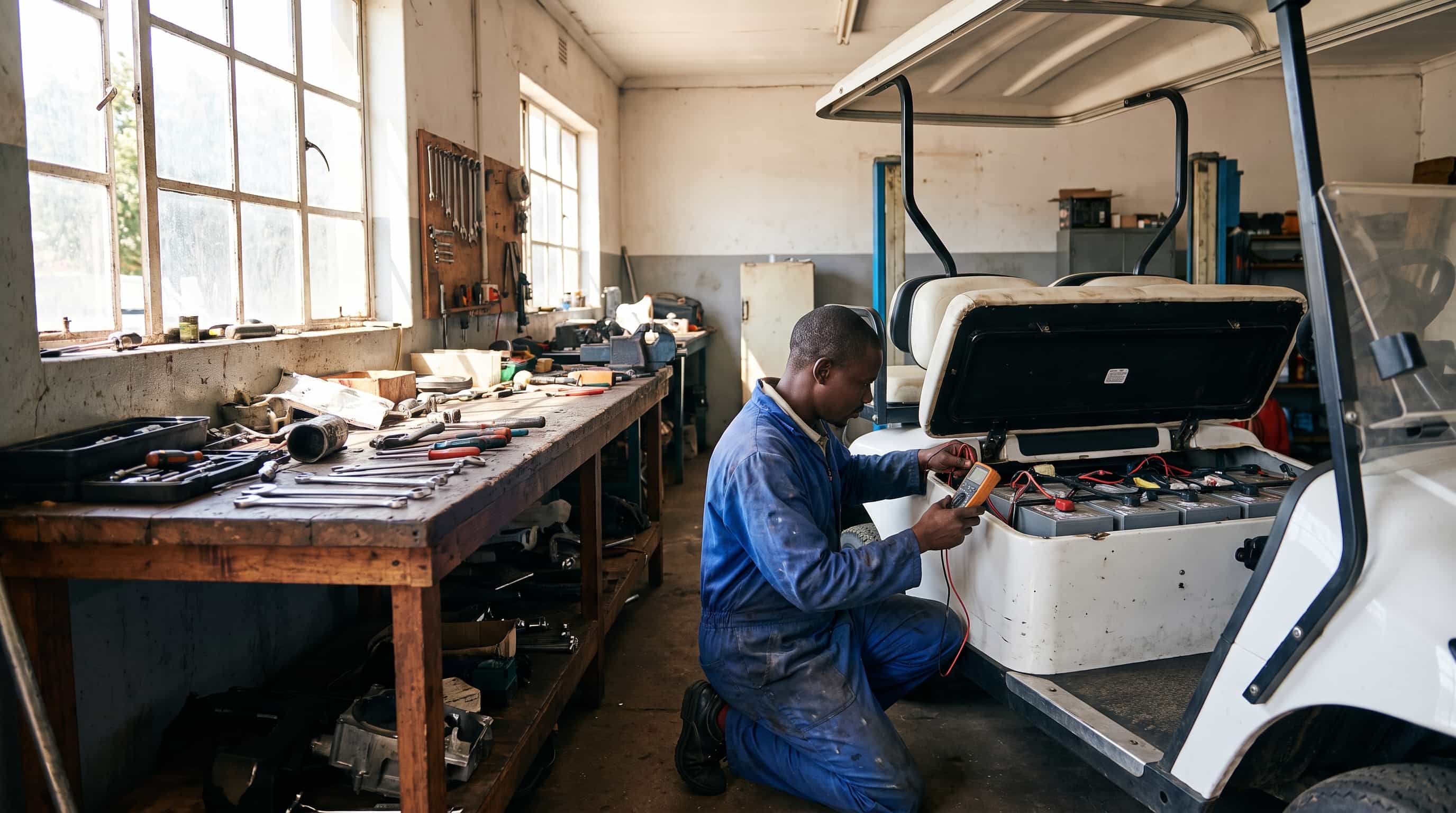 Golf buggy troubleshooting, a complete guide9 minute read
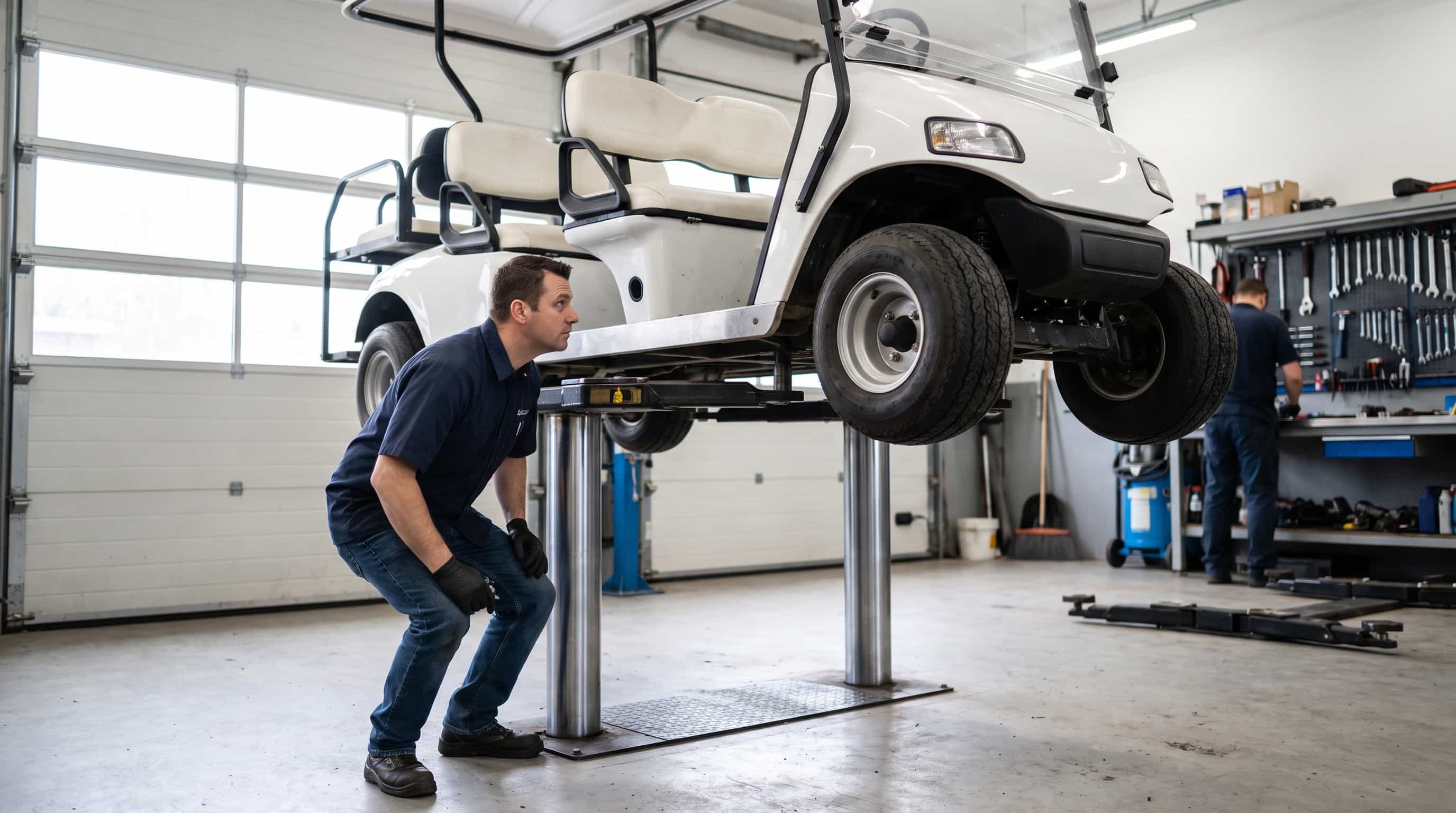 Golf buggy battery sulphation explained4 minute read
- Golf buggy seat repair and replacement4 minute read
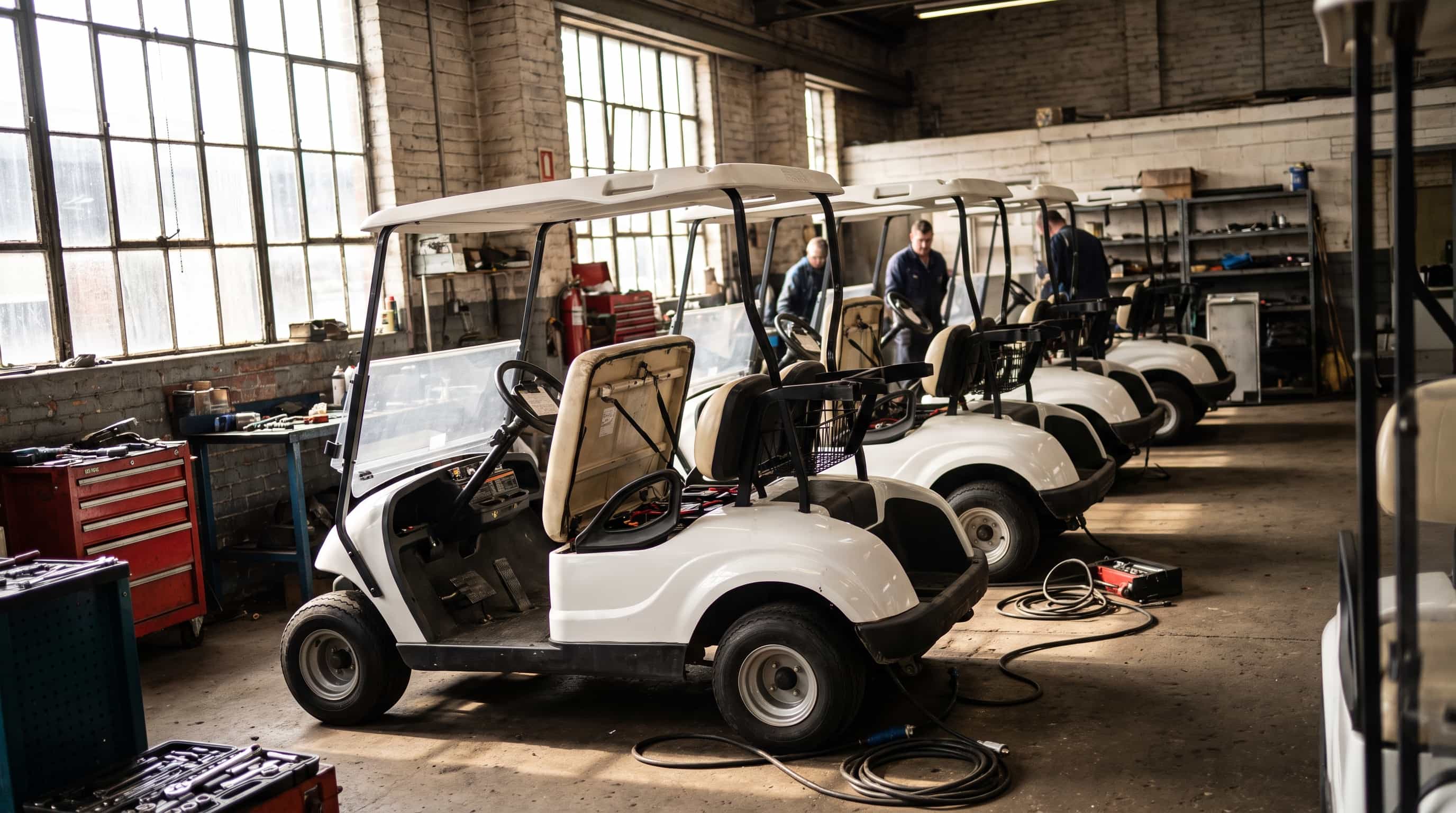 Fuses and where to find them5 minute read
 Golf buggy DC-to-DC converter faults4 minute read
- Horn, indicators and accessory faults5 minute read