Golf buggy DC-to-DC converter faults
By James Brown · Updated 21 July 2026 · 4 minute read
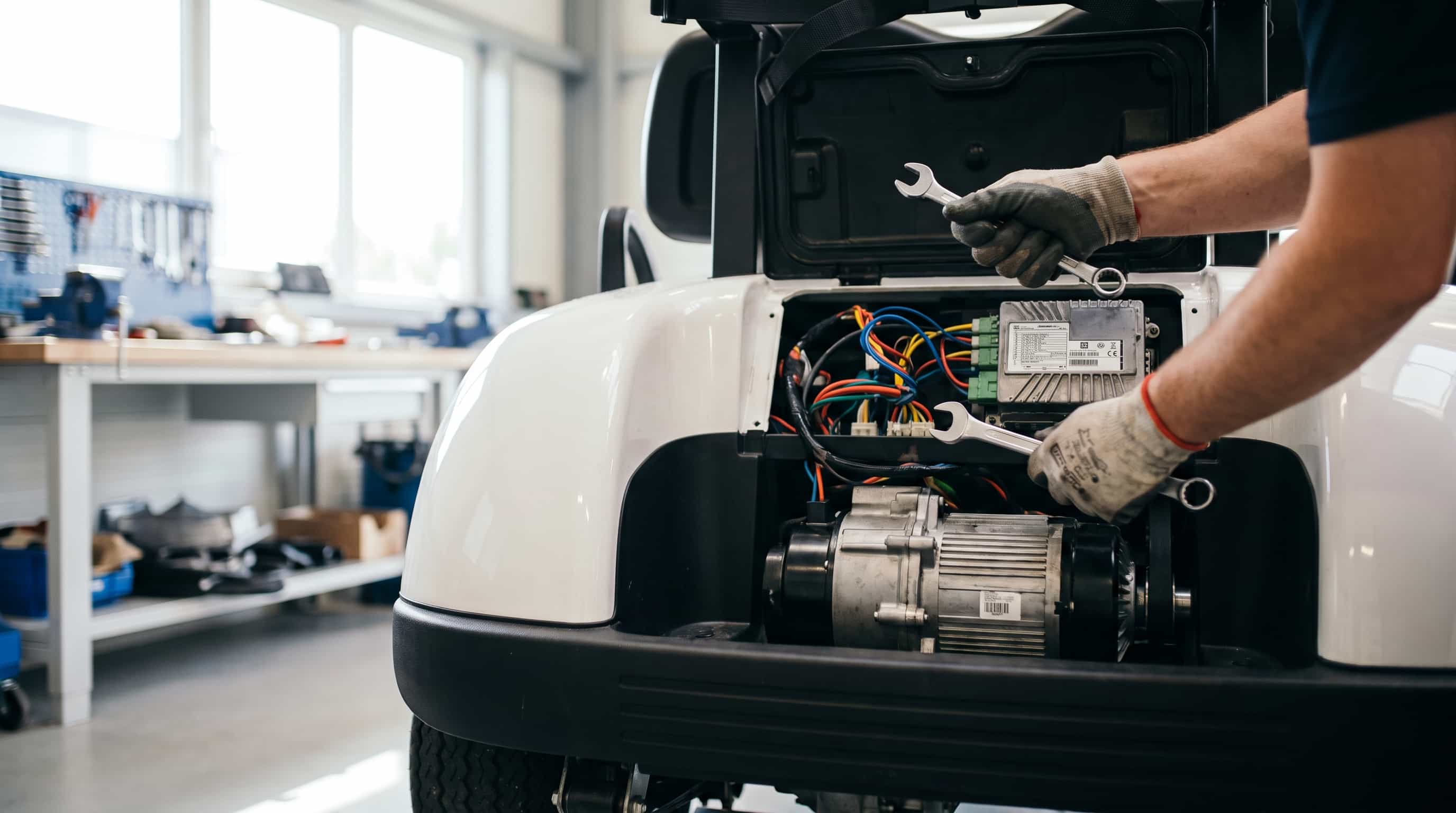
The converter steps the high pack voltage down to the lower voltage the accessories need, lights, horn, gauges and the rest. When it fails, all those accessories go dead at once while the buggy still drives, because the drive runs on the full pack voltage. That symptom, everything accessory dead but drive fine, points at the converter or the fuse feeding it.
Key takeaways
- The converter turns the high pack voltage into the low voltage the accessories use.
- Its failure kills all accessories at once while the buggy still drives.
- That whole-accessory-dead, drive-fine pattern is the converter's signature.
- Check the accessory fuse first, since it gives the same symptom and is cheaper.
- A confirmed converter fault is a replacement, diagnosed properly to avoid a wrong part.
What it does
A buggy's drive runs at the full battery pack voltage, but the accessories, lights, horn, indicators, gauges and similar, need a much lower voltage to work. The DC-to-DC converter is what bridges that gap, taking the high pack voltage and stepping it down to the level the accessory circuit uses. Without it, the accessories would have no supply they could use. So the converter sits quietly between the two electrical worlds described in the wiring guide, feeding the whole low-voltage side from the pack.
The signature failure
Because it feeds the entire accessory circuit, the converter has a very recognisable failure. When it stops working, everything on the accessory side goes dead at once, the lights, horn, gauges, the lot, while the buggy still drives perfectly, because the drive does not depend on the converter. That pattern, all accessories dead together but drive completely normal, is the converter's calling card, and it immediately narrows the fault to the low-voltage supply rather than any drive component. If only one accessory were dead, you would look at that item; when the whole lot dies together, you look at what feeds them all.
Telling it from a fuse
There is one cheaper thing that produces the same symptom, and it must be ruled out first: a blown fuse protecting the accessory circuit. A fuse that has failed cuts the supply to the whole accessory side just as a dead converter does, so before condemning the converter, check and, if blown, replace the accessory fuse as the fuses guide describes. If a sound fuse does not restore the accessories, and the supply to the converter is present but nothing comes out, the converter itself is the likely fault. Bear in mind a fuse that blows again immediately means a fault behind it to find, not simply another fuse or a converter.
If yours is doing this and the checks here have not settled it, we diagnose and repair buggies, including a callout to wherever it is.
Confirming and replacing
Confirming a converter fault properly means checking that it has its input from the pack but is not producing its output, which a meter can establish for someone comfortable with basic electrical work, mindful that one side is the high pack voltage and deserves care. A converter that has genuinely failed is a replacement rather than a repair. Because it is a specific part and an easy one to blame wrongly when the real fault is a fuse or a connection, it is worth confirming before buying, and if the checks are beyond you or do not add up, an engineer can diagnose it without the risk of fitting a part that was never the problem. The owner's useful step is recognising the whole-accessory-dead, drive-fine pattern and ruling out the fuse first.
Common questions
- All my accessories died at once but the buggy drives fine
- That pattern is the classic sign of a DC-to-DC converter fault, since it feeds the entire accessory circuit while the drive runs on the full pack voltage. First rule out a blown accessory fuse, which gives the same symptom and is cheaper, then suspect the converter if a sound fuse does not restore the accessories.
- How is it different from a blown fuse
- Both cut the whole accessory side, so they look identical from the driver's seat, which is why you check the fuse first. The difference is that a fuse is a cheap, quick swap, while the converter is a part that must be confirmed as failed, having its input but no output, before replacing. A fuse that keeps blowing means a fault behind it, not a converter.
- Can I replace the converter myself
- Confirming and replacing it is within reach for someone comfortable with basic electrical work who respects that one side carries the high pack voltage. Because it is easy to blame wrongly when a fuse or connection is the real fault, confirm the diagnosis first. If the checks are beyond you or do not add up, have an engineer diagnose it to avoid fitting a part that was never at fault.
Still not right
We diagnose and repair golf buggies, service them on a plan, and send an engineer out to where the buggy is. Tell us the symptom and we will say what it usually means.
Related pages
Related guides
 Golf buggy troubleshooting, a complete guide9 minute read
- Golf buggy battery recycling and disposal4 minute read
 Battery watering and maintenance (lead-acid)6 minute read
- Lights and electrics not working5 minute read
 Fuses and where to find them5 minute read
 Understanding golf buggy wiring basics6 minute read