Battery watering and maintenance (lead-acid)
By James Brown · Updated 21 July 2026 · 6 minute read
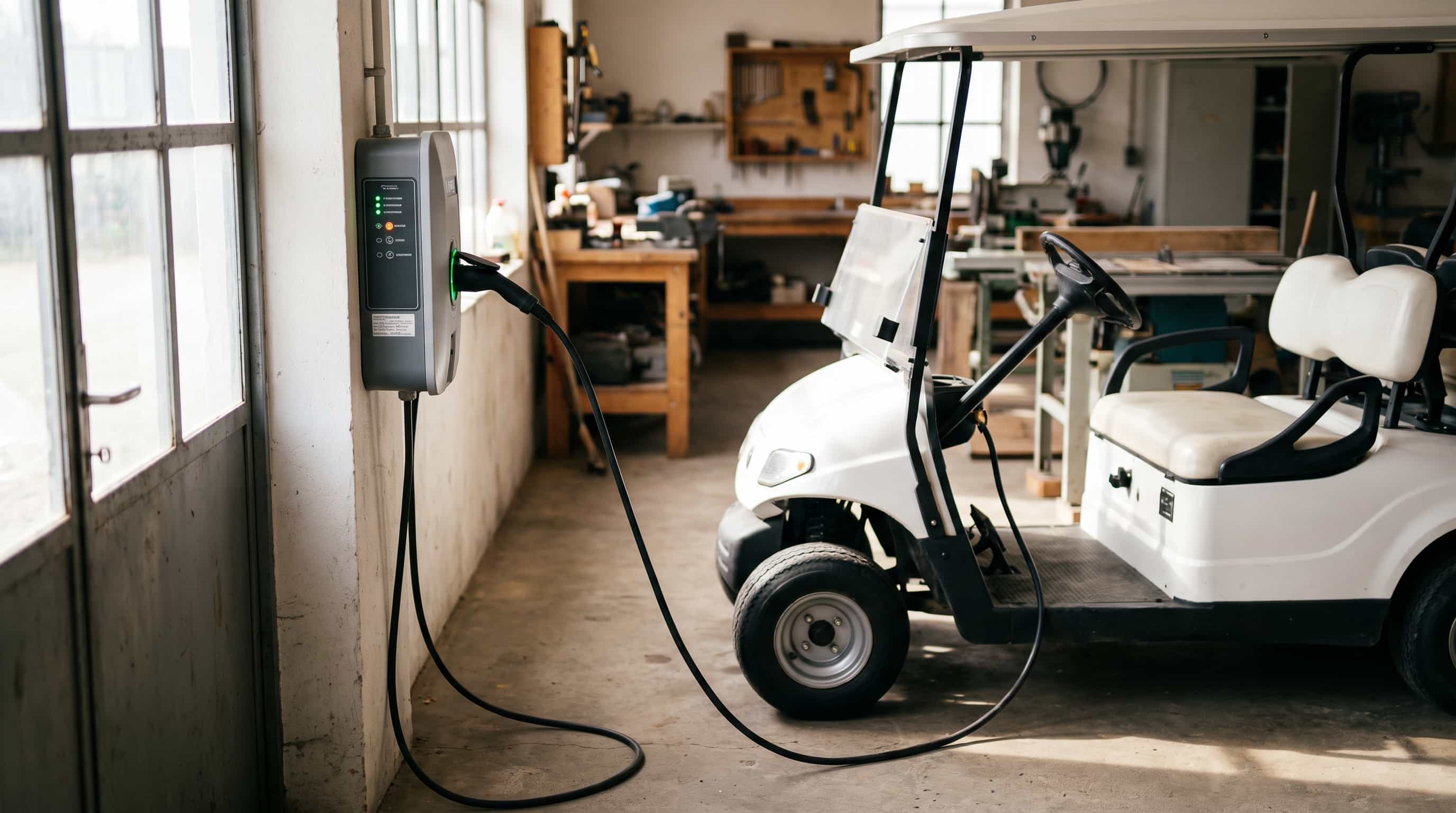
Flooded lead-acid golf buggy batteries need their water checked and topped up regularly with distilled water, or the plates are ruined. Top up after charging, not before, fill to just above the plates or to the maker's mark, never overfill, and keep the terminals clean and tight. Wear eye protection, because the electrolyte is acid. Lithium batteries do not need watering.
Key takeaways
- Flooded lead-acid batteries lose water in use and must be topped up, or they are damaged permanently.
- Use distilled or deionised water only, never tap water, which contaminates the cells.
- Top up after charging, since the level rises on charge and you can overfill if you do it before.
- Fill to just above the plates or the maker's indicator, never to the brim.
- The electrolyte is sulphuric acid, so eye protection and care are not optional. Lithium needs none of this.
Why watering matters at all
Flooded lead-acid batteries work by chemistry between plates and an electrolyte that is mostly water and sulphuric acid. Charging and use gradually drive off some of the water, so the level falls over time. If the level drops far enough to expose the tops of the plates, those exposed plates are damaged, and that damage does not come back. So watering is not a nicety, it is the single maintenance task that keeps a flooded set alive, and a neglected, unwatered set is one of the most common reasons a battery fails early.
If your buggy has flooded lead-acid batteries and nobody has checked the water in a long time, that alone can explain a failing set.
Doing it properly
A few rules make watering safe and effective. Use distilled or deionised water only. Tap water carries minerals that contaminate the cells and shorten their life, so the small cost of distilled water is worth it. Top up after charging rather than before, because the electrolyte level rises during a charge, so a cell filled to the mark beforehand can overflow afterwards. Fill to just above the plates or to the maker's indicator, and no more, since overfilling causes acid to spill during charging and makes a corrosive mess of the battery top and terminals.
Check the level regularly rather than only when a problem appears. How often depends on use and climate, so rather than invent a schedule, inspect until you learn how fast your set uses water, then settle into a rhythm that keeps it topped.
Terminals and cleanliness
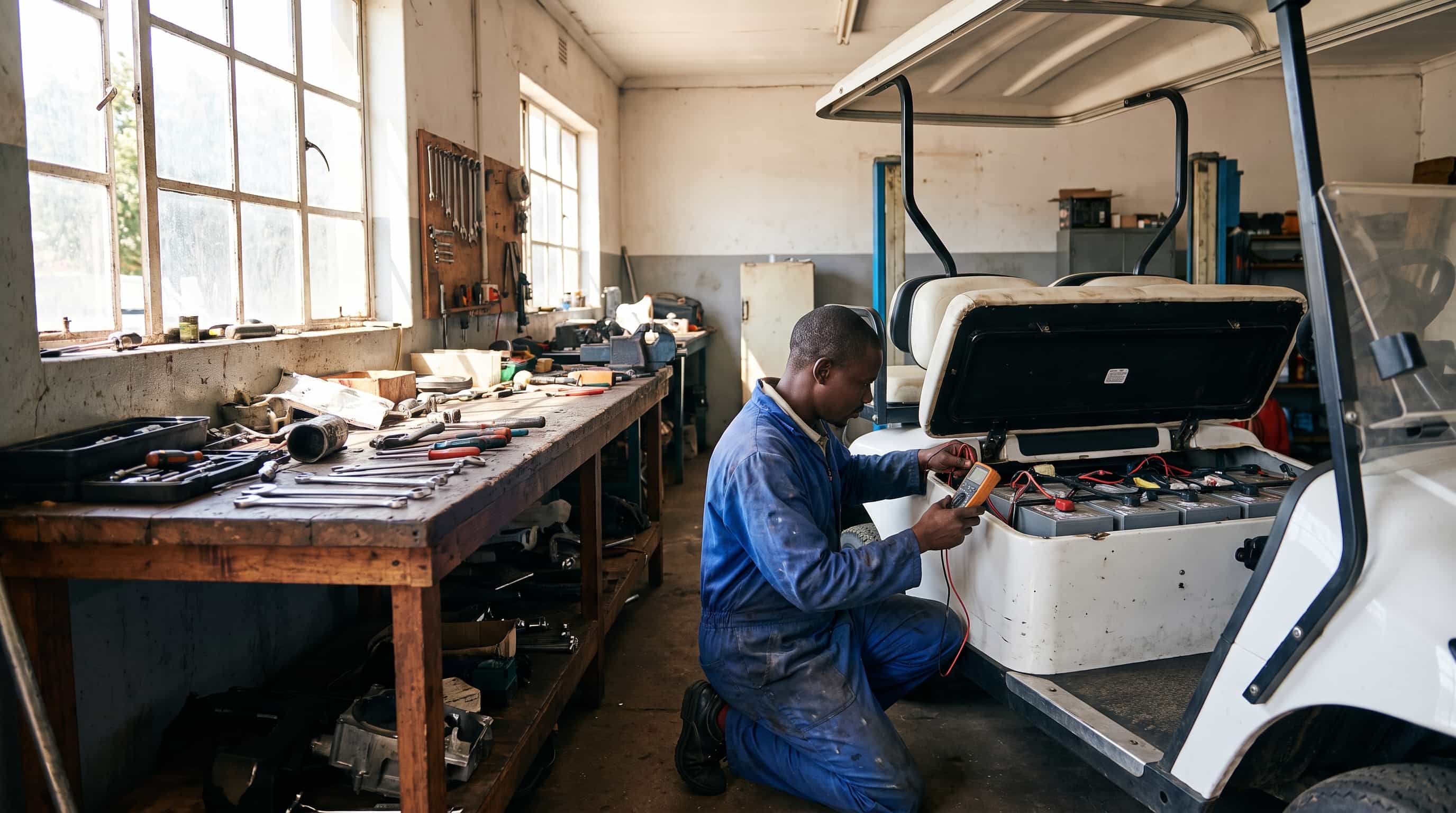
Watering is half of lead-acid care; clean connections are the other half. Corrosion builds on the terminals, especially if acid has crept out from overfilling, and it raises resistance until the buggy underperforms or faults intermittently. Keep the terminals clean and tight, protect them once clean, and wipe up any spilled electrolyte, since a battery top left wet with acid corrodes everything it touches and can even create a slow discharge path across itself.
If yours is doing this and the checks here have not settled it, we diagnose and repair buggies, including a callout to wherever it is.
The safety part
This is the one maintenance job with a real hazard, so it earns respect rather than fear. The electrolyte is sulphuric acid, which burns skin and eyes, and a charging battery gives off hydrogen, which is flammable. So wear eye protection and ideally gloves, keep sparks and flames away, work in a ventilated space, and if acid contacts skin or eyes, flush with plenty of water and get medical help for eyes. None of this makes watering difficult, it makes it safe, and it is well within owner ability. What is not an owner job is a battery that is swollen, cracked, leaking or overheating, which is a stop-and-get-help situation covered in the battery safety guide.
Common questions
- What water do I use to top up the batteries
- Distilled or deionised water only. Tap water contains minerals that contaminate the cells and shorten the set's life, so it is a false economy. Keep a container of distilled water with your charging kit so topping up is easy and you are never tempted to use tap water in a hurry.
- Do I fill before or after charging
- After charging. The electrolyte level rises during a charge, so if you fill to the mark beforehand the cell can overflow once charged, spilling acid over the battery top. Charge first, then top up to just above the plates or the maker's indicator, and never to the brim.
- Do lithium batteries need watering too
- No. Watering is only for flooded lead-acid batteries. Lithium sets are sealed and maintenance-free in this respect, needing no topping up. If you are unsure which you have, the maker's plate or manual will say, and it changes the maintenance the set needs entirely.
Still not right
We diagnose and repair golf buggies, service them on a plan, and send an engineer out to where the buggy is. Tell us the symptom and we will say what it usually means.
Related pages
Related guides
 Golf buggy troubleshooting, a complete guide9 minute read
- Controller faults and error behaviour6 minute read
 Golf buggy will not turn off4 minute read
 Golf buggy battery problems explained7 minute read
- Lithium versus lead-acid batteries in buggies6 minute read
 Golf buggy battery terminals and connections4 minute read