Golf buggy will not turn off
By James Brown · Updated 21 July 2026 · 4 minute read
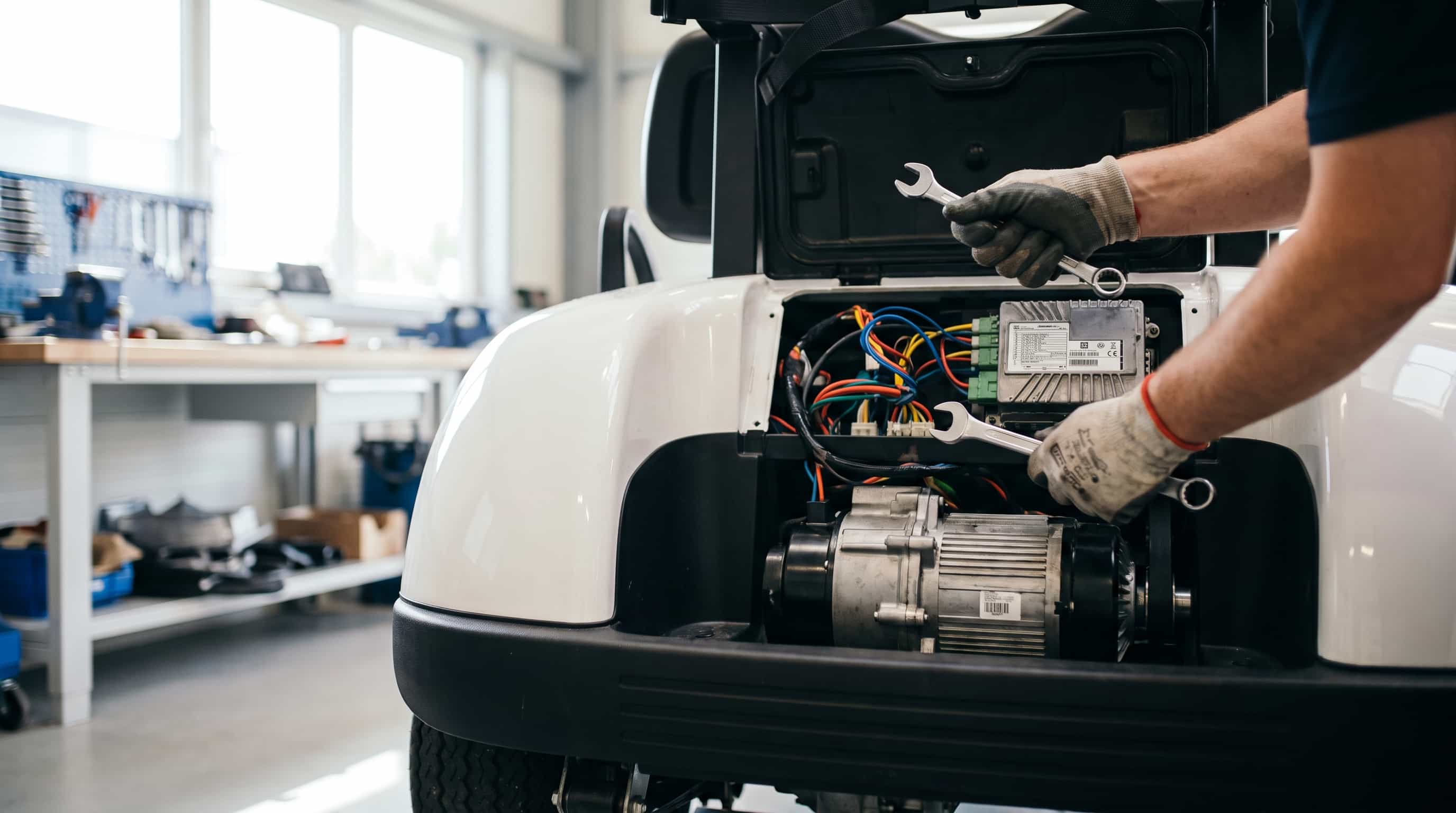
A buggy that will not switch off, or that stays powered or wants to drive with the key off, is a safety concern. The usual causes are a stuck key switch or a solenoid whose contacts have welded closed so they will not release. Isolate the buggy safely if you can, keep clear, and treat it as an engineer job, since a buggy that will not shut down is not one to keep using.
Key takeaways
- A buggy that will not turn off, or stays live with the key off, is a safety concern.
- A stuck key switch can leave the control system powered when it should be off.
- A solenoid with welded contacts can stay closed, keeping the drive connected.
- Isolate the buggy safely if it has a main disconnect, and keep people clear.
- This is an engineer job; a buggy that will not shut down should not stay in use.
Why it is a concern
We expect a buggy to stop being live when we turn it off, and when it does not, that expectation is exactly what makes it dangerous. A buggy that stays powered, or worse still wants to move, with the key off is unpredictable: someone could lean in, press the pedal, or assume it is safe because the key is out, and be caught by a buggy that is still connected. So a buggy that will not turn off is not a curiosity to investigate at leisure; it is a fault to make safe promptly and to keep people away from until it is sorted.
The usual causes
Two faults account for most cases, and they map onto components covered elsewhere. A stuck or faulty key switch can fail to break the control circuit when turned off, leaving the system powered as though the key were still on, the mirror image of the no-start key switch fault. And the solenoid, the main contactor, can fail with its contacts welded closed: if it has stuck shut, it keeps the battery connected to the controller even when the buggy should have disconnected, so the drive stays live. A solenoid whose contacts weld is a recognised failure, and it is a particularly important one here because it keeps the high-current path connected when it should be open.
Making it safe
The priority is isolation, not diagnosis. If your buggy has a main battery disconnect or isolator, using it disconnects the pack and makes the buggy safe, which is the right first move. If you know how to safely disconnect the battery and are competent to do so with the battery precautions in mind, that achieves the same, but it is high-current work and not to be rushed. Either way, once isolated, keep the buggy out of use and keep people clear of it, treating it as live until proven otherwise. Do not simply leave a buggy that will not turn off sitting powered where someone might interact with it.
If yours is doing this and the checks here have not settled it, we diagnose and repair buggies, including a callout to wherever it is.
The repair
Diagnosing whether it is the key switch, the solenoid, or the wiring between them, and repairing it, is engineer work. A welded solenoid needs replacing, and doing that safely involves the main battery cables; a faulty key switch or its wiring needs testing and putting right. Because the fault leaves the buggy in an unsafe, unpredictable state and involves the high-current drive path, the Repair Centre treats a buggy that will not turn off as one for an engineer rather than a yard fix. The owner's job is to recognise it, isolate the buggy safely, and keep it and everyone else out of harm until it is repaired.
Common questions
- My buggy stays on when I turn the key off
- That is a safety concern, usually a stuck key switch failing to break the control circuit, or a solenoid whose contacts have welded closed, keeping the drive connected. Isolate the buggy using its main disconnect if it has one, keep people clear, and have it diagnosed by an engineer, since a buggy that will not shut down should not stay in use.
- What is a welded solenoid
- The solenoid is the main contactor that connects the battery to the controller, and its contacts can fail by welding shut under the current they carry. When that happens it stays closed, keeping the pack connected even when the buggy should have disconnected, so the buggy stays live or wants to drive. It is a recognised failure and needs replacing by an engineer.
- How do I make it safe
- If the buggy has a main battery disconnect or isolator, use it to disconnect the pack, which makes the buggy safe. Otherwise, only disconnect the battery yourself if you are competent to do so safely with the battery precautions, since it is high-current work. Once isolated, keep the buggy out of use and everyone clear until an engineer repairs it.
Still not right
We diagnose and repair golf buggies, service them on a plan, and send an engineer out to where the buggy is. Tell us the symptom and we will say what it usually means.