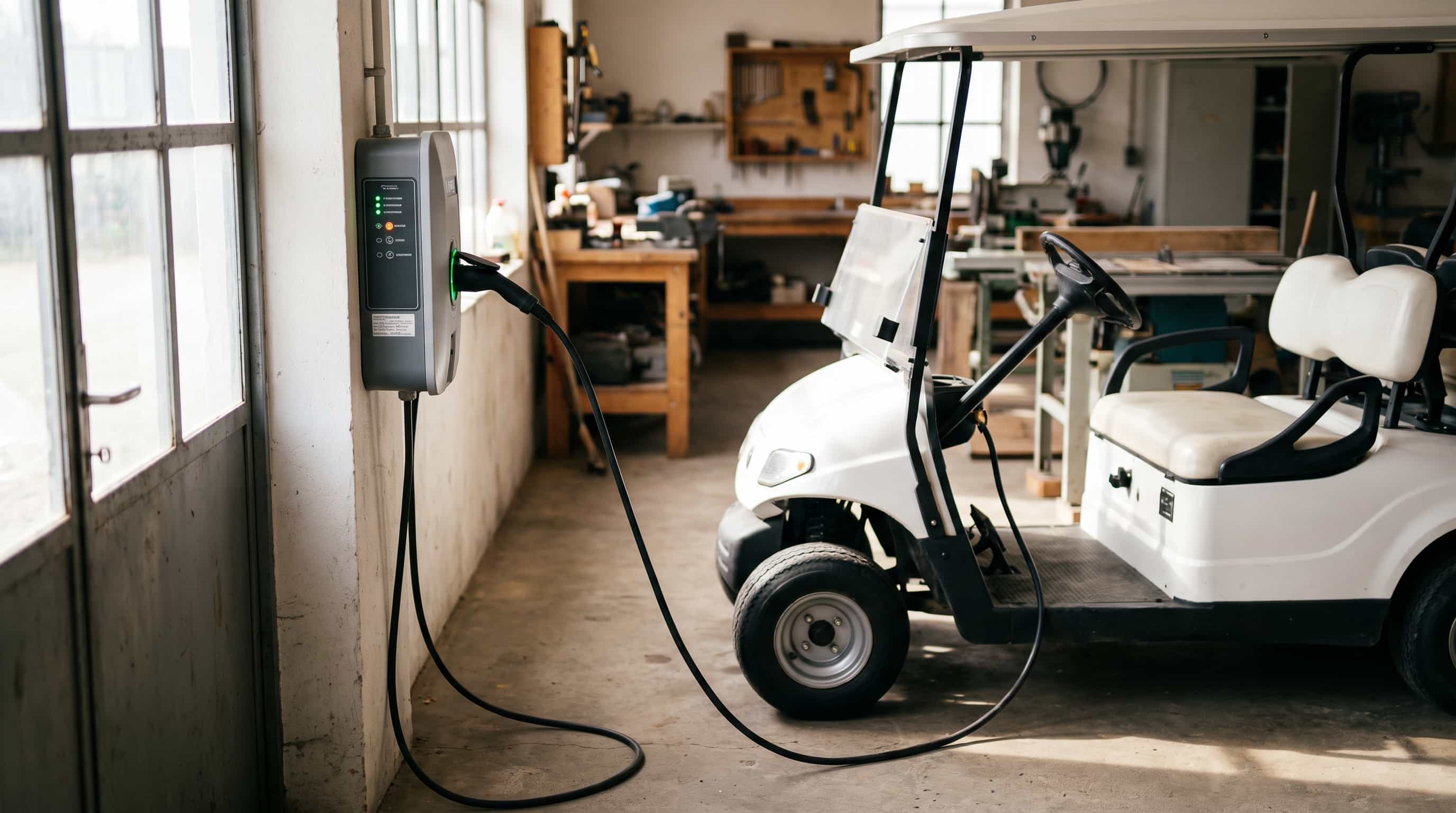
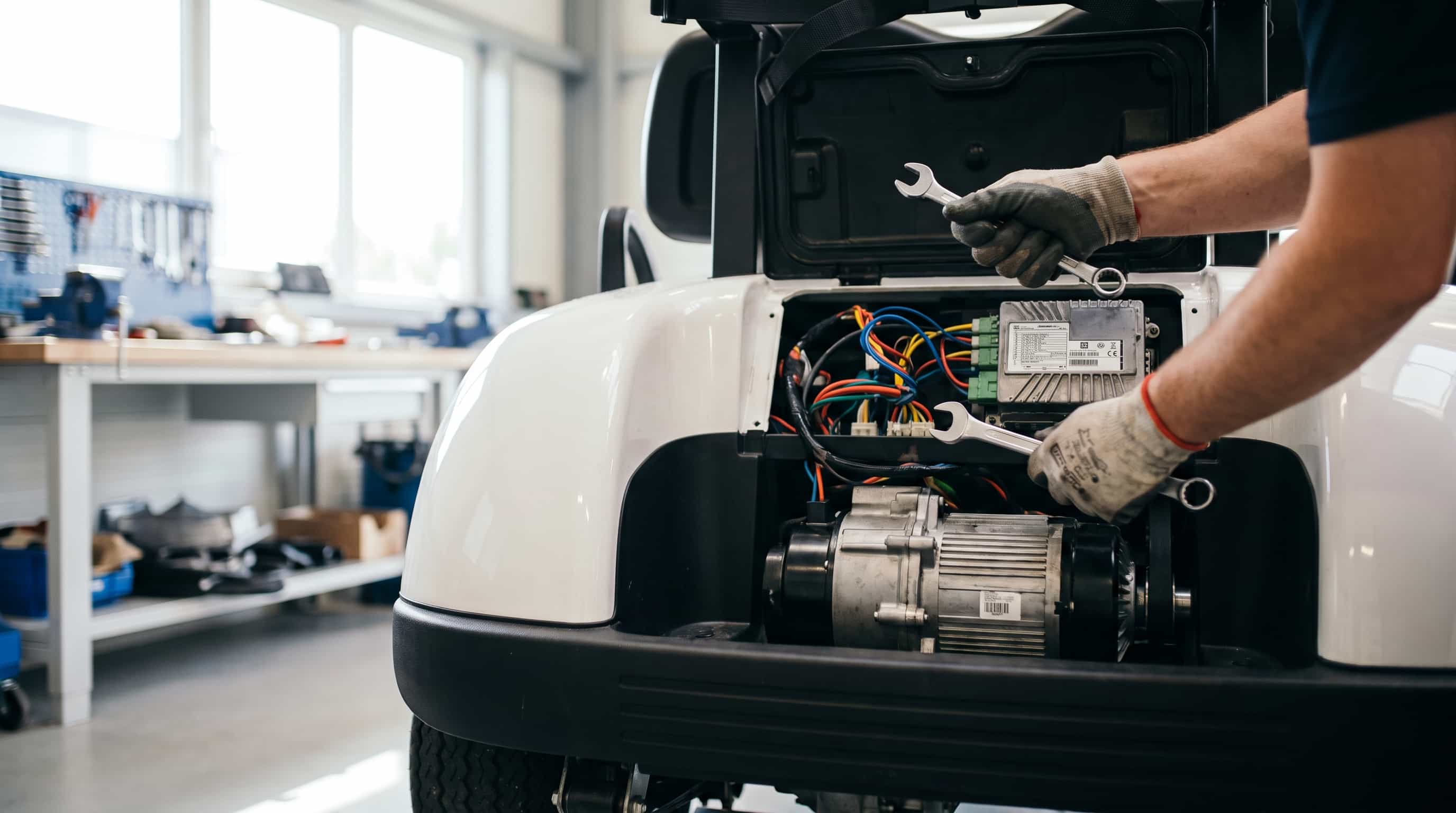
Understanding golf buggy wiring basics
By James Brown · Updated 21 July 2026 · 6 minute read
A golf buggy has two electrical circuits worth understanding: the high-current drive circuit, battery pack, solenoid, controller and motor, and the low-voltage accessory circuit for lights, horn and gauges, usually fed through a converter. Between the two sit the safety switches. Knowing which circuit a symptom belongs to is most of diagnosis, and where the corrosion hides is most of the rest.
Key takeaways
- The drive circuit carries high current: battery pack, solenoid, controller, motor.
- The accessory circuit is low voltage and runs the lights, horn and gauges, often via a converter.
- Safety switches, seat and pedal, sit in the control path and cut drive when not satisfied.
- Deciding which circuit a symptom belongs to narrows a fault quickly.
- Most wiring faults are corrosion and loose connections, not dramatic component failures.
Two circuits, one buggy
The single most useful thing an owner can understand about buggy wiring is that there are effectively two systems, not one. The drive circuit is the high-current side: the battery pack, the heavy cables, the solenoid, the controller and the motor, all carrying the serious current that moves the buggy. The accessory circuit is the low-voltage side: the lights, horn, indicators and gauges, typically fed from a converter that steps the pack voltage down to what those items need.
This matters because it splits every symptom in two. If the buggy will not move but the lights work, the drive circuit is at fault and the accessory circuit is fine. If the buggy drives but the lights are dead, it is the other way round. Before touching anything, deciding which circuit the symptom lives in cuts the search roughly in half.
The safety switches in between
Sitting in the control path are the safety switches, which is why a healthy drive circuit can still refuse to move the buggy. The seat switch checks someone is aboard; the pedal micro-switch signals that you are asking for drive; the key switch and direction selector complete the picture. These are low-current signal switches that tell the controller and solenoid when it is right to deliver power, and any one of them, if faulty or intermittent, stops or interrupts drive even though the batteries, controller and motor are perfect. A great many no-drive and cutting-out faults live here rather than in the expensive parts.
Where faults actually hide
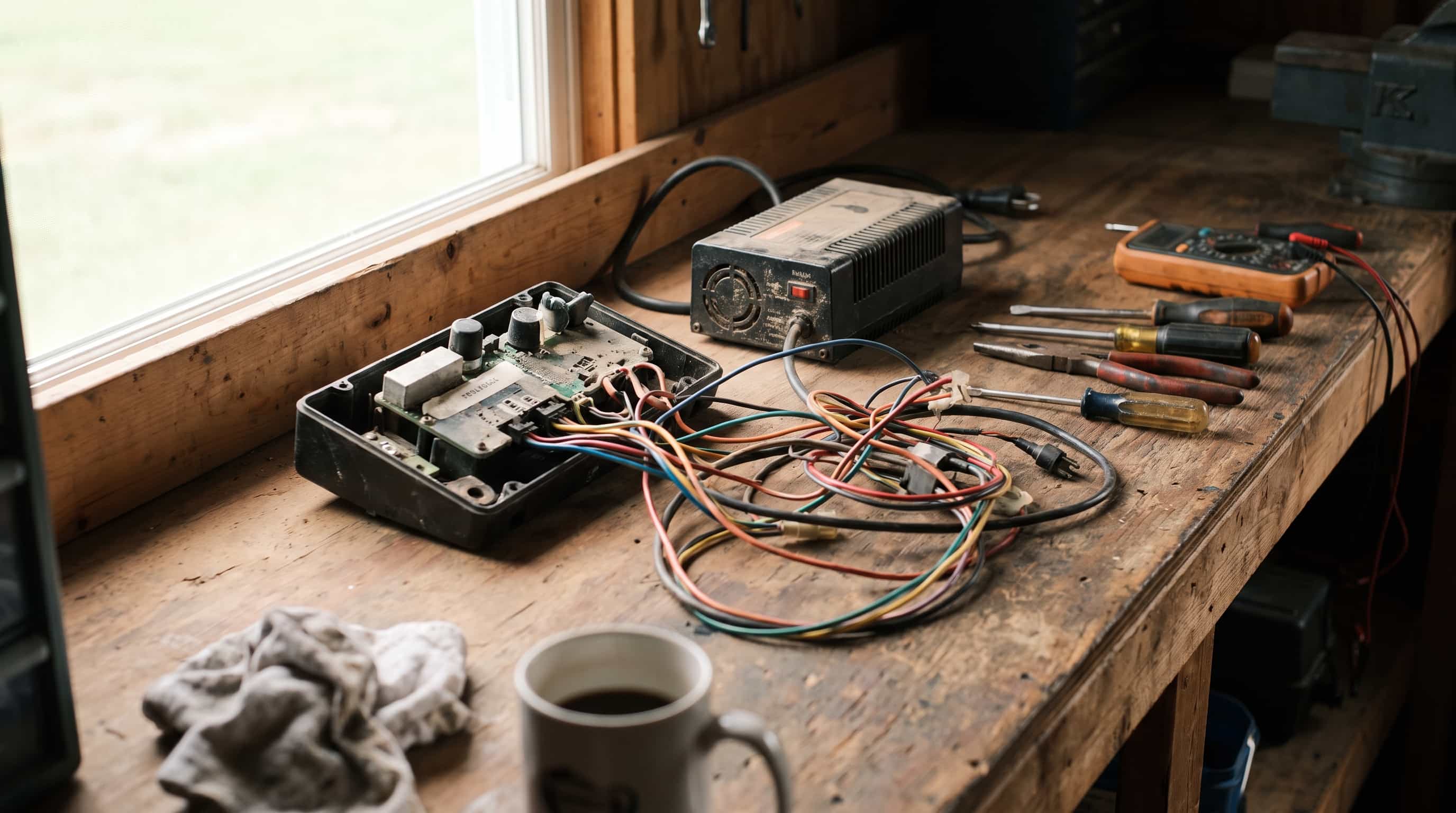
For all the components involved, most wiring faults are dull: corrosion and loose connections. A buggy lives outdoors, and damp works into connectors, bulb holders, switch contacts and cable lugs, leaving a green or white deposit that raises resistance until something works intermittently or not at all. A terminal that has loosened over a season of vibration does the same. These are the faults that come and go, that a bump provokes, that clear when you wiggle a connector, and they are behind far more breakdowns than any failed controller or motor. Cleaning connections to bright metal, tightening them, and protecting them cures a large share of electrical complaints.
If yours is doing this and the checks here have not settled it, we diagnose and repair buggies, including a callout to wherever it is.
Knowing your limit
Understanding the layout is worthwhile for every owner, because it makes you a better describer of faults and lets you fix the simple connection and accessory problems safely. But the drive circuit carries serious current, and a colour-coded diagram for your exact model is needed for real wiring work, so tracing a hidden short, repairing the harness, or working on the high-current side is engineer territory. Understand the map, fix the easy corrosion and connections, and hand over the rest rather than probing a live high-current circuit on guesswork.
Common questions
- Why does my buggy drive but the lights not work
- Because those are two separate circuits. The drive circuit clearly works if the buggy moves, so a dead-lights fault is on the low-voltage accessory circuit: a fuse, the converter that feeds it, a bulb or a connection. Splitting the symptom onto the right circuit is the fastest way to narrow it down.
- What are the safety switches for
- The seat switch, pedal micro-switch, key switch and direction selector tell the controller and solenoid when it is right to deliver power. They protect against the buggy driving when nobody is aboard or no drive is requested. Because they sit in the control path, a faulty one can stop or interrupt drive even when the batteries, controller and motor are perfectly healthy.
- Can I do my own wiring repairs
- Cleaning corroded connections, tightening loose terminals and fixing simple accessory and bulb faults are reasonable owner jobs and cure most electrical complaints. Real wiring work, tracing a hidden short, repairing the harness, or anything on the high-current drive side, needs the correct diagram for your model and belongs with an engineer, since that circuit carries serious current.
Still not right
We diagnose and repair golf buggies, service them on a plan, and send an engineer out to where the buggy is. Tell us the symptom and we will say what it usually means.