Wiring harness and connector corrosion
By James Brown · Updated 21 July 2026 · 5 minute read
Corrosion in the wiring and connectors is behind a great many buggy faults, because a buggy lives outdoors and damp gets into every connection. It raises resistance until something works intermittently or not at all, and it causes the come-and-go faults that a wiggle can provoke. Cleaning connections to bright metal and protecting them cures a large share; a badly corroded harness needs an engineer.
Key takeaways
- Corrosion is the quiet cause behind many buggy electrical faults, not dramatic parts.
- Damp works into connectors, terminals and switch contacts on an outdoor machine.
- It raises resistance, causing intermittent or dead symptoms and come-and-go faults.
- Cleaning connections to bright metal and protecting them cures a large share.
- A badly corroded or damaged harness is a tracing and repair job for an engineer.
Why corrosion causes so much
When owners imagine electrical faults, they think of failed controllers and dead motors, but the humble truth is that corrosion causes far more trouble than any expensive component. A buggy spends its life outdoors, through rain, dew, washing and damp storage, and moisture works into every connector, terminal and switch contact it can reach. There it does its slow damage, forming the green or white deposit that raises the resistance of a connection until the current can no longer pass cleanly. The component either side is fine; the join between them has quietly gone bad.
The come-and-go fault
Corrosion has a signature that is worth recognising, because it explains some of the most frustrating faults. A corroded connection often works, then does not, then works again, because it is only just making contact, and heat, movement, a bump or damp tips it either way. That is why so many intermittent faults, power that cuts out over a bump, an accessory that flickers, a fault that clears when you wiggle a connector, trace back to corrosion. If a fault comes and goes rather than staying put, corrosion or a loose connection is the first thing to suspect, ahead of any component.
Finding and cleaning it
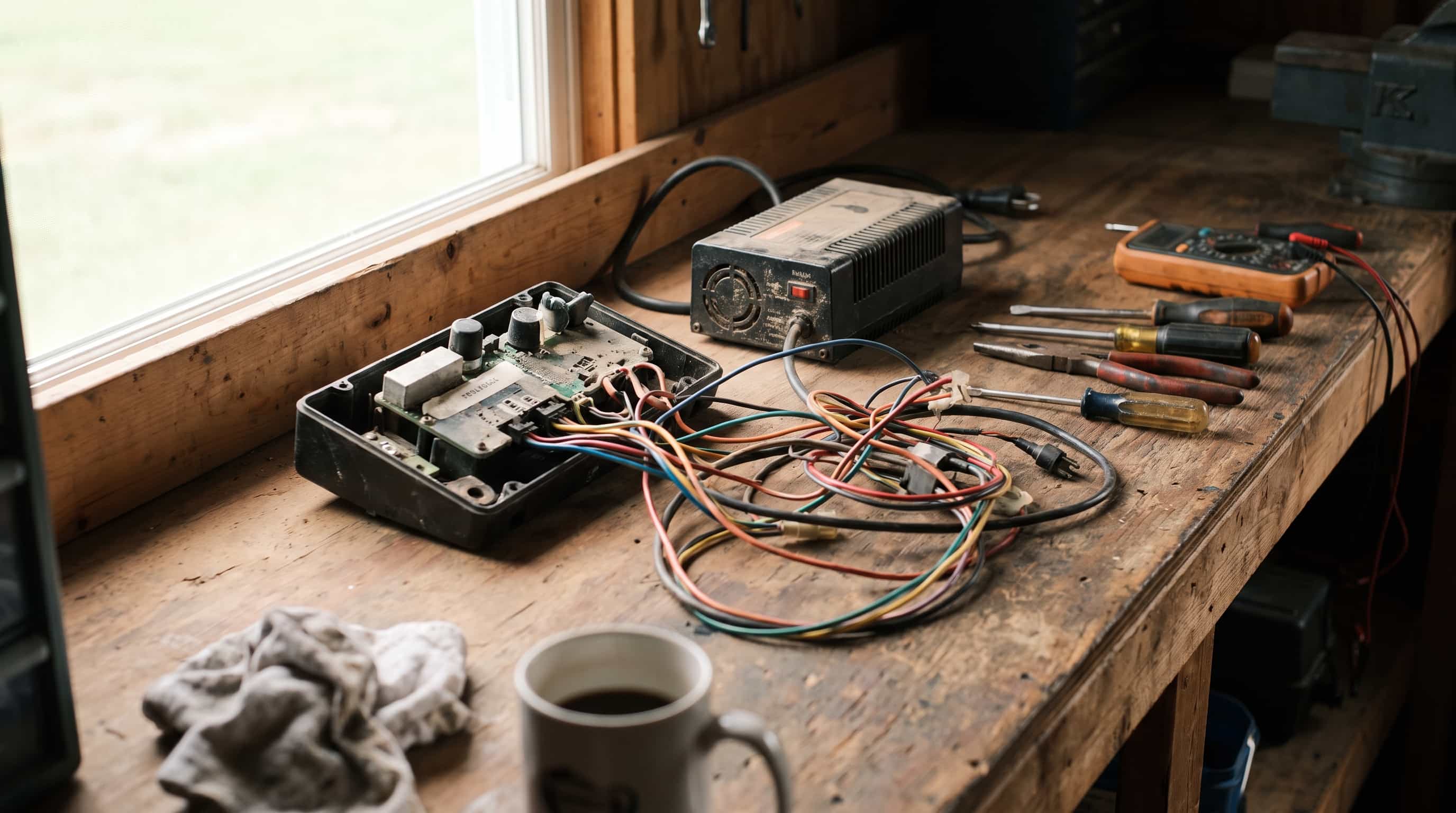
Much of this is within owner reach and genuinely rewarding, because the fix is cheap. With the buggy safely off, work through the connectors and terminals for the affected circuit, looking for the tell-tale deposit, discolouration, or a connection that looks tired. Cleaning the contact back to bright metal, reseating the connector firmly, and protecting it against further damp restores the good contact and often cures the fault outright. The battery terminals, covered in their own guide, are a prime spot, as are exposed connectors low on the buggy and anywhere water collects. This is exactly the sort of check that turns an intermittent mystery into a solved problem for the price of a little time.
If yours is doing this and the checks here have not settled it, we diagnose and repair buggies, including a callout to wherever it is.
When it is beyond a clean
There is a limit to what cleaning fixes. Corrosion that has crept inside a cable under the insulation, a connector too damaged to make good contact again, or corrosion spread through a section of the harness, is a repair rather than a clean, and tracing it through the loom needs the wiring diagram for your model and the patience to follow it. That is engineer territory, especially where the high-current drive side is involved. So the sensible split is: clean and protect the accessible corroded connections yourself, which resolves a great many faults, and hand over a harness that is corroded internally or in the drive circuit to someone equipped to trace and repair it properly.
Common questions
- Why does my fault come and go
- Come-and-go faults are usually a corroded or loose connection that is only just making contact, so heat, movement, a bump or damp tips it in and out. A component fault tends to stay put. If wiggling a connector, going over a bump, or damp changes the symptom, suspect corrosion first and clean the connections before looking at any part.
- Can I clean corroded connections myself
- Yes, and it is worth doing. With the buggy safely off, clean the affected contacts back to bright metal, reseat the connectors firmly, and protect them against damp. That cures a large share of electrical faults cheaply. The battery terminals and exposed low connectors are prime spots. Leave the high-current drive side and internal harness corrosion to an engineer.
- What if cleaning does not fix it
- Then the corrosion may have crept inside a cable, damaged a connector beyond a good contact, or spread through the harness, which is a repair rather than a clean. Tracing it needs the wiring diagram for your model, and if the drive circuit is involved it needs care, so that is the point to have an engineer trace and repair the affected wiring.
Still not right
We diagnose and repair golf buggies, service them on a plan, and send an engineer out to where the buggy is. Tell us the symptom and we will say what it usually means.