Water damage and wet weather faults
By James Brown · Updated 21 July 2026 · 6 minute read
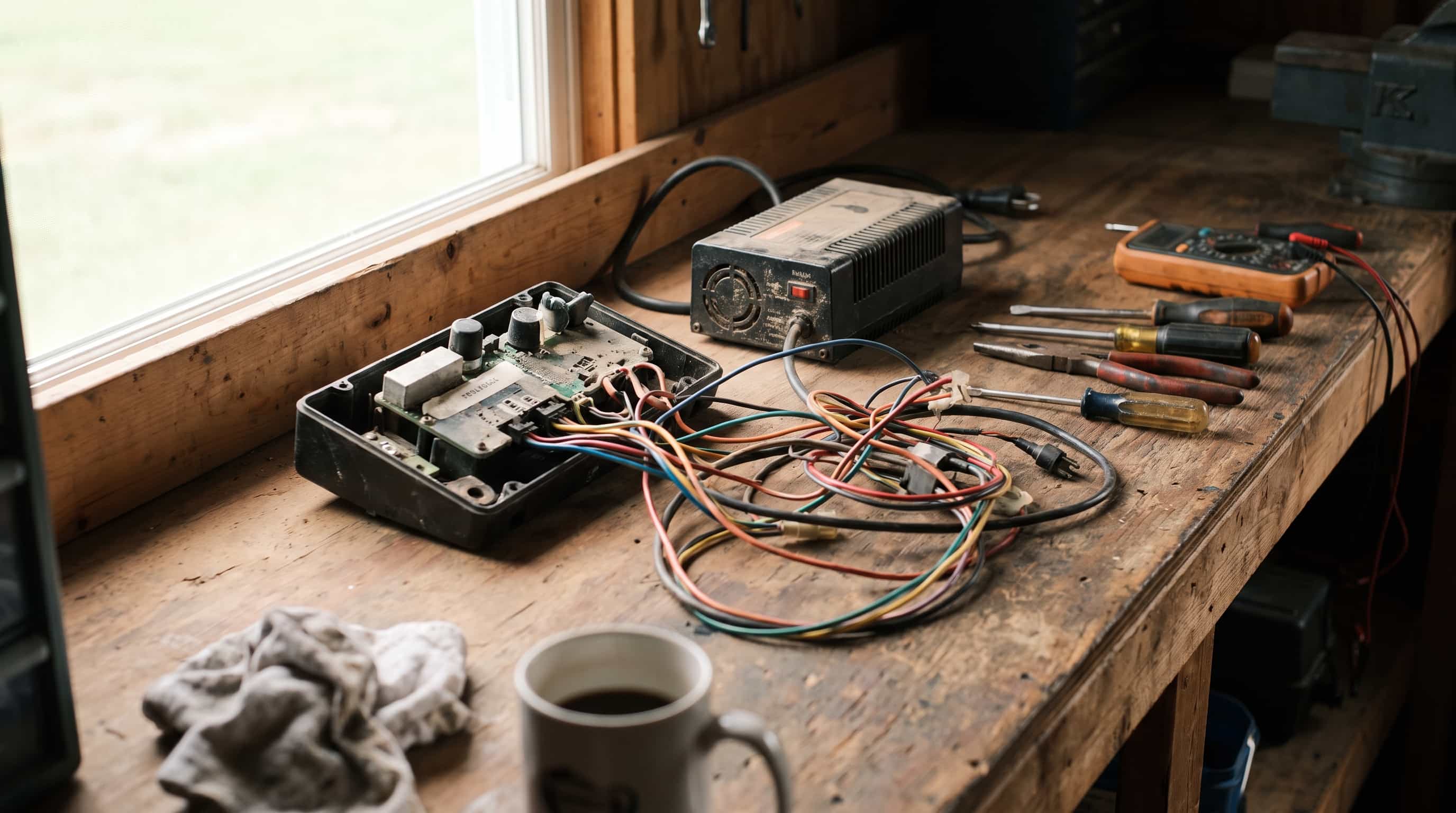
Water causes golf buggy faults mainly through connectors and the controller, not the sealed drive parts. Symptoms often appear after heavy rain, a jet wash, or driving through standing water: intermittent power, odd controller behaviour, or a buggy that will not start. Some clear once dry, others need cleaning and drying, and a soaked controller can be a real failure.
Key takeaways
- Buggies are built for outdoor use but are not waterproof, especially at connectors and electronics.
- Wet-weather faults are usually electrical: connectors, the controller, and switches, not the motor.
- A jet wash aimed at electronics causes more water damage than most rain ever does.
- Some water faults dry out and clear; others leave corrosion that must be cleaned to fix.
- Water and electricity together mean this is a fault to respect, not to prod while wet.
Where water actually gets in
A golf buggy is designed to work outdoors, so people assume it shrugs off water, and mostly it does. The motor and transaxle are built to cope. The vulnerable parts are the electrical connectors, the controller, and the switches, and water finds them through spray, through standing water thrown up while driving, and most of all through a pressure washer held too close. The drive components rarely mind the rain. The electronics can.
That is why a wet-weather fault so often shows up as an electrical symptom: power that comes and goes, a controller behaving strangely, or a buggy that simply will not respond after a soaking.
The jet wash problem
Worth singling out, because it is self-inflicted and common. A pressure washer aimed at the underside, the battery area or the electronics can drive water past seals that ordinary rain never reaches. People wash a buggy after a muddy event, point the lance at the dirty electrical area, and create a fault that the weather never would. If you wash a buggy, keep pressure away from connectors, the controller and the charge socket, and let it dry before charging or driving.
What dries and what does not
Some water faults are temporary. Moisture bridging a connector or dampness around a switch can cause an intermittent or dead symptom that clears once everything genuinely dries out, which can take longer than a wipe with a cloth, especially inside connectors and covered areas. Leaving a wet buggy somewhere warm and airy to dry properly resolves a fair number of these.
What does not simply dry out is corrosion. Water that sits in a connector leaves behind corrosion that keeps causing a poor contact long after the buggy is dry, and that has to be cleaned back to good metal to cure. And a controller that has taken water internally can be genuinely damaged rather than just wet, which is a repair rather than a drying job.
If yours is doing this and the checks here have not settled it, we diagnose and repair buggies, including a callout to wherever it is.
Respecting the risk
This is a fault type to treat carefully. Do not go poking at wet electrics with the power connected, do not charge a soaked buggy, and if anything smells hot, looks scorched, or the battery area is involved, keep clear and get help. Drying a buggy out and letting a mild damp fault clear is reasonable owner territory. Chasing a persistent post-water fault, cleaning corroded connectors properly, or dealing with a controller that took water, is better handed to an engineer who can do it safely and confirm what is damaged.
Common questions
- It stopped working after heavy rain
- That points at water in a connector, switch or the controller rather than a drive fault. Let the buggy dry out fully somewhere warm and airy, longer than a quick wipe allows, and see whether it clears. If it does not, corrosion or a water-damaged controller is likely, and that needs cleaning or diagnosis rather than more drying.
- Can I jet wash my buggy
- Wash it, but keep the pressure away from the connectors, controller, battery area and charge socket, because a lance held close drives water past seals that rain never reaches. Let it dry properly before charging or driving. A jet wash aimed at the electrics is one of the commonest causes of self-inflicted water damage.
- Is a wet buggy dangerous to touch
- Treat it with care. Do not work on the electrics with the power connected, do not charge it while soaked, and keep clear if anything smells hot, looks scorched, or involves the battery area. Water and the buggy's electrical system together are a reason to dry it out and, if in doubt, get an engineer rather than prod at it live.
Still not right
We diagnose and repair golf buggies, service them on a plan, and send an engineer out to where the buggy is. Tell us the symptom and we will say what it usually means.
Related pages
Related guides
 Golf buggy troubleshooting, a complete guide9 minute read
- Golf buggy free-wheels or rolls when parked4 minute read
 Common EZGO faults and fixes6 minute read
 Golf buggy wet weather care and drying out4 minute read
- Wiring harness and connector corrosion5 minute read
 Lights and electrics not working5 minute read