Golf buggy wet weather care and drying out
By James Brown · Updated 21 July 2026 · 4 minute read
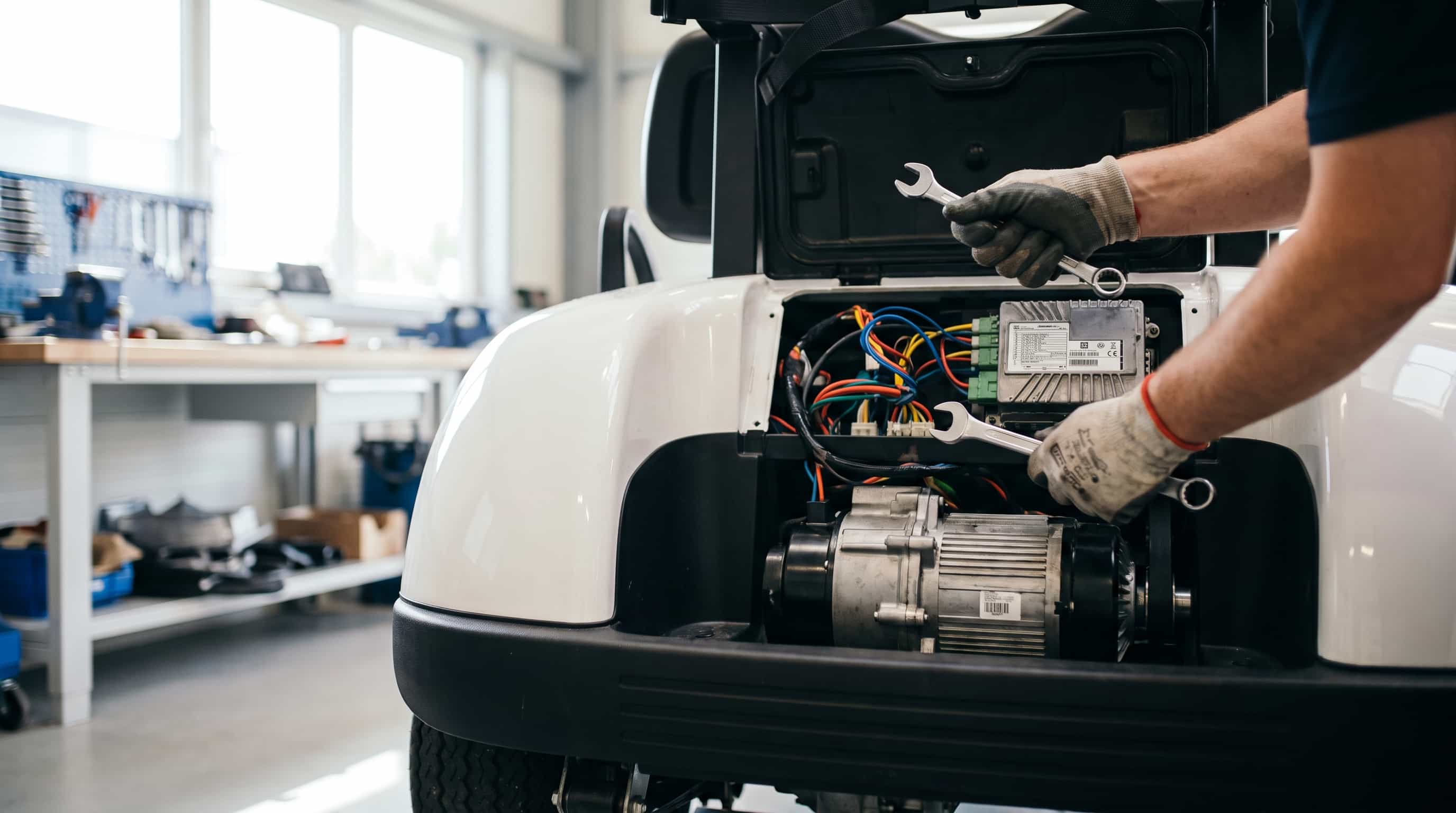
Buggies work in the wet, but damp causes their electrical faults, so wet weather care is mostly about keeping water away from the electrics and drying the buggy out properly afterwards. Let a soaked buggy dry somewhere warm and airy before charging or storing, protect connectors and the charge socket, and deal with damp before it becomes corrosion.
Key takeaways
- Buggies run in the wet, but damp causes their electrical and corrosion faults.
- Keep water away from connectors, the controller and the charge socket in the wet.
- Dry a soaked buggy somewhere warm and airy before charging or storing it.
- Do not charge a soaked buggy, and do not shut a wet one away to corrode.
- Deal with damp promptly, since standing damp turns into the corrosion behind many faults.
Wet is fine, damp trapped is not
A golf buggy is built to be used outdoors, so a day's rain is not a crisis, and you do not need to hide it from every shower. The problem is not water passing over the buggy, it is water getting into the electrics and damp being trapped against metal and in connectors over time. That distinction shapes sensible wet weather care: use the buggy in the wet as designed, but keep water out of the vulnerable electrical parts, and make sure the buggy dries out properly afterwards rather than sitting damp. Most wet-related faults come from the trapped damp, not the rain itself.
In the wet
While using or washing a buggy in the wet, the care is about the electrics. Keep any real spray or pressure away from the connectors, the controller area, the battery compartment and the charge socket, since those are where water does harm, as the water damage guide sets out. A pressure washer is the classic offender, driving water past seals that rain never reaches, so keep its pressure off the electrical areas entirely. If the charge socket has a cover, use it, and keep the socket clean and dry so a plug never goes into a wet receptacle. None of this is onerous; it is just directing the water away from the few parts that mind it.
Drying it out
The step owners most often skip is drying, and it is the one that prevents faults. After a proper soaking, a heavy event in the rain, a wash, or driving through standing water, let the buggy dry somewhere warm and airy before you charge it or shut it away. Drying takes longer than a wipe with a cloth, because water sits inside connectors and covered areas that a cloth never reaches, so giving it time in a dry, ventilated space is what actually clears it. Two firm points: do not charge a soaked buggy, and do not store a wet one, because a buggy shut away damp corrodes exactly where you cannot see, which is where the faults come from.
If yours is doing this and the checks here have not settled it, we diagnose and repair buggies, including a callout to wherever it is.
Ahead of the damp
The long game is not letting damp settle into corrosion. A buggy kept clean, dried after soakings, and stored dry corrodes far less than one left caked and wet, so wet weather care blends into the cleaning and storage guidance. Keeping the battery terminals and connectors clean and protected means damp has less to attack, and a dry storage space does more than any cover. Where a buggy has taken a real soaking and then shows an intermittent electrical fault, that is the water damage guide's territory, and the fix often begins with a proper dry-out before anything else. Treat wet weather care as prevention: manage the water in the wet, dry the buggy properly, and you avoid most of the faults that damp would otherwise cause.
Common questions
- Is it bad to use my buggy in the rain
- No, buggies are built for outdoor use and a day's rain is fine. The harm comes from water getting into the electrics and from damp being trapped afterwards, not from rain passing over the buggy. Keep spray and pressure off the connectors, controller and charge socket, and dry the buggy out properly after a real soaking.
- How do I dry a soaked buggy
- Let it dry somewhere warm and airy, giving it more time than a wipe with a cloth allows, because water sits inside connectors and covered areas a cloth cannot reach. Do not charge it or store it while soaked. A proper dry-out in a ventilated space clears the damp that would otherwise cause intermittent electrical faults or corrosion.
- Can I charge my buggy while it is wet
- Do not charge a soaked buggy. Let it dry out first, and keep the charge socket clean and dry so a plug never goes into a wet receptacle. Charging a wet buggy risks faults and is not worth it. Dry it properly, then charge, and make sure the socket and its cover keep water out in the first place.
Still not right
We diagnose and repair golf buggies, service them on a plan, and send an engineer out to where the buggy is. Tell us the symptom and we will say what it usually means.
Related pages
Related guides
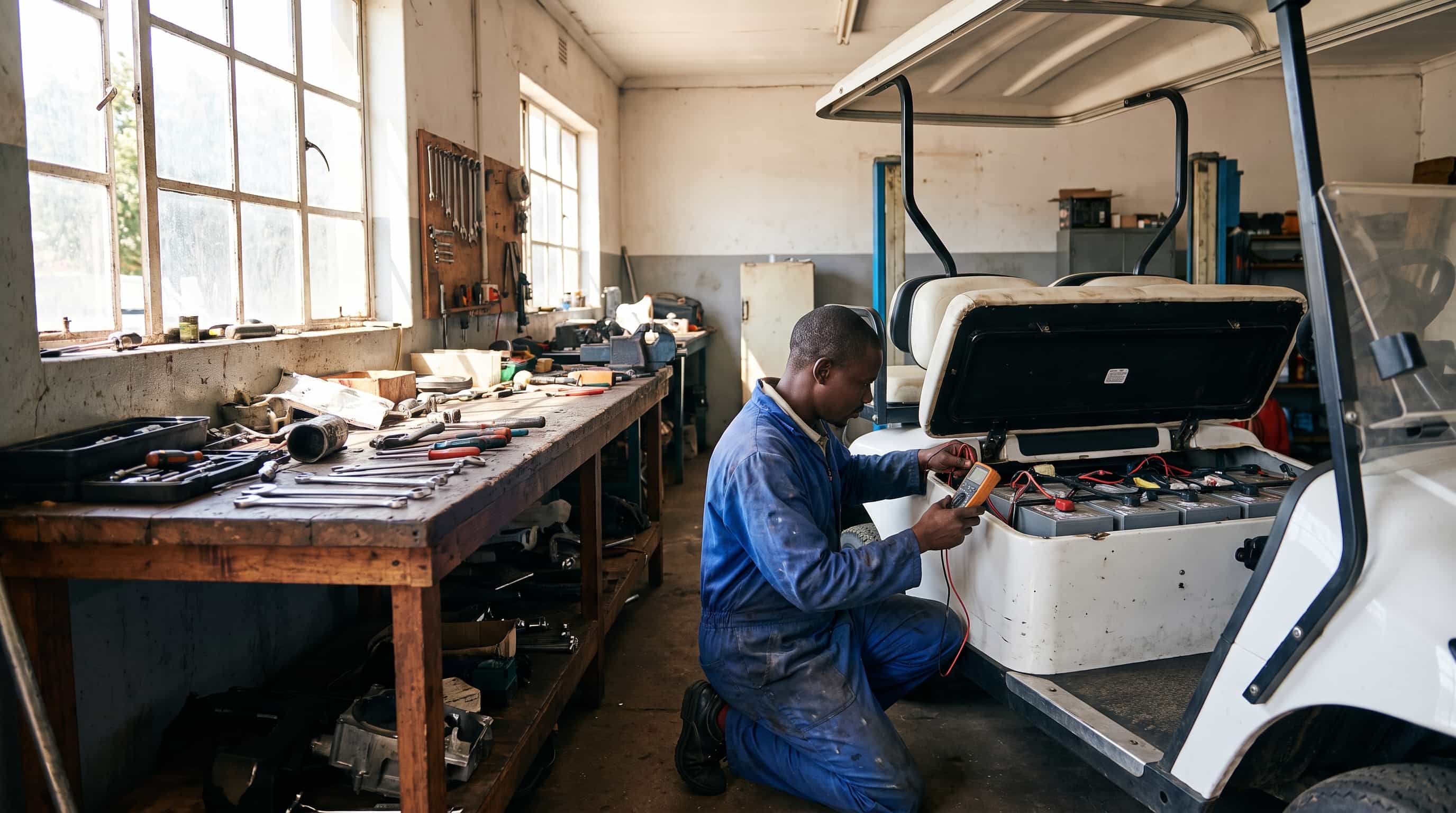 Golf buggy troubleshooting, a complete guide9 minute read
- Golf buggy single-point battery watering systems4 minute read
 Tyre wear, pressures and punctures5 minute read
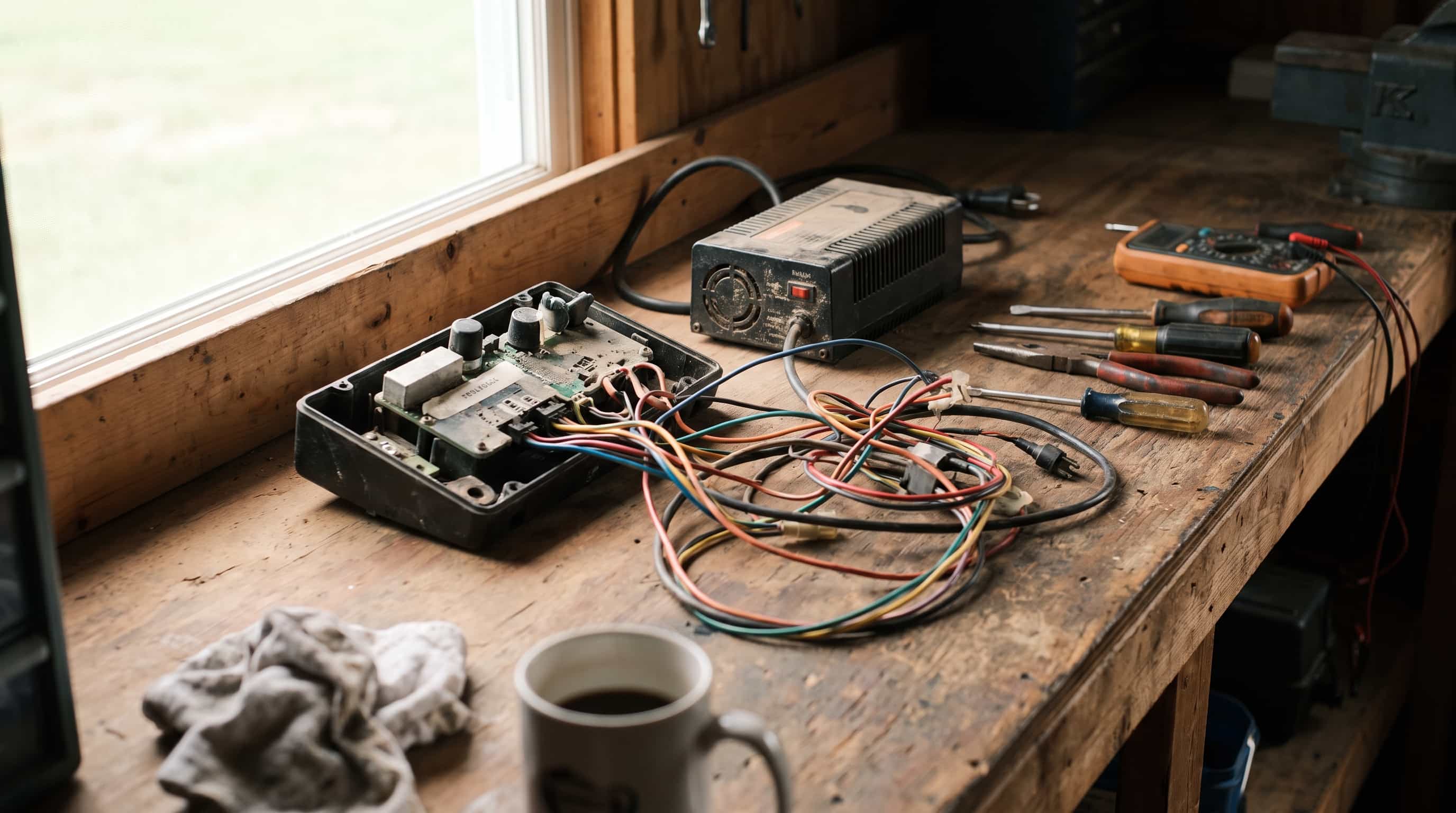 Water damage and wet weather faults6 minute read
- Cleaning and caring for bodywork and seats5 minute read
- Wiring harness and connector corrosion5 minute read