Golf buggy single-point battery watering systems
By James Brown · Updated 21 July 2026 · 4 minute read
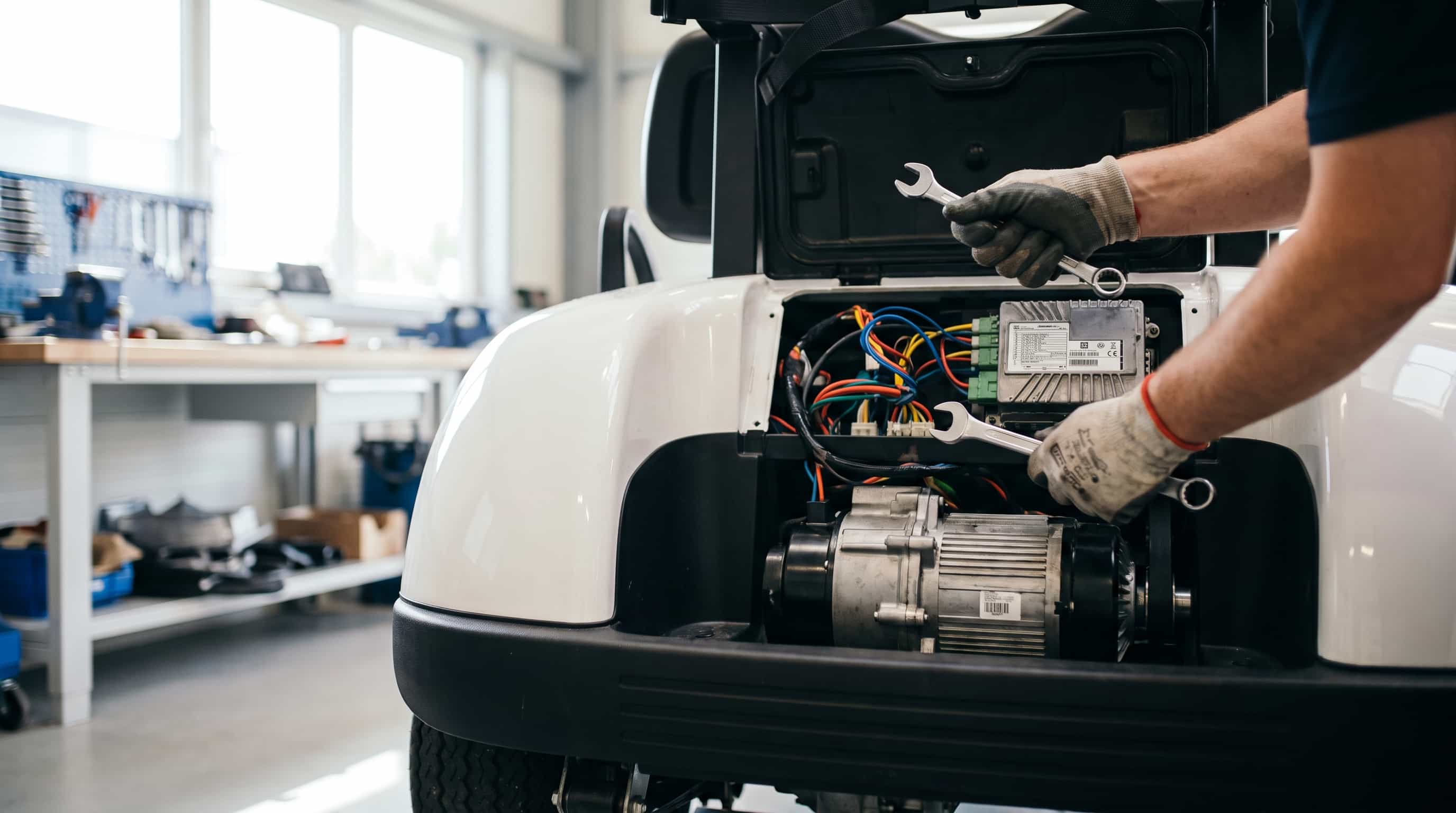
A single-point watering system replaces the individual cell caps on a flooded lead-acid set with linked caps and a connector, so the whole set is topped up from one point, filling each cell to the right level automatically. It makes watering faster, more consistent and less messy, which suits fleets. It is only for flooded lead-acid, and the same battery safety applies.
Key takeaways
- A single-point system links the cells so the set is watered from one connector.
- Each cell fills to the correct level automatically, so watering is consistent.
- It makes topping up faster, cleaner and harder to get wrong, which suits fleets.
- It is only for flooded lead-acid batteries, never sealed or lithium.
- The same battery safety applies, and watering is still needed, just made easier.
What it is
Watering a flooded lead-acid set the ordinary way means opening each cell cap in turn and topping it to the right level with distilled water, which is fiddly, easy to do unevenly, and slow across a set, let alone a fleet. A single-point watering system addresses that. It replaces the individual caps with linked caps joined by tubing to a single connector, so you attach a supply of distilled water at one point and the system fills every cell, each to its correct level, in one go. It is essentially a tidier, faster way to do the same essential job, and it is a common upgrade on buggies and fleets where watering is a regular chore.
How it helps
The benefits are practical and add up, especially at scale. Watering from one point is far quicker than opening and filling each cell, which matters when you have a set of several batteries, or a fleet of them, to maintain. It is more consistent, because each cell is filled to the same correct level automatically rather than by eye, which reduces the risk of a cell left low, the very thing that damages a set. And it is cleaner and safer to do, with less opening of cells and less spillage, which reduces the acid mess and the corrosion that overfilling and spills cause. For a fleet operator maintaining many lead-acid batteries, a single-point system turns a slow, error-prone task into a fast, reliable one.
Its limits
A single-point system is a convenience, not a change to the underlying rules, and it is worth being clear about its limits. It is only for flooded lead-acid batteries, the ones that need watering; it has no place on sealed lead-acid or lithium, which are not watered at all. It does not remove the need to water; it just makes watering easier, so the set still has to be topped up on a sensible schedule, more often in hot weather, as the watering guide describes. And it still relies on distilled water, since a faster way to put the wrong water in is no help. So it is an aid to good maintenance, not a substitute for it, and a fleet with single-point systems still needs the watering to actually be done.
If yours is doing this and the checks here have not settled it, we diagnose and repair buggies, including a callout to wherever it is.
Safety and fitting
The battery safety rules apply just as they do to ordinary watering, because you are still working on flooded lead-acid batteries that hold acid and give off gas. Eye protection, a ventilated space away from sparks, and care with the electrolyte all still apply, as the battery safety guide sets out, and the firm stop for a damaged battery is unchanged. Fitting a single-point system to an existing set, replacing the caps and setting it up correctly, is a recognised job, and getting it right matters so that each cell genuinely fills to the correct level. For a fleet considering it, it is worth setting up properly, and if you are unsure, having it fitted and checked by someone who knows the batteries ensures it does its job. Done right, it is a genuine time-saver that makes the essential watering more likely to be kept up.
Common questions
- What is a single-point watering system
- It replaces the individual cell caps on a flooded lead-acid set with linked caps joined to one connector, so you top the whole set up from a single point and each cell fills to the correct level automatically. It makes watering faster, more consistent and cleaner than opening and filling each cell by hand, which suits sets and fleets.
- Does it mean I no longer have to water the batteries
- No, it makes watering easier, not unnecessary. The set still needs topping up on a sensible schedule, more often in hot weather, and still with distilled water. A single-point system speeds up and improves the job and reduces the risk of a cell left low, but the watering still has to be done, so it is an aid to good maintenance rather than a replacement for it.
- Can I fit one to any buggy
- Only to flooded lead-acid batteries, the ones that need watering; it has no place on sealed lead-acid or lithium. Fitting it to an existing set is a recognised job, and setting it up correctly matters so each cell fills to the right level. The usual battery safety applies, so if you are unsure, have it fitted and checked by someone who knows the batteries.
Still not right
We diagnose and repair golf buggies, service them on a plan, and send an engineer out to where the buggy is. Tell us the symptom and we will say what it usually means.
Related pages
Related guides
 Golf buggy troubleshooting, a complete guide9 minute read
 Tyre wear, pressures and punctures5 minute read
 Golf buggy forward-reverse switch problems5 minute read
 Battery watering and maintenance (lead-acid)6 minute read
- Golf buggy battery safety, acid, gas and handling5 minute read
 Fleet maintenance planning for venues6 minute read