Fleet maintenance planning for venues
By James Brown · Updated 21 July 2026 · 6 minute read
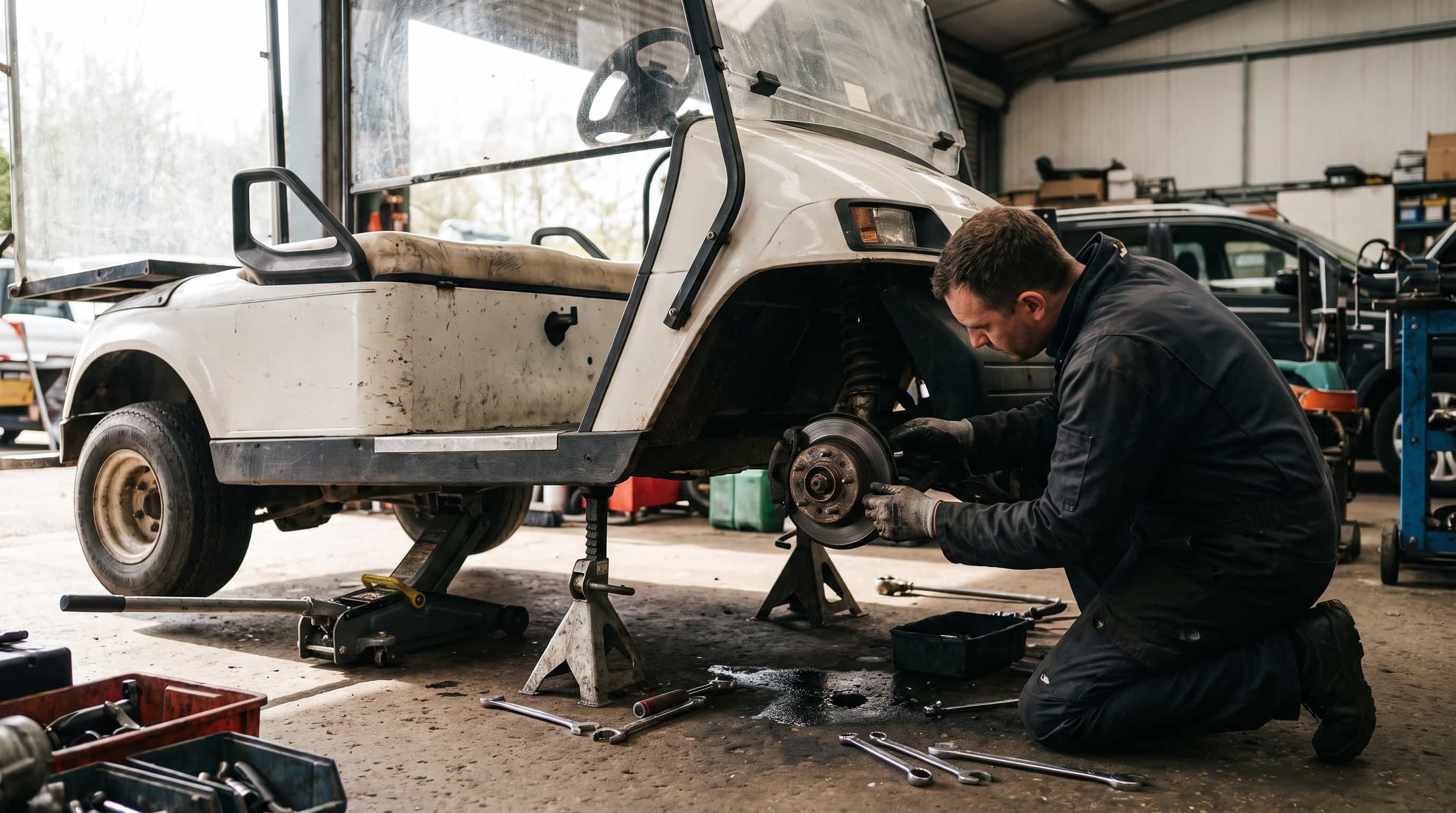
A venue keeps a fleet reliable by turning maintenance into a system rather than a reaction: daily checks before use, planned servicing scheduled ahead of the busy season, a written record per buggy, managed charging, and a stock of common spares. The aim is that faults are caught in the yard and jobs are planned, not discovered by a breakdown in front of guests.
Key takeaways
- Treat fleet maintenance as a system, not a reaction to breakdowns.
- Daily checks per buggy catch most faults before they reach a guest.
- Schedule servicing ahead of the busy season, not into the middle of it.
- Keep a written record per buggy so faults and patterns are visible across the fleet.
- Manage charging and hold common spares so a small fault does not sideline a buggy for days.
From reaction to system
The difference between a fleet that runs and a fleet that limps is whether maintenance is a system or a reaction. A venue that fixes buggies only when they break spends its season chasing failures at the worst moments, usually mid-event with guests watching. A venue that runs a system, checks, planned servicing, records and spares, catches most of those failures before they happen and plans the rest for quiet times. Building that system is not complicated, and for a fleet it is the single biggest lever on reliability and cost.
The daily and planned layers
Two layers do most of the work. The daily check, covered in its own guide, is the front line: a couple of minutes per buggy before use, covering charge, tyres, brakes, steering and a walk-round, so the failures that strand a buggy or endanger a guest are caught in the yard. The planned layer is the scheduled service: the thorough go through brakes, steering, suspension, drive and electrics, timed to land before the busy season rather than into the middle of it. The common and expensive mistake is to leave servicing until a buggy breaks in peak season, when both the breakdown and the repair cost you far more than the planned service would have. Plan the servicing into the quiet months, ahead of the events.
The record and the patterns
A fleet needs a memory, and that memory is the maintenance record. A simple log per buggy, checks done, faults found, work carried out, dated and kept, does three jobs. It proves the maintenance happened, which matters for due diligence if there is ever an incident. It stops a found fault being forgotten between shifts and staff. And, most usefully over a season, it shows patterns: the buggy that keeps needing air, the one whose brakes drift, the batteries that are fading across several machines at once. Those patterns are how you catch a developing problem, and how you plan replacements before they become breakdowns, rather than being surprised one buggy at a time.
If yours is doing this and the checks here have not settled it, we diagnose and repair buggies, including a callout to wherever it is.
Charging, spares and planning ahead
Two practical things keep the fleet moving. Charging has to be managed so every buggy that is needed is charged and ready, which means enough charging points, a routine for putting buggies on charge after use, and attention to the batteries as the fleet's biggest maintenance item. And a stock of common spares, fuses, bulbs, a tyre repair capability, the parts you know you get through, means a small fault is a quick fix rather than a buggy out of action for days waiting on a part. For a venue that would rather not carry all of this in-house, service plans put the maintenance and callout response on a managed footing per vehicle, with a fleet tier for larger operations, which many venues find simpler than staffing and stocking a workshop themselves. Either way, the principle holds: plan the maintenance around the season, and the season runs on reliable buggies rather than on luck.
Common questions
- How do I keep a buggy fleet reliable through a busy season
- Run maintenance as a system: daily checks per buggy before use, a thorough service scheduled ahead of the season rather than into it, a written record per buggy, managed charging, and a stock of common spares. That catches most faults in the yard and plans the rest for quiet times, instead of meeting them as breakdowns mid-event.
- Why keep a maintenance record for each buggy
- Because a fleet needs a memory. A per-buggy log proves the maintenance happened, stops found faults being forgotten between shifts, and reveals patterns over the season, the buggy that keeps needing attention, the batteries fading across several machines. Those patterns let you plan repairs and replacements before they become breakdowns.
- Should a venue use a service plan or maintain in-house
- Either can work. Maintaining in-house needs staff, spares and the workshop capability to do it well. A service plan puts maintenance and callout response on a managed per-vehicle footing, with a fleet tier for larger operations, which many venues find simpler than running their own workshop. Weigh what you can genuinely staff and stock against what a plan provides.
Still not right
We diagnose and repair golf buggies, service them on a plan, and send an engineer out to where the buggy is. Tell us the symptom and we will say what it usually means.
Related pages
Related guides
 Golf buggy troubleshooting, a complete guide9 minute read
 How to make a golf buggy electrically safe, step by step4 minute read
 Golf buggy MOT, registration and the law for owners6 minute read
- Daily checks for fleet operators5 minute read
 Servicing schedule, what and when6 minute read
- Golf buggy service plans explained5 minute read