Servicing schedule, what and when
By James Brown · Updated 21 July 2026 · 6 minute read
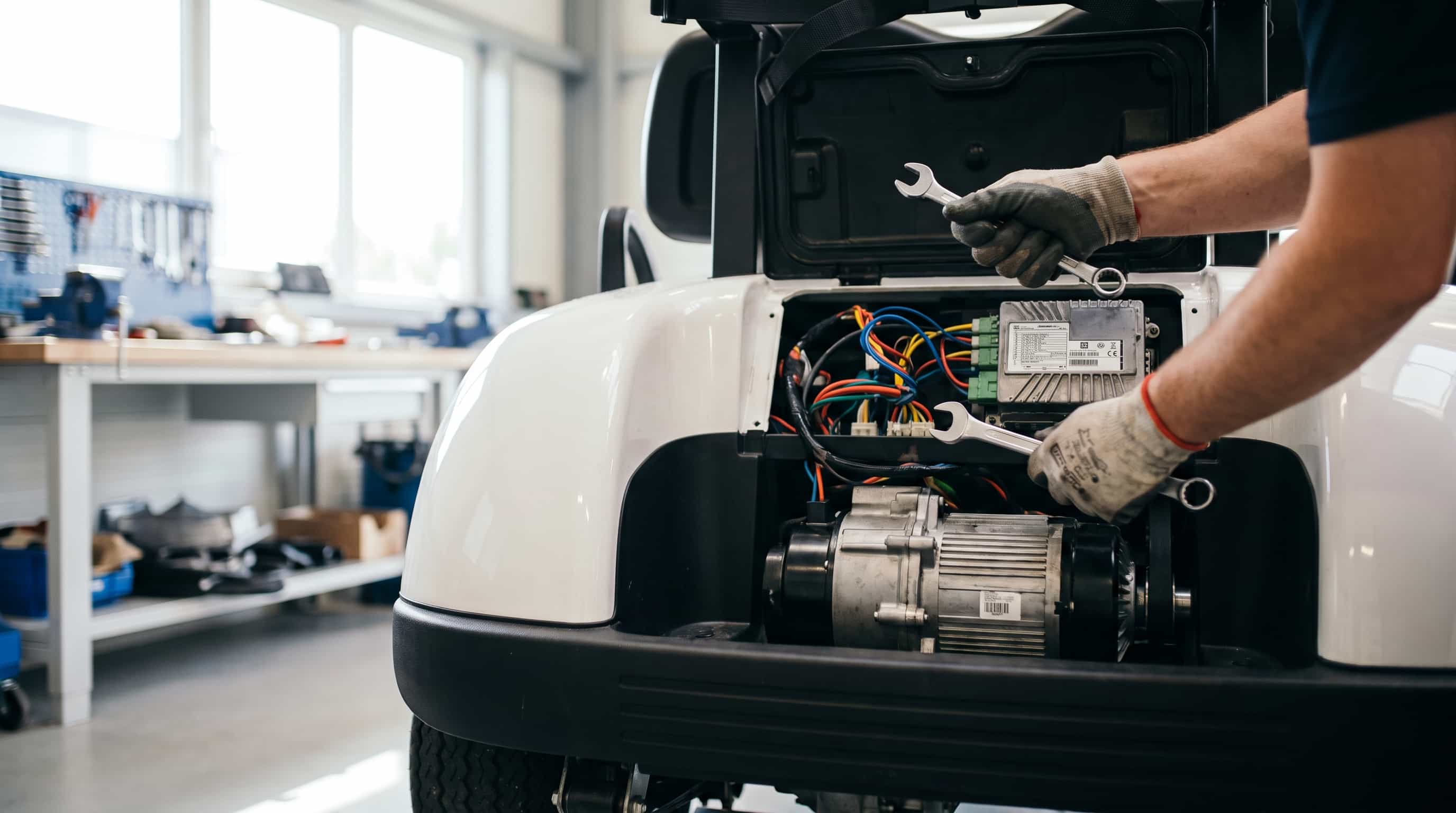
Service a buggy by use, not just by the calendar. Daily checks cover tyres, brakes, charge and anything loose. Monthly or regular checks cover battery water on lead-acid, connections and general condition. Seasonal service covers a thorough go through brakes, steering, suspension and the drive. A buggy worked hard needs it more often than one used lightly.
Key takeaways
- Usage sets the interval: a hard-worked buggy needs servicing more often than a lightly used one.
- Daily: tyres, brakes, charge state, and a look for anything loose, damaged or leaking.
- Regular: lead-acid battery water, terminal condition, and general checks over.
- Seasonal: a thorough service of brakes, steering, suspension, drive and electrics.
- Follow the maker's schedule where you have it; these tiers are a sensible default, not a substitute.
Service by use, not the calendar alone
The temptation is to service a buggy on a fixed date each year and forget it in between, and that suits a buggy used a few times a season but badly under-serves one worked hard through weddings and events all summer. A buggy accumulates wear by how much it is used, so the right rhythm scales with the work it does. A useful way to think about it is three tiers: things to check every day of use, things to check regularly, and things to do thoroughly with the seasons. If the maker provides a schedule for your buggy, follow that, since these tiers are a sensible default rather than a replacement for it.
Daily, the quick pass
Before a day's use, a few minutes catches most of what causes a breakdown or an incident. Tyres: pressures roughly right and no obvious damage. Brakes: pedal firm, park brake holding, no grinding. Charge: enough for the day's work, and the batteries in good order. And a look round for anything loose, leaking, damaged or trailing. For a fleet this is a formal daily-checks routine, covered separately, and for a single owner it is a habit worth keeping, because a soft tyre or a low battery found in the yard is far better than found halfway round a venue.
Regular, the condition pass
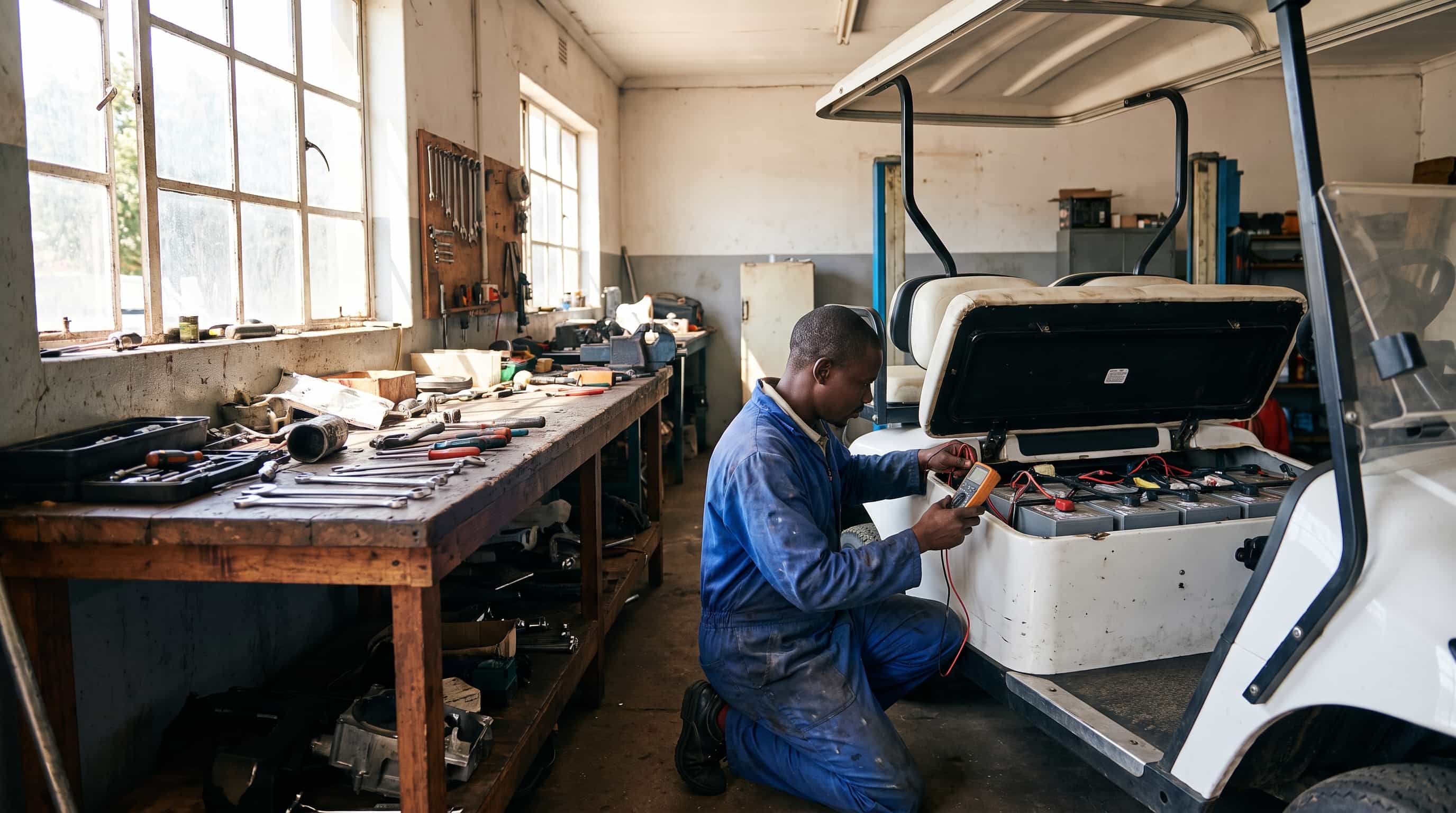
At a wider interval, weeks rather than days depending on use, comes the condition check. For flooded lead-acid batteries this is when you check and top up the water and clean the terminals, which is the maintenance that keeps a set alive. It is also when you look over the connections for corrosion, check the general condition of the buggy, and deal with the small things, a loose fixing, a tired bulb, a developing squeak, before they become the reason for a call-out.
If yours is doing this and the checks here have not settled it, we diagnose and repair buggies, including a callout to wherever it is.
Seasonal, the thorough service
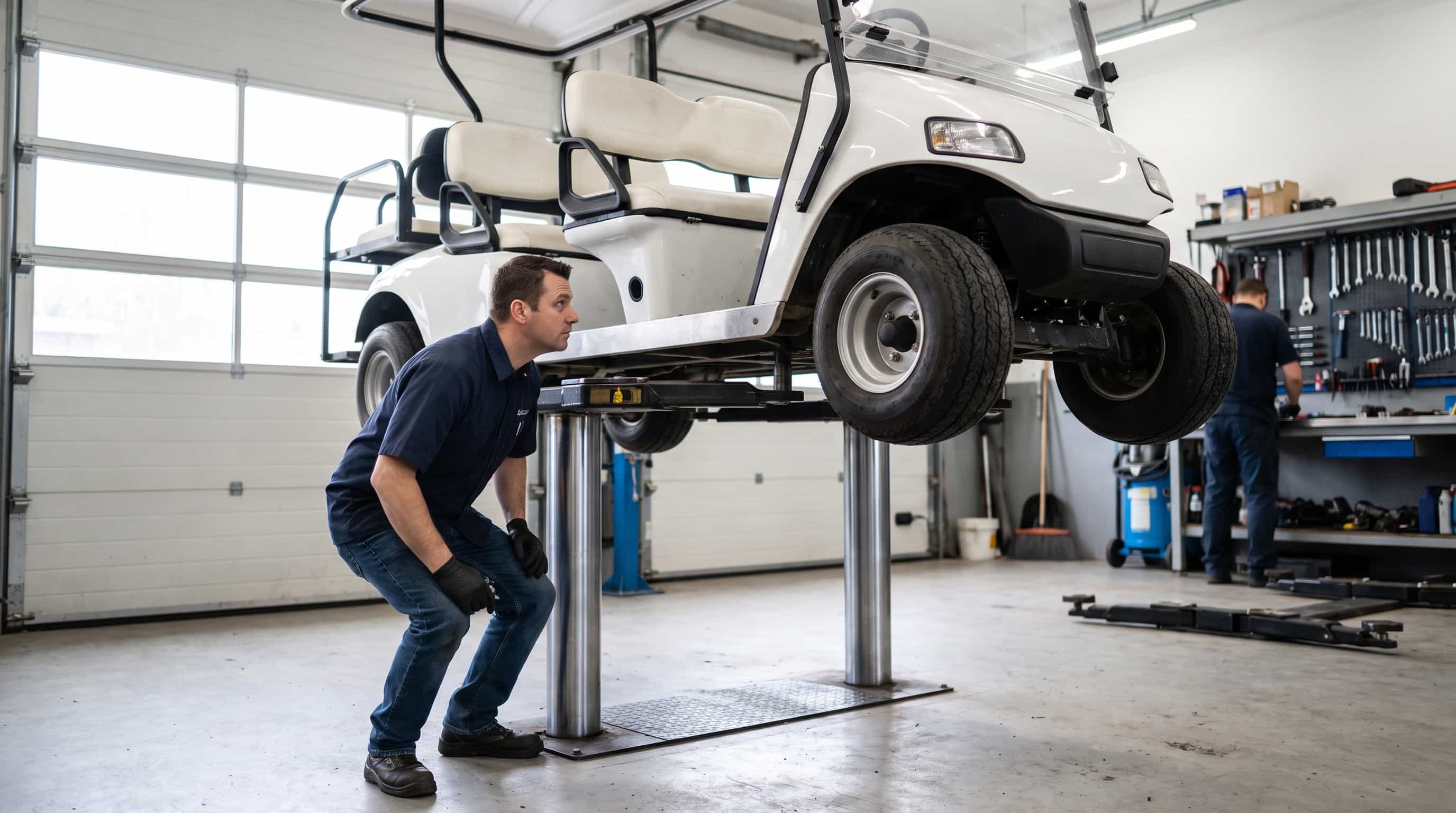
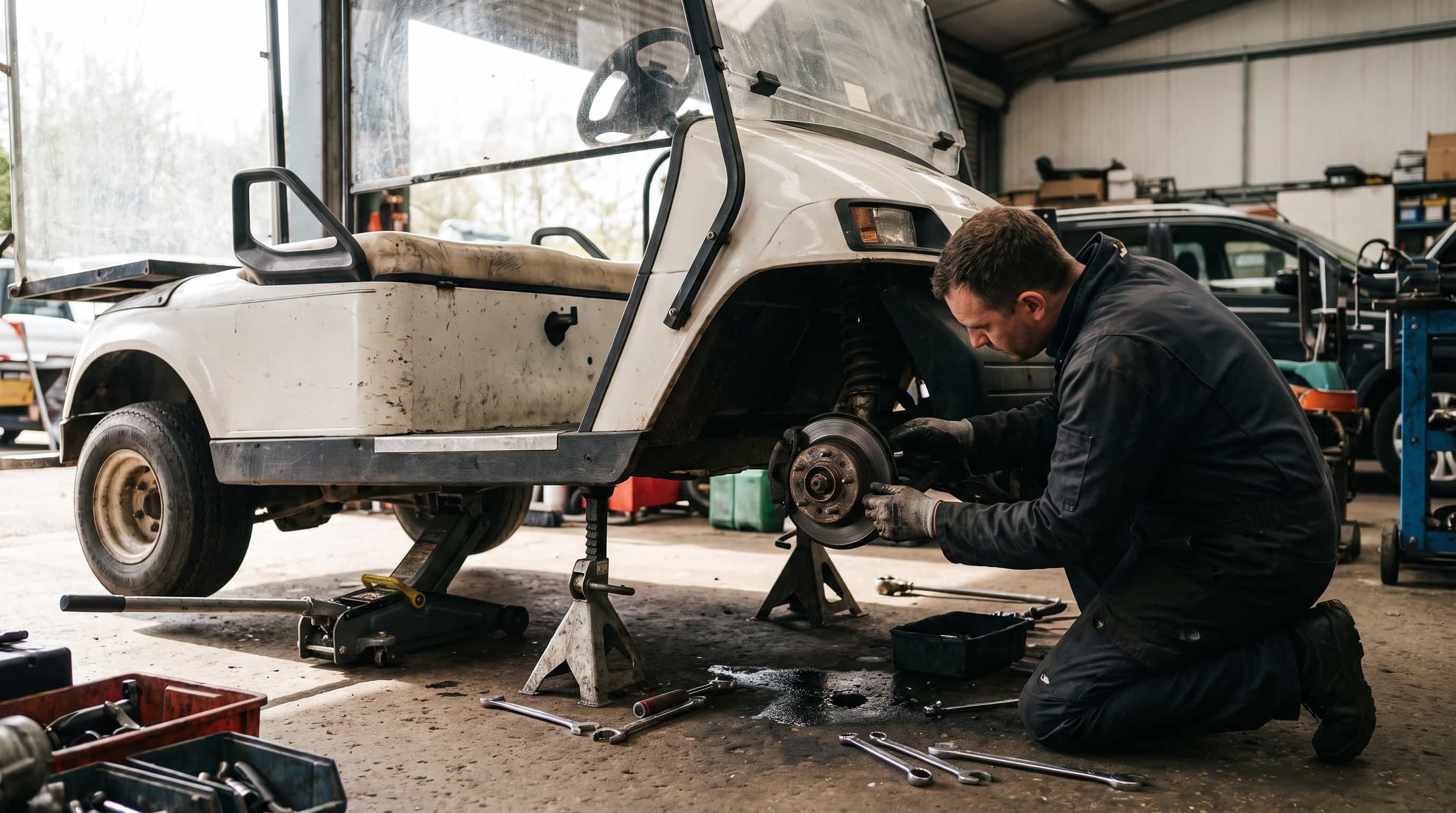
Once or more a year, matched to when the buggy is busy, comes a proper service. This is the deeper go through: the brakes inspected and adjusted, the steering and suspension checked for wear and play, the drive and electrics looked over, and anything worn dealt with rather than watched. This is the level where an engineer or a competent workshop earns their keep, because it involves the safety systems and the parts that need tools and judgement to assess. Timing it before a busy season, rather than after a breakdown mid-season, is the whole point. For an owner who would rather not track all this, the service plans exist to put it on a managed footing.
Common questions
- How often should I service my golf buggy
- By use rather than a fixed date. A hard-worked buggy needs more frequent attention than a lightly used one. As a default, check the basics every day of use, do a condition check and lead-acid watering regularly, and have a thorough service before each busy season. Where the maker gives a schedule, follow it.
- What is the difference between a check and a service
- A check is the quick, regular look at tyres, brakes, charge and condition that you or your team do, catching the everyday things. A service is the thorough, deeper go through the brakes, steering, suspension, drive and electrics, usually done by an engineer or workshop, that assesses and corrects wear across the whole buggy.
- Can I do the servicing myself
- The daily checks and regular battery and condition work are reasonable owner tasks and worth doing. The thorough seasonal service involves the safety systems and parts that need tools and judgement to assess properly, so that level is better done by an engineer or a competent workshop, or covered by a service plan that arranges it for you.
Still not right
We diagnose and repair golf buggies, service them on a plan, and send an engineer out to where the buggy is. Tell us the symptom and we will say what it usually means.
Related pages
Related guides
 Golf buggy troubleshooting, a complete guide9 minute read
 Lithium versus lead-acid batteries in buggies6 minute read
- How much do golf buggy repairs cost6 minute read
 Daily checks for fleet operators5 minute read
 Fleet maintenance planning for venues6 minute read
- Battery watering and maintenance (lead-acid)6 minute read