How to make a golf buggy electrically safe, step by step
By James Brown · Updated 21 July 2026 · 4 minute read

Before working near a buggy's electrics, or in a fault where it stays live, make it safe: switch it off, use the battery isolator if it has one to disconnect the pack, and keep clear of a serious fault. If there is no isolator, disconnecting the battery is high-current work to do carefully or hand over. A damaged battery is a stop-now, keep-clear situation.
Key takeaways
- Make the buggy electrically safe before working near the electrics or in a live fault.
- Switch it off, then use the battery isolator if fitted to disconnect the pack.
- With no isolator, disconnecting the battery is high-current work, done carefully or handed over.
- Never bridge two terminals with a tool or jewellery, which causes a dangerous short.
- A damaged, hot or smelling battery is a stop-now, keep-clear situation.
Why and when to do this
The buggy's pack stores serious electrical energy, so before you work on connections, clean terminals, or investigate an electrical fault, making the buggy electrically safe protects you and the buggy. It also matters in a fault where the buggy will not turn off or stays live, where the first job is to cut the power. So reach for this whenever you are about to work near the electrics, and whenever a fault leaves the buggy powered when it should not be, as the will-not-turn-off guide describes.
Step by step
1. Switch the buggy off at the key and remove the key, so nothing is asking it to drive. 2. Remove any watch, rings or metal jewellery, since these can bridge a connection and cause a dangerous short while you work. 3. If the buggy has a battery disconnect or isolator, use it: turn it to off to disconnect the pack, as the isolator guide describes. This cuts the buggy's power in one action and is the quickest, most certain way to make it safe. 4. Confirm the buggy is dead: with the pack isolated, the buggy should have no power, which you can check by seeing that it does not respond. 5. Put on eye protection before working near the batteries, and keep working in a ventilated space away from flames and sparks. 6. Work with care: never lay a tool across two terminals, and keep the spanner clear of other terminals as you work, since a short across the pack produces a dangerous spark and heat.
If there is no isolator
Not every buggy has an isolator, and if yours does not, cutting the power means disconnecting the battery itself. That is high-current work, and it is not as simple as flicking a switch: it must be done carefully, in the right order, with the battery precautions, and if you are not confident, it is a sensible thing to hand to someone competent rather than improvise. This is also a good reason to consider having an isolator fitted, as the isolator guide covers, so that making the buggy safe becomes a single, certain action in future.
If yours is doing this and the checks here have not settled it, we diagnose and repair buggies, including a callout to wherever it is.
The stop that overrides everything
One situation overrides the method: a damaged battery. If a battery is swollen, cracked, leaking, hot, or giving off a strong smell, or if there is a burning smell, smoke or overheating, do not proceed with routine making-safe steps that put you near it. Keep clear, get people away, use the isolator only if it is safe to reach, and treat it as the serious hazard it is, as the battery-safety, burning-smell and smoking guides set out. Making a buggy safe for routine work is one thing; a battery in trouble is a keep-clear, get-help situation, and personal safety comes first.
Common questions
- How do I make my buggy safe before working on the electrics
- Switch it off and remove the key, take off metal jewellery, and use the battery isolator if fitted to disconnect the pack, which cuts the power in one action. Confirm the buggy is dead, put on eye protection, and never bridge two terminals with a tool. If there is no isolator, disconnecting the battery is high-current work to do carefully or hand over.
- My buggy has no isolator, what then
- Cutting the power means disconnecting the battery itself, which is high-current work done carefully, in the right order, with the battery precautions, and handed to someone competent if you are not confident. It is also a good reason to have an isolator fitted, so making the buggy safe becomes a single certain action in future.
- What if the battery is damaged or there is a smell
- Then do not proceed with routine steps that put you near it. A swollen, leaking, hot or smelling battery, or a burning smell, smoke or overheating, is a serious hazard: keep clear, get people away, use the isolator only if safe to reach, and get help. Personal safety comes first, ahead of making the buggy safe for work.
Still not right
We diagnose and repair golf buggies, service them on a plan, and send an engineer out to where the buggy is. Tell us the symptom and we will say what it usually means.
Related pages
Related guides
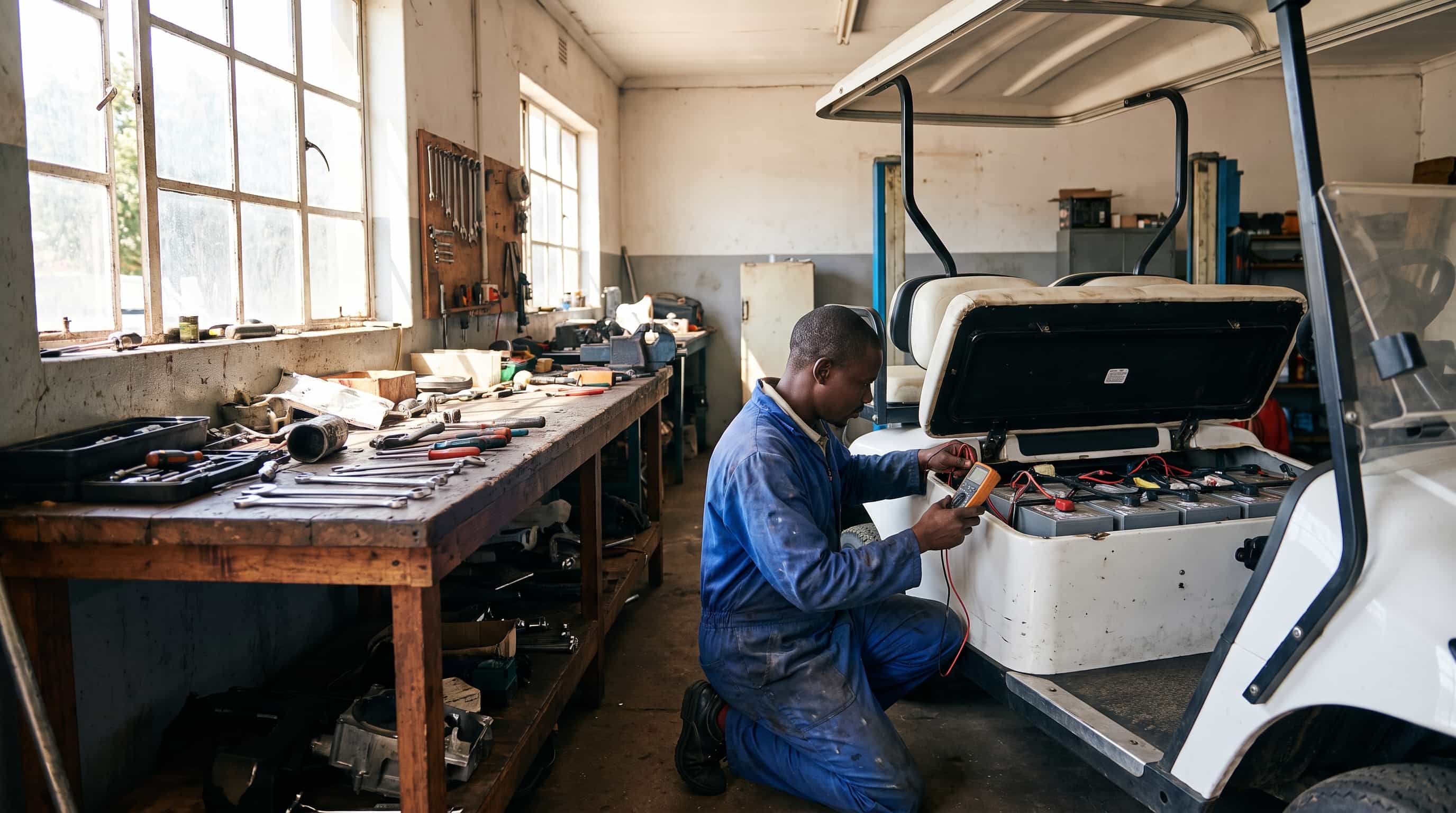 Golf buggy troubleshooting, a complete guide9 minute read
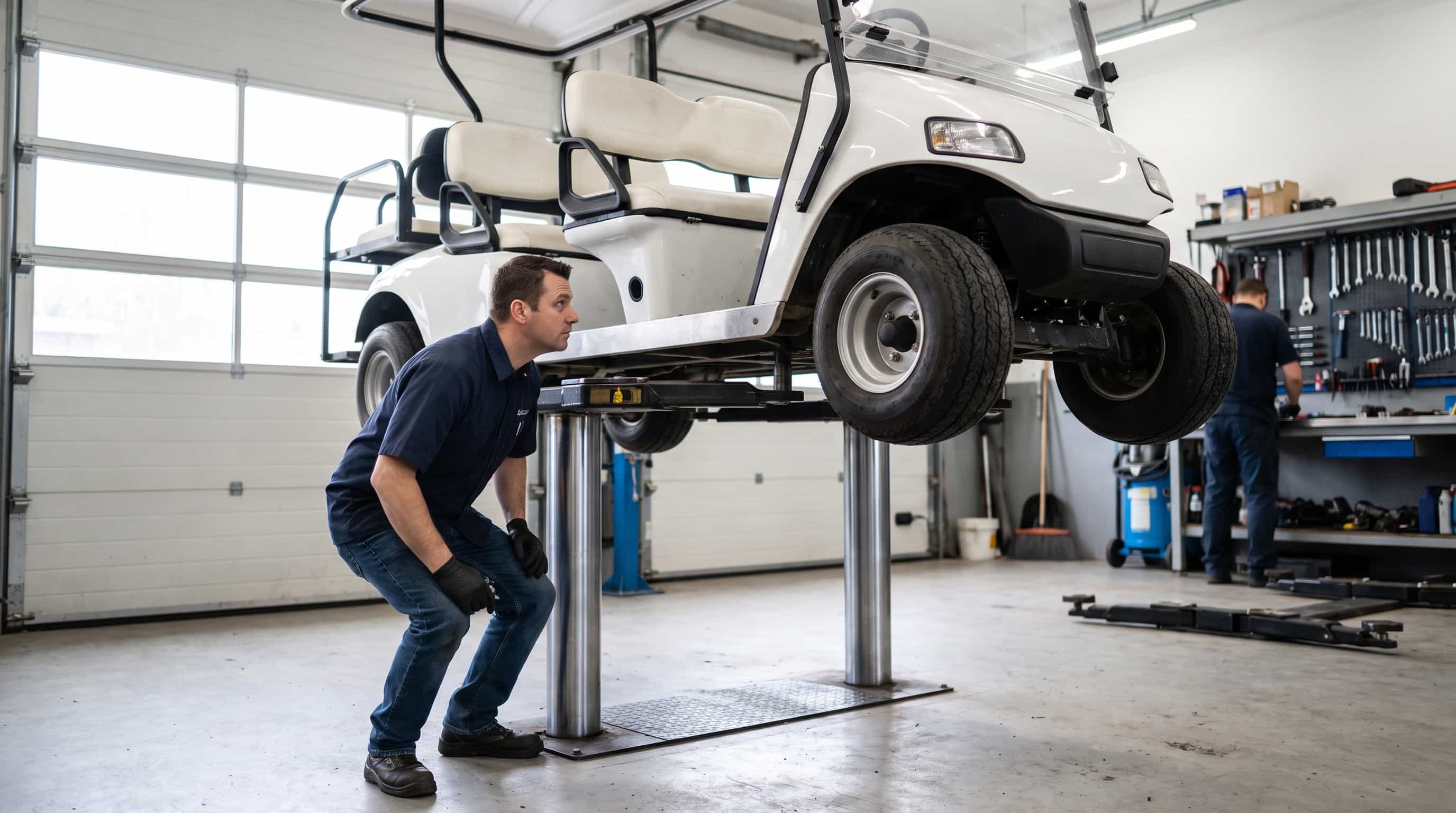 Golf buggy MOT, registration and the law for owners6 minute read
- Golf buggy clunks when changing direction4 minute read
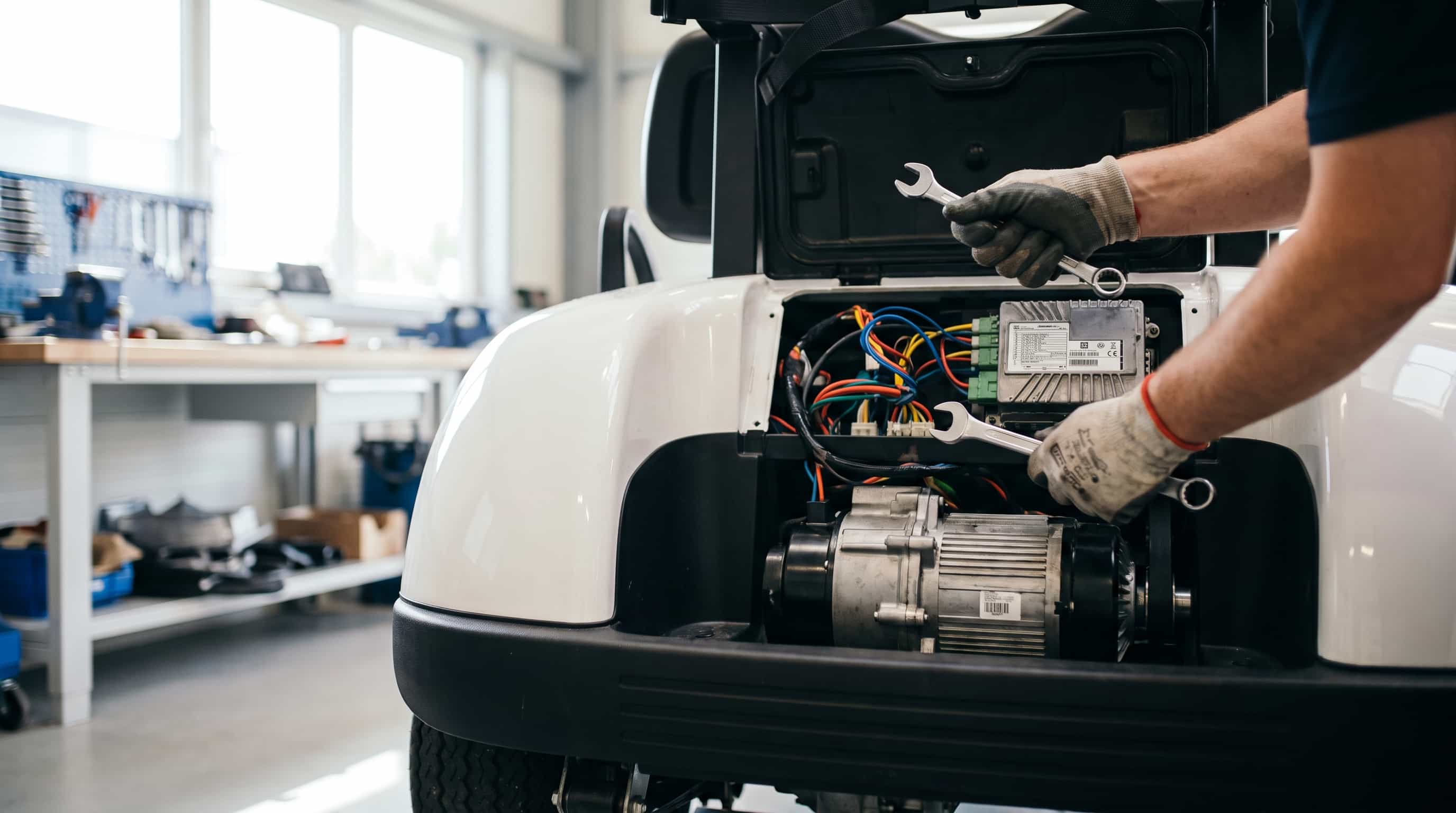 Golf buggy battery disconnect and isolator4 minute read
- Golf buggy battery safety, acid, gas and handling5 minute read
- Golf buggy will not turn off4 minute read