Golf buggy battery disconnect and isolator
By James Brown · Updated 21 July 2026 · 4 minute read
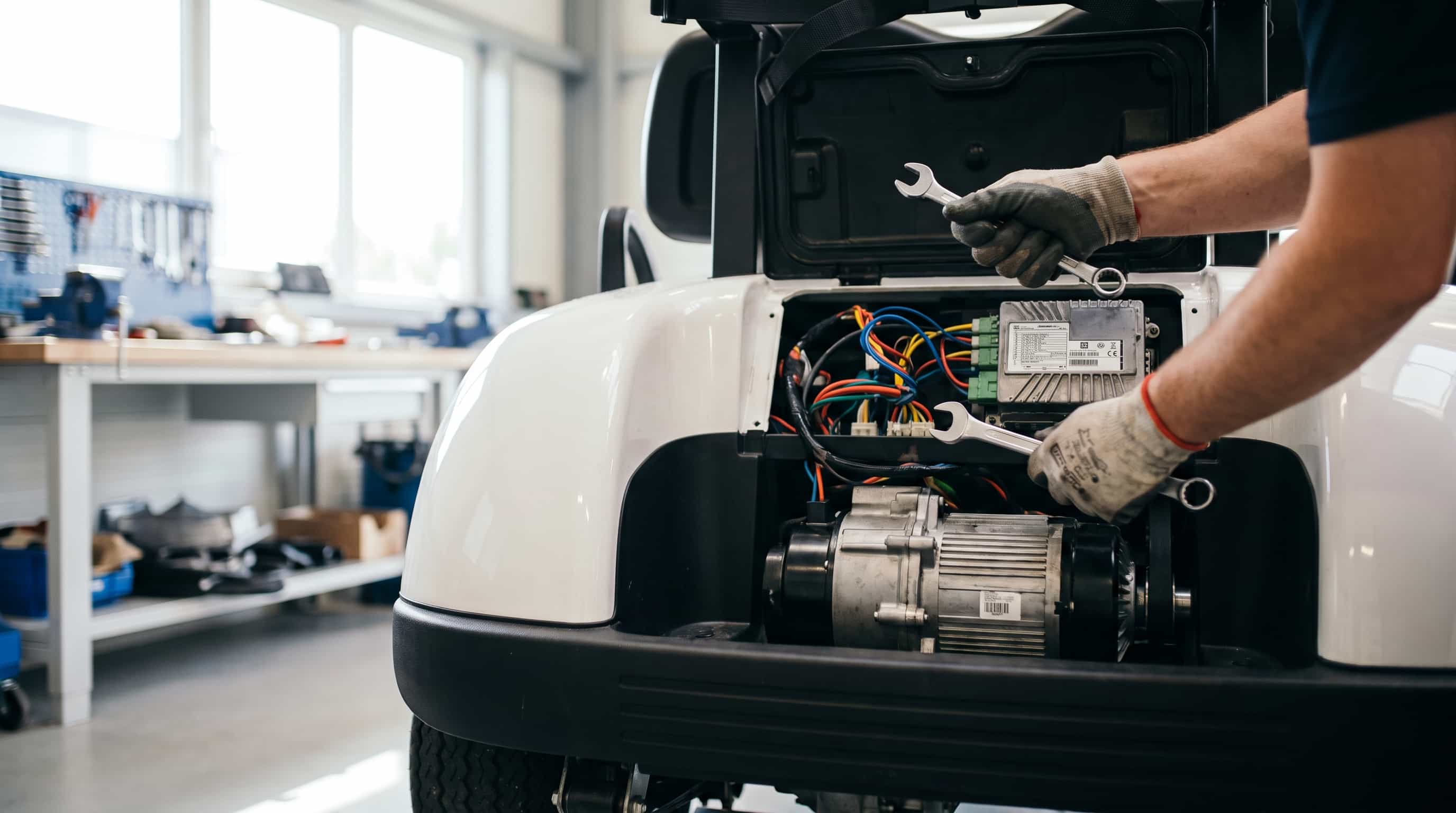
A battery disconnect or isolator is a switch that disconnects the battery pack from the buggy, cutting all power in one action. It is genuinely useful for safety, for making a buggy safe in a fault, for storage, and for work near the electrics. Where a buggy has one, knowing where it is and using it is worthwhile; where it does not, an isolator can often be added.
Key takeaways
- A battery isolator disconnects the pack from the buggy, cutting all power at once.
- It makes a buggy safe quickly in a fault, such as one that will not turn off.
- It helps during storage and when working near the electrics.
- Know where yours is, if fitted, so you can use it when needed.
- Where a buggy lacks one, an isolator can often be added for these benefits.
What it is
A battery disconnect, or isolator, is a switch placed in the main battery connection that lets you disconnect the whole pack from the buggy in one deliberate action, cutting off all power. It is a simple, robust safety device, and its value is exactly that simplicity: instead of relying on the key, the controller and everything downstream being off, you can physically break the main connection so nothing in the buggy is live. Not every buggy has one as standard, but many do, and it is a genuinely useful thing to have and to know about, because it gives you a fast, certain way to make the buggy electrically safe.
Where it earns its place
An isolator shows its worth in several situations that appear across these guides. In a fault where the buggy will not turn off, or stays live with the key off, an isolator is the quick way to make it safe, as that guide notes, disconnecting the pack rather than leaving the buggy powered and unpredictable. In a serious fault, a burning smell or overheating, an isolator lets you cut the power fast if it is safe to reach, which the burning-smell and smoking guides call for. For storage, isolating the pack helps prevent slow drains and makes the buggy safe while it stands. And when working near the electrics, breaking the main connection with an isolator is a sensible safety step before you start. In all of these, the isolator turns making the buggy safe from a fiddly task into a single switch.
Using it and its limits
Using an isolator is straightforward, but it helps to understand what it does and does not do. It disconnects the pack, so it cuts the buggy's power and makes the electrics safe to the extent that nothing downstream is live. It does not, on its own, make a damaged battery safe, since the battery itself still holds its charge and, for lead-acid, acid, and a swollen or damaged battery remains a hazard to be handled with care regardless of the isolator. So an isolator is a tool for cutting power, not a substitute for the battery safety rules or for proper handling of a damaged pack. Knowing where yours is, if fitted, and reaching for it when a fault or a job calls for it, is the practical takeaway, always with personal safety first if a fault is serious.
If yours is doing this and the checks here have not settled it, we diagnose and repair buggies, including a callout to wherever it is.
If your buggy has none
Not every buggy comes with an isolator, and if yours does not, it is worth knowing two things. First, that the will-not-turn-off and serious-fault guidance still applies, and in the absence of an isolator, making the buggy safe means disconnecting the battery properly, which is high-current work to do carefully or hand to someone competent, since it is not as simple as flicking a switch. Second, that an isolator can often be added to a buggy that lacks one, giving you the quick, certain way to cut power that the situations above benefit from. For a buggy used at events or in a fleet, where being able to make a buggy safe quickly has real value, adding an isolator can be a sensible, modest improvement, ideally fitted by someone who works on the buggy's electrics so it is done correctly.
Common questions
- What does a battery isolator do
- It disconnects the whole battery pack from the buggy in one action, cutting off all power, so nothing in the buggy is live. It is a simple safety device that gives you a fast, certain way to make the buggy electrically safe, rather than relying on the key and everything downstream being off. Not every buggy has one, but many do.
- When would I use the isolator
- In a fault where the buggy will not turn off or stays live with the key off, to make it safe quickly; in a serious fault such as a burning smell or overheating, to cut power fast if it is safe to reach; during storage, to prevent slow drains and make the buggy safe while it stands; and when working near the electrics, as a sensible step before you start.
- My buggy does not have an isolator
- Then making the buggy safe in a fault means disconnecting the battery properly, which is high-current work to do carefully or hand to someone competent, rather than a simple switch. An isolator can often be added to a buggy that lacks one, giving you a quick, certain way to cut power, which is worth considering for an event or fleet buggy, ideally fitted by someone who works on the electrics.
Still not right
We diagnose and repair golf buggies, service them on a plan, and send an engineer out to where the buggy is. Tell us the symptom and we will say what it usually means.