Brake problems and safety checks
By James Brown · Updated 21 July 2026 · 6 minute read
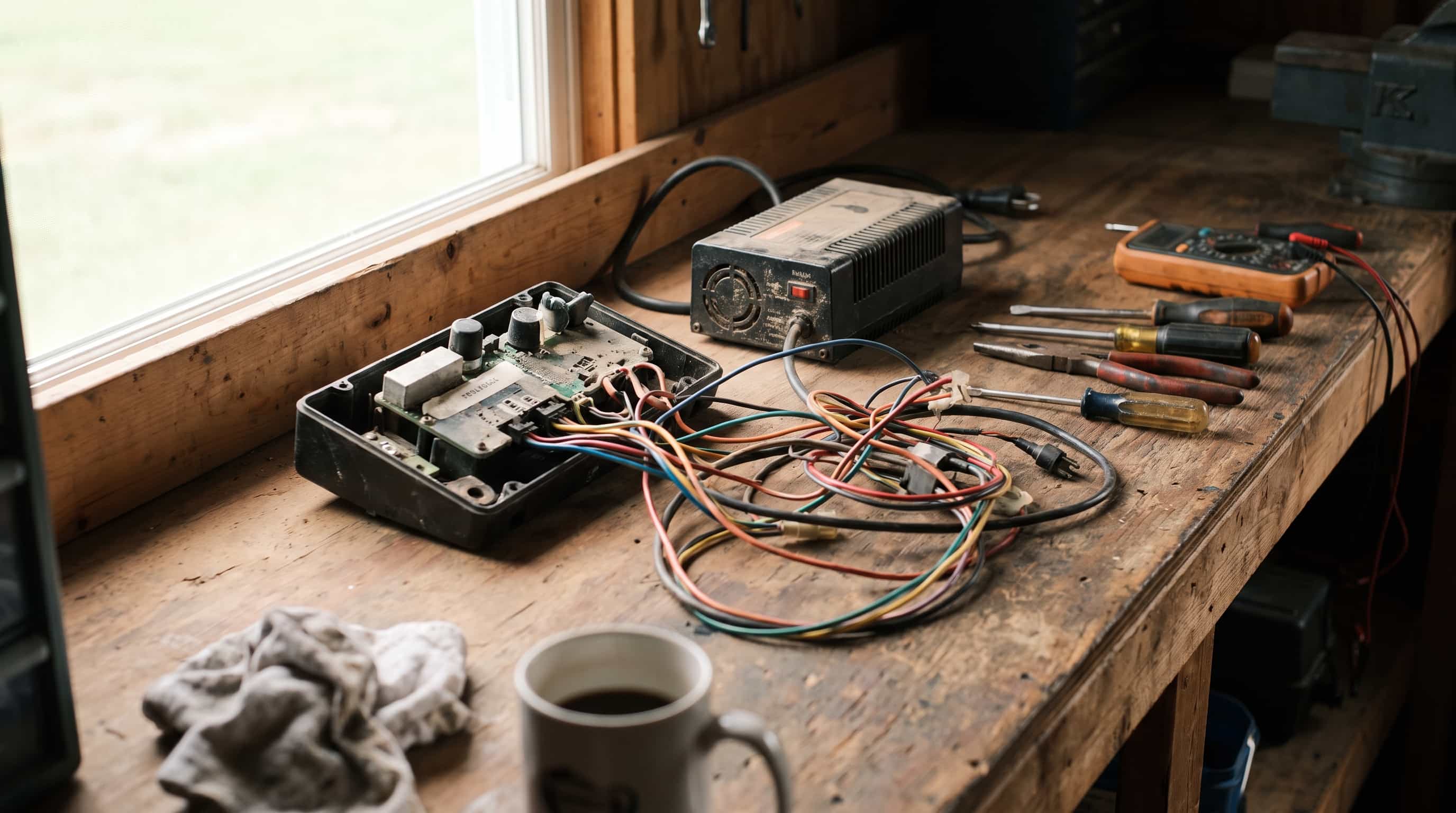
Most golf buggies use mechanical drum brakes worked by a cable and pedal, plus a park brake that latches. The common problems are worn shoes, a stretched or seized cable, brakes out of adjustment, and a park brake that will not hold. You can inspect and describe a brake fault, but repairs are a safety job. If braking is reduced, take the buggy out of use.
Key takeaways
- Most buggies have mechanical drum brakes and a latching park brake, not car-style hydraulics.
- Common faults are worn shoes, cable stretch or seizure, poor adjustment, and a park brake that slips.
- A spongy, long, or one-sided pedal all point at specific problems worth diagnosing, not ignoring.
- Brakes are a safety system, so inspection is fair for an owner but repair belongs with an engineer.
- Any real loss of braking is a stop-driving matter, full stop.
How the brakes work
Knowing the layout helps you describe a fault. Most golf buggies use mechanical drum brakes at the rear, operated by a cable from the brake pedal, with a park brake that latches the pedal down or pulls the same cables. Some also use a degree of regenerative braking on the motor when you lift off, particularly newer machines, which is why lifting off can slow the buggy noticeably before the pedal is touched.
There are usually no hydraulics to bleed, which makes the system simpler than a car's, but it also means adjustment, cable condition and shoe wear are the things that keep it working, and all three drift with use.
The common faults and what they feel like
A few patterns cover most brake calls. A pedal that feels spongy or travels a long way before biting usually means the brakes are out of adjustment or the shoes are worn, so there is slack to take up before anything happens. A buggy that pulls to one side under braking has one brake doing more than the other, often a seized or dragging cable or uneven wear. A grinding noise under braking means the friction material is gone and metal is meeting metal, which is both a noise and a loss of braking.
A park brake that will not hold on a slope is its own fault, covered separately, and matters more than people think, because a buggy that rolls when parked is a hazard to anyone near it.
What you can safely check
An owner can and should do the basic checks. With the buggy stationary and safe, press the pedal and feel how far it travels and how firm it becomes. Test the park brake on a gentle slope to see whether it holds. Look and listen for grinding, dragging or a warm wheel after driving. Note whether the buggy pulls under braking. All of this is observation, and it is exactly what helps an engineer arrive knowing what to look at.
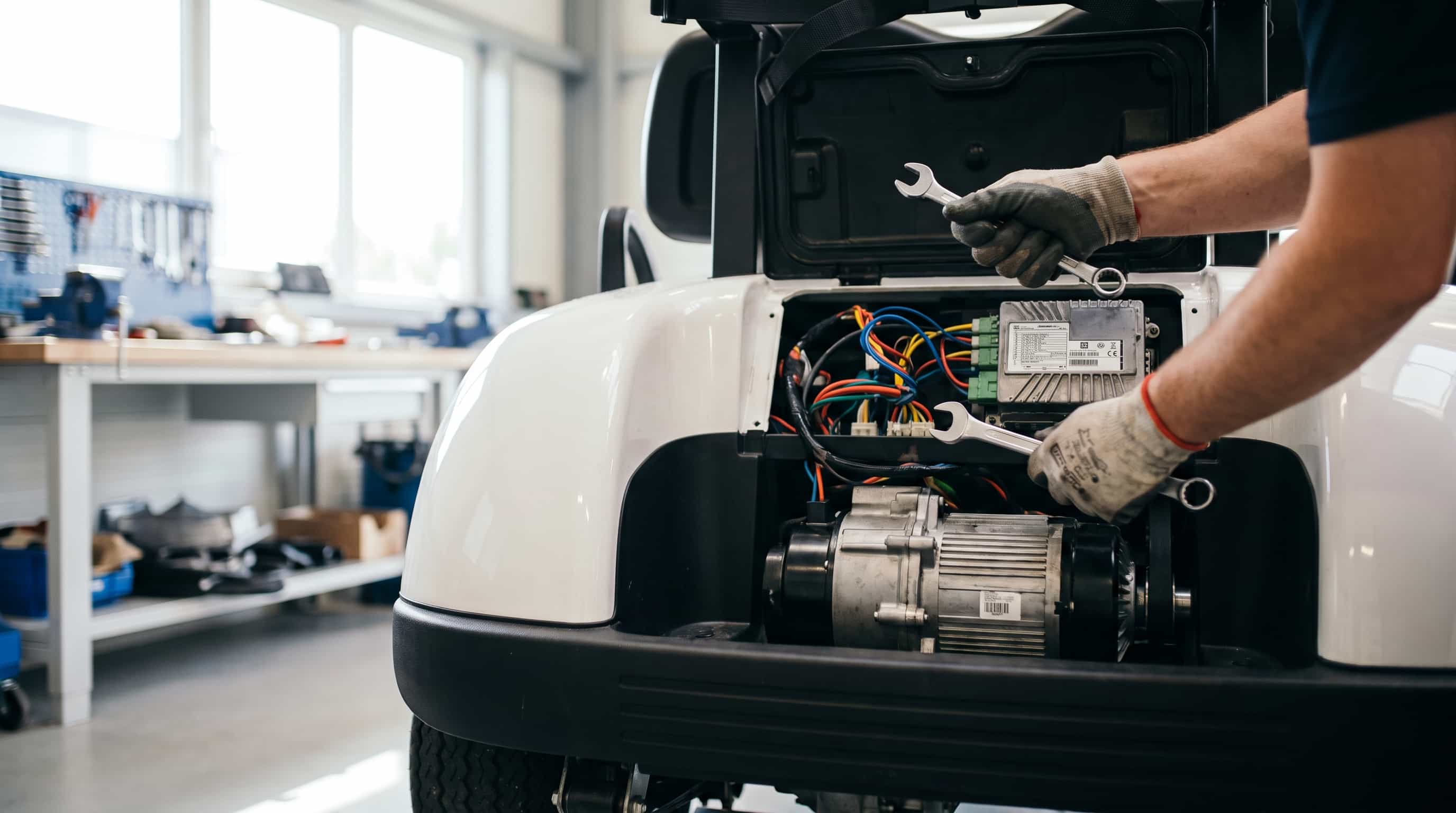
What an owner should generally not do is dismantle and reline drum brakes or adjust the system by guesswork, because a brake reassembled wrong is worse than the fault you started with. Brakes are the one system where a poor repair can hurt someone.
If yours is doing this and the checks here have not settled it, we diagnose and repair buggies, including a callout to wherever it is.
The line that means stop
Some brake situations are a clear stop. If the pedal goes to the floor, if braking is clearly reduced, if a wheel is grinding, or if the buggy will not hold on a slope, the buggy comes out of use until it is repaired. There is no version of a reduced brake that is fine to keep using for a while. This is the fault type the whole Repair Centre routes straight to an engineer, with no self-fix offered, and that is deliberate.
Common questions
- My brake pedal feels soft and goes down a long way
- That usually means the brakes are out of adjustment or the shoes are worn, so there is slack to take up before they bite. It is a real reduction in braking, so treat it as a fault to fix rather than get used to, and have the adjustment and wear checked before further use.
- The buggy rolls when I park it on a slope
- The park brake is not holding, which is a genuine hazard because a buggy can roll into people or property. Do not rely on it. Chock the wheels if you must leave it, take it out of use, and have the park brake and cables checked and adjusted properly.
- Can I adjust the brakes myself
- The basic checks, pedal travel, park brake hold, listening for grinding, are fine and useful. Adjusting or relining the brakes is better left to an engineer, because brakes are a safety system and a repair done wrong is more dangerous than the original fault. If braking is reduced, stop using the buggy until it is sorted.
Still not right
We diagnose and repair golf buggies, service them on a plan, and send an engineer out to where the buggy is. Tell us the symptom and we will say what it usually means.
Related pages
Related guides
 Golf buggy troubleshooting, a complete guide9 minute read
 Golf buggy fault-finding, a first-principles method6 minute read
 Golf buggy regenerative braking explained4 minute read
- Golf buggy brake pedal feels spongy4 minute read
- Golf buggy handbrake will not hold4 minute read
 Golf buggy brake shoes and drums5 minute read