Golf buggy battery safety, acid, gas and handling
By James Brown · Updated 21 July 2026 · 5 minute read
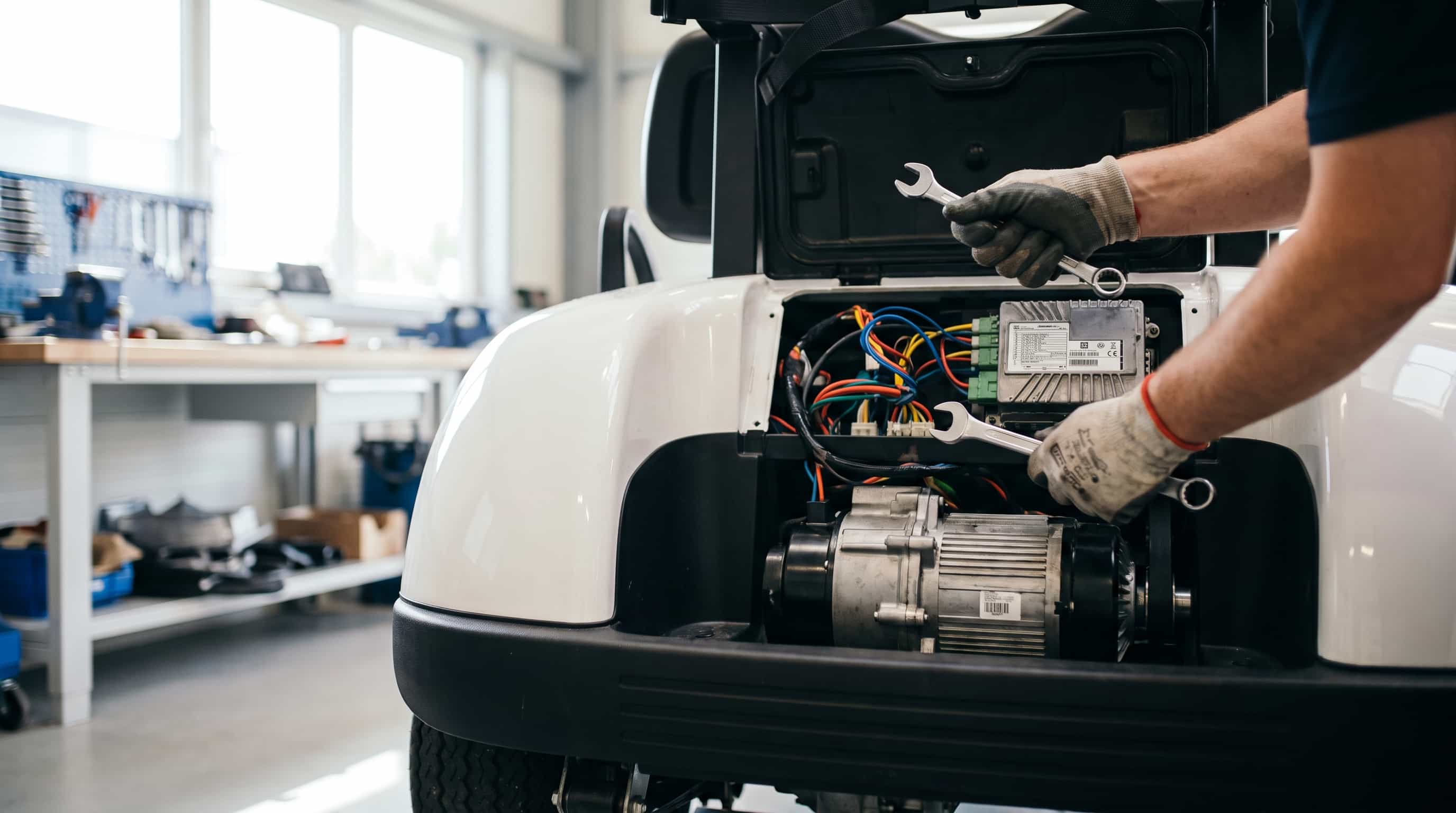
Golf buggy batteries carry real hazards: lead-acid electrolyte is acid, a charging battery gives off flammable gas, the pack stores serious electrical energy, and batteries are heavy. Work with eye protection and gloves, in a ventilated space, avoid shorting across terminals, and lift carefully. A swollen, damaged, leaking or hot battery is a stop-now situation for competent help.
Key takeaways
- Lead-acid electrolyte is sulphuric acid, which burns skin and eyes.
- A charging battery gives off hydrogen, which is flammable, so keep sparks and flames away.
- The pack stores serious energy, so avoid shorting across terminals with a tool.
- Batteries are heavy, so lift and handle them carefully to avoid injury and drops.
- A swollen, damaged, leaking or hot battery is a stop-now hazard, not a job to press on with.
The hazards, plainly
Battery work is well within owner ability, but only because the hazards are respected rather than ignored, so it is worth naming them plainly. Lead-acid batteries contain electrolyte that is sulphuric acid, which burns skin and eyes and damages clothing. A battery on charge, and for a while after, gives off hydrogen gas, which is flammable and can be ignited by a spark or flame. The pack as a whole stores a serious amount of electrical energy, enough to deliver a dangerous spark and heat if shorted. And the batteries are simply heavy, individually and as a set, which is an injury risk in its own right. None of this makes battery work dangerous if you take the precautions; all of it makes it dangerous if you do not.
Working safely
The precautions match the hazards. Wear eye protection whenever you work on or near batteries, and gloves for anything involving the electrolyte or terminals, because acid contact is the commonest injury. Work in a ventilated space, not a sealed cupboard, so any gas disperses, and keep flames, sparks and smoking well away, especially while charging. Guard against shorts: do not lay tools across the terminals, remove watches and rings that could bridge a connection, and work methodically so a spanner never bridges two posts. When lifting batteries, use proper technique and get help for a heavy set, since a dropped battery can injure you and crack its case, releasing acid. If acid contacts skin, flush with plenty of water; if it reaches the eyes, flush thoroughly and get medical help.
Lithium is different, not exempt
Lithium packs remove some hazards and add others. There is no acid to spill and no watering, and they are managed by a BMS that protects the cells. But a lithium cell that is damaged or abused can fail in ways that are serious, and a lithium pack still stores real energy. So the no-short rule and the careful handling still apply, and the extra rule is not to interfere with or bypass the BMS, as the lithium fault guide explains. Whichever type you have, the pack deserves respect rather than casual handling.
If yours is doing this and the checks here have not settled it, we diagnose and repair buggies, including a callout to wherever it is.
The stop that overrides everything
One rule sits above all the others and appears throughout this knowledge base for good reason. If a battery is swollen, bulging, cracked, leaking, hot to the touch, or giving off a strong or unusual smell, stop. Do not charge it, do not work on it, do not try to recover or move it casually, and keep people away. A battery in that state, lead-acid or lithium, is a genuine hazard that can worsen quickly, and it is a matter for someone competent to deal with safely, not a fault to press on with because the event is tomorrow. The whole Repair Centre routes a damaged battery straight to an engineer with no self-fix, and this guide does the same, because no repair is worth the risk a damaged battery carries.
Common questions
- What protective equipment do I need for battery work
- At minimum, eye protection whenever you work on or near batteries, and gloves for anything touching the electrolyte or terminals, since acid contact is the commonest injury. Work in a ventilated space away from flames and sparks, and remove watches and rings that could bridge a connection. Those simple precautions make routine battery work safe.
- Why does shorting the terminals matter so much
- Because the pack stores serious electrical energy, and bridging two terminals with a tool, a watch or a ring creates a heavy short that produces a dangerous spark and rapid heat, which can burn you and, near a gassing battery, risk ignition. Work methodically so a spanner never touches two posts at once, and keep metal jewellery off during battery work.
- What do I do about a swollen or leaking battery
- Stop and keep clear. A swollen, cracked, leaking, hot or strong-smelling battery, lead-acid or lithium, is a genuine hazard that can worsen quickly. Do not charge it, work on it, or move it casually. Get someone competent to deal with it safely. No repair is worth the risk, which is why a damaged battery always goes to an engineer rather than a self-fix.
Still not right
We diagnose and repair golf buggies, service them on a plan, and send an engineer out to where the buggy is. Tell us the symptom and we will say what it usually means.
Related pages
Related guides
 Golf buggy troubleshooting, a complete guide9 minute read
- Suspension knocks and rattles5 minute read
- Golf buggy chassis and frame corrosion4 minute read
 Battery watering and maintenance (lead-acid)6 minute read
 Golf buggy battery terminals and connections4 minute read
- Golf buggy lithium battery management system faults5 minute read