Golf buggy chassis and frame corrosion
By James Brown · Updated 21 July 2026 · 4 minute read
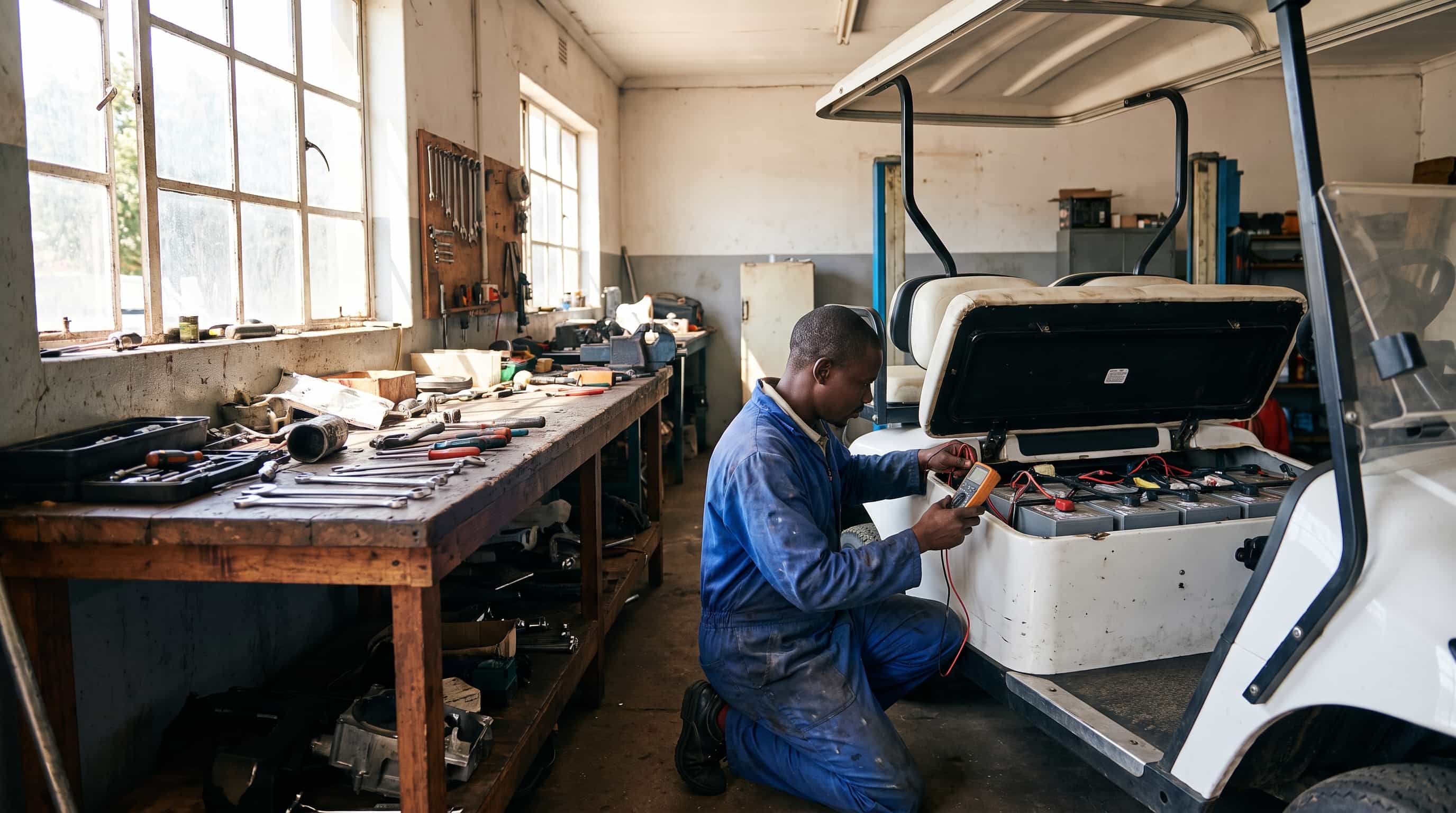
A buggy's chassis and frame corrode because they live outdoors, get wet and muddy, and trap damp in crevices. Rust tends to start where water sits and where dirt is held against metal. Keeping the buggy clean, dry and stored well slows it. Surface rust is manageable, but structural corrosion that weakens the frame is a safety matter for an engineer to assess.
Key takeaways
- The chassis and frame corrode from outdoor use, wet, mud and trapped damp.
- Rust starts where water sits and where dirt is held against metal.
- Keeping the buggy clean, dry and stored well slows corrosion considerably.
- Surface rust is manageable; structural corrosion that weakens the frame is not.
- Structural frame corrosion is a safety matter for an engineer to assess.
Why the frame corrodes
Most corrosion guides here are about electrical connections, but the buggy's structure rusts too, and for the same underlying reason: it lives outdoors. The chassis and frame get rained on, driven through wet grass and mud, splashed, and washed, and then often stored while still damp. Wherever water sits, and wherever mud and dirt are held against the metal, corrosion gets its start, because the damp cannot dry and works on the steel over time. On a buggy used hard on estates, farms and event fields, the underside in particular takes a lot of this, which is why the frame is worth thinking about and not just the parts that move.
Where rust starts
Rust does not attack evenly; it starts in the places that hold damp and dirt. The underside and lower frame members, closest to the wet ground and the mud thrown up in use, are prime spots. Crevices, seams, box sections and anywhere water can collect and not drain hold moisture against the metal. Areas where mud cakes on and is not cleaned off keep the steel damp underneath long after the surface looks dry. And any place where a stone chip or a knock has broken through protective coating gives corrosion a way in. Knowing these spots tells you where to look when you check the frame and where to direct cleaning and drying.
Slowing it down
The good news is that frame corrosion is substantially slowed by the same care that helps the rest of the buggy. Keeping it clean, and crucially dry, stops damp and mud sitting against the metal, so washing off the mud after a muddy event, and drying the buggy rather than storing it wet, does real good, as the cleaning and storage guides set out. Paying attention to the underside and the crevices, not just the visible bodywork, matters, since that is where the corrosion hides. Storing the buggy somewhere dry rather than out under a sheet does more than any treatment. None of this stops corrosion entirely on a buggy that works outdoors, but it makes the difference between slow, manageable surface rust and a frame that deteriorates quickly.
If yours is doing this and the checks here have not settled it, we diagnose and repair buggies, including a callout to wherever it is.
Surface versus structural
The important distinction is between surface rust and structural corrosion, because they matter very differently. Surface rust, discolouration and light corrosion on the outside of the metal, is common on a working buggy and is manageable: it is unsightly rather than dangerous, and it can be cleaned back and protected. Structural corrosion is another matter. When rust has eaten into the frame enough to weaken it, thinning or holing a load-bearing member, that is a safety concern, because the chassis is what holds the buggy together and carries its loads. A frame weakened by corrosion can fail, which on a vehicle carrying passengers is serious. So while cleaning and treating surface rust is fair owner work, any sign that the frame itself is weakened, significant rot, holes, or soft, flaking structural metal, is a matter to have an engineer assess, not to ignore or patch cosmetically. The Repair Centre treats a compromised structure as a safety matter for that reason.
Common questions
- Why is my buggy's frame rusting
- Because it lives outdoors and gets wet, muddy and splashed, and is often stored while still damp, so corrosion starts wherever water sits and dirt is held against the metal, especially the underside and crevices. It is normal on a working buggy, and it is substantially slowed by keeping the buggy clean, dry and stored well rather than left wet and muddy.
- Is surface rust on the chassis a problem
- Surface rust, light discolouration and corrosion on the outside of the metal, is common on a working buggy and is manageable rather than dangerous: it can be cleaned back and protected. The concern is structural corrosion that has eaten into and weakened a load-bearing frame member, which is a different and more serious matter.
- When is frame corrosion a safety issue
- When rust has weakened the frame itself, thinning, holing, or making structural metal soft and flaky, because the chassis carries the buggy's loads and a weakened frame can fail, which is serious on a passenger-carrying vehicle. That is a matter for an engineer to assess, not to patch cosmetically, so any sign the structure is compromised should be checked rather than ignored.
Still not right
We diagnose and repair golf buggies, service them on a plan, and send an engineer out to where the buggy is. Tell us the symptom and we will say what it usually means.
Related pages
Related guides
- Golf buggy troubleshooting, a complete guide9 minute read
- Golf buggy brake pedal feels spongy4 minute read
 Golf buggy charger plug and receptacle faults4 minute read
- Cleaning and caring for bodywork and seats5 minute read
 Wiring harness and connector corrosion5 minute read
- Winter storage, preparing a buggy6 minute read