Golf buggy charger plug and receptacle faults
By James Brown · Updated 21 July 2026 · 4 minute read
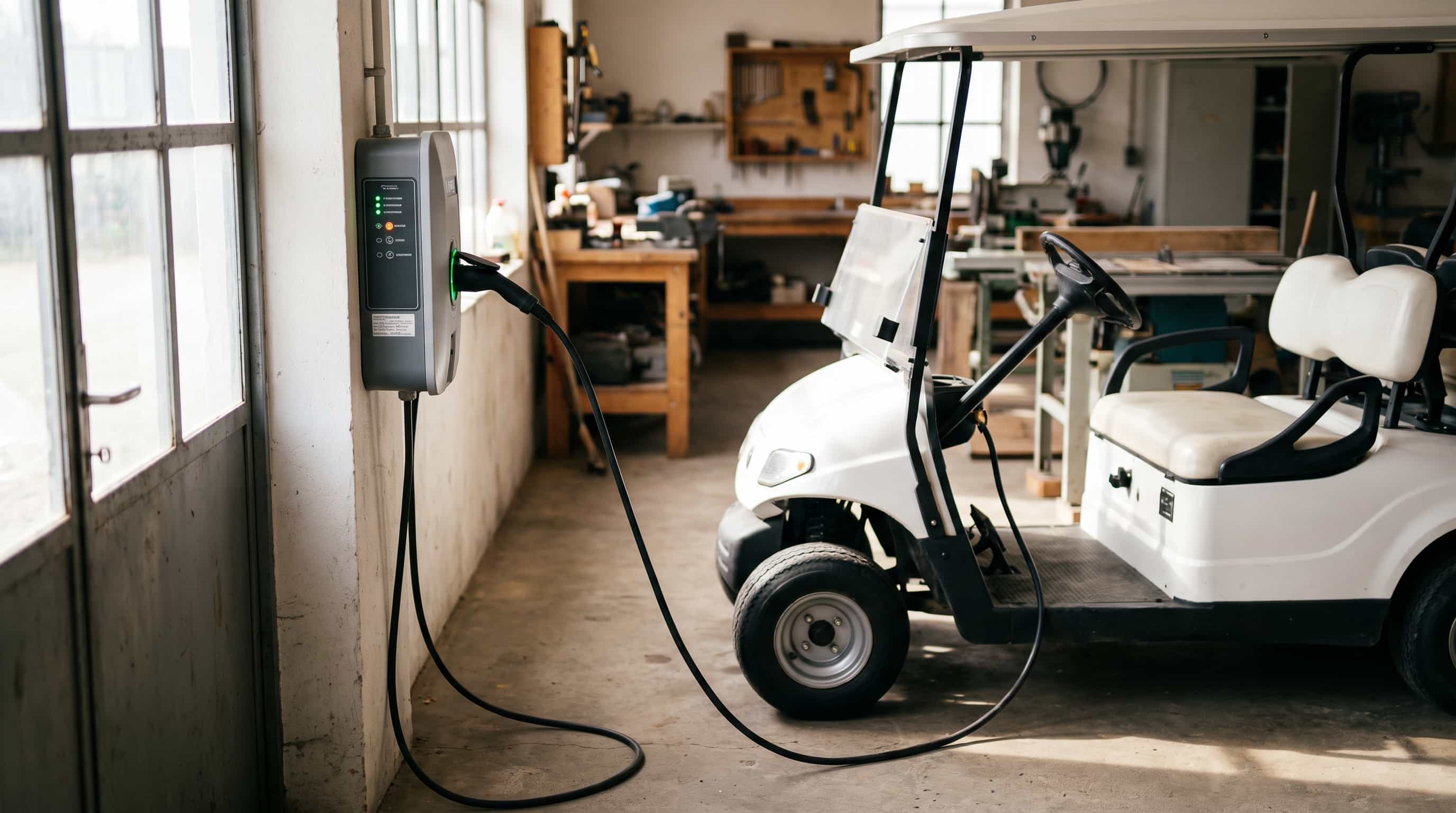
The charge plug and its socket carry real current, so worn, corroded or heat-damaged pins are a common charging fault, especially on older buggies. Signs include a plug that fits loosely, discoloured or melted pins, and heat at the socket while charging. A burnt or melted receptacle is both the fault and a hazard, so it is replaced, never forced or bodged.
Key takeaways
- The charge plug and socket carry the full charging current, so their pins matter.
- Worn, corroded or loose pins cause intermittent or failed charging.
- Discolouration, melting or heat at the socket signals a serious connection fault.
- A hot connection is a hazard, so a burnt receptacle is replaced, not patched.
- Keep the pins clean and the plug firmly seated to avoid heat building up.
A hard-working connection
The charge plug and receptacle get little thought until they fail, but they do real work: all the current that charges the pack passes through those few small pins, over and over, often outdoors and often roughly handled. A connection carrying that much current relies on clean, tight contact, and anything that spoils the contact, wear, corrosion, or a plug that no longer seats firmly, forces the same current through a poorer connection, which makes heat. That is why this modest part is a genuine and common cause of charging trouble, particularly on older buggies where the plug and socket have seen years of use.
The signs
The symptoms are fairly distinctive. A plug that has become loose in the socket, wobbling or falling out easily, is not making firm contact. Pins that look discoloured, blackened or distorted have been running hot. A socket or plug that is warm, or worse hot, while charging is a warning sign, because a good connection carrying this current should not be getting hot. And charging that works only when the plug is held at a certain angle, or that cuts in and out, is a poor-contact fault at the plug even when everything else is fine. Any of these points at the plug and receptacle rather than the charger or batteries.
Why heat is the serious part
Some faults are merely inconvenient, but a hot charging connection is the one to respect, because heat at an electrical connection under load can progress to melting and, in the worst case, a fire risk. A receptacle that has already melted or burnt is beyond cleaning; the contact is damaged and it will only get hotter. So the response to a discoloured, melted or hot socket is not to keep using it or to bodge it back together, but to stop charging through it and have it replaced. Forcing a plug into a damaged socket, or wedging a loose one to make contact, makes the heat worse, which is exactly the wrong direction.
If yours is doing this and the checks here have not settled it, we diagnose and repair buggies, including a callout to wherever it is.
Keeping it healthy, and the repair
Prevention is simple: keep the pins clean, keep the plug and socket free of dirt and corrosion, and make sure the plug seats fully and firmly every time rather than half-in. That keeps the contact good and the heat down. When a plug or receptacle is worn or damaged, replacing it is a recognised repair, but because it carries the full charging current and sits in the buggy's charging circuit, a melted or burnt one is replaced properly by someone competent rather than improvised. The owner's job is to spot the loose fit, the discolouration or the heat early, and stop using a connection that is running hot before it becomes a bigger problem.
Common questions
- My charge plug is loose or falls out
- A loose plug is not making firm contact, which both interrupts charging and risks heat where the current forces through a poor connection. Check the plug and socket pins for wear, dirt or corrosion, and make sure the plug seats fully. If the socket is worn so nothing seats firmly, it needs replacing rather than wedging, since a poor contact under charging current runs hot.
- The socket gets warm or looks discoloured when charging
- That is a warning sign to take seriously. A good charging connection should not run hot, so warmth, discolouration or melting means a poor contact heating up under load, which can progress to a fire risk. Stop charging through it and have the receptacle replaced. Do not force a plug into a damaged socket or bodge it, since that makes the heat worse.
- Can I just clean the pins
- If the pins are only dirty or lightly corroded, cleaning them and making sure the plug seats firmly can restore a good connection. But if the plug or socket is worn so it will not seat, or shows melting, burning or heat damage, cleaning is not enough and it needs replacing, because the contact itself is compromised and will keep running hot.
Still not right
We diagnose and repair golf buggies, service them on a plan, and send an engineer out to where the buggy is. Tell us the symptom and we will say what it usually means.
Related pages
Related guides
 Golf buggy troubleshooting, a complete guide9 minute read
 Daily checks for fleet operators5 minute read
 Golf buggy battery disconnect and isolator4 minute read
- Charger not working, what to check5 minute read
- Charging faults and how to diagnose them7 minute read
- Onboard versus offboard golf buggy chargers4 minute read