Charger not working, what to check
By James Brown · Updated 21 July 2026 · 5 minute read

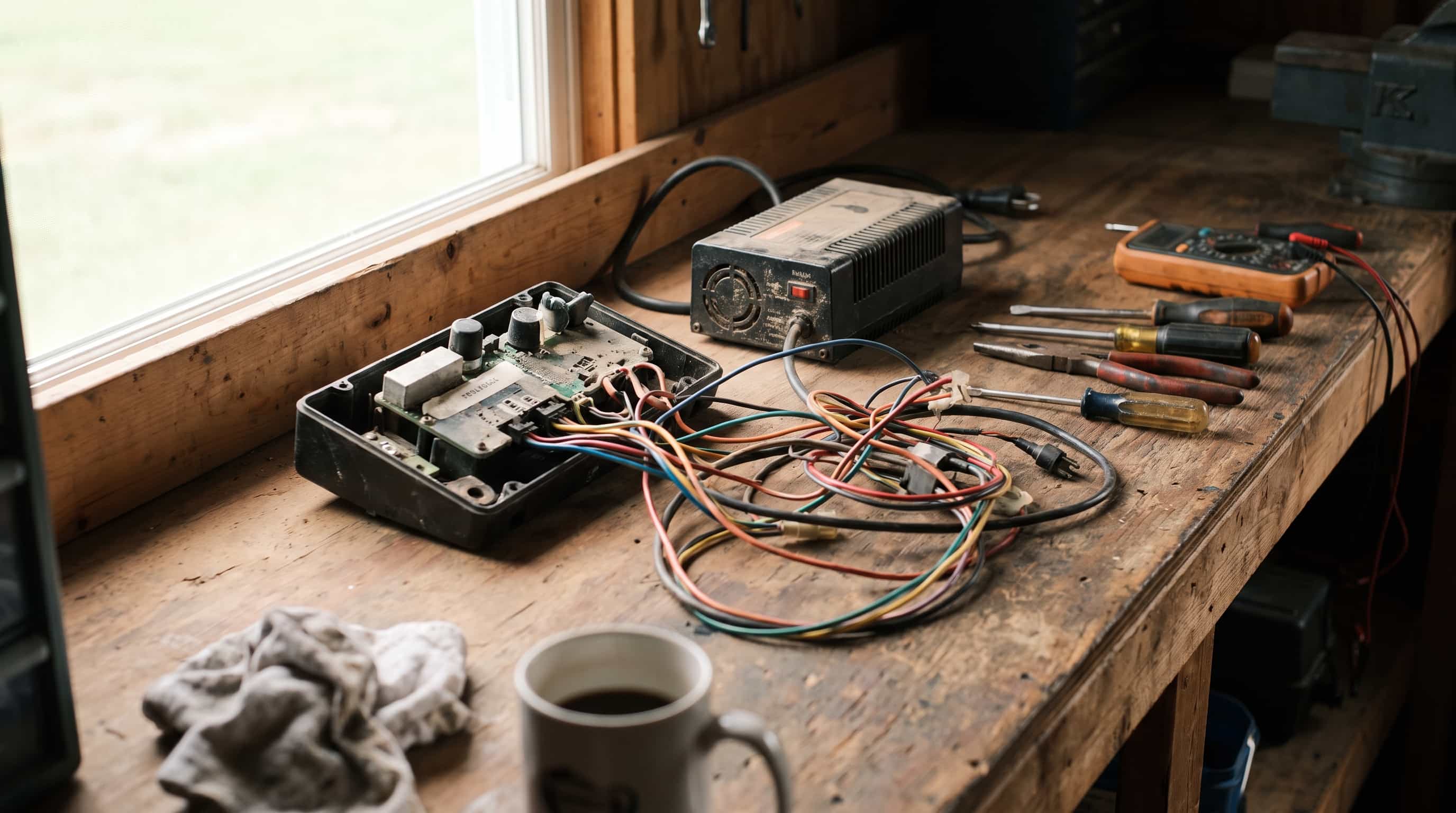
Work a dead charger from the wall in: check the mains socket and the plug fuse, then the lead and its pins for damage, then read the charger's own indicator lights against its manual. If all that is good and it still does nothing, the pack may be too flat for the charger to start, or the charger itself has failed and needs testing.
Key takeaways
- Check the mains supply and plug fuse first, since a dead socket looks exactly like a dead charger.
- Inspect the lead and both plugs for damage, corrosion or melted pins before blaming the unit.
- The charger's indicator lights usually tell you what it thinks is wrong; read the manual's key.
- A pack left very flat can sit below the voltage the charger needs to start, so it does nothing.
- A charger that is hot, smells, or trips the mains is a stop-now fault, not a persist-and-see one.
The wall and the fuse
A charger that will not work is often a supply problem wearing a charger's clothes. Before anything else, confirm the mains socket is live and switched on, and check the fuse in the charger's mains plug, since a blown plug fuse gives you a completely dead charger and is a two-minute fix. If you are using an extension lead, check that too, because a switched-off or faulty lead produces the same nothing.
This is dull, and it resolves a real share of dead-charger calls at no cost, which is why it comes first every time.
The lead and the pins
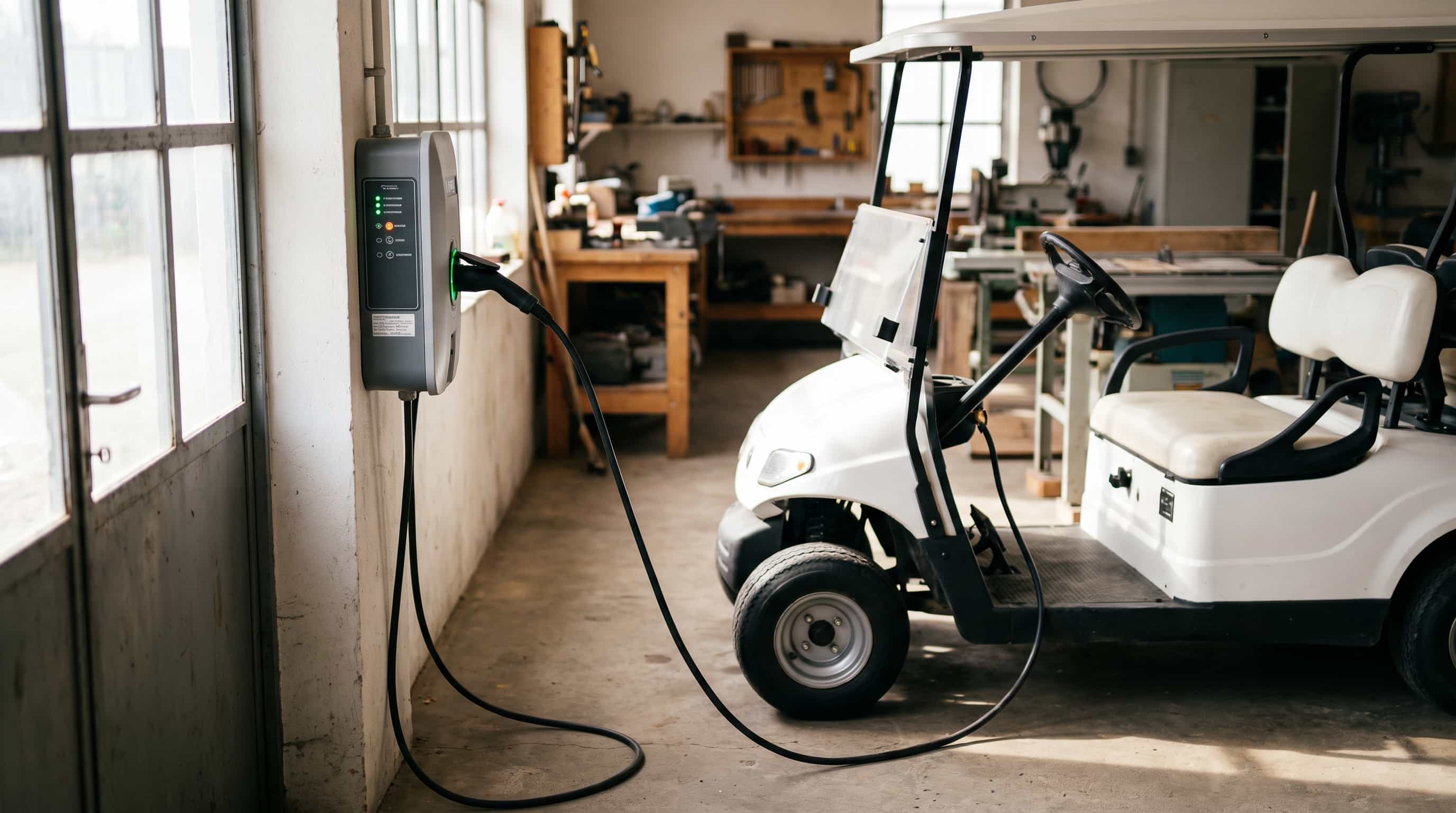
Next look at the charging lead and both ends of it. The lead takes a hard life, coiled, trodden on, and pulled from odd angles, and a break inside the insulation or a corroded pin stops it passing current. Pay attention to the charger plug and the buggy's charge socket, because those pins carry real current and are a known point for heat damage and melting on older machines. A socket with darkened or distorted pins is both the fault and a hazard, and it wants replacing rather than forcing.
Read the charger's lights
A modern charger reports its state through indicator lights or a blink pattern. Before you decide it is broken, find the light key in its manual and read what the current pattern means. Chargers commonly refuse to start and show a fault when they detect a problem with the pack, so a fault light is the charger working and telling you something, not the charger failing. Note the exact pattern, because it is the most useful thing you can hand an engineer.
If yours is doing this and the checks here have not settled it, we diagnose and repair buggies, including a callout to wherever it is.
The flat-pack case, and when to stop
There is one situation where charger and battery look like each other. Many modern chargers need to see a minimum pack voltage before they begin, as a safety measure. A set left very flat can drop below that, so the charger sees no valid battery and stays dark, which looks like a dead charger but is not. Recovering a pack from that state is covered separately and needs care.
Stop and get help in two cases. If the lead or plug shows damaged insulation, that is an electrical hazard to replace, not to tape. And if the charger becomes too hot to hold, smells hot, or trips the mains repeatedly, unplug it and leave it, because a charger failing that way is not one to keep trying.
Common questions
- The charger is completely dead, no lights
- Start at the mains: a dead or switched-off socket, a blown plug fuse, or a faulty extension lead all give a completely dead charger and cost nothing to check. If the supply is good and the charger still shows nothing, inspect the lead and pins, then consider whether the charger itself has failed.
- The charger shows a fault light
- That is usually the charger detecting a problem and refusing to charge, which is it working rather than broken. Read the light pattern against the manual to learn what it has found, often a pack it judges too flat or out of range, and note the pattern to pass on if an engineer is needed.
- Could my batteries be too flat for the charger
- Yes. Many chargers need a minimum pack voltage to start, so a set left very flat can sit below it and the charger does nothing, looking dead when it is not. Recovering from that state needs the right approach and equipment, covered in the guide on recovering a flat buggy.
Still not right
We diagnose and repair golf buggies, service them on a plan, and send an engineer out to where the buggy is. Tell us the symptom and we will say what it usually means.
Related pages
Related guides
 Golf buggy troubleshooting, a complete guide9 minute read
 Clicking noise when accelerating5 minute read
 Golf buggy loses charge while parked4 minute read
- Charging faults and how to diagnose them7 minute read
 Golf buggy charger plug and receptacle faults4 minute read
 Onboard versus offboard golf buggy chargers4 minute read