Golf buggy loses charge while parked
By James Brown · Updated 21 July 2026 · 4 minute read

A parked buggy losing charge can be normal slow self-discharge, a parasitic drain from something left switched on or wired to draw power, a failing battery that no longer holds, or current leaking across a dirty, damp battery top. How fast it goes flat, over months or overnight, tells you which, and points at storage, wiring, or the batteries.
Key takeaways
- All batteries self-discharge slowly, so some loss over long standing is normal.
- A fast drain points at a parasitic draw, a failing battery, or a leak across the battery top.
- Something left switched on, or an accessory wired to draw power, is a common parasitic drain.
- A dirty, damp or acid-fouled battery top can leak current across itself.
- A battery that goes flat quickly despite no obvious drain is likely failing.
Some loss is normal
Every battery loses a little charge just sitting there, which is why the storage guides insist on keeping a stored set topped up. So a buggy that is noticeably down after months of standing is not necessarily faulty; it may simply be showing normal self-discharge that maintenance charging is meant to counter. The question that separates normal from a fault is the rate. Slow loss over long periods is expected. Fast loss, flat in days or overnight, is a fault to find, and the speed of the drain is your main clue to which fault it is.
Parasitic drains
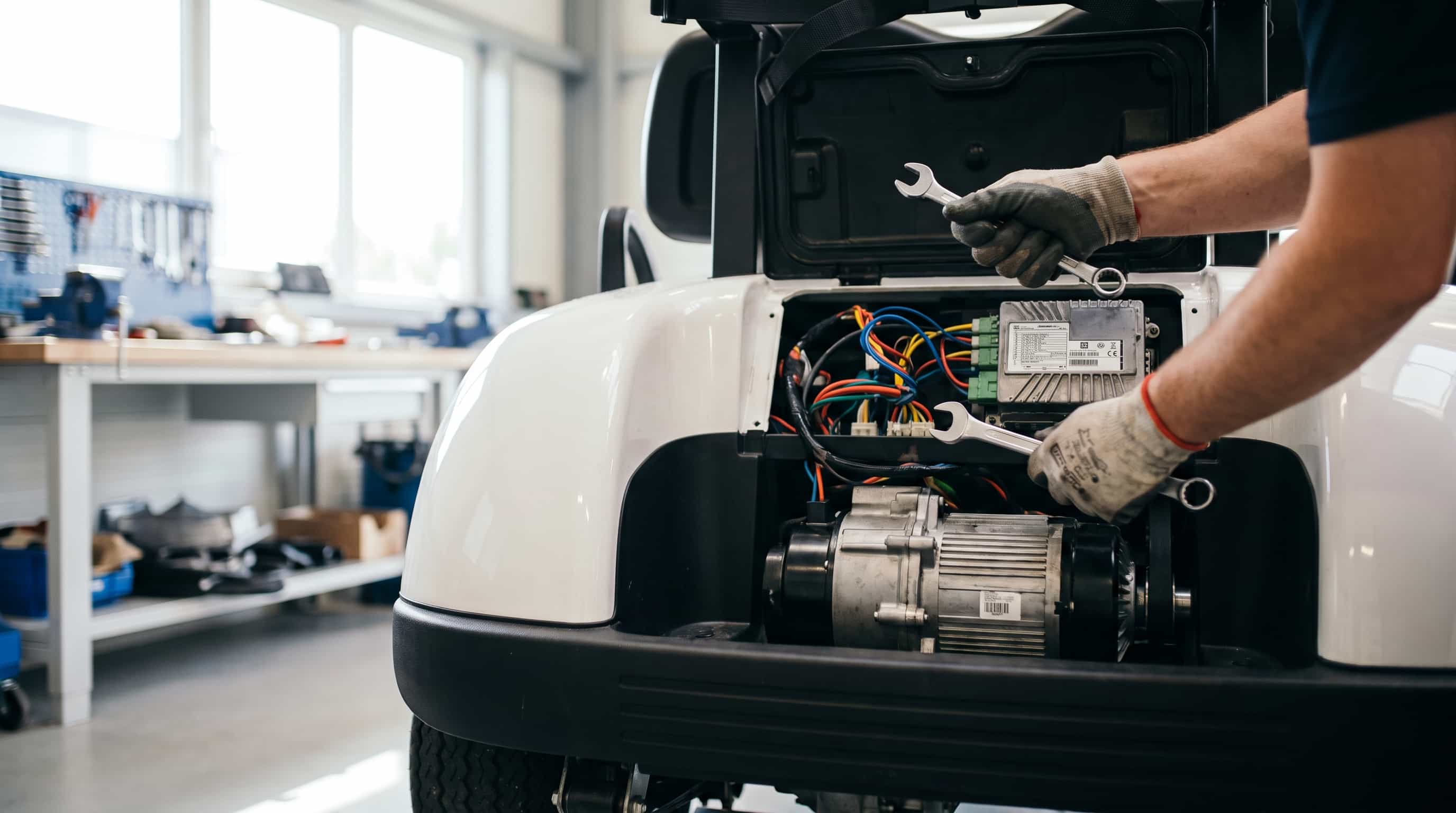
A common cause of a buggy going flat faster than it should is a parasitic drain, something drawing power while the buggy is parked. The simplest version is something left switched on, lights, an accessory, an added device, quietly using the batteries. Beyond that, an accessory wired so it draws even when the buggy is off, or a fault causing a small constant current, empties the set over time. If a buggy goes flat while parked and there is added equipment on it, or something that might be left on, that is the first place to look, since it is common and fixable. Tracing a parasitic drain properly can need a meter to measure the standing current, which points at whether there is an abnormal draw.
Leaks and failing batteries
Two battery-side causes complete the picture. On a lead-acid buggy, a battery top that is dirty, damp, or fouled with spilled electrolyte can let current leak across the surface between terminals, slowly discharging the set, which is one more reason the battery watering guide stresses keeping the tops clean and dry. And a battery that is failing simply will not hold its charge: a set near the end of its life goes flat far faster than a healthy one, sometimes overnight, which overlaps with the guide on a buggy that will not hold charge overnight. A set that drains quickly with no drain to find and a clean battery top is usually telling you it is worn out.
If yours is doing this and the checks here have not settled it, we diagnose and repair buggies, including a callout to wherever it is.
Narrowing it down
Put together, the diagnosis follows the rate and the clues. Slow loss over long standing with no other symptoms is likely normal self-discharge, managed by maintenance charging. Faster loss sends you to look for a parasitic drain, especially anything added or possibly left on, and to check the battery top is clean and dry on a lead-acid set. A quick drain with no drain found and a clean set points at failing batteries. Checking for things left on and keeping the battery top clean are owner jobs; measuring a standing current or confirming a failing set is where a meter, or an engineer, earns its place, so you fix the actual cause rather than just recharging repeatedly.
Common questions
- My buggy is flat after standing for months
- Some of that is normal self-discharge, which is why stored batteries need topping up through the standing period. If it is only mildly down after months, maintenance charging is the answer rather than a repair. If it goes flat far faster than that, look for a parasitic drain, a fouled battery top, or a failing set instead.
- It goes flat overnight or in a few days
- That fast a drain is a fault. Look first for something left switched on or an accessory drawing power while parked, which is common and fixable. On a lead-acid buggy, check the battery top is clean and dry, since a fouled top leaks current across itself. If no drain is found and the top is clean, the batteries are likely failing.
- How do I find what is draining it
- Start with the obvious: anything left switched on, and any added equipment that might draw power when the buggy is off. On lead-acid, clean and dry the battery top. Confirming an abnormal standing draw usually needs a meter to measure the current with the buggy parked, which shows whether something is drawing more than it should, and an engineer can trace it if needed.
Still not right
We diagnose and repair golf buggies, service them on a plan, and send an engineer out to where the buggy is. Tell us the symptom and we will say what it usually means.
Related pages
Related guides
 Golf buggy troubleshooting, a complete guide9 minute read
 Golf buggy DC-to-DC converter faults4 minute read
- Golf buggy battery recycling and disposal4 minute read
 Golf buggy will not hold charge overnight4 minute read
 Golf buggy battery problems explained7 minute read
- Golf buggy battery terminals and connections4 minute read