Charging faults and how to diagnose them
By James Brown · Updated 21 July 2026 · 7 minute read
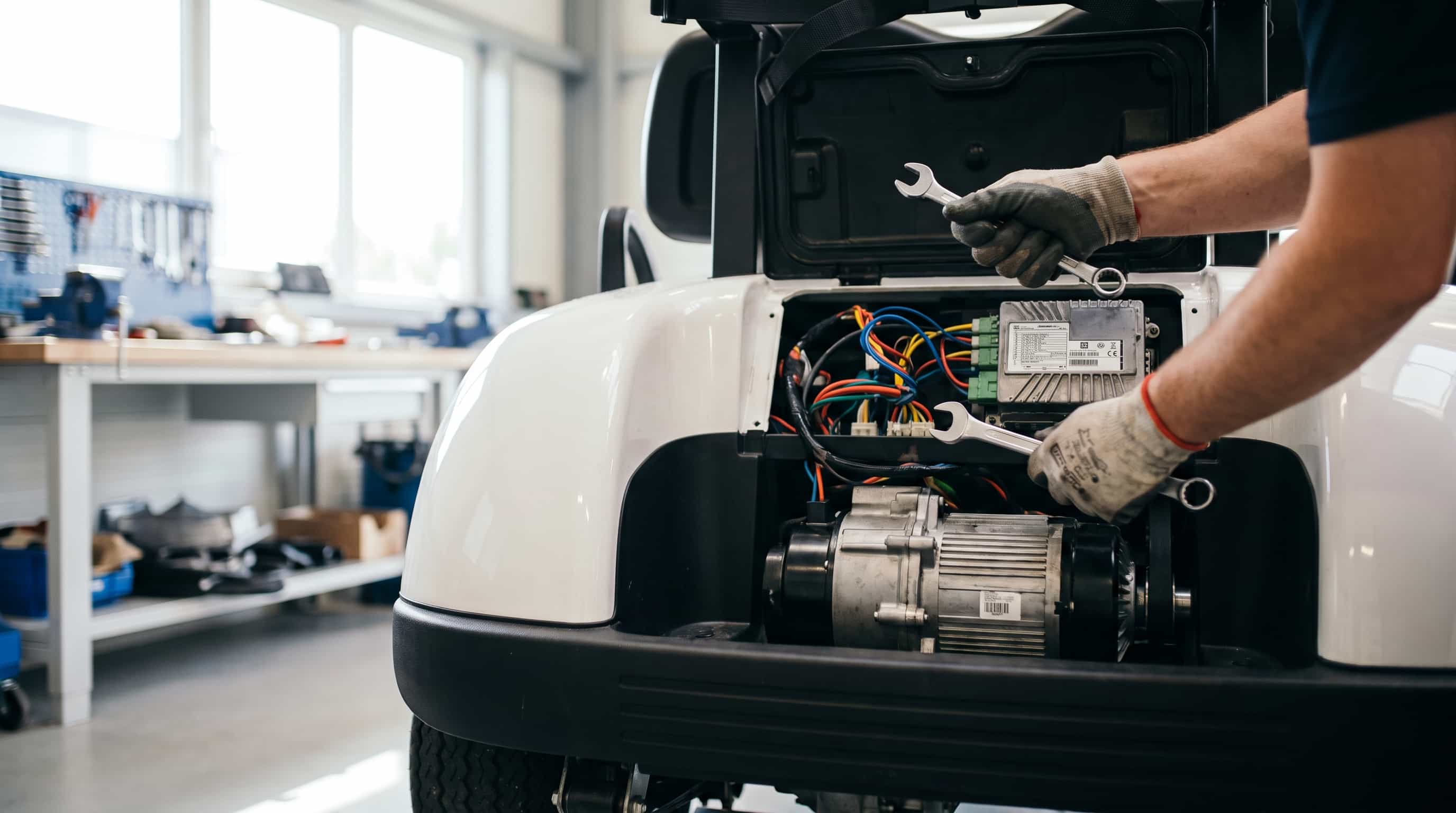
Diagnose a charging fault from the outside in: mains supply, the lead and plug, the charger unit, then the pack itself. Most no-charge cases are a dead socket, a damaged lead, or a pack so flat the charger will not wake. A single bad cell can also stop a charge. Work in that order before suspecting the battery.
Key takeaways
- Charging faults are worked from the wall inwards, ruling out the cheap causes first.
- A pack taken too flat can drop below the voltage a modern charger needs to start, and it looks dead.
- Charger indicator lights and any error blinks are the fastest clue, so read the manual's key.
- A single failing cell can stop the whole set charging, which points at the batteries not the charger.
- Damaged leads and swollen batteries are where you stop and get help rather than persist.
Start at the wall, not the battery
When a buggy will not charge, the instinct is to blame the batteries, and that is usually the last thing to suspect rather than the first. Begin at the mains. Is the socket live, the fuse in the plug intact, the extension lead actually switched on. A surprising share of no-charge calls end here, at a tripped socket or a dead lead, and it costs nothing to check.
Then look at the charging lead and both plugs. A lead that has been run over, kinked at the buggy socket, or corroded at the pins will not pass current reliably. Check the buggy's charge receptacle too, since that is a common point of heat damage and melted pins on older machines.
Read what the charger is telling you
A modern charger is not a dumb transformer. It reads the pack and runs a charge profile, and it usually reports what it is doing through indicator lights or a blink code. Before you assume anything, find the charger's light key in its manual and read what the current pattern means. Many chargers will refuse to start and show a fault rather than charge into a pack they judge unsafe, and that refusal is information, not a breakdown.
If the charger clicks, hums and then stops, or cycles its lights and gives up, note exactly what it does. That pattern is the single most useful thing to tell an engineer if it comes to that.
The flat-pack trap
There is a common trap with modern chargers. Many need to see a minimum pack voltage before they will begin, a safety feature so they do not try to force charge into a damaged pack. If a set has been left flat for a long period, it can sink below that threshold, and then the charger sees what looks like no battery and does nothing. The buggy appears dead and the charger appears broken when neither is quite true.
Recovering a pack from that state is possible but is a job to approach carefully, because you are deliberately working around a safety cut-out. It is covered separately in the guide on recovering a flat buggy, and if you are at all unsure it is a reason to get help rather than improvise with the wrong equipment.
If yours is doing this and the checks here have not settled it, we diagnose and repair buggies, including a callout to wherever it is.
When it is the batteries, and when to stop
If the mains is good, the lead is sound and the charger is healthy but the set still will not take or hold a charge, the fault has moved to the batteries. A single cell that has failed short can drag the pack voltage in a way that stops a proper charge, and a lead-acid battery that has been run dry may simply not recover.
Two things end the DIY part immediately. A charging lead with damaged insulation is an electrical hazard and gets replaced, not taped. And any battery that is swollen, leaking, hot or giving off a strong smell is a stop-now situation: disconnect the charge, keep clear, and get a competent person to deal with it. Charging faults are usually cheap and dull, but the failures around them are the ones worth respecting.
Common questions
- My charger lights come on but nothing charges
- Read the light pattern against the charger's manual first, because many chargers show a fault code rather than charging when they detect a problem. If the pattern is a fault, note it. If the lights suggest it is charging but the pack never comes up, the fault has moved to the batteries or their connections.
- Could the batteries be too flat to charge
- Yes, and it is a common cause that looks like a dead charger. Many modern chargers need a minimum pack voltage before they will start, so a set left flat for months can drop below it and the charger simply does nothing. Recovering from that state needs care and the right equipment.
- Is a warm charger normal
- A charger that is warm to the touch while working is normal, since it is doing real electrical work. A charger that becomes too hot to hold, smells hot, or trips the mains is not, and that is the point to unplug it and stop rather than keep trying.
Still not right
We diagnose and repair golf buggies, service them on a plan, and send an engineer out to where the buggy is. Tell us the symptom and we will say what it usually means.
Related pages
Related guides
 Golf buggy troubleshooting, a complete guide9 minute read
 Golf buggy accelerates slowly from a stop4 minute read
 Won't go into reverse5 minute read
- Charger not working, what to check5 minute read
- Golf buggy battery problems explained7 minute read
- When to call an engineer for a golf buggy: warning signs5 minute read