Golf buggy accelerates slowly from a stop
By James Brown · Updated 21 July 2026 · 4 minute read

Sluggish acceleration from a stop is often a tired battery that cannot deliver the surge needed to pull away, but it can also be a deliberate soft-start setting, a dragging brake holding the buggy back, or simply overloading. Check the battery charge and health, rule out a low limiter or soft-start and a dragging brake, before assuming a drive fault.
Key takeaways
- Pulling away demands a surge of current, which a tired battery struggles to supply.
- Many buggies have a soft-start setting that makes gentle pull-away deliberate, not a fault.
- A dragging brake holds the buggy back from rest and runs the wheel hot.
- Overloading makes pull-away sluggish and is worth ruling out by counting the load.
- If battery, settings, brakes and load are fine, a drive fault is worth an engineer.
The surge of pulling away
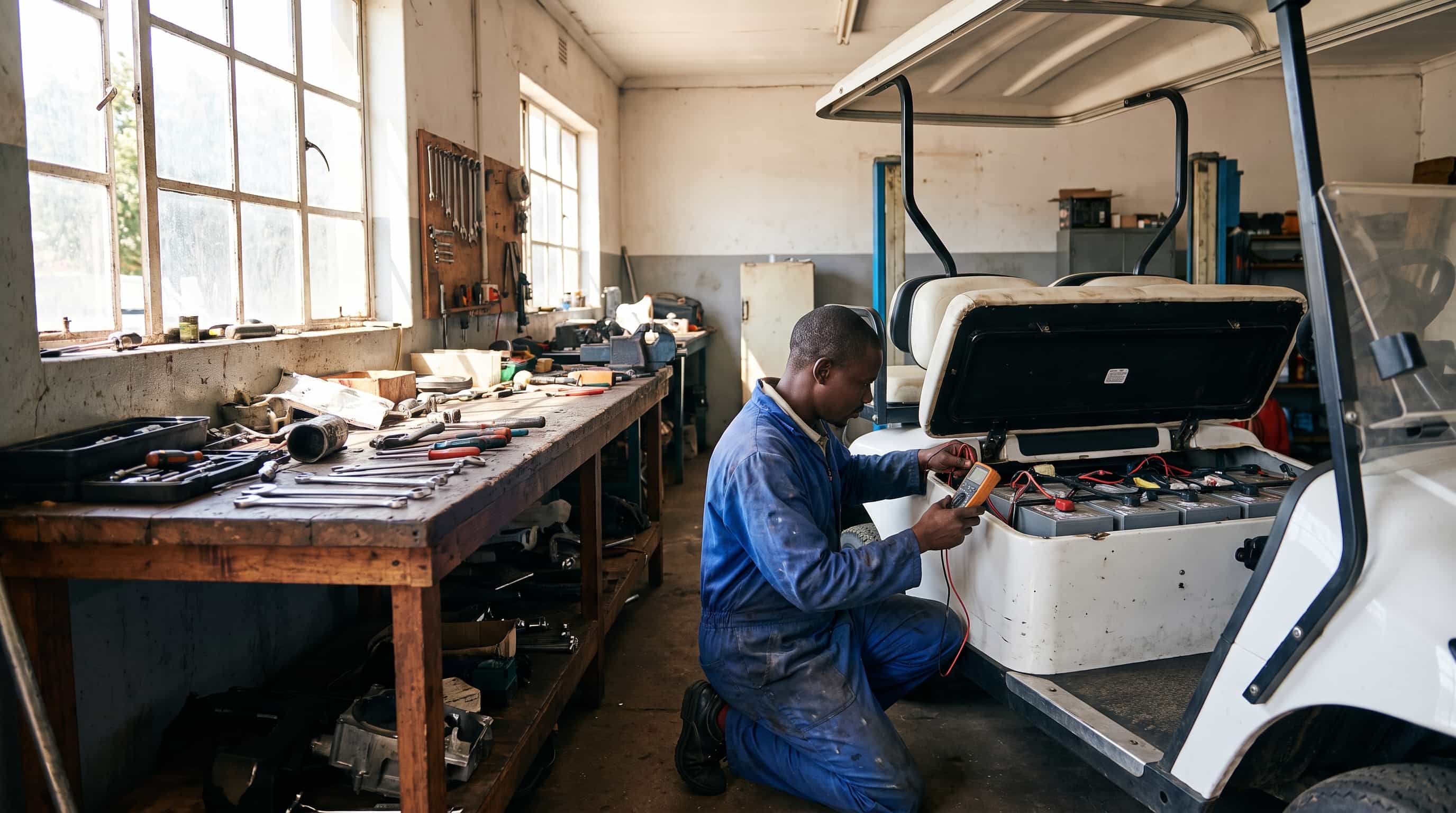
Getting a stationary buggy moving is one of the higher demands on the drive, because overcoming the buggy's inertia needs a surge of current right at the start. A battery set that is tired or low struggles most exactly here, so a buggy that feels sluggish pulling away, then fine once rolling, is often showing battery weakness at the moment of highest demand. As with the other speed guides, the tell is whether it tracks the charge: worse late in the day or on an old set, better fresh off the charger. So the battery is the first thing to check, because it is the commonest cause and free to assess.
Soft-start, not a fault
Before treating sluggish pull-away as a problem, know that some of it may be deliberate. Many buggies have a soft-start or ramped acceleration, built in or set, so the buggy pulls away gently rather than lurching, which is kinder to passengers and to the drivetrain and is genuinely desirable at a wedding or a busy venue. A buggy that has always pulled away gently may simply be set that way, and an owner new to it, or one comparing it with a different buggy, can mistake a feature for a fault. Establish whether the buggy has a soft-start or a low speed setting before assuming it is broken, since that is the cheapest answer.
The brake and the load
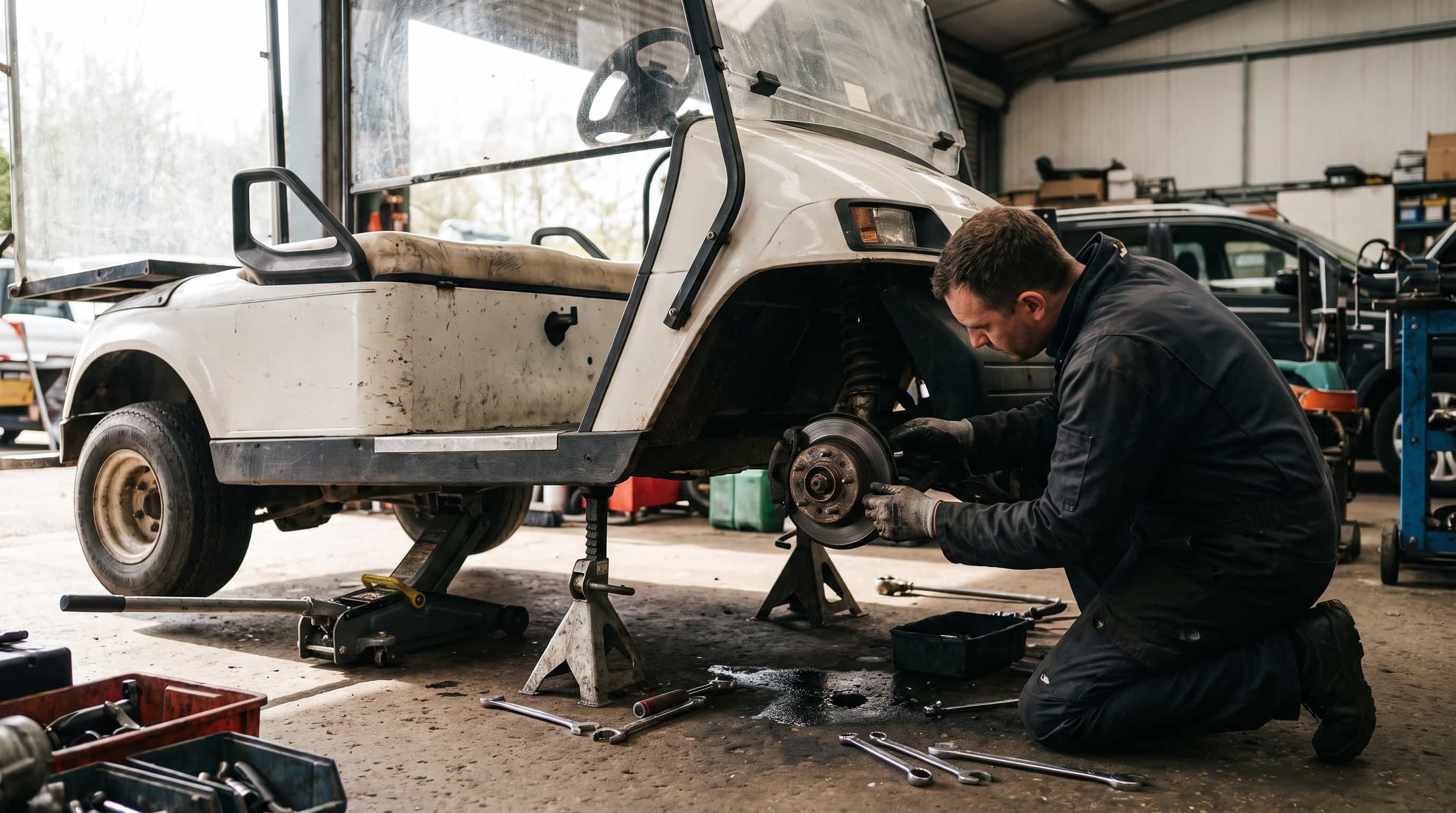
Two more causes overlap with the general slow-buggy guide. A dragging brake holds the buggy back all the time, which is felt most from rest as reluctant pull-away, and it comes with a warm wheel and lost range, so a sluggish start with a hot wheel points at the brake. And overloading makes pulling away hard, because a buggy carrying more people or weight than it is rated for has more inertia to overcome from every stop, which both slows the start and works the batteries harder. Counting the load against the buggy's rating is a quick, honest check that owners often skip.
If yours is doing this and the checks here have not settled it, we diagnose and repair buggies, including a callout to wherever it is.
When it is a real fault
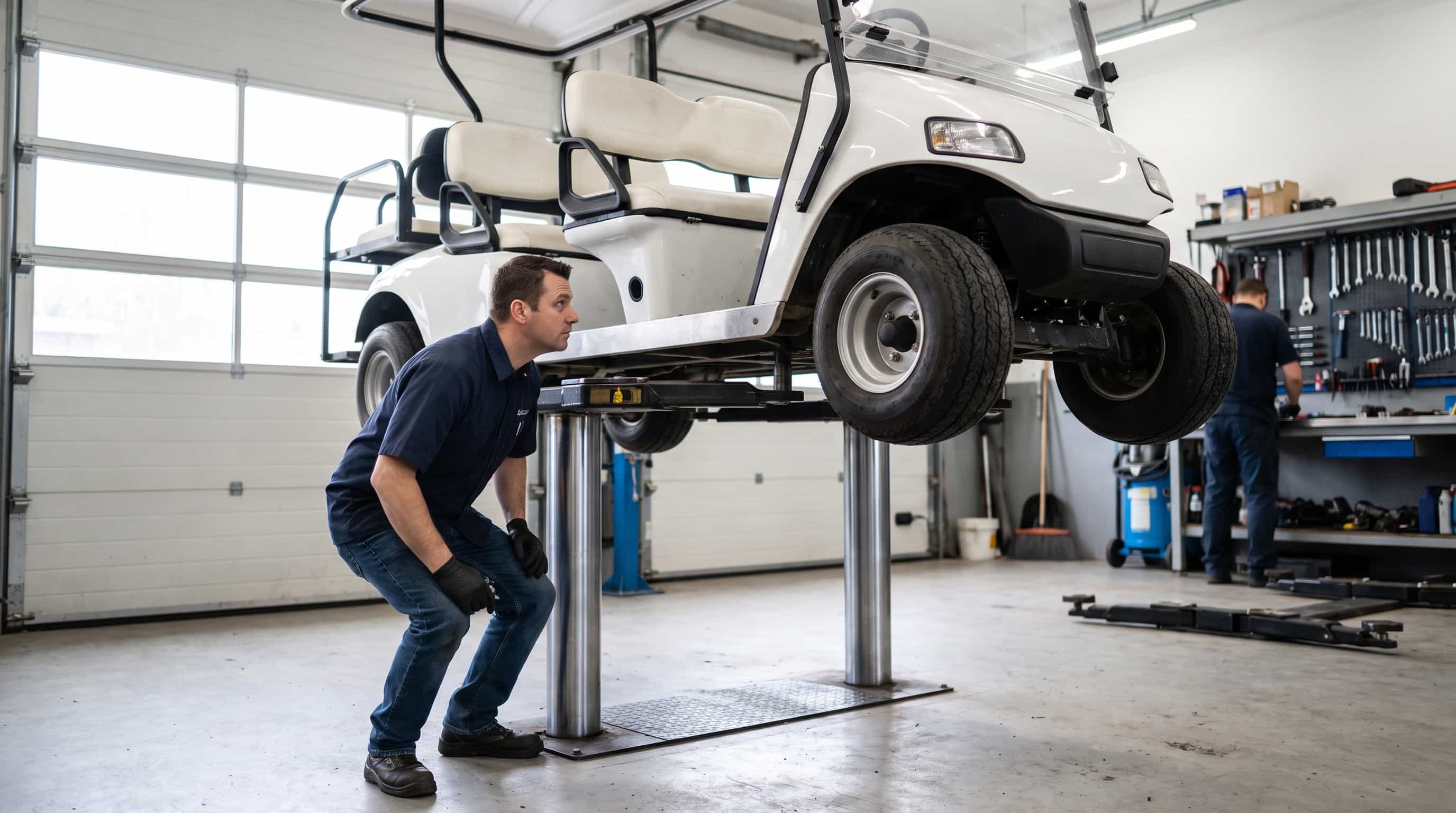
Work through those, a healthy charged battery, no low soft-start or limiter, no dragging brake, a sensible load, and if the buggy is still slow to pull away, a genuine drive fault becomes worth diagnosing. Uneven or hesitant pull-away specifically, rather than merely gentle, can also point at the throttle or a tired battery sagging under the initial load, as the surging guide covers, so note whether it is smooth-but-slow or jerky-and-slow. As always, the useful thing is to tell an engineer what you have ruled out, so they go to the harder causes rather than repeating your checks.
Common questions
- My buggy is slow to pull away but fine once moving
- That pattern often means a tired battery, which struggles most with the surge of current needed to get moving from rest, then copes once rolling. Check the charge and battery health first, especially if it is worse late in the day. Also rule out a soft-start setting, a dragging brake, and overloading before assuming a drive fault.
- Could it be set to accelerate gently
- Yes, and it is worth checking. Many buggies have a soft-start or ramped acceleration, built in or set, so they pull away gently on purpose, which is kinder to passengers and the drivetrain. A buggy that has always pulled away gently may simply be set that way, so confirm the setting before treating gentle acceleration as a fault.
- It is sluggish and one wheel is warm
- A warm wheel with sluggish pull-away points at a dragging brake holding the buggy back from rest, which also drains range. Have the brake checked promptly, since a brake that will not release is a safety matter as well as a drag on acceleration, and freeing or adjusting it is engineer work.
Still not right
We diagnose and repair golf buggies, service them on a plan, and send an engineer out to where the buggy is. Tell us the symptom and we will say what it usually means.