Golf buggy whining noise when driving
By James Brown · Updated 21 July 2026 · 5 minute read
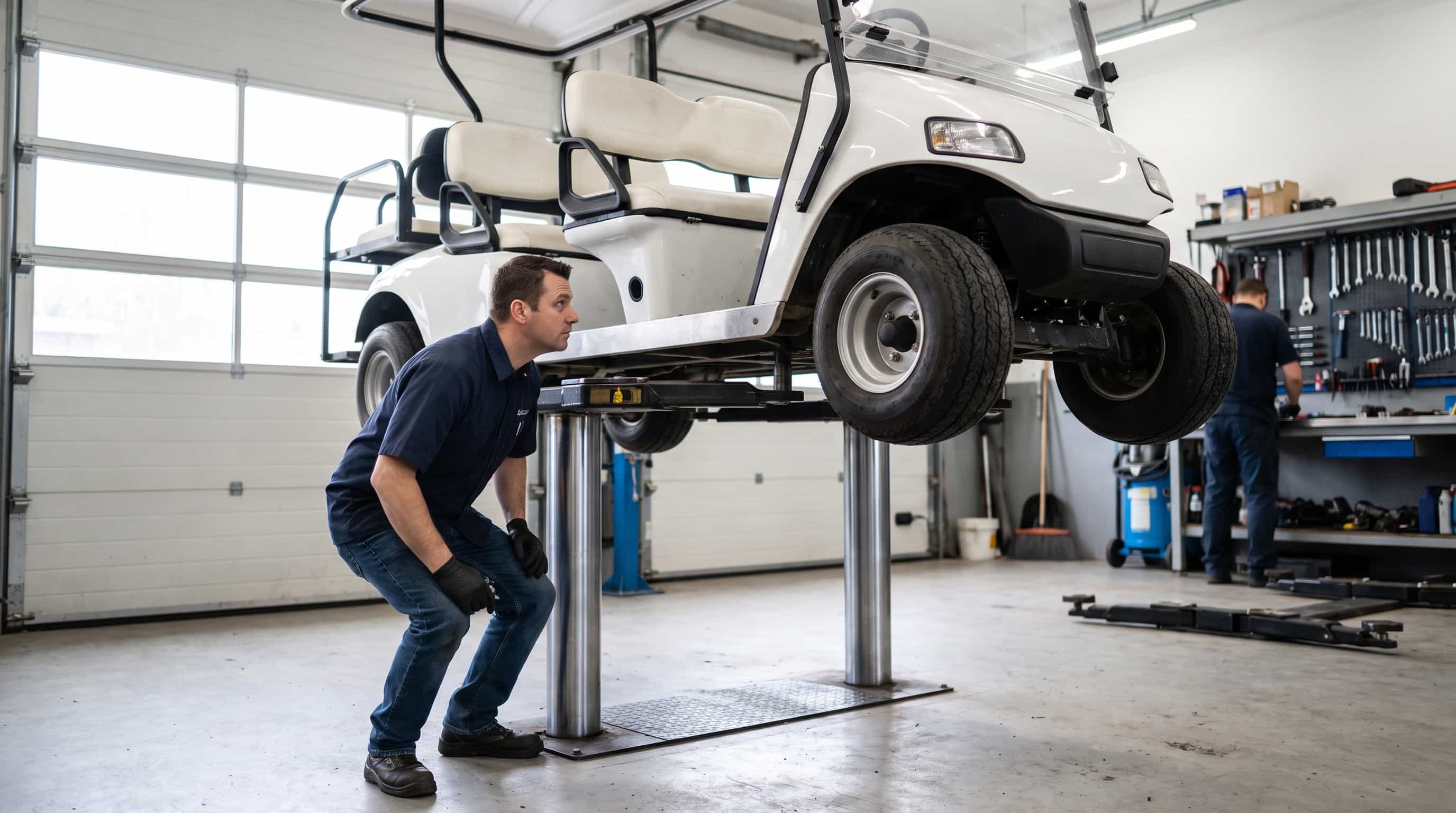
Some whine is normal on an electric buggy: the motor and controller make a hum or whine that rises with speed, and on many buggies that is simply how they sound. A whine to worry about is a new one, one that has grown, or one with a mechanical edge, which can mean gear wear in the transaxle or a bearing. The change is the clue, not the sound itself.
Key takeaways
- Electric buggies normally hum or whine from the motor and controller, rising with speed.
- A whine that is new, has grown, or has a mechanical edge is the one to investigate.
- A rising-with-speed whine from the back can be transaxle gear wear.
- A whine that is really a rumble, felt as well as heard, points at a wheel bearing.
- Note whether it is new and where it comes from, since that decides whether it matters.
Normal electric whine
Petrol vehicles taught people that a quiet drive is a healthy one, and electric buggies break that expectation, because they make their own family of sounds. The motor and controller produce a hum or a whine that rises and falls with speed, and on a great many buggies that is entirely normal, just the noise of electric drive. So the first question with any whine is not what does it sound like, but is it new. A whine that has always been there, unchanged, is usually the buggy being itself. A whine that has appeared or grown is the one worth chasing.
When a whine means wear
A whine crosses into fault territory when it changes character or grows louder over time. A rising-with-speed whine coming specifically from the rear can be gear wear inside the transaxle, which tends to develop gradually and is worth having assessed, alongside a check for any oil leak that would hasten it. A whine with a harder, more mechanical edge, or one that comes and goes with load, can be the drive taking up wear. The distinction from normal is that these grow, where the ordinary electric whine stays the same season after season.
Whine or rumble
It is worth separating a true whine from a rumble, because they point different ways. A whine is a higher, more constant tone. A rumble is lower and rougher, felt through the floor or steering as much as heard, and typically it is a wheel bearing rather than the drive, especially if it changes as the buggy corners and loads one wheel more than another. Deciding which you have, a smooth high whine or a rough felt rumble, sends you towards the transaxle and motor on one hand or a wheel bearing on the other, and saves looking in the wrong place.
If yours is doing this and the checks here have not settled it, we diagnose and repair buggies, including a callout to wherever it is.
What to do about it
For a whine, the owner's job is mostly listening and describing: is it new or has it grown, where does it come from, does it track speed or load, and is it a smooth whine or a felt rumble. That description does most of the diagnostic work. If it is the unchanged, normal electric whine, there is nothing to fix. If it is new, growing, or a rumble, it is worth having looked at, since transaxle gear wear and a worn bearing both benefit from being caught early rather than left to become a heavier fault. As with the grinding noises, anything that has become a grind, or a bearing rumble that threatens to seize, is a stop-and-check rather than a drive-on.
Common questions
- Is a whining electric buggy normal
- Often, yes. The motor and controller of an electric buggy naturally hum or whine, rising with speed, and on many buggies that is simply how they sound. The whine to worry about is one that is new, has grown louder, or has a mechanical edge, because a change is what signals wear rather than the presence of a whine at all.
- The whine comes from the back and rises with speed
- A rising-with-speed whine from the rear, if it is new or growing, can be gear wear inside the transaxle. Have it assessed, and check for an oil leak, since a transaxle low on oil wears faster. If the noise is really a rough rumble felt through the buggy rather than a smooth whine, suspect a wheel bearing instead.
- How do I tell a whine from a bearing rumble
- A whine is a higher, steadier tone, often just the normal electric drive. A bearing rumble is lower and rougher, felt through the floor or steering as well as heard, and usually changes as the buggy corners and loads one wheel. If it is a felt, cornering-sensitive rumble, look at the wheel bearings; if a smooth high whine that has grown, look at the drive.
Still not right
We diagnose and repair golf buggies, service them on a plan, and send an engineer out to where the buggy is. Tell us the symptom and we will say what it usually means.
Related pages
Related guides
 Golf buggy troubleshooting, a complete guide9 minute read
- Horn, indicators and accessory faults5 minute read
 Golf buggy pre-event checklist for hirers4 minute read
- Golf buggy transaxle and differential basics5 minute read
 Wheel bearings, symptoms of wear5 minute read
- Motor problems, symptoms and causes6 minute read