Wheel bearings, symptoms of wear
By James Brown · Updated 21 July 2026 · 5 minute read
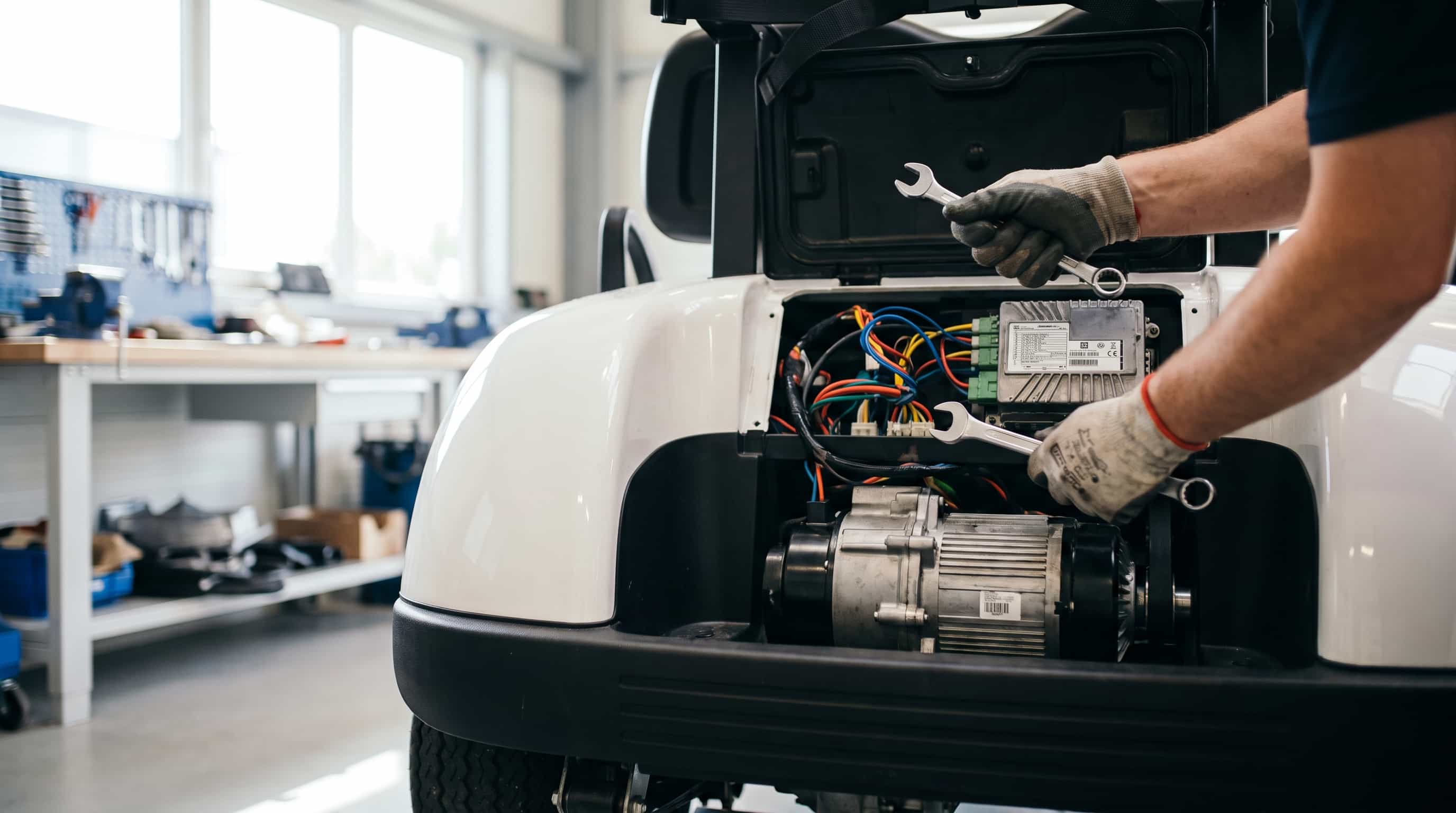
A worn wheel bearing rumbles or grinds, gets louder with road speed, and can often be felt as roughness or vibration through the buggy. Checked stationary, the wheel may have play when rocked or feel rough when spun by hand. A grinding bearing is not a drive-on fault, because a badly worn bearing can eventually seize, so it is a stop-and-fix matter.
Key takeaways
- A worn wheel bearing rumbles or grinds and gets louder as road speed rises.
- It can be felt as roughness or vibration through the floor or steering, not just heard.
- Stationary, a worn bearing shows as play when the wheel is rocked, or roughness when spun.
- A badly worn bearing can seize, which while moving is a serious matter.
- This is a stop-and-fix fault, and the repair belongs with an engineer.
The sound and the feel
A wheel bearing lets a wheel spin freely and takes the loads of driving and cornering, and when it wears, it announces itself in a fairly recognisable way. The classic sign is a rumble or grind that tracks road speed: quiet or absent at a crawl, growing louder as you speed up, and often changing as the buggy corners and shifts weight onto or off the affected wheel. It is as much felt as heard, coming through the floor or the steering as a roughness or a low vibration. That speed-linked, felt-as-well-as-heard quality is what separates a bearing from a brake noise or something caught in a wheel.
Confirming it stationary
You can add to the picture with the buggy safe and stationary. Raising a wheel clear of the ground where it is safe to do so and rocking it, top to bottom and side to side, reveals play if the bearing is badly worn, a knocking looseness that a good bearing does not have. Spinning the raised wheel by hand and listening and feeling for roughness or grinding does the same. A healthy bearing spins smoothly and quietly; a worn one feels gritty or rough as it turns. This is fair owner checking, and it turns a vague noise into a located fault.
Why it is not a drive-on fault
A worn bearing is one of the noises to take seriously rather than monitor over the coming weeks, and the reason is simple: a bearing that is grinding is on its way to failing, and a wheel bearing that seizes while the buggy is moving is a serious safety matter, potentially locking or damaging the wheel at speed. So a genuine bearing grind, or clear play in a wheel, is a reason to take the buggy out of use and have it dealt with, not to keep driving on it and hope it lasts the season. The cost of the repair is far smaller than the cost of a seizure at the wrong moment.
If yours is doing this and the checks here have not settled it, we diagnose and repair buggies, including a callout to wherever it is.
The repair
Replacing a wheel bearing is skilled work: the corner has to be supported safely, the wheel and hub dealt with, and the new bearing fitted correctly, because a bearing job done poorly can leave a wheel insecure, which is exactly the outcome you were trying to avoid. That makes it an engineer's job rather than a trial-and-error one for most owners. The owner's valuable contribution is the diagnosis: locating which wheel, describing the speed-linked rumble and any play, so the engineer arrives knowing what to fix. Catching a bearing at the rumble stage, before it grinds and threatens to seize, is the whole point of knowing the symptoms.
Common questions
- There is a rumble that gets louder as I speed up
- That speed-linked rumble, felt as well as heard and often changing through corners, is a classic worn wheel bearing. Confirm it if you can by raising the wheel safely and checking for play when rocked or roughness when spun. A grinding bearing is a stop-and-fix fault, so take the buggy out of use and have it dealt with.
- How do I know which wheel the bearing is in
- The noise often changes as the buggy corners and shifts weight onto or off the worn bearing, which helps place it. Stationary, raising each wheel in turn and checking for play when rocked and roughness when spun by hand narrows it down. Locating the wheel is the owner's useful contribution before the engineer's repair.
- Can I keep driving with a noisy bearing
- No. A grinding wheel bearing is failing, and a badly worn bearing can seize while the buggy is moving, which is a serious safety matter. Take the buggy out of use once you are confident it is a bearing, and have it replaced by an engineer, since a bearing fitted wrong can leave a wheel insecure.
Still not right
We diagnose and repair golf buggies, service them on a plan, and send an engineer out to where the buggy is. Tell us the symptom and we will say what it usually means.
Related pages
Related guides
 Golf buggy troubleshooting, a complete guide9 minute read
 Golf buggy long-term storage beyond one winter4 minute read
- Recovering a broken-down golf buggy on site4 minute read
- Squealing or grinding noises explained6 minute read
 Golf buggy shudders or vibrates4 minute read
- Suspension knocks and rattles5 minute read