Golf buggy long-term storage beyond one winter
By James Brown · Updated 21 July 2026 · 4 minute read
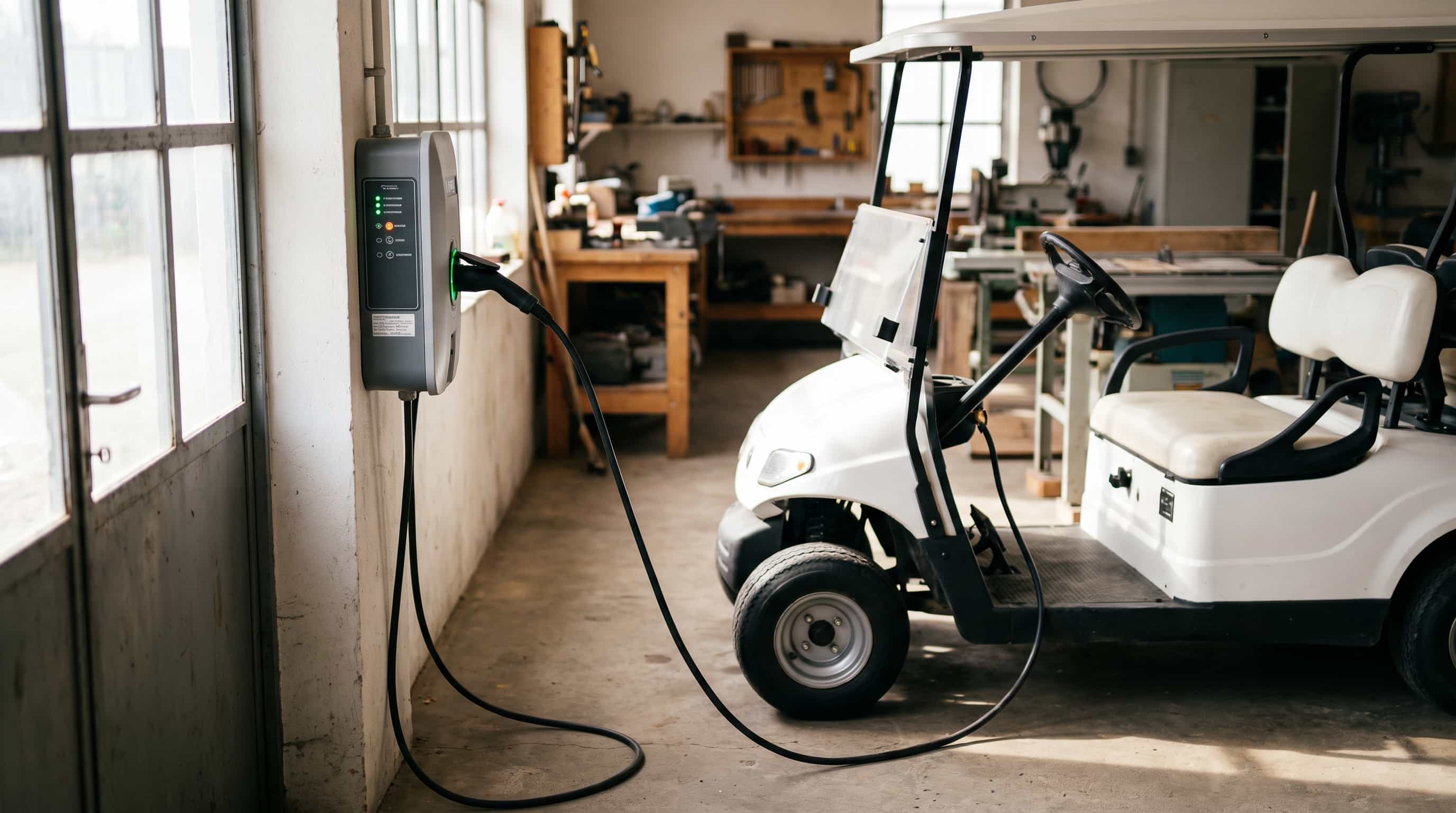
Storing a buggy for longer than a winter raises the stakes on the same things: the batteries are the biggest risk, so they must be kept charged and maintained across the whole period, not just charged once and forgotten. Add protection against damp and pests, check in periodically rather than leaving it untouched for a year, and expect a proper wake-up before use.
Key takeaways
- Long storage is the same principles as winter storage, but the risks compound over time.
- The batteries are the biggest risk, so keep them charged and maintained for the whole period.
- Charging once and forgetting for a year lets the set discharge and degrade.
- Protect against damp and pests, which do more damage over a long stand.
- Check in periodically rather than leaving the buggy untouched, and wake it properly before use.
The stakes rise with time
Everything in the winter storage guide applies to a longer stand, only more so, because the same slow processes have more time to do damage. A battery that sinks over three months sinks further over twelve. Damp that starts corrosion over a winter has far longer to spread over a year. Tyres flat-spot more, seals dry more, and pests have more opportunity. So long-term storage is not a different discipline, it is the winter discipline taken more seriously and checked more than once, because the margin for neglect shrinks the longer the buggy stands.
Batteries over the long haul
The batteries are the make-or-break of long storage, and the fatal mistake is charging them once at the start and leaving them for a year. A set left to slowly discharge over many months will degrade and can be dead by the time you return, exactly the flat-storage failure, magnified. So a long stand needs the batteries kept charged and maintained across the whole period: either a charger suited to being left connected that holds the set correctly for months, as the maintenance-charging guide describes, or a plan to return and charge periodically before the set sinks. On flooded lead-acid, the water needs checking across the period too, not just at the start. If the buggy will be stored so long that the set will age out regardless, it may be more sensible to accept a replacement on return than to nurse an old set through, but a good set kept properly maintained can come through a long stand fine.
Damp and pests
Over a long stand, the environment does more, so protect against it. A dry building beats outdoors by a wide margin, and a breathable cover beats a sealed one that traps condensation, as before. Over months, damp is the enemy that corrodes connections and seizes parts, so a genuinely dry space is worth finding. Pests are the extra factor a long stand introduces: mice and other creatures nest in a buggy left undisturbed and can chew wiring and upholstery, so deterring them, and not leaving anything that attracts them, saves an unpleasant surprise on return. These are the things a single winter often gets away with and a long stand does not.
If yours is doing this and the checks here have not settled it, we diagnose and repair buggies, including a callout to wherever it is.
Check in, and wake it properly
The habit that makes long storage safe is not leaving the buggy untouched. Checking in periodically, on the batteries, for damp, for pests, and to move the buggy so the tyres do not flat-spot on one point, catches a problem while it is small rather than finding a compounded mess after a year. And when the buggy finally comes out, treat it to a proper wake-up as the out-of-storage guide describes, more thoroughly than after a single winter: the batteries checked and charged, tyres and brakes tested, connections inspected, and a gentle shakedown drive. A buggy stored well for a long period and woken methodically comes back to use in good order; one charged once and abandoned for a year usually needs a repair before it will do anything.
Common questions
- How is long-term storage different from over winter
- It is the same principles taken more seriously, because the slow processes have more time to do damage. The batteries can discharge and degrade further, damp has longer to corrode, tyres flat-spot more, and pests get an opportunity. So long storage needs the batteries maintained across the whole period, better protection against damp and pests, and periodic checking rather than a single set-up.
- Can I just charge the batteries and leave them for a year
- No, that is the fatal mistake. A set charged once and left for a year slowly discharges and degrades, and can be dead on return. Keep the batteries charged and maintained across the whole period, with a charger suited to being left connected or a plan to return and charge periodically, and check the water on flooded lead-acid throughout.
- Do I need to do anything during the storage
- Yes, check in periodically rather than leaving the buggy untouched. Look at the batteries, check for damp and pests, and move the buggy so the tyres do not flat-spot on one point. That catches problems while they are small. Then wake the buggy properly before use, more thoroughly than after a single winter, with the batteries, tyres, brakes and connections all checked.
Still not right
We diagnose and repair golf buggies, service them on a plan, and send an engineer out to where the buggy is. Tell us the symptom and we will say what it usually means.
Related pages
Related guides
 Golf buggy troubleshooting, a complete guide9 minute read
- Recovering a broken-down golf buggy on site4 minute read
 How to top up lead-acid battery water, step by step5 minute read
- Winter storage, preparing a buggy6 minute read
- Bringing a buggy out of storage5 minute read
 Golf buggy trickle charging and maintenance charging4 minute read