Suspension knocks and rattles
By James Brown · Updated 21 July 2026 · 5 minute read
Knocks and rattles from a buggy's suspension are usually worn bushings, a tired shock absorber, or something loose. A knock over bumps points at play in a joint or a loose fixing, and a rattle at all times points at something not held tight. Find where the noise comes from before replacing anything, because a loose bolt and a worn bush sound alike but cost very differently.
Key takeaways
- Most suspension noises are worn bushings, tired shocks, or loose fixings.
- A knock only over bumps is play in a joint or a loose mount taking up slack.
- A constant rattle is usually something not clamped tight rather than a worn part.
- Buggies live on rough ground, so fixings work loose and bushings wear faster than on a road car.
- Locate the noise first; a loose bolt and a worn bush sound similar and cost very differently.
Bumps versus everywhere
The timing of the noise narrows it fast. A knock that appears only when you go over a bump, a kerb, a rut, a cattle grid, is play being taken up. Something in the suspension has clearance in it, and each bump makes it move through that clearance and knock. A rattle or buzz that is there most of the time, worse on rough ground but never really absent, is usually something loose: a fixing that has backed off, a bracket, a body panel, or an accessory that is no longer held tight.
Deciding which you have before you start turns a vague hunt into a targeted one.
Where the play lives
Buggies work on ground that a road car never sees, so their suspension takes a beating and the wear points are predictable. The bushings, the rubber or plastic sleeves in the pivots, wear and let joints move more than they should, producing knocks. The shock absorbers tire and stop damping properly, which shows as a floaty or harsh ride and sometimes a knock as worn mounts move. And on a machine that is constantly shaken over rough ground, plain loose bolts and mounts are more common than people expect.
That last point is the good news. A fair share of alarming knocks turn out to be a fixing that has worked loose and needs checking and tightening, not a worn part needing replacement.
Finding the source
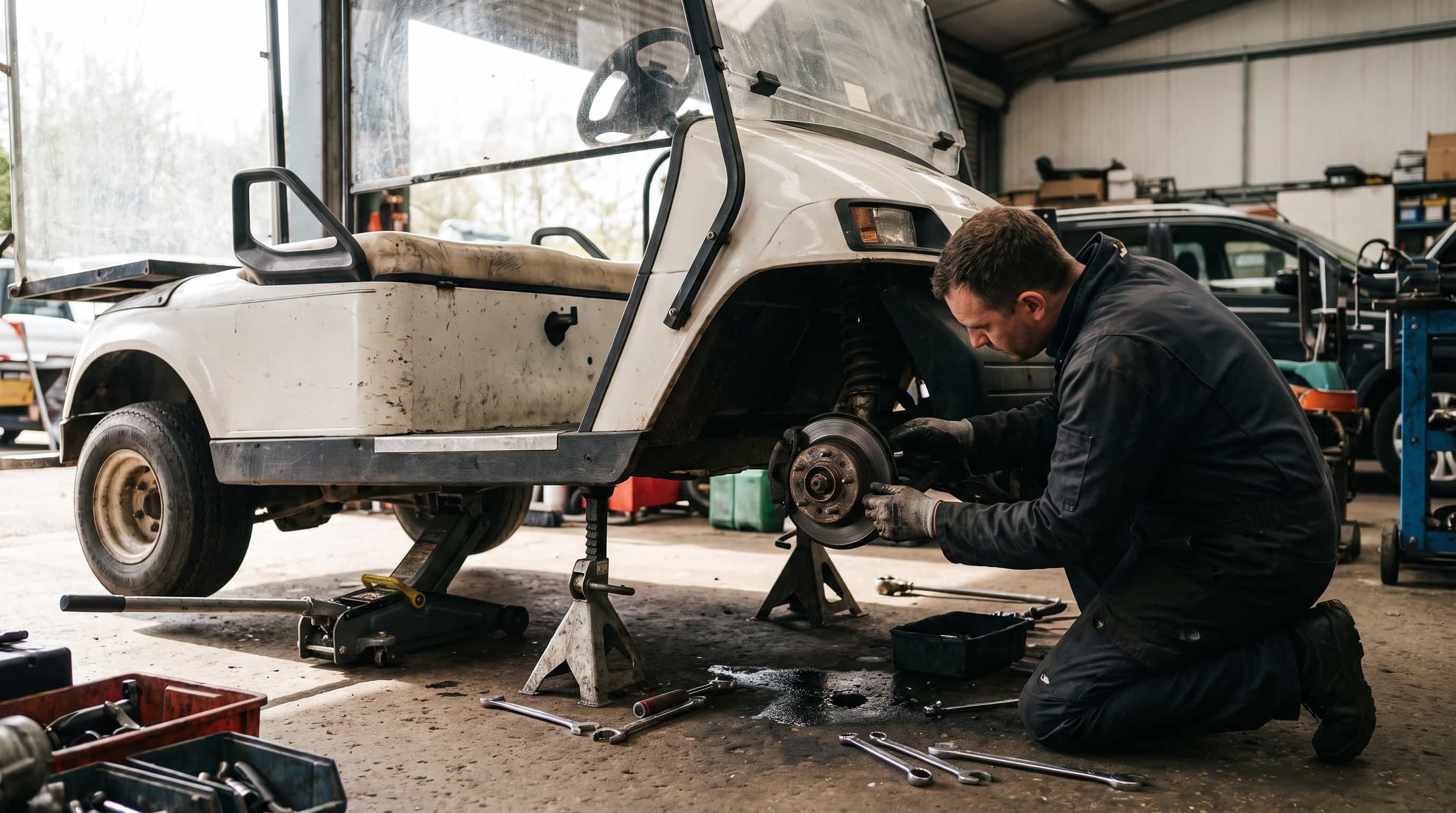
With the buggy safe and stationary, you can do a lot by hand. Rocking the buggy, pushing down on each corner, and grabbing suspension parts to feel for play often reveals a loose or worn joint. A helper bouncing the buggy while you listen underneath, on level safe ground, helps place the noise. Working through the fixings with a spanner to check nothing is loose is worthwhile in its own right on a buggy this age of use.
Just be honest about the limit of a hand check: it finds the loose and the obviously worn, but it does not confirm a tired shock or a subtly worn bush the way a proper inspection does.
If yours is doing this and the checks here have not settled it, we diagnose and repair buggies, including a callout to wherever it is.
When to hand it over
Tightening loose fixings is fair owner territory and often the whole answer. Replacing bushings, shock absorbers or suspension joints is more involved, sometimes needing the corner supported and parts pressed, and getting it wrong affects how the buggy handles. If the noise traces to a worn part rather than a loose bolt, or you cannot place it, that is the point to have it inspected properly rather than replace parts hoping to silence it.
Common questions
- There is a knock over every bump
- A knock tied to bumps is play being taken up, usually a worn bushing or joint, or a loose mount. Check the obvious fixings first, because a loose bolt knocks exactly like a worn bush and is free to fix. If everything is tight and it still knocks, a worn suspension part is likely and wants a proper look.
- It rattles all the time on rough ground
- A near-constant rattle is usually something not clamped tight rather than a worn part: a loose fixing, bracket, panel or accessory. Buggies shake everything loose over time, so working round the fixings with a spanner often finds and cures it. If nothing is loose, a tired shock or its mounts may be the source.
- Can I fix suspension noises myself
- Tightening loose fixings is reasonable and often the whole fix. Replacing bushings, shocks or joints is more involved and affects handling if done poorly, so if the noise is a worn part rather than a loose bolt, it is better inspected and repaired by someone with the tools to do it properly.
Still not right
We diagnose and repair golf buggies, service them on a plan, and send an engineer out to where the buggy is. Tell us the symptom and we will say what it usually means.