Motor problems, symptoms and causes
By James Brown · Updated 21 July 2026 · 6 minute read
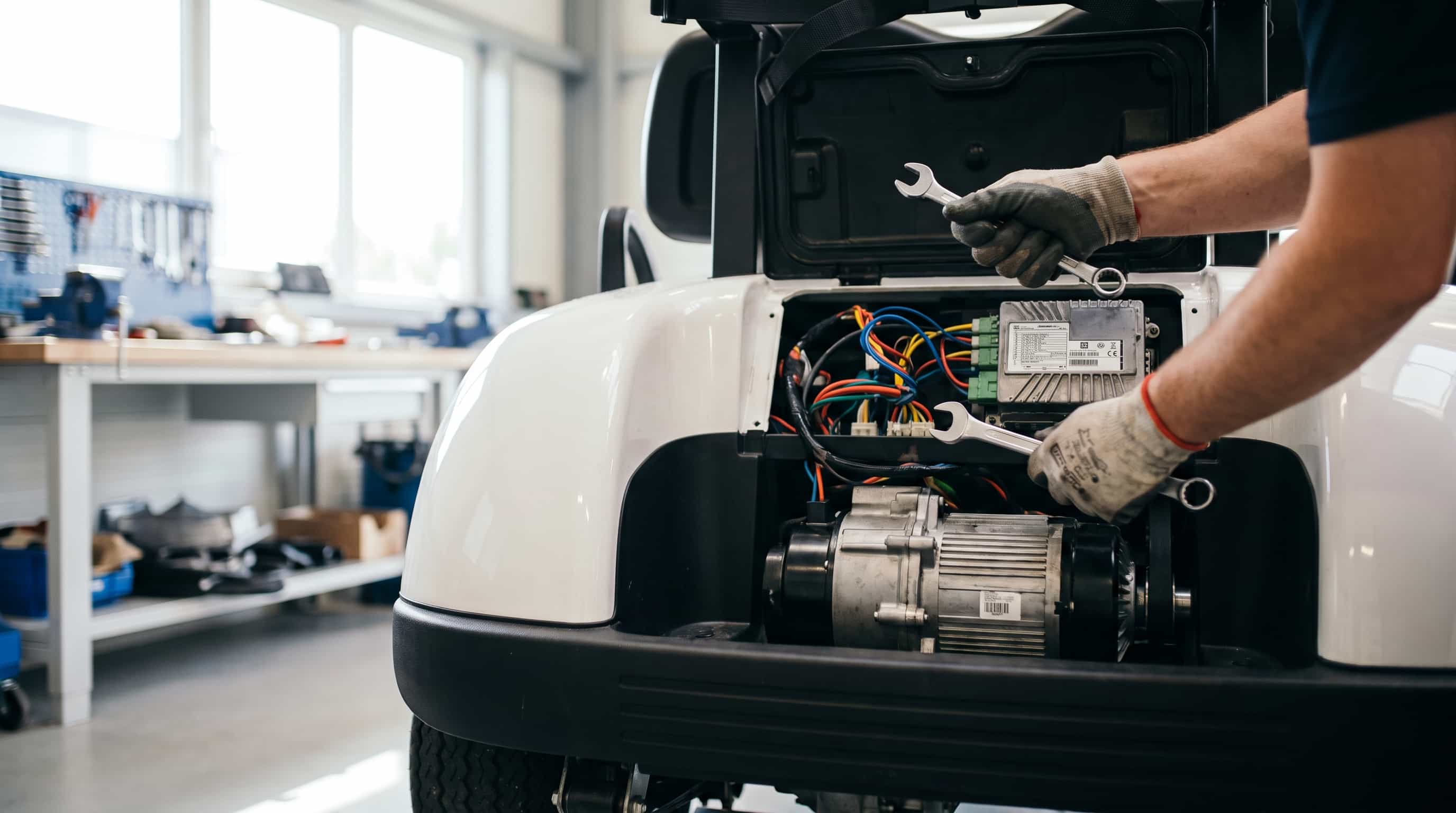
Genuine motor faults show as a burning smell, a grinding or screeching from the motor, a buggy that will not move despite good power reaching it, or one that has clearly lost torque with a healthy battery and controller. The motor is often blamed for battery and controller problems it did not cause, so it is usually the last thing to confirm, not the first.
Key takeaways
- The motor is often wrongly blamed for symptoms that are really the battery or controller.
- Real motor faults include worn brushes on older motors, a burning smell, and mechanical grinding.
- Rule out battery health and controller behaviour before condemning the motor.
- A hot smell or smoke from the motor is a stop-now signal, not a drive-on one.
- Motor diagnosis and repair needs test gear, so this is largely an engineer's territory.
Why the motor gets blamed unfairly
When a buggy is slow, weak on hills, or will not move, people reach for the motor because it is the obvious mover. In practice, most of those symptoms come from further up the chain. A tired battery set cannot deliver the current the motor needs, so the buggy is weak. A controller protecting itself cuts power, so the buggy fades. A solenoid or connection fault interrupts the supply, so the buggy will not go. In all three the motor is fine and being starved or switched off.
That is why an experienced approach checks battery health and controller behaviour first, and only turns to the motor once those are cleared. Replacing a motor that was never the problem is expensive and disappointing.
What a genuine motor fault looks like
Real motor faults have their own signatures. Older direct-current motors use brushes that wear, and worn or sticking brushes give reduced power, arcing, and sometimes a smell. A motor with a failing bearing grinds or screeches in a way that rises with speed and is clearly coming from the motor rather than a wheel. A motor with an internal electrical fault can refuse to turn even when the controller and solenoid are clearly delivering power to it, or can trip the controller's protection repeatedly.
The clearest confirmation is when good power is measurably reaching the motor and the motor still will not perform. That is a motor fault, and it takes measurement to establish, not assumption.
The smell and the heat
One symptom overrides the diagnosis and becomes a safety matter: a burning smell, smoke, or a motor too hot to touch. That can mean a motor working against a mechanical drag, an internal short, or a serious overload, and continuing to drive risks damage and, at worst, fire. If the motor smells hot or smokes, stop, switch off, disconnect the supply if you safely can, and do not use the buggy until it has been looked at. This is one of the faults the Repair Centre routes straight to an engineer with no self-fix offered.
If yours is doing this and the checks here have not settled it, we diagnose and repair buggies, including a callout to wherever it is.
Where the owner's part ends
An owner can gather the useful evidence: is the battery healthy and charged, does the controller show a code, does good power seem to reach the motor, is there a smell or a noise and exactly when. That evidence shortens any engineer's visit considerably. Actually testing a motor, checking brushes, measuring windings, or replacing it, is skilled work with the buggy's main power involved, so it belongs with an engineer rather than with trial and error in a shed.
Common questions
- How do I know it is the motor and not the batteries
- You often cannot from the symptom alone, which is the point. Weak performance and refusing to move are more often battery or controller problems. The motor is confirmed as the fault only when good power is measurably reaching it and it still will not perform, and that measurement is an engineer's job.
- There is a burning smell from the back
- Stop using the buggy. A burning smell or smoke from the motor area can mean an internal short, a serious overload, or a mechanical drag, and driving on risks damage or fire. Switch off, disconnect the supply if you can do so safely, and have it examined before any further use.
- Can a motor be repaired or only replaced
- It depends on the fault and the motor. Worn brushes on an older motor can sometimes be replaced, while bearing or winding failures may mean a rebuild or a new unit. An engineer who can test it will tell you which, and that diagnosis is worth having before spending on a full replacement.
Still not right
We diagnose and repair golf buggies, service them on a plan, and send an engineer out to where the buggy is. Tell us the symptom and we will say what it usually means.