Golf buggy transaxle and differential basics
By James Brown · Updated 21 July 2026 · 5 minute read
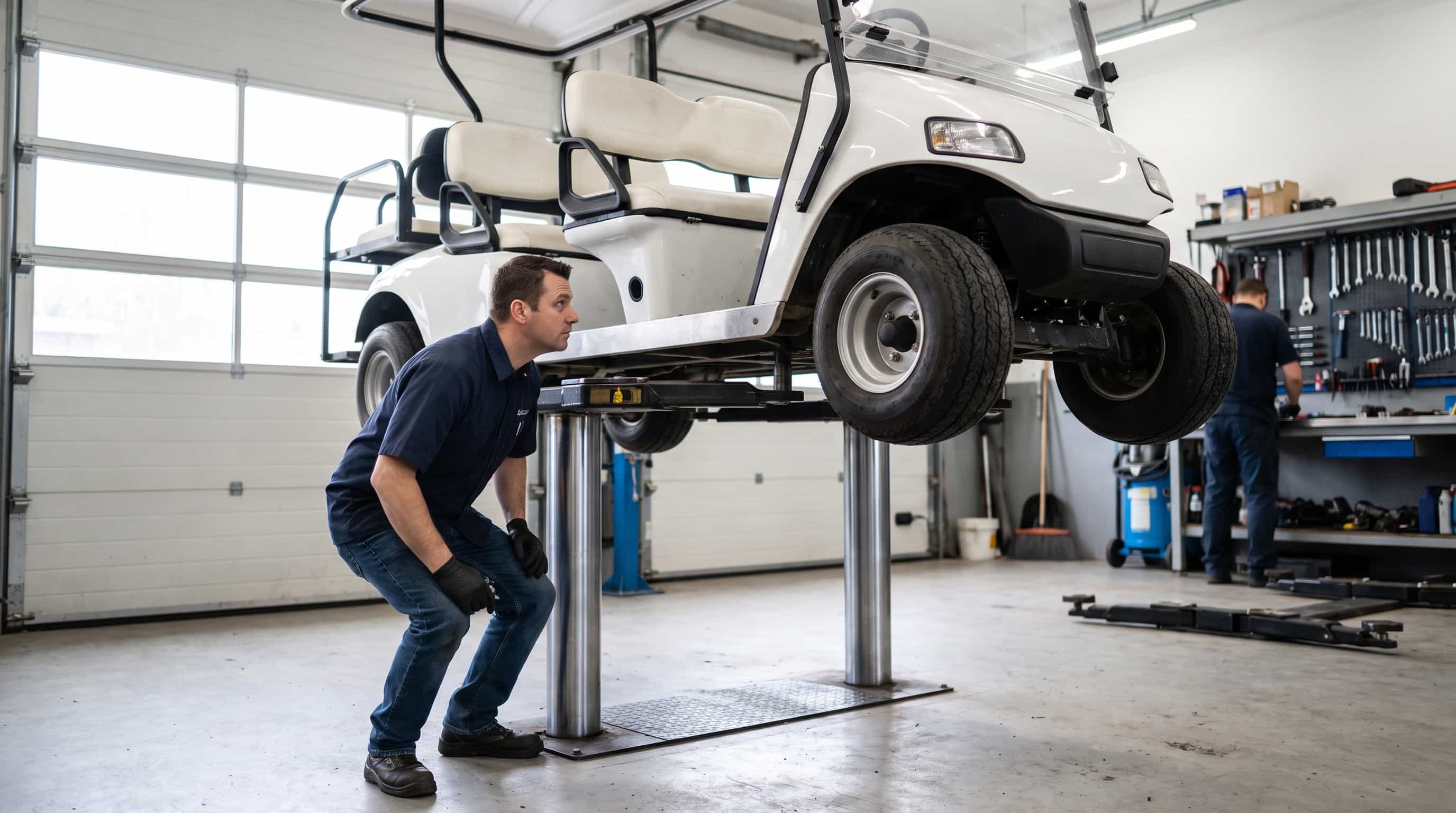
The transaxle takes power from the motor and drives the rear wheels through a differential, which lets the two wheels turn at different speeds on corners. It is a robust, oil-filled unit that rarely fails suddenly. Wear shows as whining, clunks on taking up drive, or play, and an oil leak is worth attending to before it runs dry.
Key takeaways
- The transaxle turns motor power into drive at the rear wheels through a differential.
- The differential lets the rear wheels turn at different speeds through corners.
- It is a robust oil-filled unit that wears gradually rather than failing suddenly.
- Whining, clunks on drive take-up, and play are the usual wear signs.
- An oil leak matters, since a transaxle run dry wears fast, so attend to it early.
What it does
On the drive side of an electric buggy, the motor does not connect straight to the wheels. Its power passes through the transaxle, a gear unit that reduces the motor's speed to something useful at the wheels and sends drive to both rear wheels. Built into it is the differential, which does the clever job of letting the two rear wheels turn at different speeds, necessary because on any corner the outer wheel travels further than the inner one. Without a differential the buggy would scrub and fight itself through every turn.
It is a sealed, oil-filled unit, and its robustness is why most owners never think about it. It is designed to run for a long time with little more than its oil kept where it belongs.
How wear shows
Because it wears slowly, the transaxle usually warns you rather than failing outright. A whine that rises and falls with road speed, coming from the back, can be gear wear inside the unit. A clunk as you take up drive, or when changing between forward and reverse, can be backlash, excess play in the gears or the drive joints, which grows over time. Felt play, where the buggy has a moment of slack before the drive bites, is the same story. None of these is usually an emergency the first time you notice it, but none of them improves, and a unit left to wear eventually becomes a heavier fault.
The oil, and leaks
The one maintenance point worth knowing is the oil. The transaxle relies on its oil to protect the gears, and if that oil leaks away, the unit runs dry and wears rapidly, turning a slow-ageing part into a failing one. So an oil leak from the back of the buggy, a wet patch under the transaxle, oil creeping down the casing, is worth attending to rather than ignoring, because catching a leak and restoring the oil is far cheaper than replacing a transaxle that has run dry. Checking for leaks is fair owner observation, and it is the kind of thing a regular service picks up.
If yours is doing this and the checks here have not settled it, we diagnose and repair buggies, including a callout to wherever it is.
Where the owner's part ends
Spotting the symptoms, a whine, a clunk, play, an oil leak, is squarely owner territory, and describing them accurately helps any engineer enormously. Opening a transaxle, assessing gear wear, or replacing the unit is skilled work that needs the right tools and knowledge, so it belongs with an engineer rather than trial and error. If you have a noise from the back that tracks road speed, or a growing clunk on drive take-up, the useful move is to note exactly when it happens and have it looked at, rather than waiting for a slow whine to become an expensive failure.
Common questions
- There is a whining noise from the back
- A whine that rises and falls with road speed, coming from the rear, can be gear wear inside the transaxle. It usually develops gradually rather than suddenly. It is not normally an immediate emergency, but it does not improve, so have it assessed rather than left, and check for an oil leak, since a transaxle running low on oil wears far faster.
- It clunks when I change between forward and reverse
- A clunk on taking up drive or switching direction is often backlash, excess play in the gears or drive joints, which grows with wear. Note whether it is getting worse. It wants an engineer's look before it develops into a heavier fault, and it is worth ruling out a worn drive joint, which can clunk similarly.
- Do I need to do anything to maintain the transaxle
- Mainly keep an eye out for oil leaks, since the unit relies on its oil and runs dry quickly if that leaks away. A wet patch or oil creeping down the casing is worth attending to early. Beyond that, it is a robust sealed unit, and a regular service is where its oil level and condition are properly checked.
Still not right
We diagnose and repair golf buggies, service them on a plan, and send an engineer out to where the buggy is. Tell us the symptom and we will say what it usually means.
Related pages
Related guides
 Golf buggy troubleshooting, a complete guide9 minute read
 How to check golf buggy tyre pressures, step by step4 minute read
- How to jump start or recover a flat buggy safely5 minute read
- Clicking noise when accelerating5 minute read
- Golf buggy clunks when changing direction4 minute read
- Golf buggy whining noise when driving5 minute read