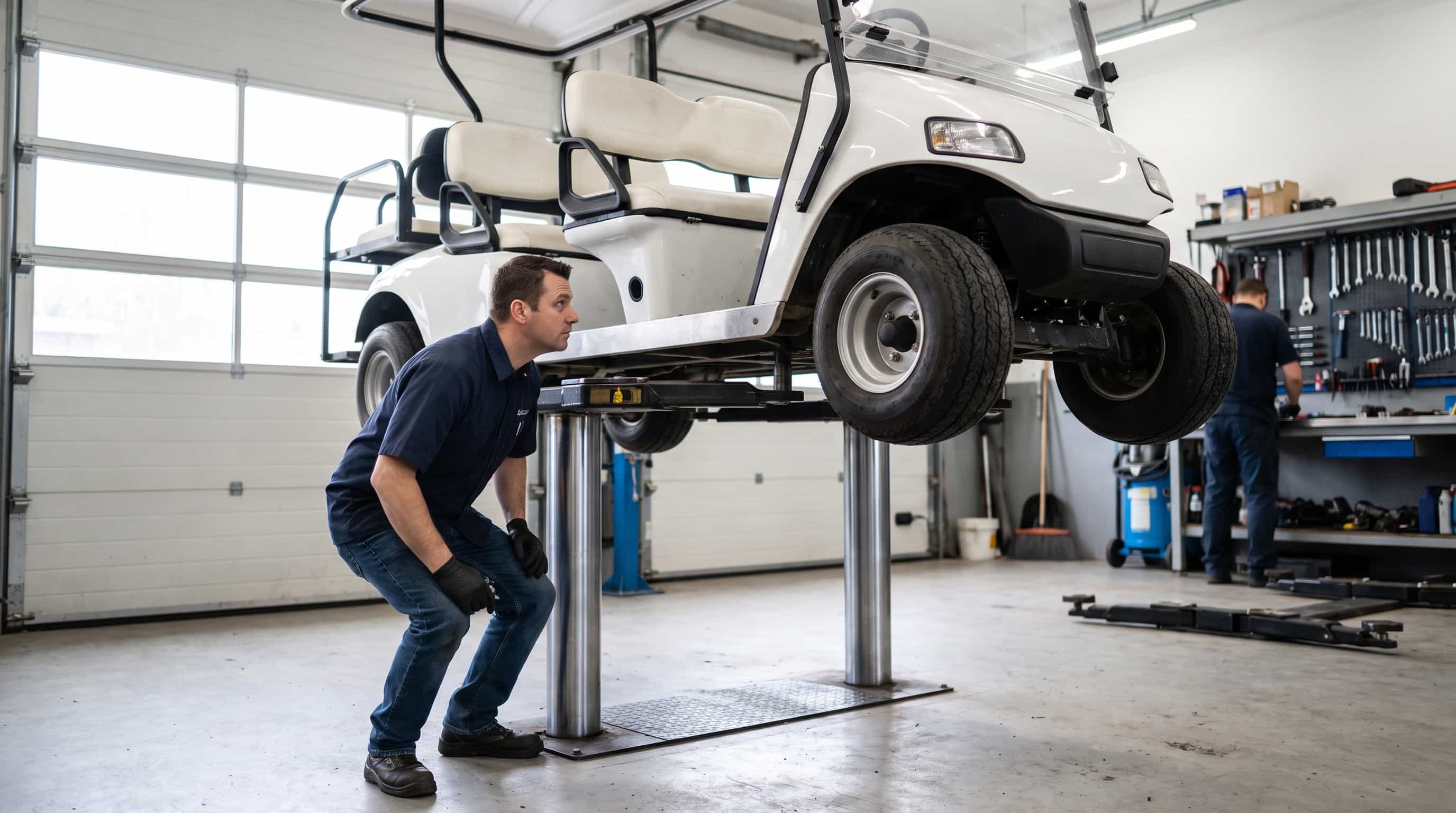
Golf buggy clunks when changing direction
By James Brown · Updated 21 July 2026 · 4 minute read
A clunk when you change between forward and reverse, or as drive takes up, is usually backlash in the drivetrain: the slack in the gears and joints being taken up sharply as the load reverses. A little is normal on a worn buggy; a heavy or growing clunk points at worn joints or the transaxle and wants an engineer before it develops further.
Key takeaways
- A clunk on changing direction is usually drivetrain backlash being taken up under load.
- A small clunk on an older buggy can be normal wear rather than a fault.
- A heavy or growing clunk points at worn drive joints or transaxle wear.
- It does not cure itself, so a worsening clunk is worth catching early.
- Diagnosing and repairing drivetrain wear is engineer work, not a yard fix.
What the clunk is
When you switch from forward to reverse, or press the pedal after coasting, the drive load reverses direction, and any slack in the drivetrain, in the gears, the joints and the couplings, gets taken up sharply as the parts move from resting against one side to the other. That take-up is the clunk. Every geared drive has some of this slack, called backlash, and a small, consistent clunk on an older buggy is often just that, the accumulated play of a drivetrain that has done its miles. So the clunk itself is not automatically a fault; its size and its trend are what matter.
Normal versus worth worrying about
The judgement is about degree and change. A light clunk that has been there a while and is not getting worse is usually tolerable wear. A clunk that is heavy, that you can feel through the buggy as a jolt, or that has grown noticeably over time, is telling you the play has become excessive, which points at worn drive joints or wear inside the transaxle. Backlash grows as parts wear, so a clunk that is increasing is on a trajectory, and a heavy clunk today tends to become a heavier one and eventually a failure. Catching it while it is still just a clunk is cheaper than waiting.
What to do
The owner's part is to notice the clunk, judge whether it is growing, rule out anything obviously loose, and describe it accurately. Assessing and repairing drivetrain backlash, worn joints or transaxle wear is skilled work needing the right tools and access, so it belongs with an engineer. There is no safety-critical urgency to a mild, stable clunk the way there is with brakes or steering, but a heavy or worsening one is worth having looked at before the play becomes a break, and it is exactly the kind of developing wear a regular service is meant to catch.
Common questions
- My buggy clunks when I switch forward to reverse
- That is usually drivetrain backlash, the slack in the gears and joints taken up sharply as the load reverses. A small, steady clunk on an older buggy is often normal wear. A heavy or growing clunk points at worn drive joints or transaxle wear and is worth having assessed before it develops into a heavier fault.
- Is a clunk on drive take-up dangerous
- It is not safety-critical the way a brake or steering fault is, so a mild, stable clunk is not an emergency. But it does not cure itself, and a heavy or worsening clunk means the play is becoming excessive and heading towards a failure. Catching it early is cheaper, so a growing clunk is worth an engineer's look.
- Can I fix the clunk myself
- The owner's part is noticing it, judging whether it is growing, and describing it. Assessing and repairing drivetrain backlash, worn joints or transaxle wear needs the right tools and access, so the repair belongs with an engineer. A regular service is where this developing wear is normally caught before it becomes a bigger job.
Still not right
We diagnose and repair golf buggies, service them on a plan, and send an engineer out to where the buggy is. Tell us the symptom and we will say what it usually means.