Golf buggy pre-event checklist for hirers
By James Brown · Updated 21 July 2026 · 4 minute read
Before an event, check the buggy is charged for the day, the tyres are right, the brakes and park brake work, the controls respond correctly, and the route suits the buggy and the ground. The point is to find any problem in the quiet of the morning, not in front of guests, and to know the buggy will do what the day asks of it.
Key takeaways
- A pre-event check finds problems in the quiet morning, not in front of guests.
- Confirm the buggy is charged for the whole day's expected use.
- Check tyres, brakes and the park brake, since these are safety and reliability basics.
- Test the controls: drive, direction, and that the pedal returns properly.
- Walk the route and ground, so the buggy suits the site before the day begins.
Why a pre-event check is different
When a buggy is hired for a wedding or an event, the stakes change: a fault that would be a minor annoyance at home becomes a problem in front of guests, on a timeline that cannot wait for a repair. So a pre-event check is not the same as a casual glance; it is a deliberate confirmation that the buggy will do what the day needs, done with enough time in hand to fix or swap anything that is not right. The whole aim is to move any surprise from the middle of the event to the calm of the setup, where it can be dealt with.
Charge, tyres, brakes
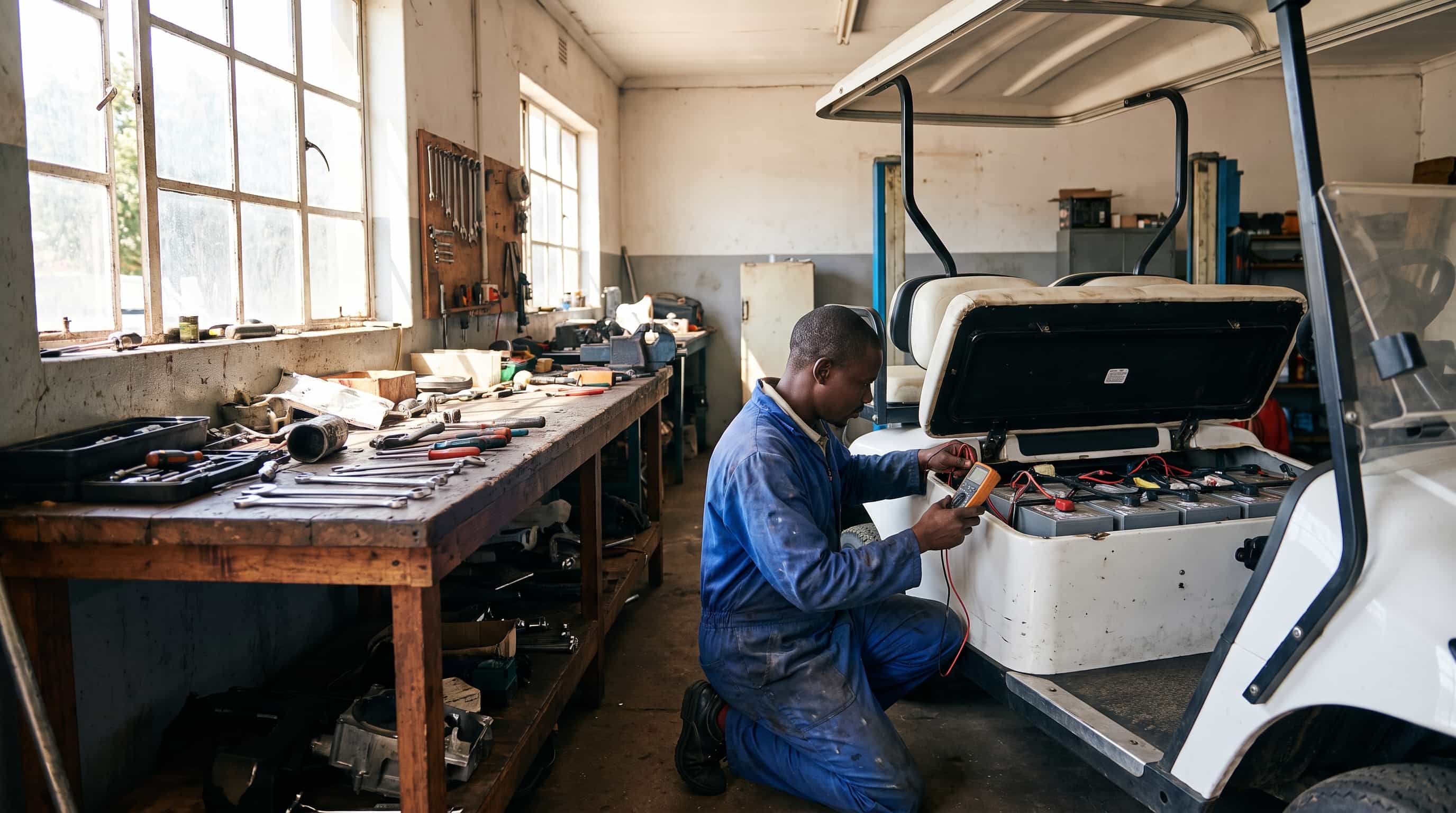
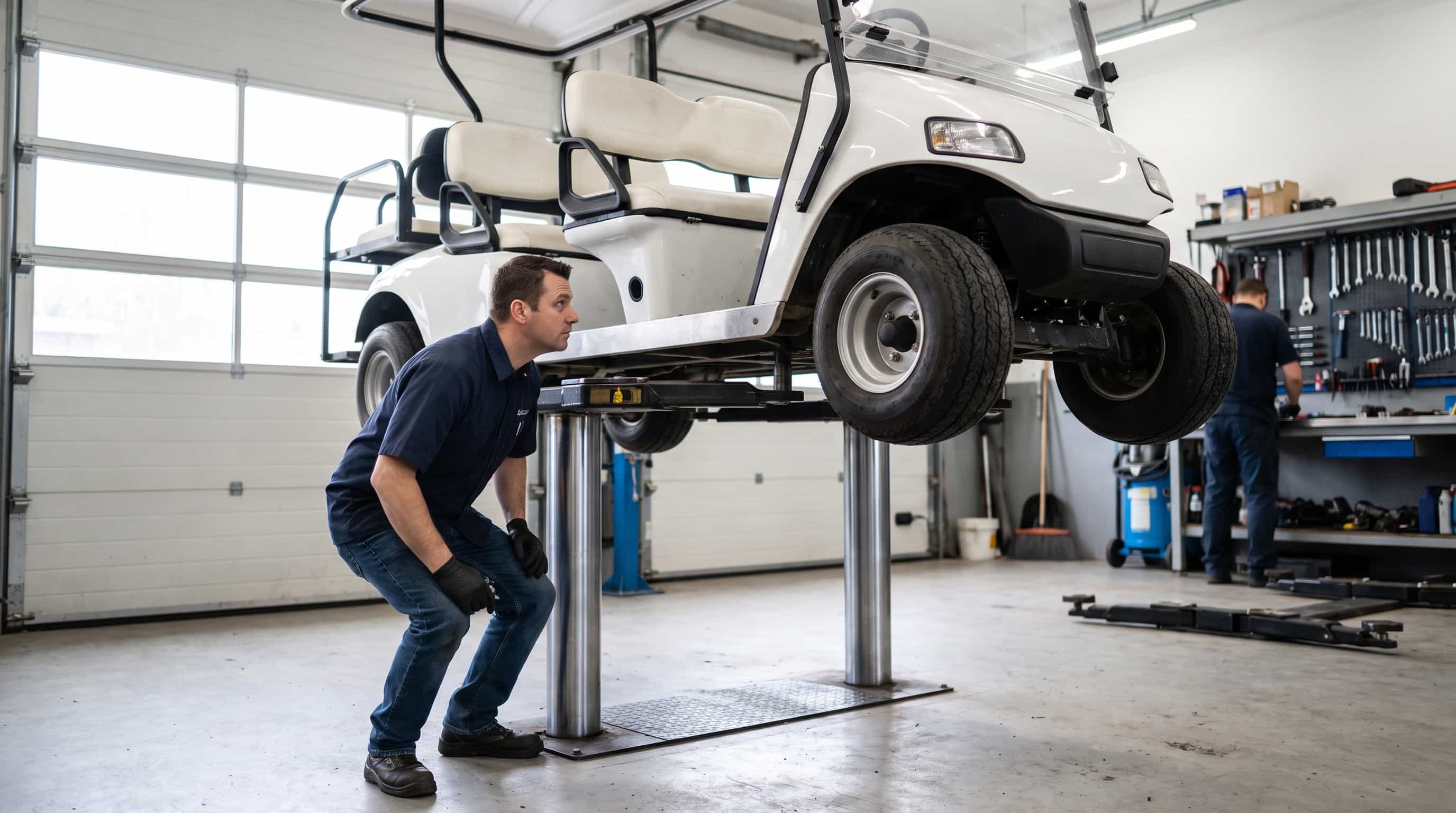
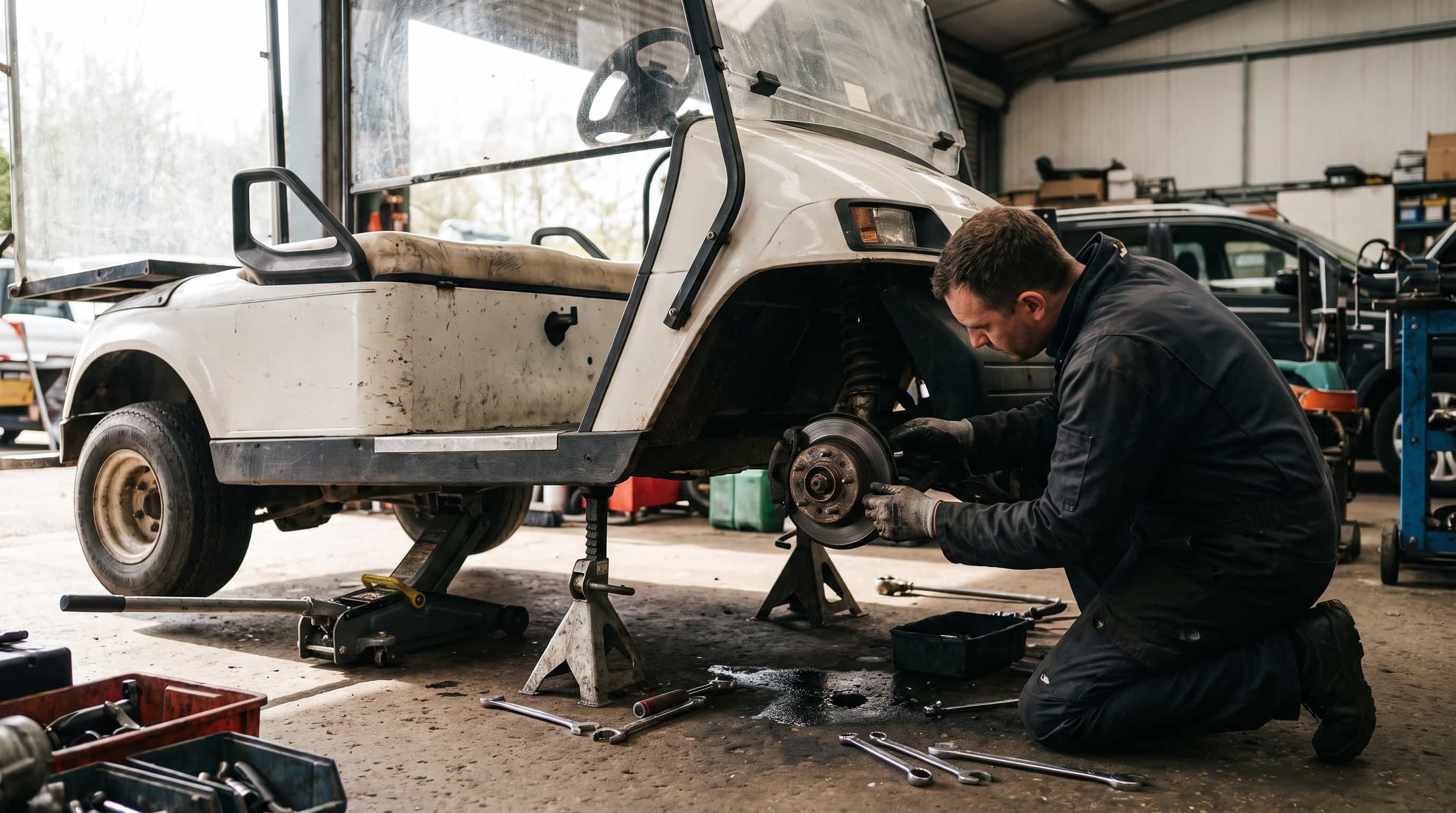
Start with the basics that strand a buggy or make it unsafe. Charge: is the buggy fully charged and is that enough for the day's expected use, given the route, the load and the hours, since running out mid-event is exactly the failure to avoid. Tyres: pressures correct and equal, no damage or a tyre gone soft, since a soft tyre costs range and handling across a long day. Brakes: the pedal firm, no grinding or dragging, and crucially the park brake holding on a slope, since a buggy that will not stay parked is a hazard around guests. These three are where most reliability and safety problems live, and they are quick to confirm.
Controls and the site
Then check the buggy does what you ask and suits where it will work. Test the controls in a safe space: it drives smoothly, both directions work, the pedal returns properly when you lift off, and any speed setting is where you want it for a venue full of people, gentle rather than quick. Then think about the site, which is the hirer's particular advantage: walk or picture the route, note the ground, wet grass, gravel, slopes, a cattle grid, and any narrow gates or tight turns, and confirm the buggy and its speed setting suit them. Matching the buggy to the ground beforehand avoids the awkward discovery that a route does not work once guests are relying on it.
If yours is doing this and the checks here have not settled it, we diagnose and repair buggies, including a callout to wherever it is.
Timing and the fallback
A pre-event check is only useful if it is done with time to act on it, so do it in the setup, not as guests arrive, leaving room to charge further, correct a tyre, or raise anything that needs attention. If the buggy is hired from us, anything that is not right is our concern to put right, and the point of the check is partly to surface it early enough that it can be. For a hirer running the buggy themselves, the same discipline as the daily checks applies: if a safety basic fails, the buggy does not go into service until it is sorted, however inconvenient, because a buggy failing in front of guests is the outcome the whole check exists to prevent.
Common questions
- What should I check before an event
- Confirm the buggy is charged for the whole day, the tyres are correct and undamaged, the brakes and park brake work, the controls respond properly with the pedal returning and a sensible speed setting, and the route and ground suit the buggy. Do it in the setup with time to fix anything, so problems surface before guests arrive rather than during the day.
- How do I know it is charged enough for the day
- Think about the day's actual use, the route length, the load, and the hours, not just that it shows charged, and make sure the set is genuinely full rather than part charged. If in doubt, charge fully with enough time before the event, and for a long or busy day consider whether the charge and the battery condition are up to it.
- What if something is not right on the day
- Deal with it before the buggy goes into service, which is why the check is done in the setup with time in hand. If the buggy is hired from us, anything not right is ours to put right, so raise it early. If you are running it yourself, hold the daily-checks discipline: a failed safety basic means the buggy stays parked until it is sorted.
Still not right
We diagnose and repair golf buggies, service them on a plan, and send an engineer out to where the buggy is. Tell us the symptom and we will say what it usually means.