Horn, indicators and accessory faults
By James Brown · Updated 21 July 2026 · 5 minute read
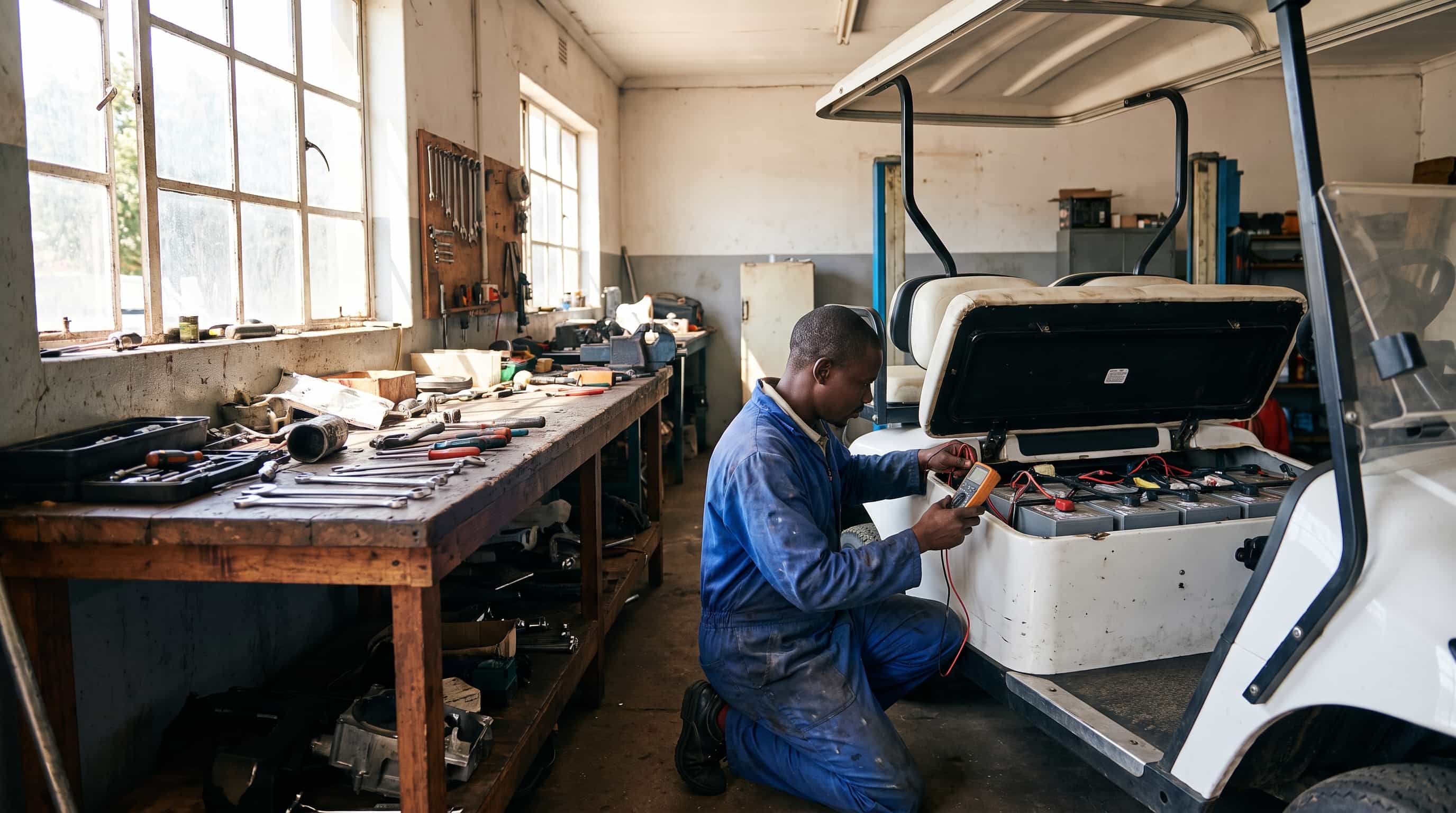
Horn, indicator and accessory faults are almost always the fuse, the switch, the bulb, or a relay, in that rough order of likelihood. A dead horn is usually its switch or fuse; indicators that will not flash are often a bulb or the flasher relay. These are low-voltage accessory faults, separate from the drive, and mostly within owner reach.
Key takeaways
- These are accessory-side faults, separate from the drive system, so the buggy driving is no clue.
- A dead horn is usually the horn switch, its fuse, or a corroded connection.
- Indicators that will not flash often mean a blown bulb or a failed flasher relay.
- One indicator flashing too fast usually means the bulb on that side has blown.
- On a road-legal buggy these are legal requirements, so fixing them is not optional.
Where these faults sit
The horn, indicators and similar accessories run on the low-voltage accessory side, fed separately from the drive. So the fact that the buggy drives perfectly tells you nothing about why the horn is silent, and you can put the motor and controller out of mind. What matters here is the small chain behind each accessory: a fuse protecting it, a switch that operates it, the wiring and connectors, and for flashing items a relay that does the flashing.
Most faults in these items are cheap and findable, which makes them satisfying to sort compared with the deeper electrical problems.
The horn
A dead horn has a short list of causes. The horn switch or button itself is a common failure, since it is pressed hard and often. The fuse protecting the horn circuit may have blown. The connection to the horn can corrode, especially as horns often sit low and exposed at the front. And, less often, the horn unit itself fails. Work through switch, fuse and connections first, because those cover most cases, and only suspect the horn itself once the supply to it is confirmed good.
Indicators
Indicators add one part to the chain: the flasher relay that makes them blink. Two patterns are worth knowing. If the indicators will not come on at all, suspect the fuse, the switch, or the flasher relay, since a failed relay stops the whole system flashing. If they come on but one side flashes much faster than the other, that fast flash is the classic sign of a blown bulb on that side, because the system detects the missing bulb and speeds up. Replacing that bulb usually restores the normal rate.
That fast-flash clue is a genuinely useful shortcut: it tells you which bulb has gone without any testing.
If yours is doing this and the checks here have not settled it, we diagnose and repair buggies, including a callout to wherever it is.
Why it matters, and the limit
If your buggy is registered and used on the road, the horn, indicators and lights are legal requirements, not optional extras, so a fault in them is a fault to fix before that use, not to shrug off. Most of this work, checking fuses, swapping bulbs, cleaning connections, testing a switch, is reasonable owner territory. If a fault traces to the wiring itself, a persistent short, or a fuse that keeps blowing, that becomes a tracing job that may need an engineer, because chasing a short through a harness is skilled and fiddly work.
Common questions
- My horn does not work
- Check the horn switch, the fuse for the horn circuit, and the connections to the horn, in that order, since those cover most dead-horn faults. The horn often sits low and exposed, so a corroded connection is common. Only suspect the horn unit itself once you have confirmed good supply and a working switch.
- One indicator flashes faster than the other
- That fast flash on one side is the classic sign of a blown indicator bulb on that side. The system detects the missing bulb and speeds up the flash as a warning. Replace the bulb on the fast-flashing side and the normal rate should return, which saves testing the rest of the circuit.
- Do I have to fix these if the buggy still drives
- If the buggy is registered and used on the road, yes, because the horn, indicators and lights are legal requirements for that use. Even off-road, working indicators and a horn are sensible safety items at a busy venue. They are accessory faults separate from the drive, so the buggy driving does not excuse them.
Still not right
We diagnose and repair golf buggies, service them on a plan, and send an engineer out to where the buggy is. Tell us the symptom and we will say what it usually means.
Related pages
Related guides
- Golf buggy troubleshooting, a complete guide9 minute read
 Golf buggy pre-event checklist for hirers4 minute read
- Golf buggy bounces or rides harshly4 minute read
 Lights and electrics not working5 minute read
 Fuses and where to find them5 minute read
 Golf buggy MOT, registration and the law for owners6 minute read