Speed problems, buggy running slow
By James Brown · Updated 21 July 2026 · 6 minute read

A buggy running slow is most often a tired battery set, since a weak set cannot deliver full power. Other causes are a speed setting or limiter, a controller cutting back to protect itself, or a dragging brake. Check the battery charge and health first, then rule out a limiter and a dragging brake, before assuming a serious drive fault.
Key takeaways
- A weak or low battery set is the commonest cause of a slow buggy, so check it first.
- Many buggies have a speed setting or limiter that can be set low or altered.
- A dragging brake steals speed and range and leaves the affected wheel warm.
- Controller protection can hold speed down on heat, load, or a low battery.
- If battery, limiter and brakes are all fine, a drive fault is worth an engineer's diagnosis.
Battery first, always
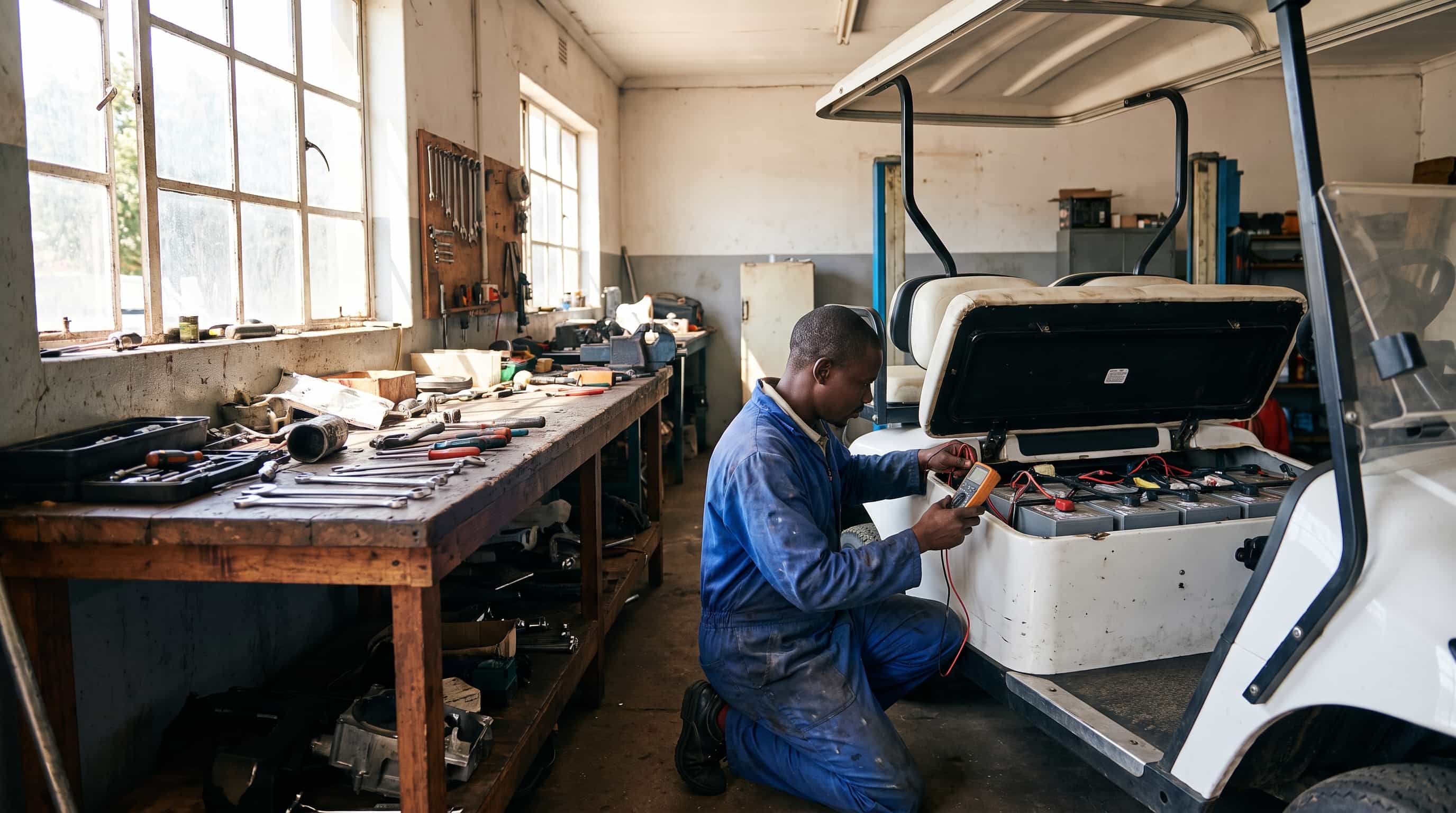
Speed and power come from the battery set's ability to deliver current, so a tired or low set is the first and most common reason a buggy runs slow. The tell is that the symptom tracks the charge: reasonable just after charging and worse as the day goes on. A set that is genuinely worn, rather than just low, is slow even fresh off the charger. Either way, the state and health of the batteries is where an honest diagnosis starts, because it explains most slow buggies and it is free to check.
If the buggy is quick in the morning and sluggish by mid-afternoon, you are almost certainly looking at a battery and charge picture, not a fault in the drive.
The limiter nobody remembered
Many buggies have a speed setting, and some have a physical limiter or a programmed maximum, put there to suit a golf course, a venue, or a nervous owner. It is genuinely common for a buggy to be reported as slow when it is simply set to a lower speed than expected, sometimes by a previous owner or hirer. Before chasing a fault, establish whether the buggy has a speed setting and what it is on. It is the cheapest possible fix, and it catches out more people than they admit.
The dragging brake
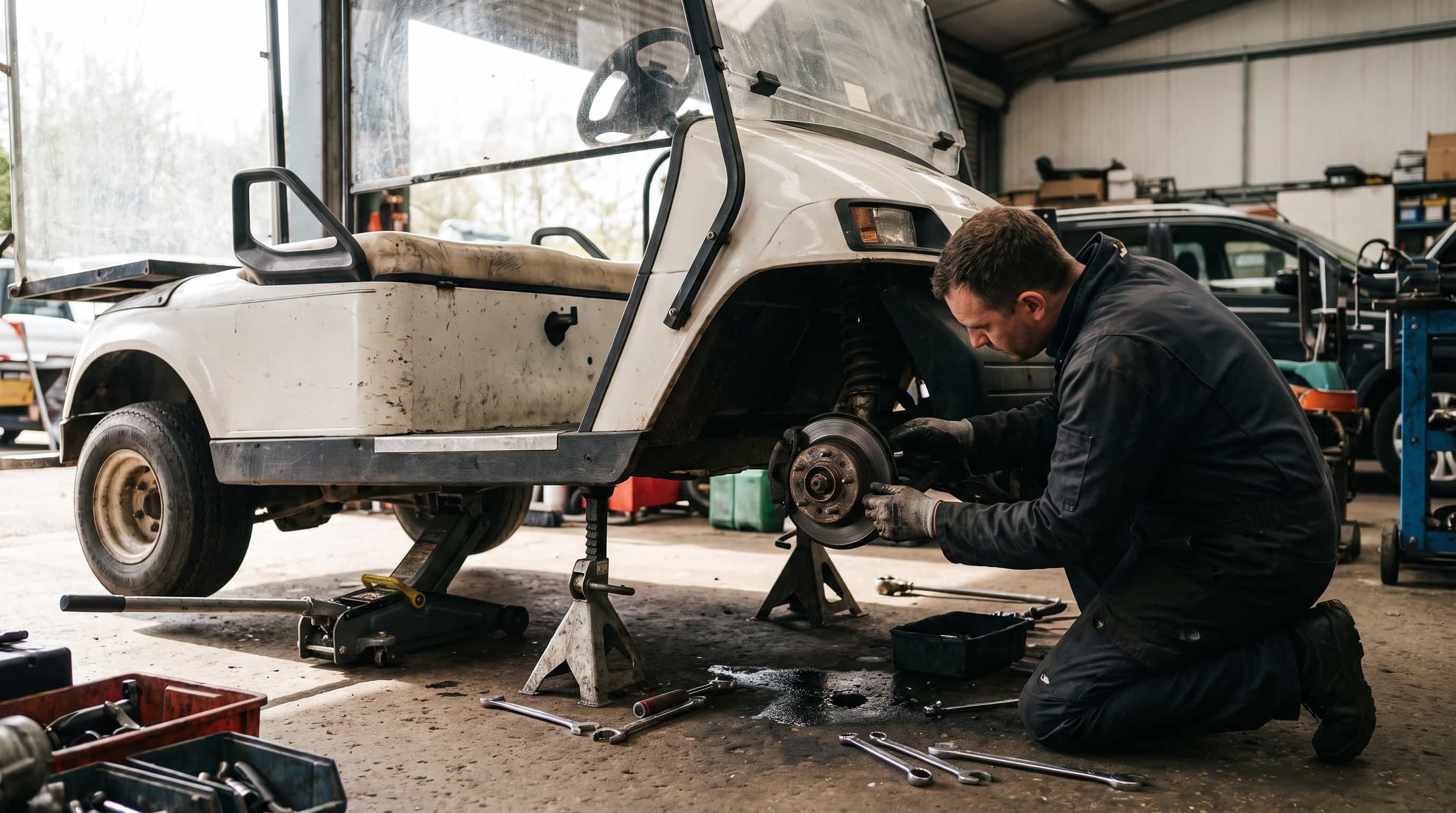
A brake that is not releasing fully drags all the time, and that drag steals both speed and range while the buggy fights it. The clues are specific: the affected wheel runs warm or hot after a drive, the buggy feels heavy and down on range as well as slow, and there may be a smell or noise from that corner. If slow comes with a hot wheel, look at the brake before the drive, and treat a dragging brake as something to fix promptly, because a brake that will not release is a safety matter as much as a performance one.
If yours is doing this and the checks here have not settled it, we diagnose and repair buggies, including a callout to wherever it is.
Controller protection, and the real fault
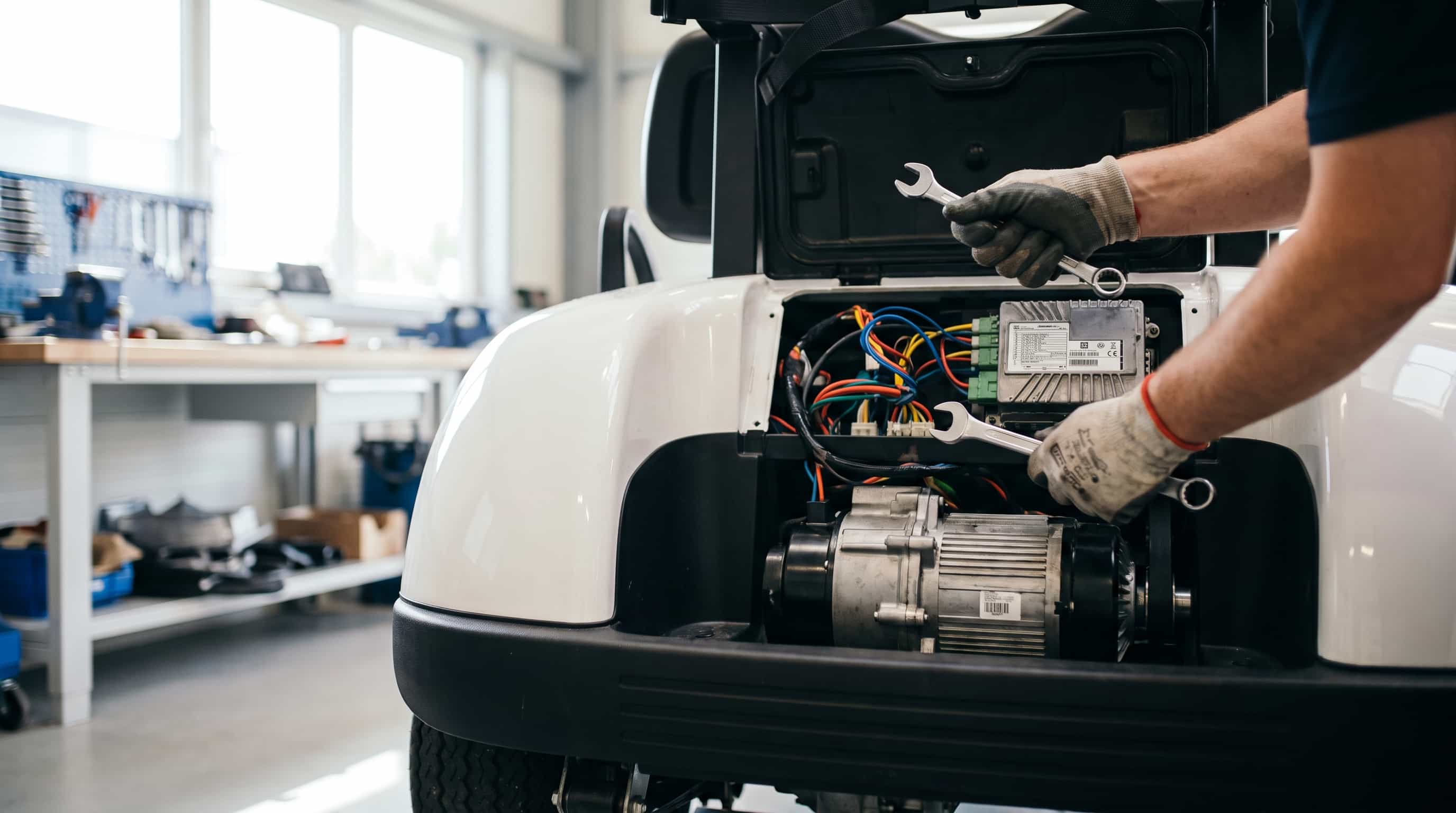
As with hills, a controller will hold power and speed down to protect itself from heat or over-current, particularly on a hot day, under load, or with a low battery. If speed recovers once things cool or the demand eases, that is protection, not failure. When you have ruled out all of this, a healthy charged battery, no low limiter, no dragging brake, no protective cut-back, and the buggy is still slow, then a genuine drive fault in the motor or controller is worth diagnosing properly. That is the point where the useful thing is to tell an engineer everything you have already ruled out, so they go straight to the harder causes.
Common questions
- My buggy is slower in the afternoon than the morning
- That is the signature of a tired or low battery set: fine just after charging, weaker as the charge drops through the day. It points at battery health and state of charge rather than a drive fault. Check and charge the set, and consider its overall condition if the pattern repeats even after a full charge.
- It has always been slow since I got it
- Check whether it has a speed setting or limiter set low, which is common on buggies passed between owners, courses or venues. A buggy reported as slow is often simply set to a lower maximum than expected. That is the cheapest fix, so rule it out before assuming anything is broken.
- It is slow and one wheel is hot
- A wheel that runs hot usually means that brake is dragging and not releasing, which steals speed and range as the buggy fights it all day. Have the brake checked promptly, since a brake that will not release is both a performance problem and a safety one.
Still not right
We diagnose and repair golf buggies, service them on a plan, and send an engineer out to where the buggy is. Tell us the symptom and we will say what it usually means.
Related pages
Related guides
 Golf buggy troubleshooting, a complete guide9 minute read
 How long do golf buggy batteries last6 minute read
 Onboard versus offboard golf buggy chargers4 minute read
- Golf buggy top speed has dropped4 minute read
 Golf buggy loses power uphill5 minute read
- Controller faults and error behaviour6 minute read