How long do golf buggy batteries last
By James Brown · Updated 21 July 2026 · 6 minute read
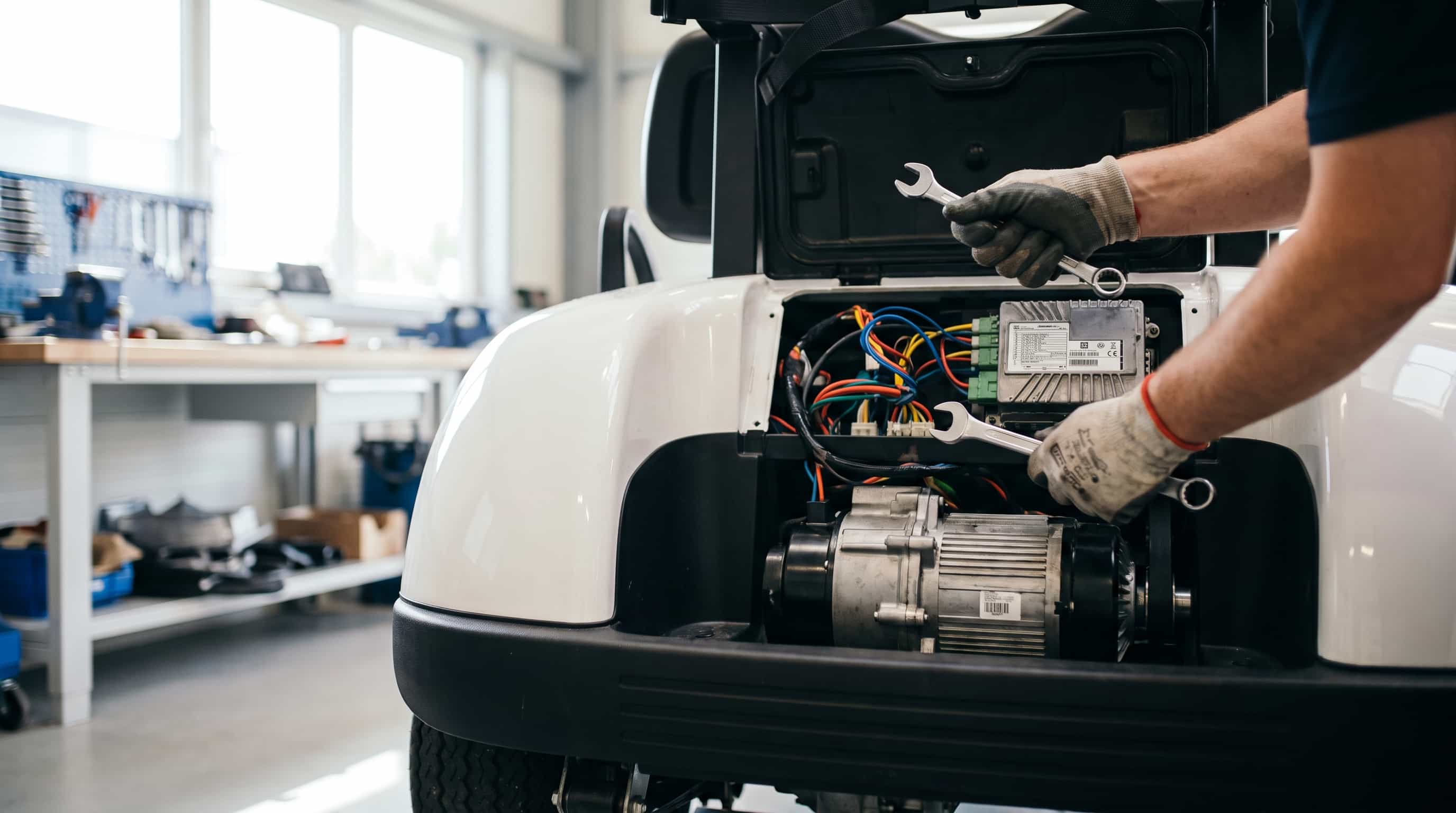
There is no single figure. A golf buggy battery set lasts as long as its type, how it is charged, and how it is looked after allow. Lead-acid sets that are watered and charged after every use last far longer than neglected ones, and lithium generally outlasts lead-acid. Cycles and care decide it, not the calendar.
Key takeaways
- Battery life is measured in charge cycles and care, not years, so two identical sets can differ widely.
- Deep discharges, leaving a set flat, and skipped watering are the three things that shorten life most.
- Lithium sets usually outlast lead-acid and need no watering, at a higher purchase cost.
- The honest signs of a tired set are reduced range and slowing on hills, not a warning light.
- Anyone quoting you an exact lifespan without knowing the set and how it is used is guessing.
Why there is no fixed number
People want a figure in years, and it is a fair thing to want, but it is the wrong unit. A traction battery is rated in charge cycles, not time. A buggy charged every night and worked hard through a season goes through cycles far faster than one used a handful of weekends a year, so the same set can be worn out in one case and barely broken in the other after the same number of months.
We will not print a lifespan figure here because any single number would be wrong for most people the moment they told us how they use their buggy. What we can do is be clear about what moves the number up and down.
What shortens a set's life
Three habits do most of the damage. The first is deep discharging, running the set close to empty regularly rather than charging when it is part used. Traction batteries prefer a partial discharge and a full recharge, and the deeper you take them each time, the fewer cycles they give back.
The second is leaving a set flat. A battery left discharged degrades, and a set that was merely flat in the autumn can be genuinely dead by spring. The third, for lead-acid, is skipped watering: run the electrolyte low and the plates are damaged permanently. None of these announces itself. The set simply gives less each season until one day it is not worth charging.
How type changes the answer
Older and cheaper buggies use flooded lead-acid batteries. They are the most forgiving to buy and the least forgiving to neglect, because they need their water checked and topped up with distilled water, and they hate being left flat. Looked after, they give honest service. Ignored, they fade quickly.
Lithium sets, more common on newer buggies, generally last longer in cycles, hold their voltage better as they discharge, and need no watering. They cost more up front and their faults are less suited to a home fix, since the battery management system that protects them is not something to poke at. If you do not know which type you have, the maker's plate or the manual will say, and it changes both the maintenance and the expected life.
If yours is doing this and the checks here have not settled it, we diagnose and repair buggies, including a callout to wherever it is.
Getting the most from a set
The routine that extends a set is dull and effective. Charge after every use, not only when it is nearly empty. Do not leave it sitting discharged. For lead-acid, check the water regularly and keep clean, tight terminals. Store it charged and keep the charge topped through the off-season rather than letting it sink over winter.
None of that buys you a specific extra number of years, and we would not claim it does. What it does is stop the avoidable early death that ends most sets long before their design allowed.
Common questions
- Can you tell me how many years my batteries will last
- Not honestly, because life is measured in charge cycles and shaped by care, not by the calendar. A hard-worked set charged every night ages far faster than a lightly used one. The maker's guidance for your specific set, read alongside how you actually use it, is the figure to trust.
- How do I know my set is near the end
- The usual signs are gradual: less range on a charge than the buggy used to give, and slowing on hills it used to climb. Those track the state of charge, which is what tells you it is the batteries rather than a controller or motor fault. A set that will not hold charge overnight is close.
- Does leaving it on charge all the time help or harm
- It depends on the charger. A modern charger with a proper battery profile can be left connected and will hold the set correctly, which is good for a stored buggy. An older or unmatched charger that keeps pushing current can overcharge and cook a lead-acid set, so check what yours is designed to do before leaving it plugged in for weeks.
Still not right
We diagnose and repair golf buggies, service them on a plan, and send an engineer out to where the buggy is. Tell us the symptom and we will say what it usually means.
Related pages
Related guides
 Golf buggy troubleshooting, a complete guide9 minute read
 Onboard versus offboard golf buggy chargers4 minute read
- Wheel bearings, symptoms of wear5 minute read
 Golf buggy battery problems explained7 minute read
 Lithium versus lead-acid batteries in buggies6 minute read
 When to repair versus replace a battery set5 minute read