Golf buggy top speed has dropped
By James Brown · Updated 21 July 2026 · 4 minute read

A dropped top speed is usually a tiring battery set, since a weak set cannot deliver full power, but it can also be a speed setting or limiter, a dragging brake, or the controller cutting back to protect itself. Check the battery charge and health, confirm no limiter is set low, and rule out a dragging brake before assuming a drive fault.
Key takeaways
- A tiring battery set is the commonest reason a buggy loses top speed.
- A speed setting or limiter set low is a common and cheap explanation, so rule it out.
- A dragging brake holds speed down and runs the affected wheel hot.
- Controller protection can cap speed on heat, load, or a low battery.
- If battery, limiter and brakes are fine, a drive fault is worth an engineer's diagnosis.
Battery first
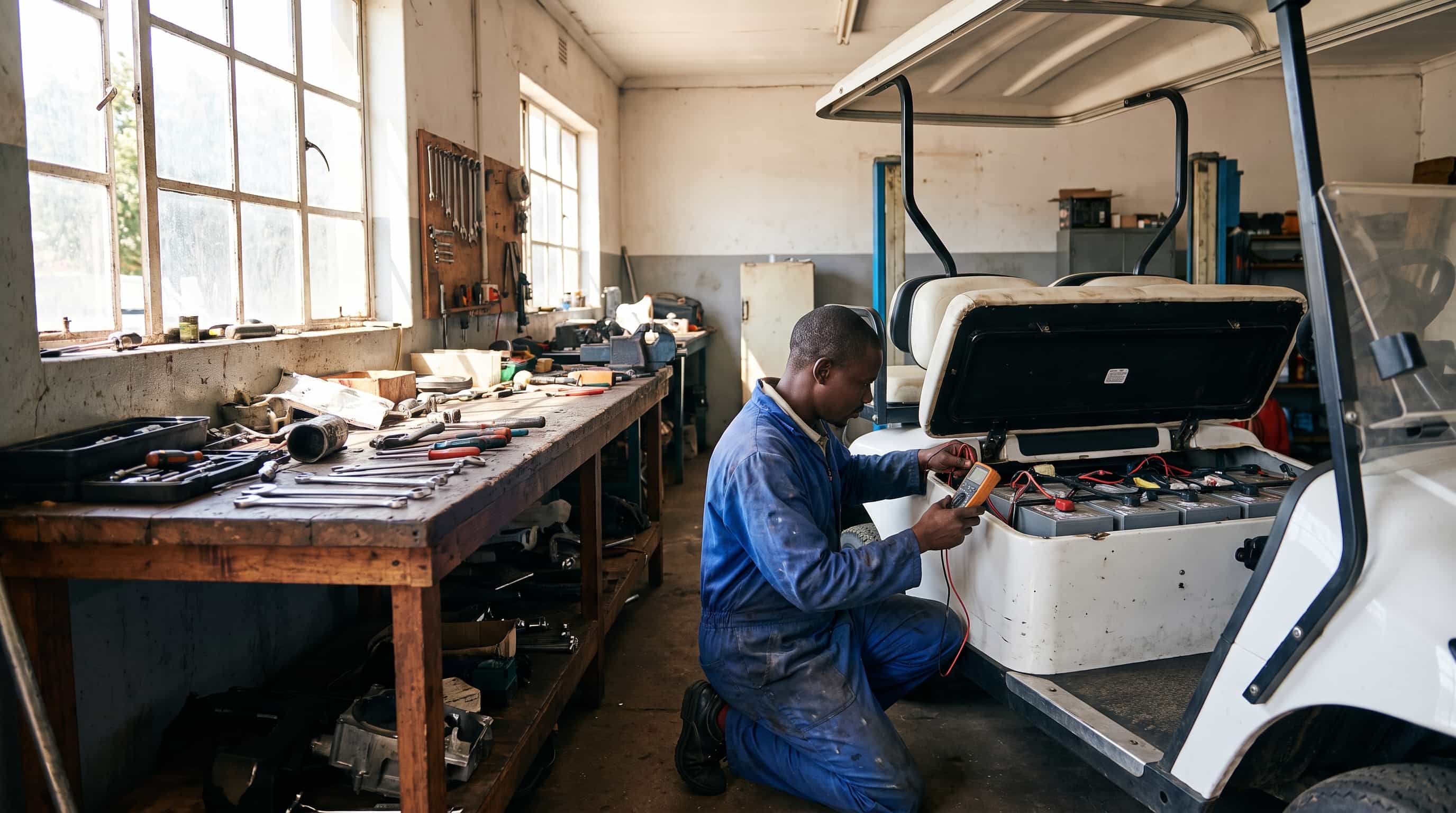
Top speed comes from the battery set's ability to deliver full power, so a set that is tiring is the first and commonest reason speed falls off. The pattern to notice is whether the loss tracks the charge: a buggy that reaches its old speed just after charging but not later in the day is showing battery decline, not a fault in the drive. A genuinely worn set is down on speed even fresh off the charger. Either way, checking the state and health of the batteries is where an honest diagnosis of lost speed begins, because it explains most cases and costs nothing.
The limiter, the brake, the controller
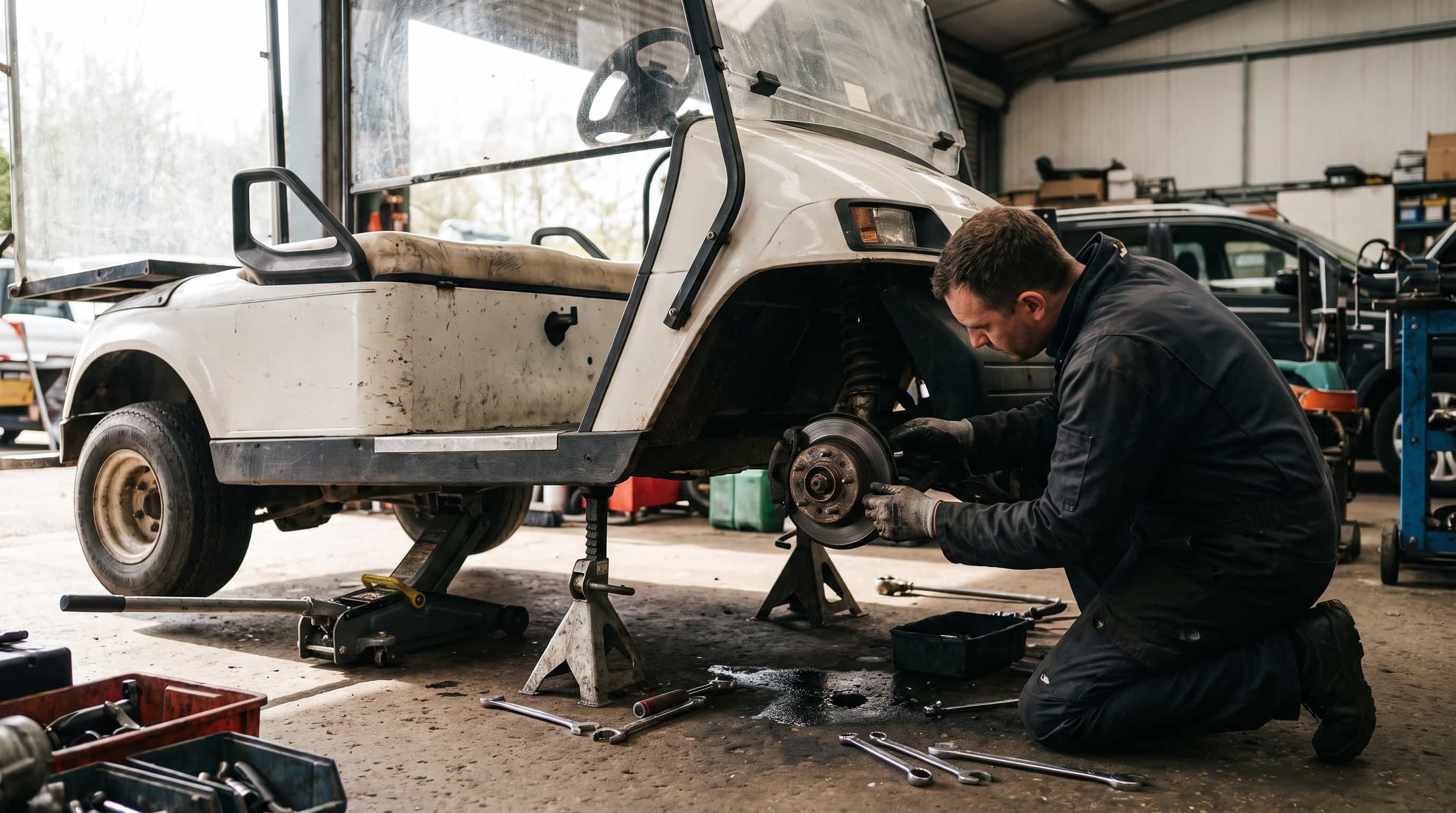
Three other causes cover most of the rest. A speed setting or limiter set low is surprisingly common, especially on a buggy passed between owners, courses or venues, where someone set it down and it was forgotten, so before chasing a fault, confirm what the speed setting is. A dragging brake holds the buggy back all the time, capping its speed while running the affected wheel hot and draining range, so a lost top speed with a warm wheel points at the brake. And the controller will cap speed to protect itself from heat or over-current, particularly on a hot day or under load, recovering when things cool, which is protection rather than a fault.
When it is a real drive fault
Work through those and the picture usually resolves. If the battery is healthy and charged, no limiter is set low, no brake is dragging, and it is not simply protective cut-back, and the buggy still will not reach its old speed, then a genuine drive fault in the motor or controller is worth diagnosing properly. That is the point where the useful thing is to tell an engineer everything you have ruled out, so they go straight to the harder causes rather than repeating your checks. As with all speed complaints, describing exactly when the speed is down, always, only when warm, only late in the charge, only with a load, guides the diagnosis.
If yours is doing this and the checks here have not settled it, we diagnose and repair buggies, including a callout to wherever it is.
The honest limit on figures
One thing this guide will not do is tell you what your buggy's top speed should be, because that depends on the model, its setting and its condition, and inventing a figure would mislead. If you suspect the speed is genuinely below what your buggy should do, the reference is the maker's specification for your model and setting, read against its actual condition. What this guide can do is help you work out why a speed you know your buggy used to reach has fallen away, which is the more common and answerable question.
Common questions
- My buggy used to be faster than it is now
- The commonest cause is a tiring battery set, which cannot deliver full power, so check the charge and battery health first, especially if the speed is fine after charging but drops later. Then rule out a low speed setting or limiter, a dragging brake, and controller protection before assuming a drive fault.
- Could a setting be limiting the speed
- Yes, and it is worth checking early because it is the cheapest fix. Many buggies have a speed setting or limiter, and one set low, often by a previous owner or venue and then forgotten, is a common reason a buggy seems slow. Confirm the setting before assuming anything is broken.
- It is slower and one wheel is hot
- That points at a dragging brake on that wheel, holding the buggy back all the time while running the wheel hot and draining range. Have the brake checked promptly, since a brake that will not release is a safety matter as well as a cap on speed, and freeing or adjusting it is engineer work.
Still not right
We diagnose and repair golf buggies, service them on a plan, and send an engineer out to where the buggy is. Tell us the symptom and we will say what it usually means.
Related pages
Related guides
 Golf buggy troubleshooting, a complete guide9 minute read
 Charging faults and how to diagnose them7 minute read
- Golf buggy accelerates slowly from a stop4 minute read
- Speed problems, buggy running slow6 minute read
 Golf buggy battery problems explained7 minute read
- Controller faults and error behaviour6 minute read