When to call an engineer for a golf buggy: warning signs
By James Brown · Updated 21 July 2026 · 5 minute read

Call an engineer for anything affecting the brakes or steering, any burning smell or overheating, and any damaged, swollen or leaking battery. These are safety matters, not diagnosis-from-a-webpage matters. Controller and motor faults are safe to investigate but usually need proper test equipment rather than swapping parts on a hunch.
Key takeaways
- Brakes and steering are never do-it-yourself. Stop driving and call someone.
- A burning smell, overheating, or a damaged battery means stop immediately.
- Controller and motor faults are not dangerous but need test equipment to diagnose.
- Guessing at expensive parts costs more than a diagnosis usually does.
- What you have already checked makes an engineer's visit shorter and cheaper.
The faults that are not yours to fix
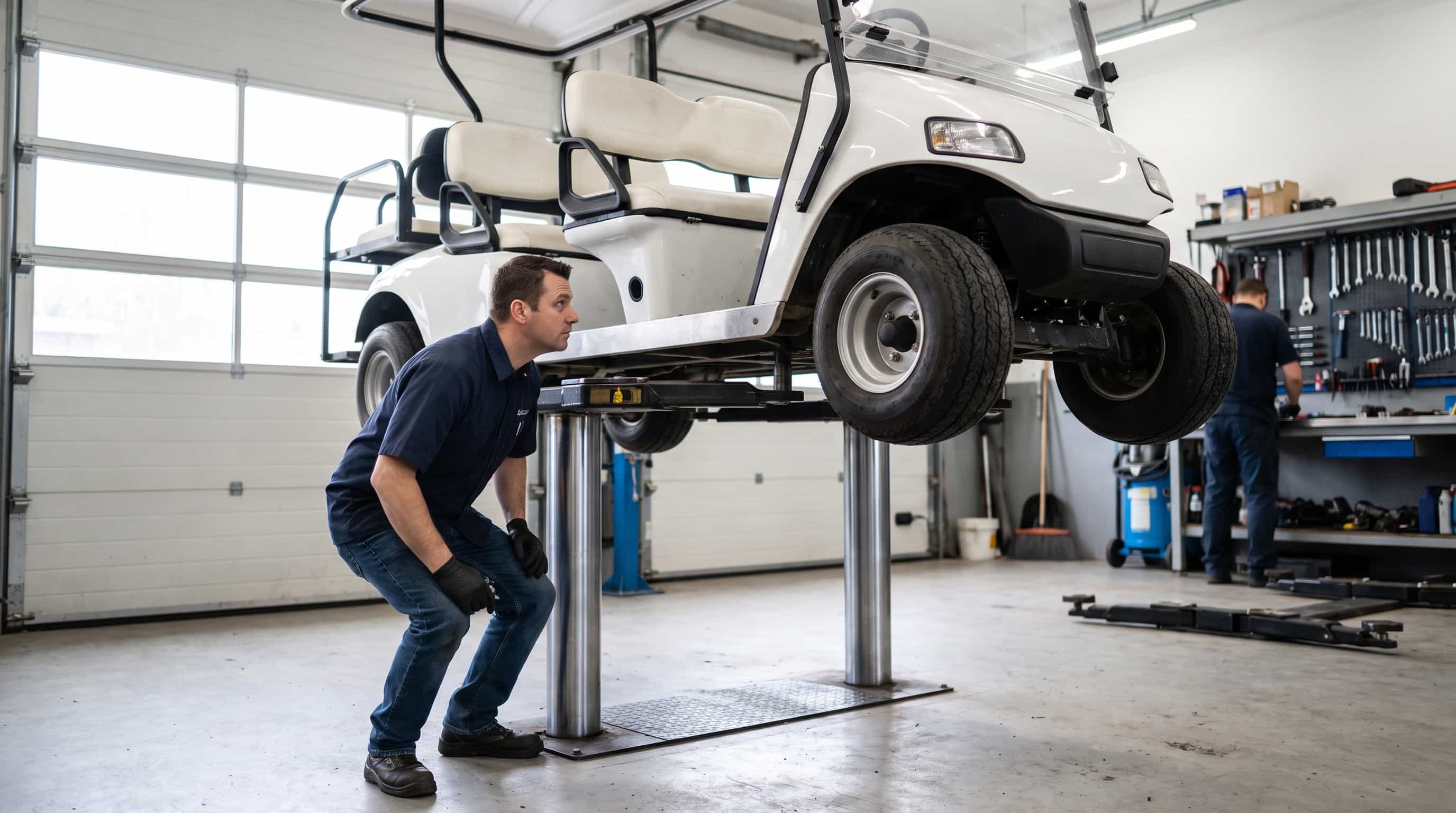
Some things are simply not safe to investigate or to drive with, and it is worth being blunt about them. If the brakes feel wrong in any way, soft, grabbing, pulling to one side, or slow to bite, the buggy should not be driven until an engineer has looked at it. The same is true of steering that has developed play, stiffness or a noise.
These are not the sort of fault where a webpage should be talking you through a repair, because the cost of getting it wrong is somebody hurt. Stop, and get it looked at.
Stop-immediately signs
A few signs mean stop now rather than finish the day. A burning or hot-electrical smell means something is overheating, and continuing risks a fire. Visible overheating, smoke or melted plastic around the controller or wiring is the same.
On the battery side, any casing that is cracked, swollen or leaking, or any strong acid smell, means stop and keep clear. Damaged batteries are dangerous to handle and dangerous to charge, and this is firmly engineer territory.
Faults that are safe to investigate but hard to fix
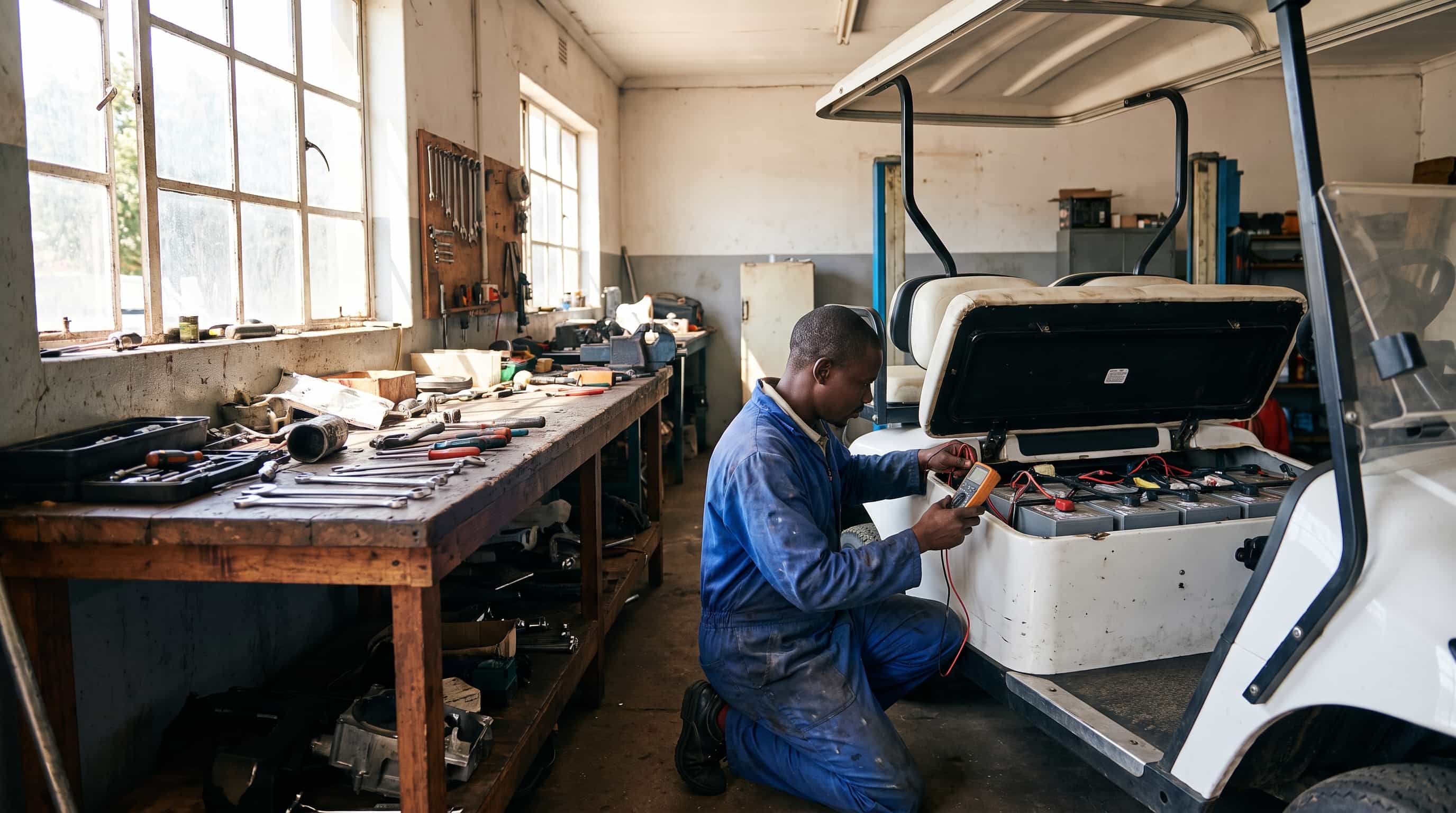
Controller and motor faults are not dangerous to look at, but they are usually beyond a sensible home repair. Diagnosing them properly needs test equipment to measure what is actually happening, rather than swapping expensive parts one at a time and hoping one works.
That guessing approach is how people spend more on a buggy than a proper diagnosis would have cost. If you have reached the controller or the motor, it is usually the economical moment to call somebody who can test rather than guess.
If yours is doing this and the checks here have not settled it, we diagnose and repair buggies, including a callout to wherever it is.
Make the visit count
When you do call an engineer, the single most useful thing you can do is tell them what you have already established. The batteries charge and read healthy. The solenoid clicks. The fault is present regardless of charge. Each of those saves them repeating a step.
A well-briefed engineer spends less time diagnosing and more time fixing, which is faster for you and cheaper. The checks in the rest of this cluster are exactly the ones that produce that briefing.
Common questions
- Can I keep driving a buggy with a brake problem
- No. A brake fault of any kind means the buggy should not be driven until an engineer has checked it. This is a safety matter, not a convenience one, and it is not something to work around.
- Is a burning smell serious
- Yes, treat it as stop-immediately. A burning or hot-electrical smell means something is overheating, and continuing risks a fire. Switch off, disconnect if you can do so safely, and get it looked at before using the buggy again.
- When is it cheaper to call an engineer than to try myself
- Once you reach the controller or motor. Diagnosing those needs test equipment, and swapping expensive parts on a guess usually costs more than a proper diagnosis would have. The simple checks are worth doing yourself; the expensive parts are not worth guessing at.
Still not right
We diagnose and repair golf buggies, service them on a plan, and send an engineer out to where the buggy is. Tell us the symptom and we will say what it usually means.