Golf buggy hot weather and summer maintenance
By James Brown · Updated 21 July 2026 · 4 minute read
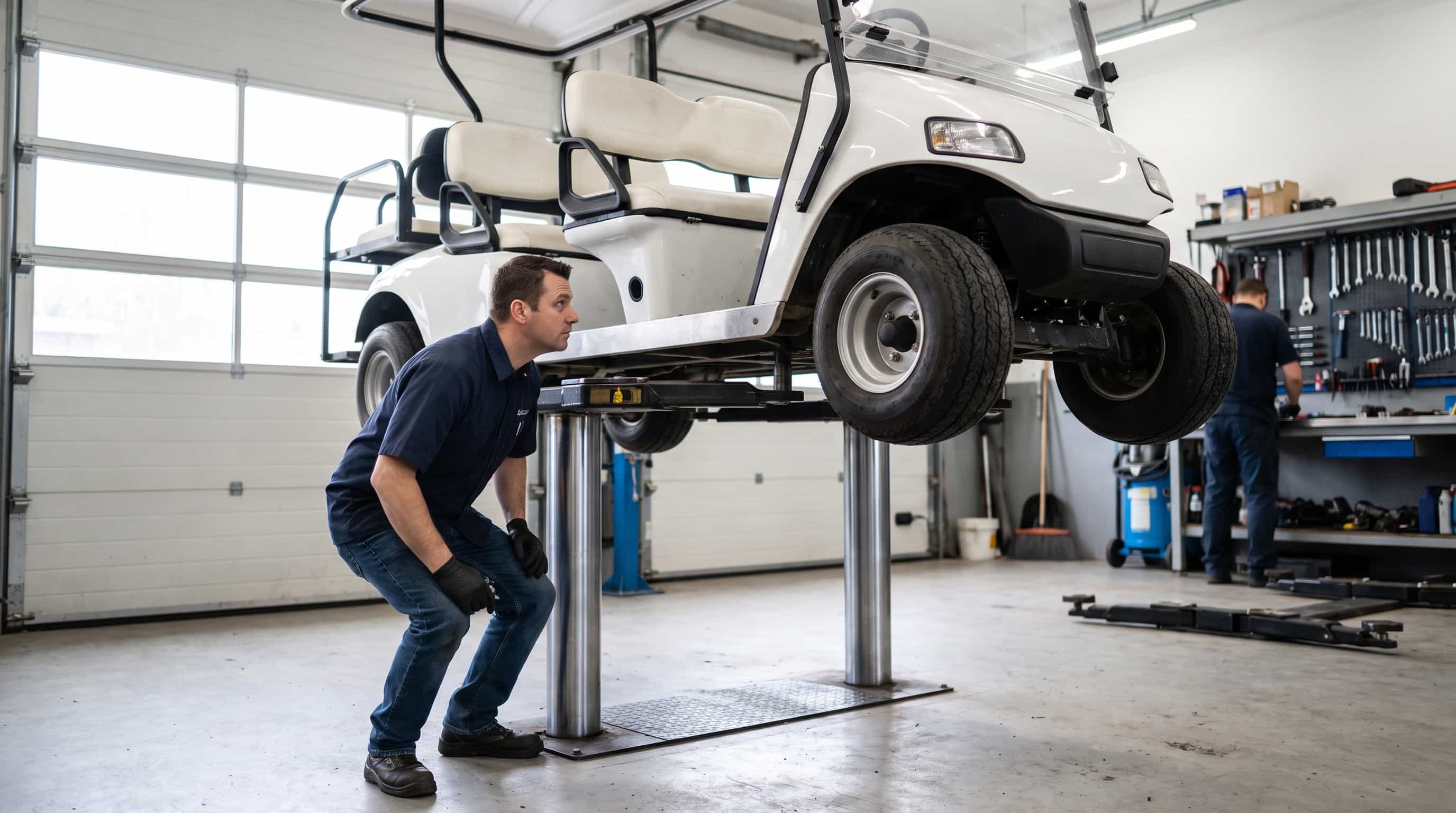
Summer is a buggy's busiest and hottest time, and heat matters: flooded lead-acid batteries use more water in the heat and need checking more often, controllers may cut power to protect themselves on hot days under load, and tyre pressures rise. Keep on top of water, charge, and the daily checks through the season, because summer is when the buggy works hardest.
Key takeaways
- Summer is the busiest and hottest season, so maintenance needs to keep pace.
- Flooded lead-acid batteries use more water in heat, so check the level more often.
- Controllers may cut power on hot days under load to protect themselves.
- Heat raises tyre pressures, so check them in hot spells as well as cold.
- Hard summer use means keeping up charge, water and the daily checks matters most.
Heat and the batteries
Summer is when buggies earn their keep and when heat is added to the load, and the batteries feel it first. Flooded lead-acid batteries use water faster in hot weather, because heat drives off more of it, so a set that needed the water checked occasionally in spring may need it more often through a hot, busy summer. Letting the level fall in the heat exposes the plates and damages the set, exactly as the watering guide warns, so the practical response is to check the water more frequently through summer rather than on the same schedule as the cooler months. Heat also works batteries harder overall, so a set already tiring shows it more in the heat and under a full summer workload.
Controllers and heat
The other heat effect owners meet in summer is protective cut-back. As the controller guide explains, controllers reduce power to protect themselves when they get too hot, and a hot day, a long or repeated hill, and a full load together are exactly the conditions that provoke it. So a buggy that fades on a warm afternoon, on a route it manages easily in cooler weather, is often showing the controller doing its job rather than a fault. Knowing that saves a needless diagnosis: if power returns once things cool and the demand eases, it is heat and load, and the answer is to ease the demand, not to suspect the controller. A buggy worked flat out on the hottest days is the one most likely to see this.
Tyres and the rest
Heat moves tyre pressures the opposite way to cold: pressures rise as tyres warm, so a hot spell can leave them higher than set, which affects ride and grip. So tyre checks matter in summer as much as winter, just for the opposite drift, and the tyre care guide's message of checking through the season rather than setting once applies. Beyond that, summer's real demand is simply volume of use: the buggy is out constantly, so the wear accumulates fast, and staying on top of the charge, the daily checks, and the small developing faults keeps a hard-worked buggy reliable through the season rather than letting a busy summer quietly run it into a breakdown.
If yours is doing this and the checks here have not settled it, we diagnose and repair buggies, including a callout to wherever it is.
Keeping pace
The theme of summer maintenance is keeping pace with the work. A buggy used a handful of times needs little; a buggy working weddings and events all summer needs its maintenance frequency to rise with its use, more frequent water checks on lead-acid, diligent charging so it is ready each day, and daily checks that catch the wear a heavy season brings. For a fleet, this is the servicing and fleet guides in action: match the maintenance to the season's demand. Get that right and the buggy comes through its busiest, hottest months reliably; neglect it because everything is going fine, and summer is exactly when a neglected buggy finally fails, in front of guests.
Common questions
- Does hot weather affect my buggy's batteries
- Yes. Flooded lead-acid batteries use water faster in heat, so the level needs checking more often through a hot summer than in cooler months, or the plates are exposed and the set is damaged. Heat also works batteries harder overall, so a tiring set shows it more in the heat and under a full summer workload. Keep on top of the water and charge.
- My buggy fades on hot afternoons
- That is often the controller protecting itself from heat, especially on a hot day with a long hill or a full load, which are the conditions that provoke protective cut-back. If power returns once things cool and the demand eases, it is heat and load rather than a fault, so ease the demand rather than suspecting the controller.
- Do tyre pressures change in summer
- Yes, heat raises tyre pressures as the tyres warm, the opposite of the winter drop, so a hot spell can leave them higher than set, affecting ride and grip. So check tyre pressures in summer as well as winter, since pressures drift with temperature both ways and need keeping at the correct figure through the season.
Still not right
We diagnose and repair golf buggies, service them on a plan, and send an engineer out to where the buggy is. Tell us the symptom and we will say what it usually means.
Related pages
Related guides
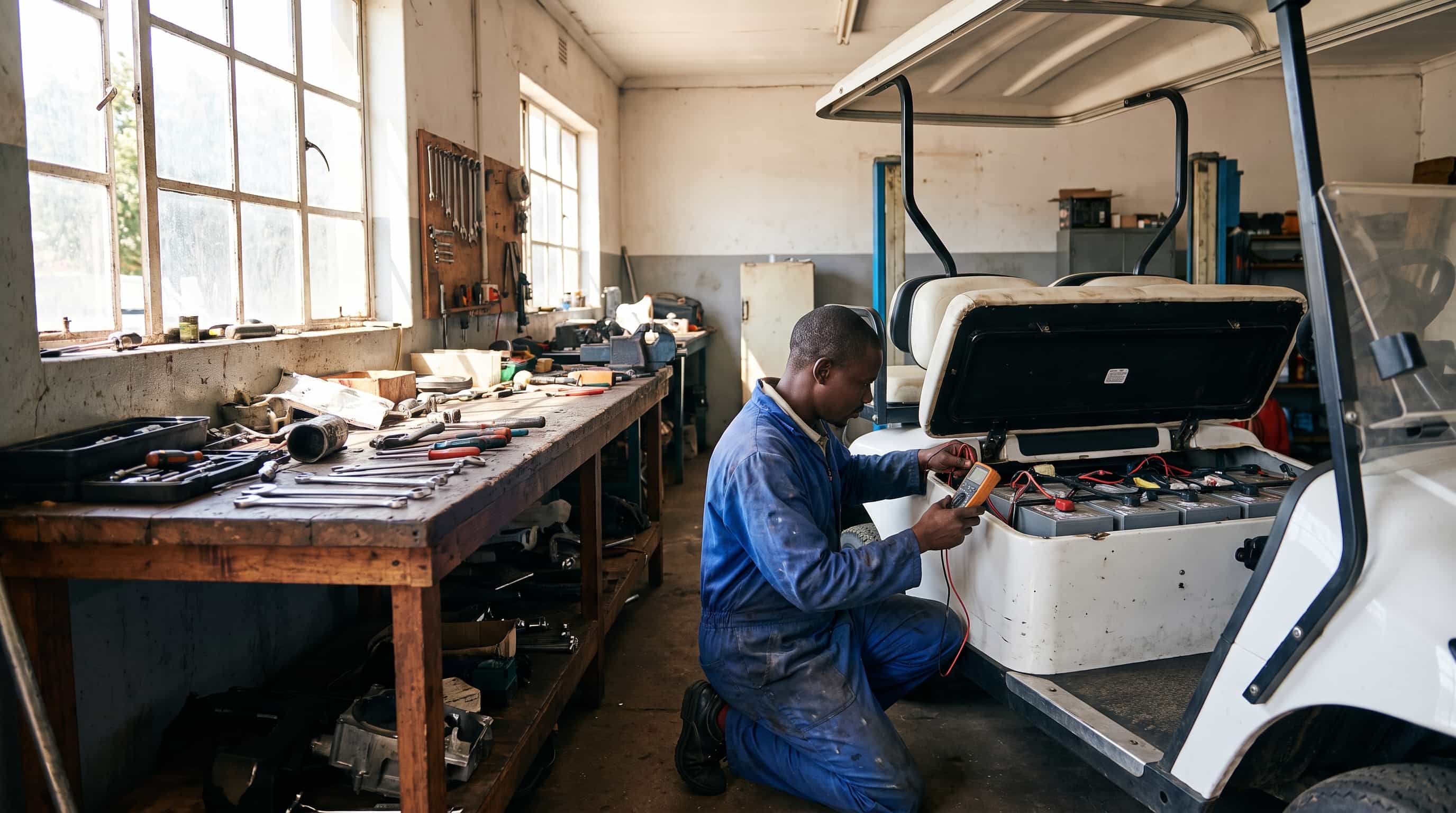 Golf buggy troubleshooting, a complete guide9 minute read
- Buying a used golf buggy, what to inspect5 minute read
- Golf buggy daily safety check, step by step4 minute read
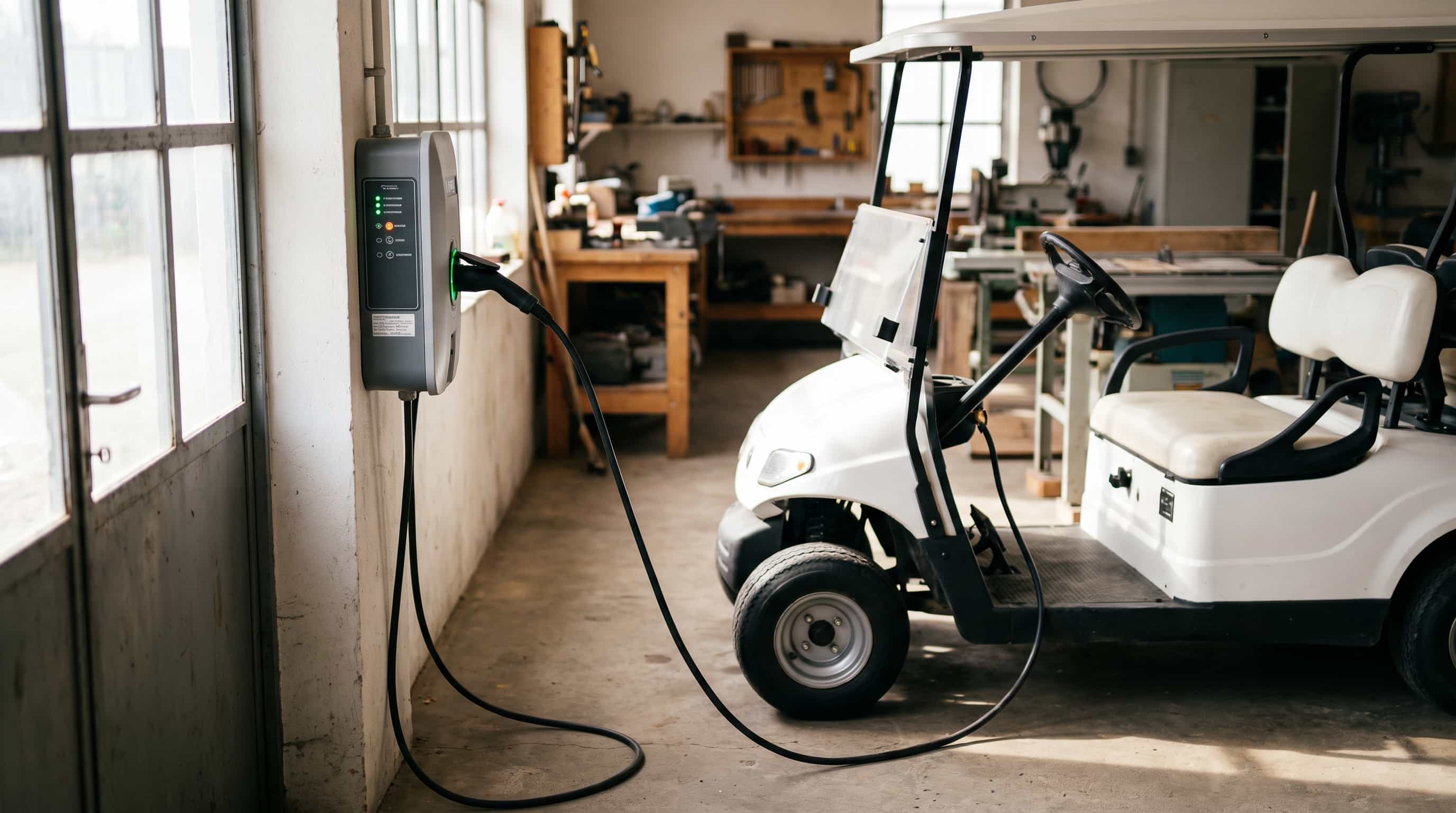 Battery watering and maintenance (lead-acid)6 minute read
- Controller faults and error behaviour6 minute read
 Golf buggy tyre care and seasonal pressures4 minute read