Golf buggy daily safety check, step by step
By James Brown · Updated 21 July 2026 · 4 minute read
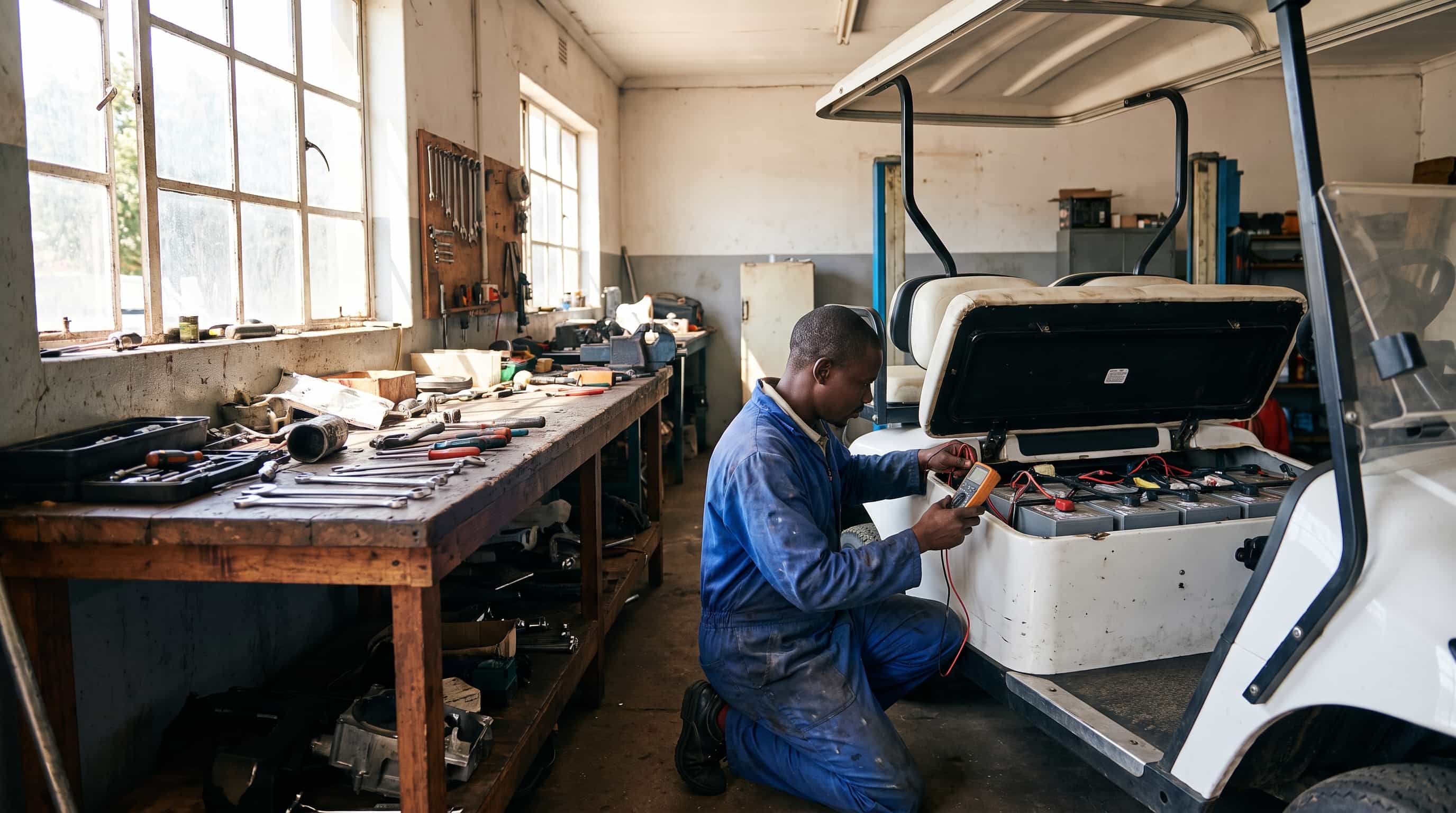
A daily safety check takes a couple of minutes and catches most breakdowns and safety problems before the buggy goes out. Check the charge, the tyres, the brakes and park brake, the steering, and do a walk-round for damage or anything loose. Record it. If any safety check fails, park the buggy until it is fixed, however busy the day.
Key takeaways
- A two-minute daily check catches most breakdowns and safety problems in the yard.
- Cover charge, tyres, brakes and park brake, steering, and a walk-round.
- Record the check, so faults are acted on and patterns show over time.
- A failed safety check parks the buggy until it is fixed, no exceptions.
- Keep it short enough that it genuinely gets done every day of use.
Before the buggy goes out
This check is done before use, in the calm of the morning or setup, with enough time to act on anything it finds. It is deliberately short so it actually gets done every day rather than skipped when the yard is busy. For a fleet, do it per buggy and keep a record; for a single owner, make it a habit. The whole point is to move any surprise from the middle of the day, in front of guests, to the quiet before, where it can be dealt with.
Step by step
1. Charge: check the buggy is charged enough for the day's expected use, and that it charged properly overnight. A buggy sent out low is a breakdown waiting to happen. 2. Tyres: glance at each tyre for obvious damage or one gone soft, and check the pressures are right and equal if you have the gauge out, as the tyre-pressure guide covers. 3. Brakes: sit in and press the pedal to feel it is firm with no grinding, then test the park brake holds on a gentle slope, as the owner brake-checks guide describes. A soft pedal or a park brake that slips is a fail. 4. Steering: check for obvious excess play or heaviness as you move off gently, and that the buggy tracks straight. 5. Walk-round: look over the buggy for anything loose, damaged, leaking or trailing, that seats and bodywork are sound, and that the lights, horn and reverse buzzer work if the buggy uses them. 6. Record it: note the check as done, dated and initialled, and flag anything found so it is acted on rather than forgotten between shifts.
The rule that makes it work
The check is only worth doing if a failed check has teeth. The rule is simple: if a safety basic fails, brakes not right, park brake not holding, steering wrong, something clearly unsafe, the buggy comes out of service until it is fixed, however inconvenient. The pressure to send a marginal buggy out because you are short is exactly what the check exists to resist, because a buggy failing in use with guests aboard is far worse than one parked in the yard.
If yours is doing this and the checks here have not settled it, we diagnose and repair buggies, including a callout to wherever it is.
What a fail means next
A failed check routes to the matching guide or to an engineer, depending on what failed. A soft tyre or a low charge is an owner fix; the buggy waits while you sort it. A brake or steering fault, or anything safety-critical, is not an owner repair, so the buggy stays parked and an engineer is requested, as the brakes and steering guides and the diagnostic flow set out. Recording the fail also builds the picture over time, so a buggy that keeps failing the same check gets the deeper attention it needs before it fails in use.
Common questions
- What should a daily check include
- Charge, tyres, brakes and park brake, steering, and a walk-round for damage or anything loose, per buggy, before use. That short list covers the faults that strand a buggy or create a safety risk. Keep it brief enough to genuinely get done every day, and record it so faults are acted on and patterns show over time.
- What do I do if the buggy fails the check
- If a safety basic fails, park the buggy until it is fixed, no exceptions, however busy the day. An owner-level fault like a soft tyre or low charge you fix and re-check; a brake, steering or other safety-critical fault means the buggy stays parked and you request an engineer. A buggy failing in use with guests aboard is far worse than one parked.
- Do I really need to record it
- Yes. A record proves the check happened, which matters for due diligence if there is ever an incident; it makes sure a found fault is acted on rather than forgotten between shifts; and over time it reveals patterns, the buggy that keeps needing attention, so you catch a developing problem before it fails. A simple dated, initialled note is enough.
Still not right
We diagnose and repair golf buggies, service them on a plan, and send an engineer out to where the buggy is. Tell us the symptom and we will say what it usually means.
Related pages
Related guides
- Golf buggy troubleshooting, a complete guide9 minute read
 Golf buggy cold-weather operation4 minute read
- Golf buggy owner brake checks, step by step4 minute read
 Daily checks for fleet operators5 minute read
 Golf buggy pre-event checklist for hirers4 minute read
- How to check golf buggy tyre pressures, step by step4 minute read