Buying a used golf buggy, what to inspect
By James Brown · Updated 21 July 2026 · 5 minute read
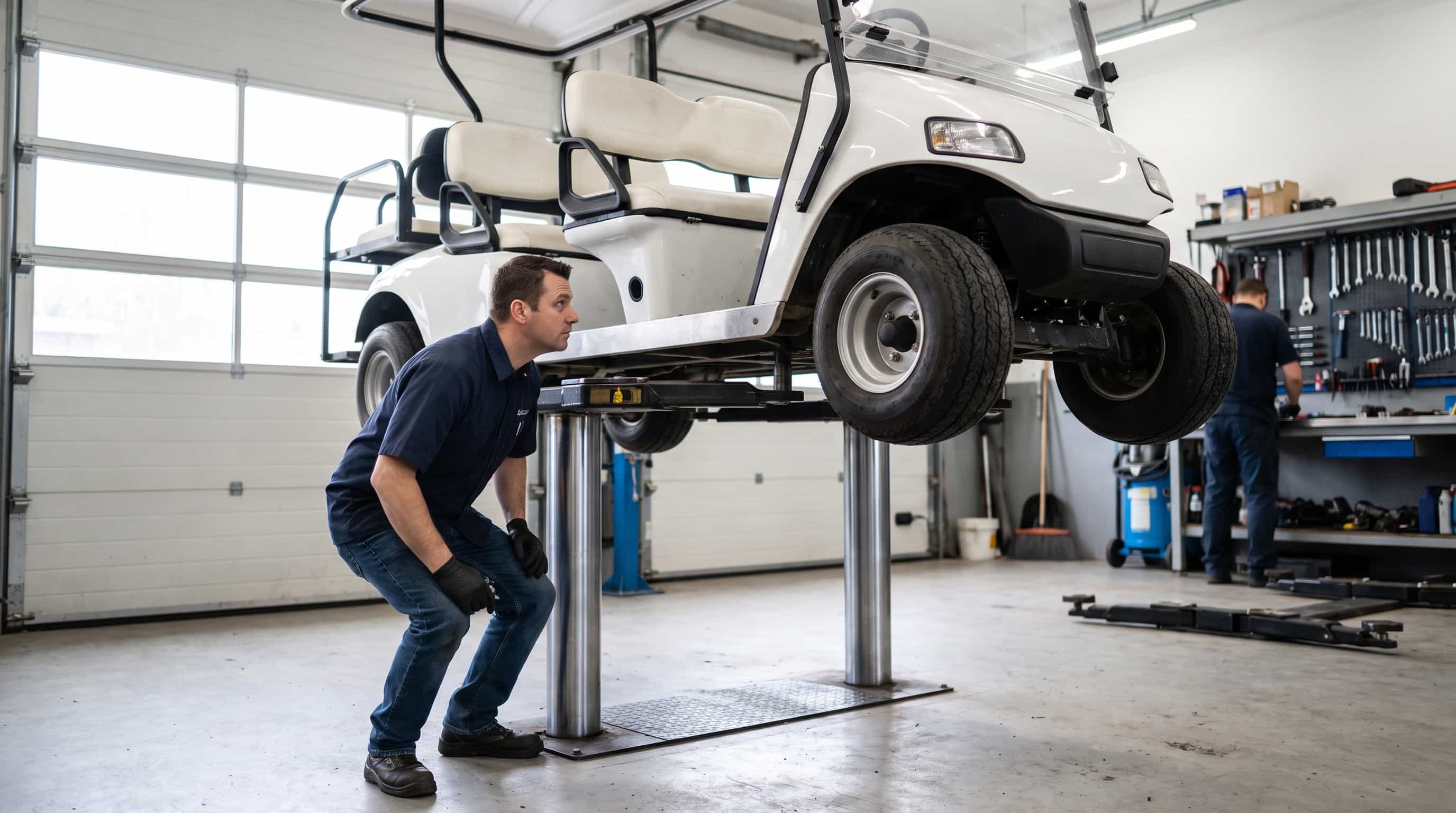
When buying a used buggy, check the batteries first, because a worn set is the biggest hidden cost and a new set changes the sums entirely. Then check the drive, the brakes and park brake, the steering, the tyres and the body. Test drive it, and judge the price against what it will need, not just how it looks, since a tidy buggy on a dying set is not a bargain.
Key takeaways
- The batteries are the biggest hidden cost, so check them before anything else.
- A worn set means a whole-set replacement soon, which changes the real price.
- Check the drive, brakes and park brake, steering, tyres and body in turn.
- Test drive it, listening and feeling for the faults the symptom guides describe.
- Judge the price against what it will need, not just how it looks.
Batteries first, always
The single most important check on a used buggy is the batteries, because they are the most expensive part and the easiest for a seller to gloss over. A buggy can look immaculate and drive round the yard fine on a set that is nearly finished, and the buyer discovers weeks later that it needs a full set, which as the repair-versus-replace guide explains is a whole-set cost that transforms the real price paid. So find out what you can: the battery type and age, whether a lead-acid set has been watered and looks cared for or is corroded and neglected, and, ideally, how it holds up under a proper test rather than a quick spin. A set that will not hold charge, slows on hills, or fades in a longer test is a set near the end, and the price should reflect that a replacement is coming.
The drive, brakes and steering
Beyond the batteries, work through the systems the rest of this knowledge base covers. On the drive, listen for the whines, clunks and grinds that point at transaxle or bearing wear, and note whether it pulls away smoothly and holds speed. On the brakes, check the pedal is firm and the buggy stops properly, and crucially that the park brake holds on a slope, since a used buggy with tired brakes is both a cost and a safety matter. On the steering, feel for the play and vagueness that mean worn linkage, and check the tyres for uneven wear that hints at tracking or alignment. These are the same checks you would make diagnosing a fault, applied before you own the problem.
Body, electrics and the test drive
Look over the body and electrics too. A cracked, faded or badly repaired body is cosmetic but tells you how the buggy was treated, and split seats and a neglected look often go with neglected maintenance underneath. Check the lights, horn and any accessories work, and look at the battery area and connections for the corrosion that causes so many faults. Then test drive it properly, not just a crawl round the yard: over a bit of distance, up a slope if you can, listening and feeling for everything the symptom guides describe, and watching how it holds its charge and speed. A seller confident in the buggy will let you test it properly; reluctance to is itself information.
If yours is doing this and the checks here have not settled it, we diagnose and repair buggies, including a callout to wherever it is.
Judging the price
The mistake buyers make is judging a used buggy by how it looks and drives for two minutes, rather than by what it will cost to own. A tidy buggy on a dying battery set, with tired brakes and worn steering, is not a bargain, because the repairs to make it right can approach the price of a sounder buggy, as the worth-repairing guide sets out. So price it on the whole picture: what it will need, batteries above all, added to the asking price, against what a sounder example would cost. And if you are not confident judging the batteries and the mechanical condition yourself, having someone who knows buggies look before you buy, or buying from a source that stands behind the buggy, is worth far more than it costs against the risk of a set of dead batteries you did not see coming.
Common questions
- What is the most important thing to check on a used buggy
- The batteries, because they are the most expensive part and the easiest to gloss over. A buggy can look and drive fine on a nearly finished set, then need a costly whole-set replacement soon after. Check the battery type, age and condition, and ideally how the set holds up under a proper test, since it changes the real price you are paying.
- How do I check the rest of the buggy
- Work through the systems as you would diagnosing a fault: listen on the drive for whines, clunks and grinds; check the brakes stop properly and the park brake holds on a slope; feel the steering for play; look at the tyres for uneven wear; and check the body, lights and connections. Then test drive it properly over distance and a slope, not just round the yard.
- How should I judge the price
- By what the buggy will cost to own, not just how it looks. Add what it will need, batteries above all, to the asking price, and compare that with a sounder example. A tidy buggy on a dying set and tired brakes is not a bargain. If unsure, have someone who knows buggies inspect it, or buy from a source that stands behind the buggy.
Still not right
We diagnose and repair golf buggies, service them on a plan, and send an engineer out to where the buggy is. Tell us the symptom and we will say what it usually means.
Related pages
Related guides
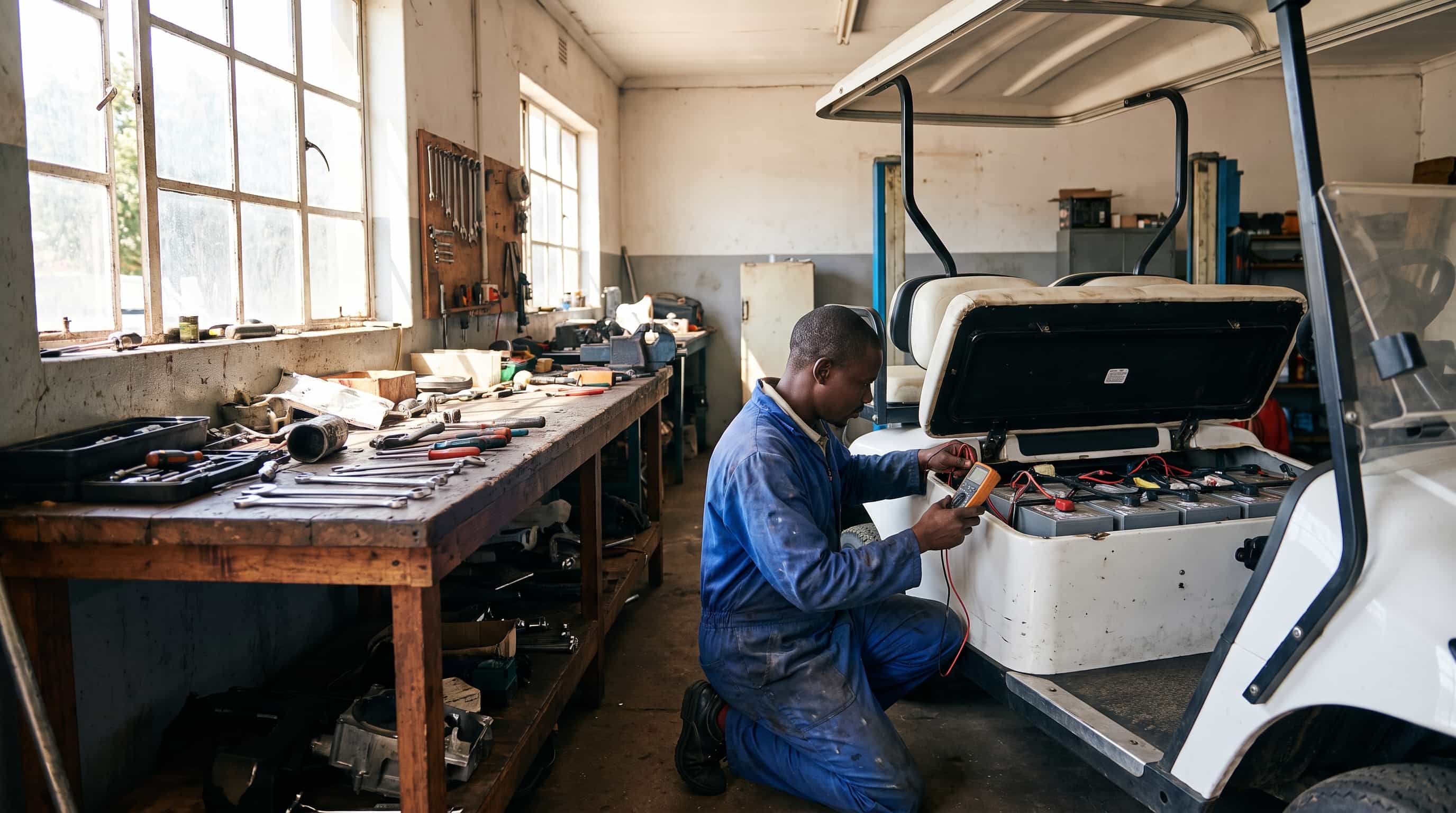 Golf buggy troubleshooting, a complete guide9 minute read
- Golf buggy daily safety check, step by step4 minute read
 Golf buggy cold-weather operation4 minute read
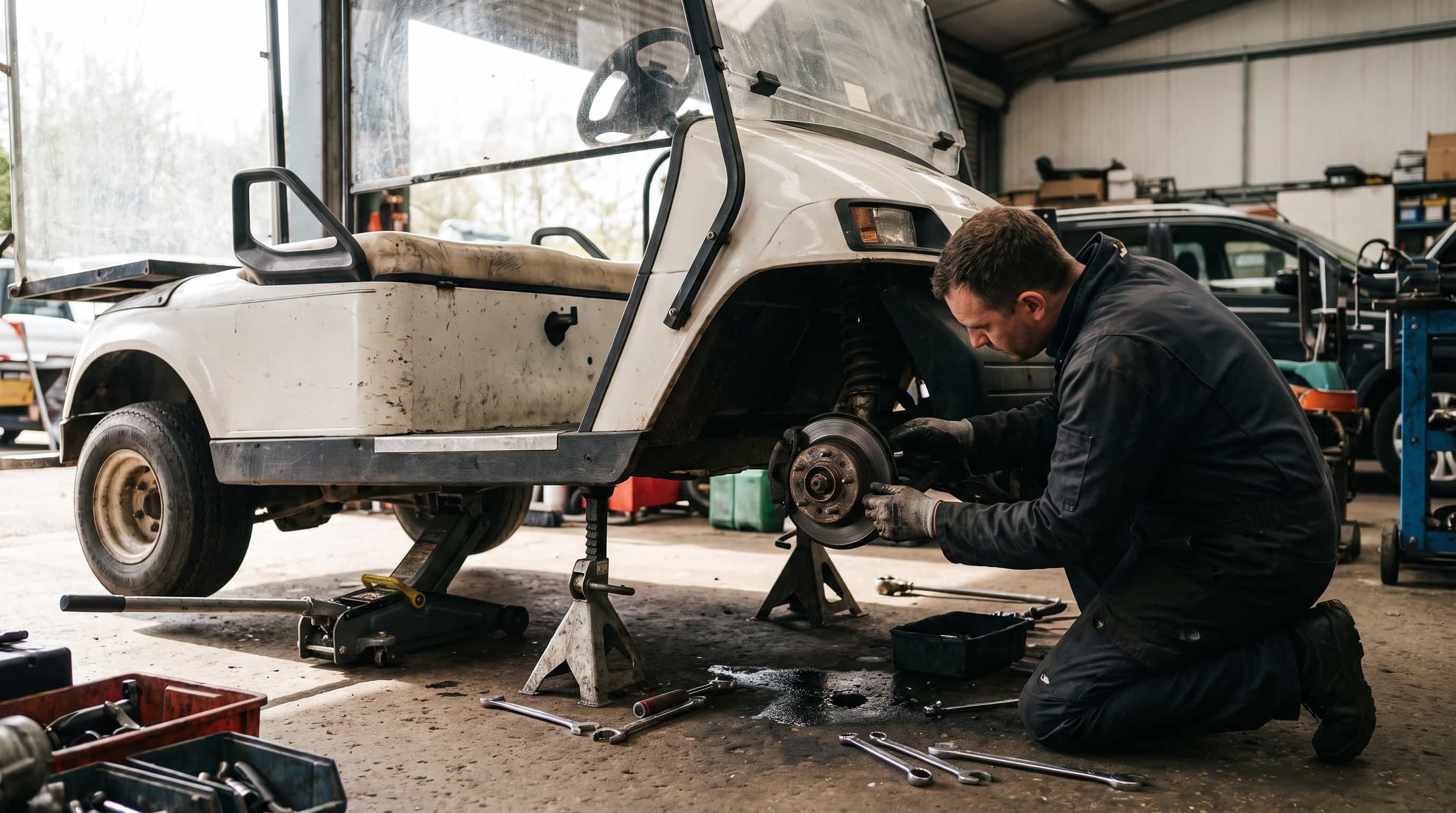 Golf buggy battery problems explained7 minute read
- Is my golf buggy worth repairing5 minute read
 When to repair versus replace a battery set5 minute read