Steering feels loose or heavy
By James Brown · Updated 21 July 2026 · 5 minute read
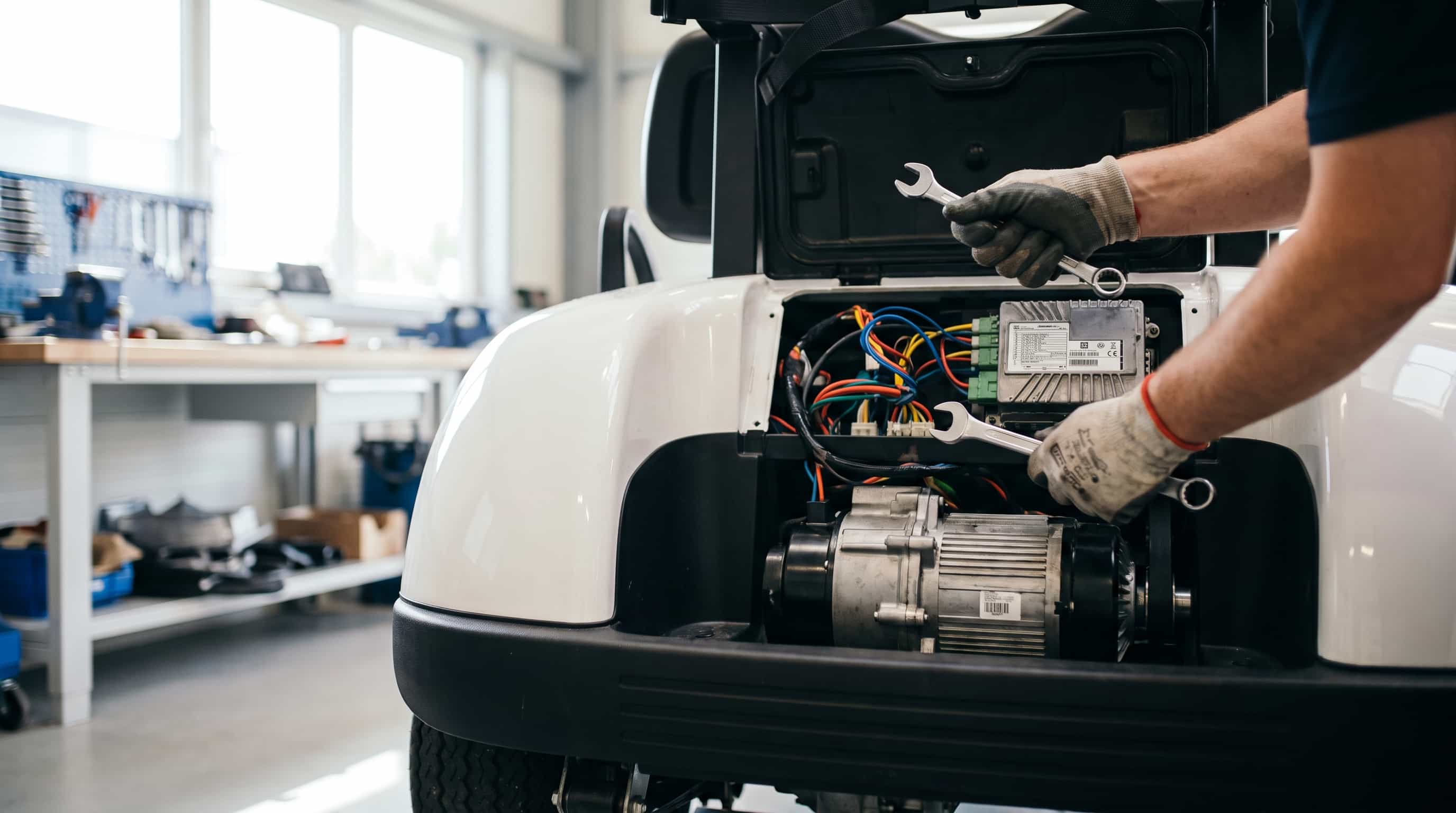
Loose steering, play at the wheel before the buggy responds, usually means wear in the steering linkage, tie rods, or bushings. Heavy steering usually means low front tyre pressures, a dry or binding pivot, or a damaged rack. Steering is a safety system, so a genuine fault means checking pressures and then handing it to an engineer, not living with it.
Key takeaways
- Loose steering is play in the linkage or bushings; heavy steering is friction or low pressure.
- Check front tyre pressures first, because a soft front tyre makes steering heavy for free.
- Excessive play at the wheel before the buggy turns is a wear symptom that grows, not shrinks.
- Steering is a safety system, so a real fault is an engineer job, not a live-with-it one.
- A sudden change in steering feel is a stop-and-check matter rather than a monitor-it one.
Loose and heavy are different problems
Steering complaints split cleanly. Loose steering is slack: you turn the wheel and nothing happens for a moment, then the buggy responds, and you are always making small corrections to hold a line. Heavy steering is effort: the wheel is hard to turn, especially slowly or when stopped. They come from different places, so the first job is to decide which one you have before looking for a cause.
What makes it loose
Play comes from wear in the parts that connect the steering wheel to the front wheels. The tie rods and their ends, the steering rack or box, and the bushings and pivots all develop clearance as they wear, and that clearance shows up as free movement at the wheel before anything happens at the road. It creeps in slowly, which is why owners often only notice how much play has built up when it is pointed out.
Play is not something that settles. A worn joint keeps wearing, the slack grows, and eventually a worn part can fail rather than merely feel vague. That is why loose steering is worth acting on while it is still just annoying.
What makes it heavy
Heavy steering has a cheap cause worth ruling out first: low front tyre pressures. A soft front tyre has a bigger contact patch dragging on the ground, and the steering goes heavy as a result, so check and correct the pressures before assuming anything mechanical. Beyond that, a dry or seized pivot, a binding kingpin or bushing, or a damaged rack adds friction that makes the wheel hard to turn. A pivot that has lost its lubrication is a common and fixable cause.
If yours is doing this and the checks here have not settled it, we diagnose and repair buggies, including a callout to wherever it is.
Why this one goes to an engineer
Owner checks here are limited and sensible: set the tyre pressures, and with the buggy safely raised, feel for obvious play by rocking the front wheels. Beyond that, steering is a system where a poor repair is genuinely dangerous, because a joint that comes apart or a rack fitted wrong can take away your control of the buggy. So a confirmed fault, real play or real heaviness that pressures do not cure, goes to an engineer. And a sudden change in how the steering feels, rather than a slow drift, is a reason to stop and have it checked straight away rather than drive on and hope.
Common questions
- There is play in the wheel before the buggy turns
- That slack is wear in the steering linkage or bushings, the tie rods, rack or pivots, and it grows rather than settles. It is worth having checked while it is still just vague feel, because a worn steering joint can eventually fail, and steering is not a system to leave to chance.
- The steering has gone heavy
- Check the front tyre pressures first, since a soft front tyre makes steering heavy at no cost. If pressures are correct and it is still heavy, a dry or binding pivot, kingpin or a damaged rack is likely. A pivot needing lubrication is common and fixable, but confirm it rather than force a stiff steering system.
- Is loose steering safe to keep using
- Mild play is a fault to act on rather than a crisis, but it does not improve and a worn steering part can fail. A sudden change in feel, or steering that has become clearly vague or notchy, is a stop-and-check matter, because steering is a safety system and losing it while moving is serious.
Still not right
We diagnose and repair golf buggies, service them on a plan, and send an engineer out to where the buggy is. Tell us the symptom and we will say what it usually means.
Related pages
Related guides
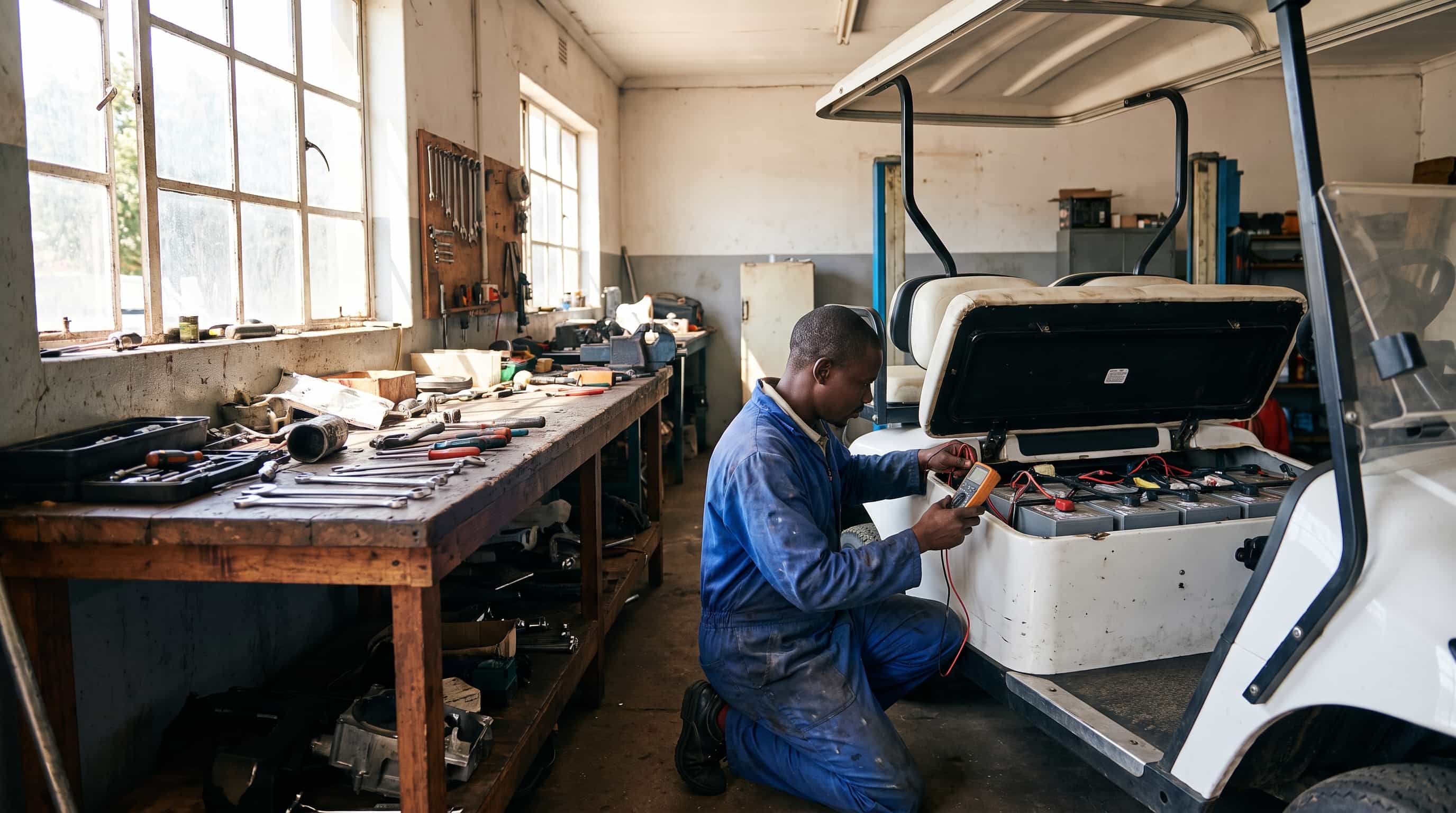 Golf buggy troubleshooting, a complete guide9 minute read
- Golf buggy brake shoes and drums5 minute read
- Golf buggy battery safety, acid, gas and handling5 minute read
 Golf buggy tie rods and steering linkage4 minute read
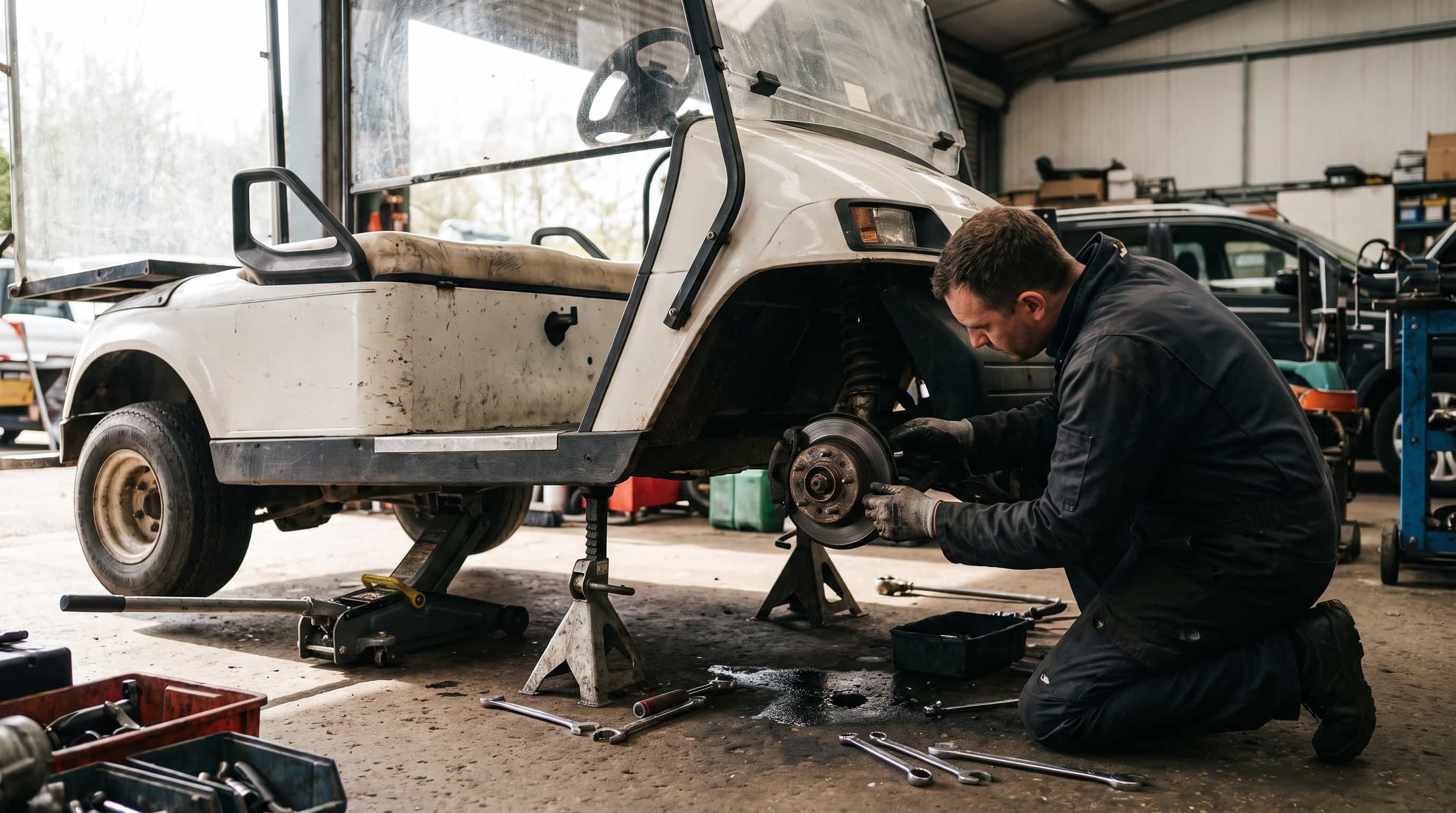 Golf buggy bushings and kingpins4 minute read
 Tyre wear, pressures and punctures5 minute read