Golf buggy battery charging times explained
By James Brown · Updated 21 July 2026 · 4 minute read

There is no single charging time, because it depends on how flat the set is, the battery type and size, and the charger. A modern charger runs a profile that charges quickly at first and then slows for the final part to finish the batteries properly. Plan to charge fully before use rather than chasing a number, since the last stage matters most for battery health.
Key takeaways
- Charging time depends on how flat the set is, the battery type and size, and the charger.
- There is no honest single figure, so we will not invent one; the charger and set decide it.
- A modern charger charges fast at first, then slows for the final finishing stage.
- The slow final stage is important for battery health, so let a charge complete.
- Plan to charge fully before use rather than interrupting to save time.
Why there is no single number
Owners often want a figure in hours, and it is the wrong unit for the same reason battery life is. Charging time depends on several things at once: how discharged the set is when you start, since a nearly full set finishes quickly and a deeply flat one takes far longer; the type and size of the batteries; and the charger and its profile. Those combine differently for every buggy and every charge, so any single figure would be wrong for most people, and we will not print one. What is more useful is understanding the shape of a charge, so you can plan around it sensibly.
The shape of a charge
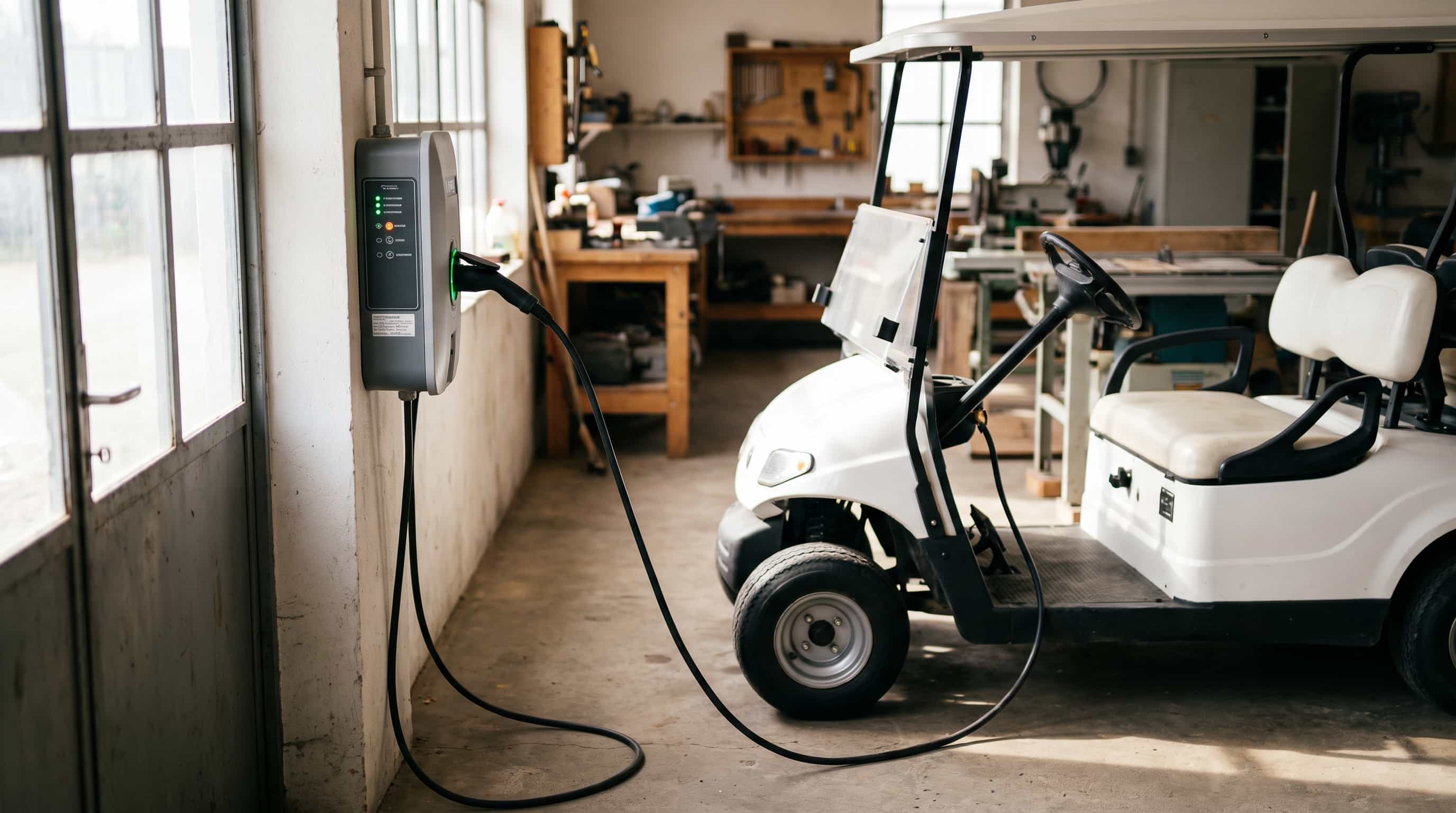
A modern charger does not deliver a steady flow to the end. It runs a profile, typically pushing charge in quickly at first while the batteries can accept it, then slowing as they fill, and finishing with a slower final stage that tops the batteries up and, on lead-acid, does the important work of completing the charge properly. This is why the last part of a charge feels slow, and why a set can seem nearly done for a while before it finishes: the charger is deliberately easing off to finish correctly rather than forcing the last part in. That slow tail is a feature, not the charger struggling.
Why the finish matters
It is tempting to unplug when the charger looks nearly done, and it is worth resisting, because that final stage matters for battery health. On lead-acid especially, completing the charge fully and periodically doing the finishing work keeps the set balanced and healthy, and habitually stopping short leaves the set undercharged, which over time reduces its capacity and its life. So letting the charge complete, rather than pulling it off early to save time or get the buggy out, is part of looking after the batteries. A buggy taken off charge early also starts its day less than full, which shows up as short range, as the range guide notes.
If yours is doing this and the checks here have not settled it, we diagnose and repair buggies, including a callout to wherever it is.
Planning around it
The practical answer is to plan charging rather than chase a time. Charge after use so the set is ready for next time, and for a full day's work, charge fully overnight or with enough time to complete rather than snatching a partial top-up before an event. For a fleet, this means enough charging points and a routine that gets every buggy on charge in good time, as the fleet guides cover. If a charge is taking far longer than it used to, or never seems to complete, that is a charging-fault question for the charging guides rather than a matter of the time itself, and it is worth investigating rather than living with.
Common questions
- How long does a golf buggy take to charge
- There is no single figure, because it depends on how flat the set is, the battery type and size, and the charger, and any number would be wrong for most people. What matters more is letting the charge complete: a modern charger charges fast at first then slows to finish the batteries properly, so plan to charge fully rather than chase a time.
- Why does the last part of charging take so long
- Because the charger deliberately slows for the final stage to finish the batteries correctly rather than forcing charge in. On lead-acid especially, that finishing work keeps the set healthy and balanced. So the slow tail is a feature, not the charger struggling, and it is worth letting it complete rather than unplugging when it looks nearly done.
- Can I unplug it early to save time
- It is better not to make a habit of it. The final stage matters for battery health, and habitually stopping short leaves the set undercharged, which over time reduces its capacity and life, and starts the buggy's day less than full, cutting range. Let a charge complete when you can, and plan charging with enough time rather than snatching partial top-ups.
Still not right
We diagnose and repair golf buggies, service them on a plan, and send an engineer out to where the buggy is. Tell us the symptom and we will say what it usually means.