Golf buggy battery state of charge, reading it properly
By James Brown · Updated 21 July 2026 · 4 minute read
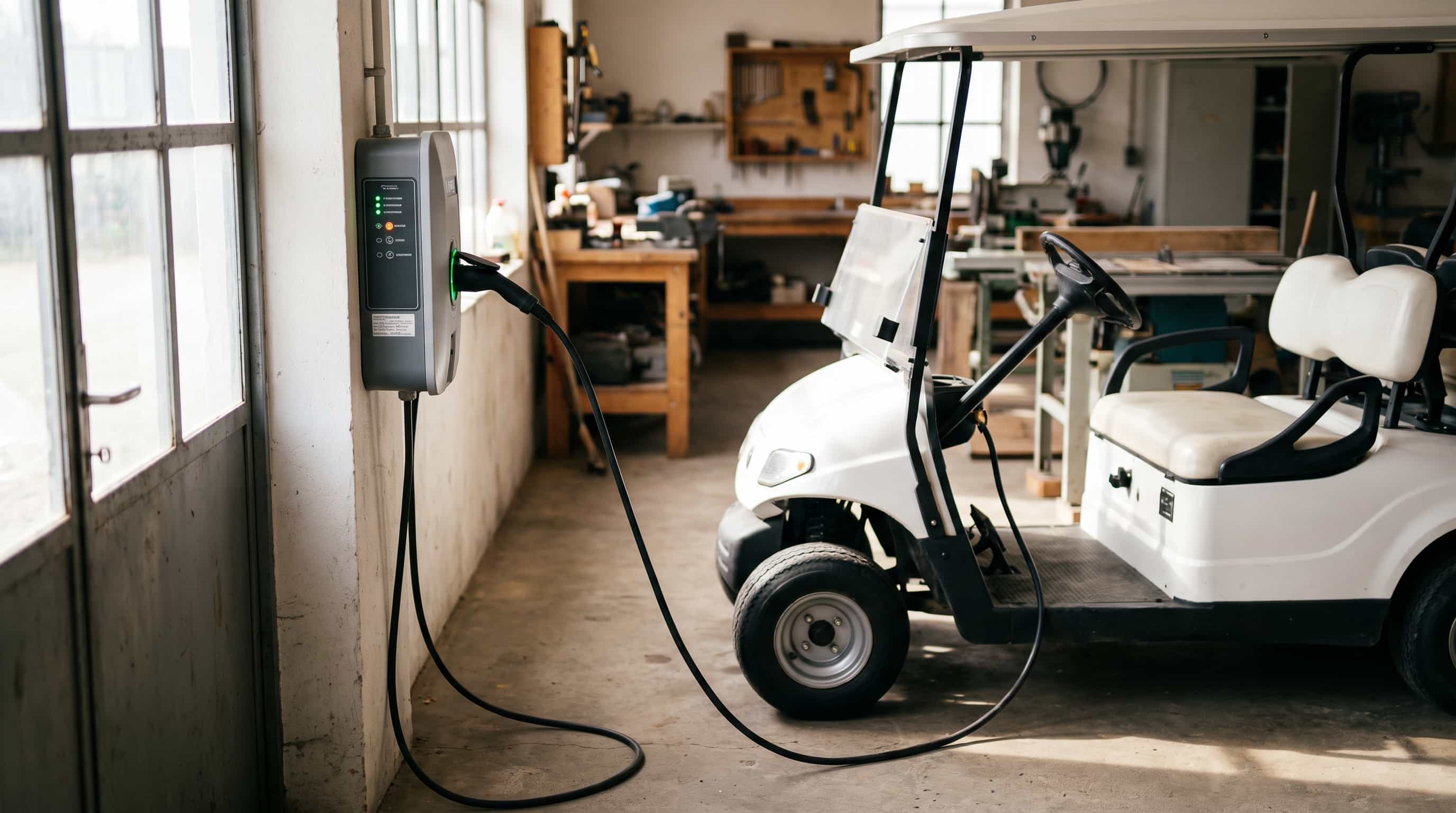
A buggy's real state of charge is not the number the gauge shows mid-drive, because voltage sags under load and sits high just after charging. Read it with the set rested, not straight off the charger or mid-hill. A meter gives a fairer voltage, and on flooded lead-acid a hydrometer reads the cells directly, which is the most honest measure of all.
Key takeaways
- State of charge is not the gauge reading snatched mid-drive or straight off the charger.
- Voltage sags under load and sits high after charging, so timing the reading matters.
- Read with the set rested for a fairer picture of the true charge.
- A meter gives a truer voltage than a swinging dashboard gauge.
- On flooded lead-acid, a hydrometer reads the cells directly and is the most honest measure.
Why a glance misleads
As the gauge guide explains, a buggy's charge gauge often reads pack voltage, and pack voltage is a moving target: it sags under load, so a reading on a hill looks alarmingly low, and it sits high for a while just after charging, so a reading then looks better than the set really is. So a glance at the gauge mid-drive, or a quick voltage check straight off the charger, does not tell you the true state of charge. Knowing that is the first step to reading it properly, because it stops you trusting a number taken at the wrong moment.
Rest it first
The single most useful habit is to read the state of charge with the set rested. Give the batteries a little while after driving and after charging, off the load and off the charger, and the voltage settles to something that reflects the actual charge far better than a reading taken under either. A rested reading is not a laboratory measurement, but it is a great deal more honest than a snatched one, and it is the difference between judging the set fairly and being fooled by the moment. For everyday purposes, a rested voltage read with a meter gives you a sensible picture.
The hydrometer on lead-acid
On flooded lead-acid batteries there is a better tool still: the hydrometer. It measures the specific gravity of the electrolyte in each cell, which corresponds directly to that cell's state of charge, so it reads the batteries themselves rather than inferring from voltage. That has two advantages. It gives the most honest state-of-charge reading available to an owner, and, because it reads each cell, it can reveal a single weak cell dragging the set down, which a whole-pack voltage hides. Using a hydrometer means handling electrolyte, so the battery safety precautions apply, eye protection and care, but it is a genuinely useful measure for anyone maintaining a lead-acid set. Sealed and lithium batteries do not offer this, so for those a rested voltage or the buggy's own reading is what you have.
If yours is doing this and the checks here have not settled it, we diagnose and repair buggies, including a callout to wherever it is.
Using it well
Reading the state of charge properly pays off in several of the other guides. It tells you whether a buggy is genuinely charged before a day's work, rather than trusting a hopeful gauge. It helps separate a flat set from a failing one, since a set that reads low rested and does not come up is different from one merely part-used. And on lead-acid, a hydrometer showing one cell adrift points at the single-dead-cell picture behind overnight losses and lost range. None of this needs expensive kit, a meter and, for lead-acid, a hydrometer, and the discipline of reading with the set rested rather than believing a swinging gauge. That small habit turns state of charge from a guess into information.
Common questions
- How do I check my buggy's real state of charge
- Not by the gauge mid-drive or a reading straight off the charger, since voltage sags under load and sits high after charging. Read it with the set rested a little while, off the load and the charger, using a meter for a fairer voltage. On flooded lead-acid, a hydrometer reads the cells directly and is the most honest measure.
- Why is the reading different after charging versus later
- Because voltage sits high for a while just after charging before settling, so a reading then overstates the charge. Left to rest, the voltage settles to reflect the true state of charge more honestly. This is why timing matters: always read with the set rested rather than straight off the charger for a fair picture.
- What does a hydrometer tell me that a meter does not
- A hydrometer reads the specific gravity of each cell's electrolyte on flooded lead-acid, which corresponds directly to that cell's charge, so it reads the batteries themselves and can reveal a single weak cell that a whole-pack voltage hides. It needs the battery safety precautions since it involves electrolyte, but it is the most honest owner measure for a lead-acid set.
Still not right
We diagnose and repair golf buggies, service them on a plan, and send an engineer out to where the buggy is. Tell us the symptom and we will say what it usually means.
Related pages
Related guides
 Golf buggy troubleshooting, a complete guide9 minute read
 Common Club Car faults and fixes6 minute read
 Reading golf buggy controller error codes4 minute read
 Golf buggy charge gauge reads wrong4 minute read
 Golf buggy battery problems explained7 minute read
- Golf buggy battery charging times explained4 minute read