Golf buggy makes explained: who builds what
By James Brown · Updated 29 August 2026 · 10 minute read
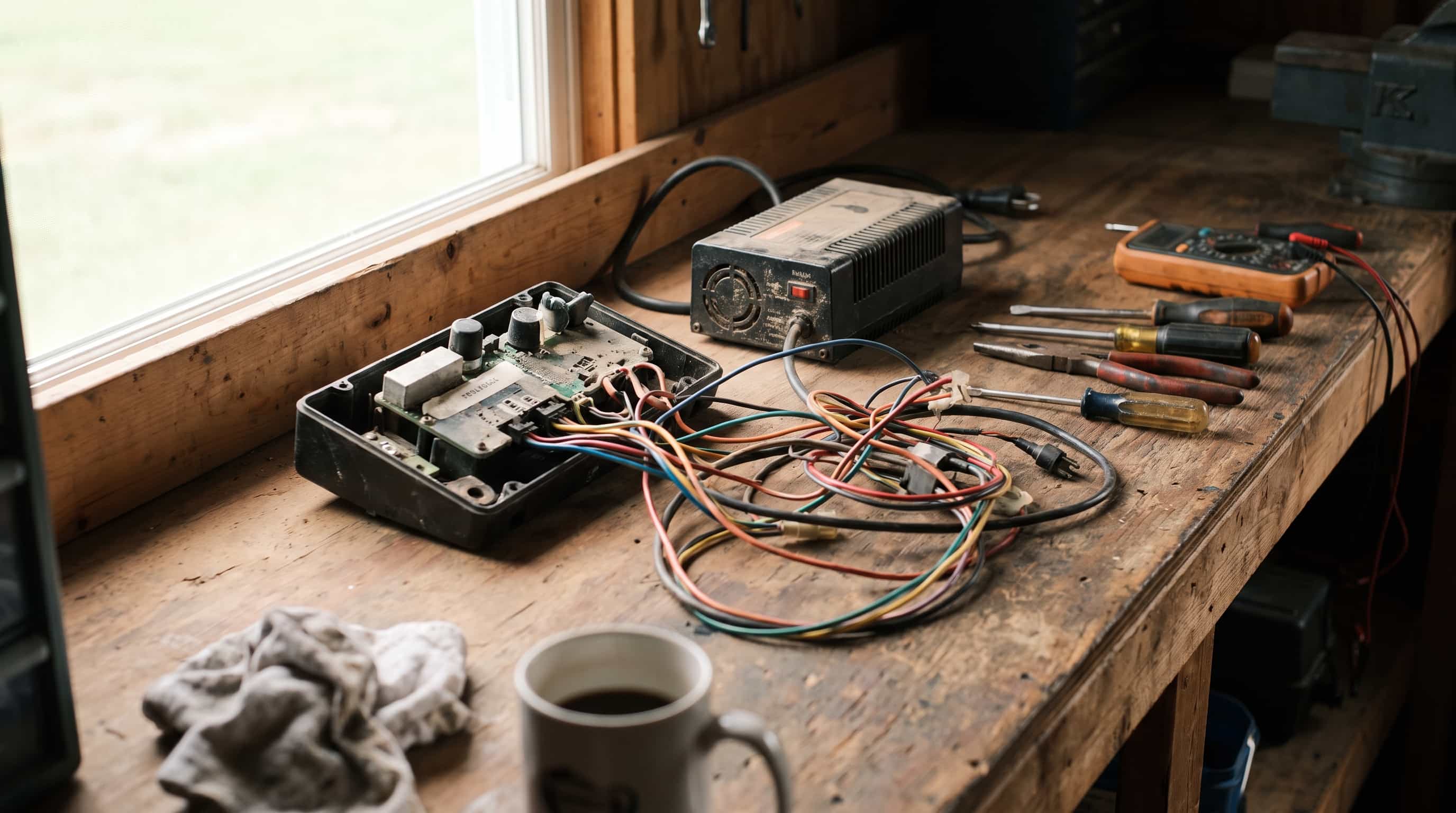
Three marques dominate golf fleets in Britain: Club Car, E-Z-GO and Yamaha. Alongside them sit work-vehicle names such as Cushman, Bradshaw and Columbia, a scattering of low-volume specialists, and a newer group building buggies intended for road registration. From an owner's point of view the differences that matter are parts supply, who can service the machine locally, and how the drive is arranged. On a used purchase, condition and support decide far more than the badge does.
Key takeaways
- Club Car, E-Z-GO and Yamaha account for most of the golf machines on British courses and most of the used stock that comes off them.
- Utility marques such as Cushman, Bradshaw and Columbia are built around a load bed or a work task rather than a round of golf.
- Parts supply follows volume, so a common platform is cheaper to keep running than a rare one however well the rare one was built.
- Ask who services the make within a sensible drive of you before you buy, not after the first fault.
- Every machine carries a serial number that the maker or a dealer can decode, and a seller's stated year is not evidence on its own.
- Ex-fleet golf buggies are built for hard use and quick servicing, which is why so many stay in work long after they leave the club.
- On a used purchase, condition, history and local support outweigh the name on the bodywork.
The three names most British fleets run on
Walk on to almost any golf club in Britain with a buggy fleet and you will find one of three badges: Club Car, E-Z-GO or Yamaha. All three have been building golf machines for decades, all three sell into clubs on fleet terms, and all three release those machines back on to the used market when a fleet turns over. That single fact shapes the whole second-hand trade here, because the supply of used buggies in Britain is largely the supply of ex-fleet golf buggies.
Volume is the reason those names matter more than their engineering does. A platform that ran for years in large numbers has a deep parts trade behind it, independent engineers who know its habits, and a used market wide enough that you can walk away from a poor example without starting again. A rarer machine can be perfectly well built and still leave you waiting weeks for a component that a common platform would have had on a shelf.
None of that makes the three interchangeable. They differ in how the drive is arranged, how the body comes apart for service, how the braking is set up and how the electronics report a fault. Those differences are real and an owner meets them every year. They simply sit second in line behind the plainer question of whether anybody near you can get parts for the machine and knows what to do with them.
The work-vehicle marques
A second group of names exists for jobs that have nothing to do with a round of golf. Cushman is the one most often met on courses, because greenkeeping and course service are its home ground, and its lines are arranged around a load bed or a service body rather than a bag rack. Bradshaw and Columbia turn up more often in industrial and grounds settings: factories, warehouses, campuses, estates and large sites where the vehicle is a tool rather than transport for players.
The distinction matters at the point of purchase because the questions are different. A golf buggy is specified by seats and by comfort. A work vehicle is specified by what it has to carry, how often, over what surface, up what gradient, and for how many hours between charges. A machine sized for two golfers and a pair of bags will do a fraction of what a purpose-built hauler does, and it will wear itself out trying.
Utility marques also offer things a golf platform does not: tipping beds, cab and screen arrangements, heavier tyres, towing points and bodies built for a particular trade. If any of that appears on your list, start in the utility range rather than adapting a golf machine, because adaptation usually ends up costing more, carrying less and voiding whatever support the machine came with.
- A load to move regularly: a utility platform with a proper bed and suspension to match.
- People to move in numbers: a passenger shuttle rather than several golf buggies and several drivers.
- A service task on a course or at an event: a bodied vehicle built around that task.
- Golfers and clubs on turf: a golf platform, which is lighter, gentler on grass and cheaper to run.
Specialists and the road-registered end
Beyond the fleet marques sits a scattering of lower-volume names. Garia is aimed at private owners and resorts, finished to a standard that has more in common with a car than with a fleet buggy. Melex is a long-standing name in electric utility vehicles that a British buyer occasionally meets second hand. Neither has the dealer footprint here that the fleet marques do, and that is the practical point rather than any judgement about how they are put together.
There is also a newer group of brands building buggies intended to be registered and used on public roads rather than only on private ground. These are a different proposition and worth treating as one. Road use in Britain brings requirements around construction, lighting, registration and insurance that a course machine has never had to meet, and the paperwork matters as much as the hardware.
Do not assume a buggy advertised as road-legal arrives with all of that settled. Ask what documentation comes with the specific vehicle, ask who registered it and when, and confirm the position with DVLA and with your own insurer before you rely on being able to drive it anywhere other than your own land. A claim in an advert is not a registration document.
What actually differs once you own one
Ask an owner what separates the makes and you will not hear much about styling. You will hear about parts. Each marque has its own part numbering, its own dealer route and its own habits about how long a discontinued line stays supported, and that shapes both what a repair costs and how long the machine stands in the corner waiting for it. Ask, before you buy, how a part is ordered for that particular model and roughly what a wait looks like.
Drivetrain philosophy is the second real difference. The makes have taken different views on how the motor drives the wheels, how the machine slows itself on a descent, and how much of the braking is done by friction brakes rather than by the drivetrain. An owner meets that difference in servicing: some arrangements ask more of the brakes, others ask more of the electronics. Neither is better in the abstract. What matters is that whoever services it understands which arrangement is in front of them.
The third is diagnostics. Modern machines report faults through a handheld tool or an on-board display, and the tool is usually specific to the make. An independent engineer who works on one marque all week may have no kit at all for another. Ask any engineer you are considering which makes they carry diagnostic equipment for, because the answer decides whether a fault is read in a few minutes or guessed at over an afternoon at your expense.
If yours is doing this and the checks here have not settled it, we diagnose and repair buggies, including a callout to wherever it is.
How the makes age in a British climate
Buggies rarely die of mechanical failure. They corrode, they get tired battery packs, and their plastics, seats and wiring give up long before their motors do. A machine that has spent its life outdoors on a coastal course is a different object from one kept in a dry barn a few miles inland, and that difference shows up more clearly in the metal than the badge ever does. Damp, salt and grass clippings are the real adversaries here.
Frames are the part to look hardest at. Some makes use aluminium and some use steel, and the two behave differently once a coating is broken. Neither is immune. What you are looking for is not the material but the evidence: bubbling under paint, flaking, weeping around welds, and soft spots where a bracket meets the frame. Take a torch and look underneath, because a clean top surface tells you about the wash-down routine and nothing else.
Identify the machine before you judge the badge
Every buggy carries a serial number or vehicle identification number on a plate or stamped into the frame. It is the only reliable way to establish what you are actually looking at, and the maker or one of their dealers can usually decode it into a model line and a build. Where the plate sits varies by make and generation, so if you cannot find it, ask the seller to point at it and treat any reluctance as information in its own right.
A stated age with nothing behind it is worth very little. Buggies get rebodied, reseated, repainted and fitted with parts from several years, and a tidy machine can be considerably older than it looks. Match the serial to the maker's records, then look at the wear that is hard to disguise: pedal rubbers, seat frames, steering play with the wheels straight ahead, and the state of the battery tray underneath.
- Find the serial plate and photograph it before you agree anything.
- Ask what the charger is and confirm in writing that it comes with the machine.
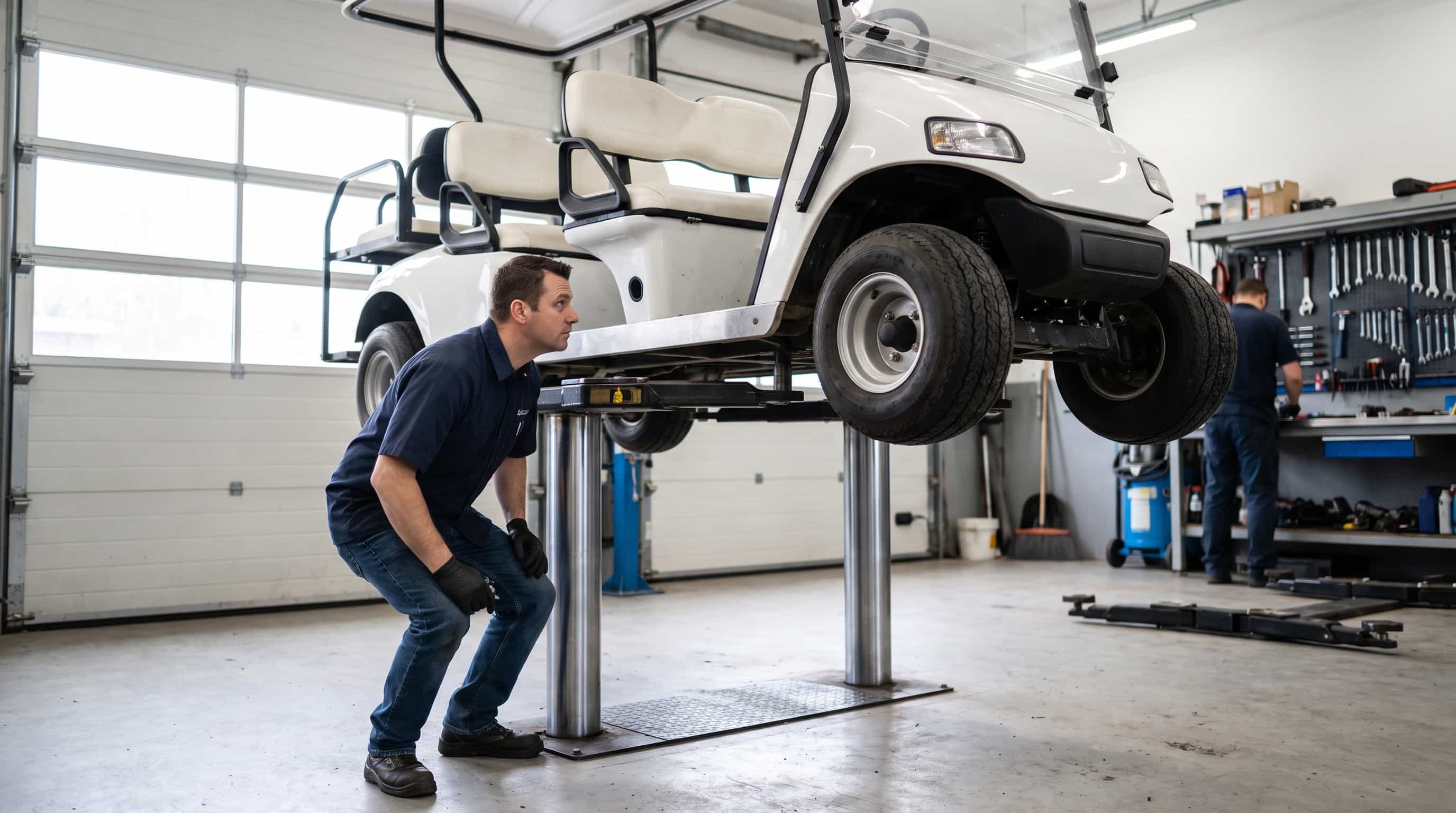
- Look underneath with a torch rather than across the bodywork in daylight.
- Ask who has serviced it and whether any record of that work still exists.
Support is a local question, not a national one
The makes all claim coverage of the United Kingdom, and the claim is not usually false. It is simply not the whole answer. What decides your ownership is whether somebody within a sensible drive will come out to a machine of that make, holds the diagnostic tool for it, and can get parts without a long wait. That is a postcode question, and it has a different answer in the Highlands from the one it has in Surrey.
Before you commit, make two calls. One to the make's own dealer or importer, asking who covers your area and how parts reach them. One to an independent engineer near you, asking what they work on and what they will not touch. If both answers are thin, that is not an automatic reason to abandon the purchase, but it is a reason to buy something common rather than something interesting, and to price a further travelled engineer into your thinking.
This is also where hiring earns its keep. If a machine is wanted for a season, an event or a defined stretch of work, the support question belongs to the supplier rather than to you, and the badge stops mattering, because keeping it running is somebody else's job and a replacement arrives when it stops. Ownership is the better answer when the use is continuous, the site is settled and the machine will be there in five years.
Common questions
- Is one golf buggy make more reliable than the others?
- No make has a monopoly on reliability, and any answer that simply names one is guessing. What decides reliability in practice is how the individual machine has been used, whether the battery pack has been charged and stored properly, and whether it has been serviced at all. A well-kept example of a common platform will outlast a neglected example of anything, and it will cost less to put right when it does fail.
- Are Club Car and E-Z-GO parts interchangeable?
- Generally not. The platforms are engineered separately, and the parts that matter, body panels, controllers, axles and brake components, are specific to a make and often to a model line within it. A few consumables and general items cross over. Work from the machine's own part number rather than assuming something will fit because it looks similar, which is how people end up with a buggy in pieces.
- How do I find out what make and model a buggy is?
- Start with the serial or identification plate. It is fixed to or stamped into the frame or bodywork, and its position varies by make and generation. Photograph it, then ask the maker or one of their dealers to decode it. That gives you the model line and the build, which is what parts suppliers will ask for. Badges and bodywork get swapped between machines; the serial usually does not.
- Is it a mistake to buy an unfamiliar make?
- Not automatically, but do the parts check first. Ring a supplier and ask them to source one ordinary wearing item for that exact machine, a brake component or a wheel bearing, and see what happens. If the answer is quick and unremarkable, the make is supported. If it involves a long wait or a shrug, you have learned what ownership will feel like before you have paid for it.
- Does the make affect where I can legally drive a buggy?
- No. Use on private land is governed by the landowner's own rules, and use on a public road is governed by the vehicle's construction, its registration and its insurance, none of which follows from the badge. A machine of any make may or may not be built to a road specification. DVLA and your insurer are the authorities on that, and they should be asked about the specific vehicle.
- What does ex-fleet mean when buying a golf buggy?
- It means the machine spent its working life in a golf club's hire fleet and was released when the club renewed. Most used buggies in Britain are ex-fleet. They have worked hard, but they have usually been serviced on a schedule and were built to be maintained quickly, which is why so many go on for years afterwards. Ask for whatever service history survives.
Still not right
We diagnose and repair golf buggies, service them on a plan, and send an engineer out to where the buggy is. Tell us the symptom and we will say what it usually means.
Related pages
Related guides
 Club Car buggies: the model lines explained10 minute read
 E-Z-GO buggies: the model lines explained11 minute read
 How to buy a golf buggy: a complete guide8 minute read
 Buying a used golf buggy, what to inspect5 minute read
 Finding parts, original versus pattern5 minute read
- Yamaha buggies: the model lines explained10 minute read