E-Z-GO buggies: the model lines explained
By James Brown · Updated 29 August 2026 · 11 minute read

The E-Z-GO range divides into golf platforms and everything built around them. TXT is the long-running platform that most British buyers meet second hand, and RXV is the later golf platform with a different drive and braking arrangement. Freedom is a personal specification rather than a chassis of its own, Express covers the multi-passenger machines, and Valor and Liberty are more recent additions. Which line you are looking at changes the service routine more than it changes the driving.
Key takeaways
- TXT is the long-running platform and the one a British used buyer meets most often.
- RXV came later with a different drive and braking arrangement, which changes servicing more than it changes how the machine feels to drive.
- Freedom is a specification applied to a golf platform for personal use, not a separate chassis.
- Express is the multi-passenger side of the range, and the model name carries the seat count.
- Valor and Liberty are later additions, and what each includes varies, so confirm specification against the maker's own current documentation.
- An engineer needs the right diagnostic tool for the platform, so ask before assuming local support exists.
- On any of these lines, the battery pack and the charger are the costs most often hidden in a cheap machine.
TXT, the platform you keep meeting
Look at used E-Z-GO machines in Britain and you will spend most of your time looking at TXT. It has been the marque's mainstay golf platform for a long stretch, it went into fleets in large numbers, and fleets renew, which puts a steady flow of them on to the used market. Familiarity is its main practical advantage: independents know it, parts are widely available in both original and pattern form, and a fault on one is rarely a mystery for long.
That does not make every TXT a good buy. It makes a good TXT easy to keep running and a poor one easy to walk away from, which is a different and more useful quality. Because there are plenty about, you are not forced to accept a machine with a tired battery pack or a suspicious history. The ability to say no without starting your search again is worth more than any feature on a specification sheet.
The line ran long enough that details changed within it. Body parts, electrical items and brake components are not necessarily common across every year of TXT ever built, and assuming otherwise is how the wrong part arrives. Order against the serial number rather than the model name, and give that number to the parts supplier before they quote you. It saves a return, a second wait and a machine standing idle.
RXV and a different way of arranging the drive
RXV is the later golf platform, and what separates it from TXT sits under the floor rather than in the bodywork. The drive and the braking are arranged differently, which is why owners and engineers treat the two as genuinely separate machines rather than one being a facelift of the other. From the driving seat the difference is less dramatic than people expect. In the workshop it is not subtle at all.
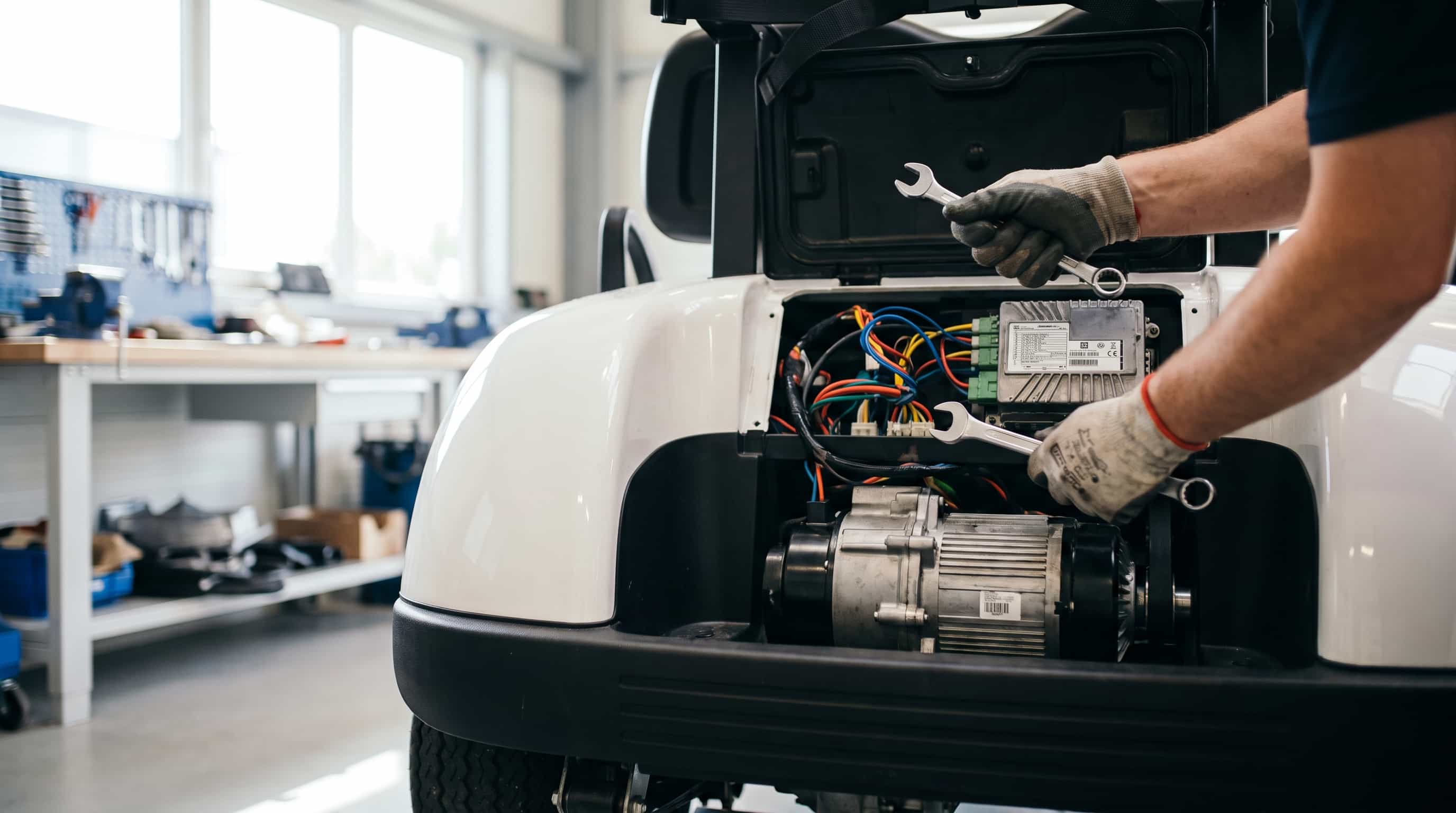
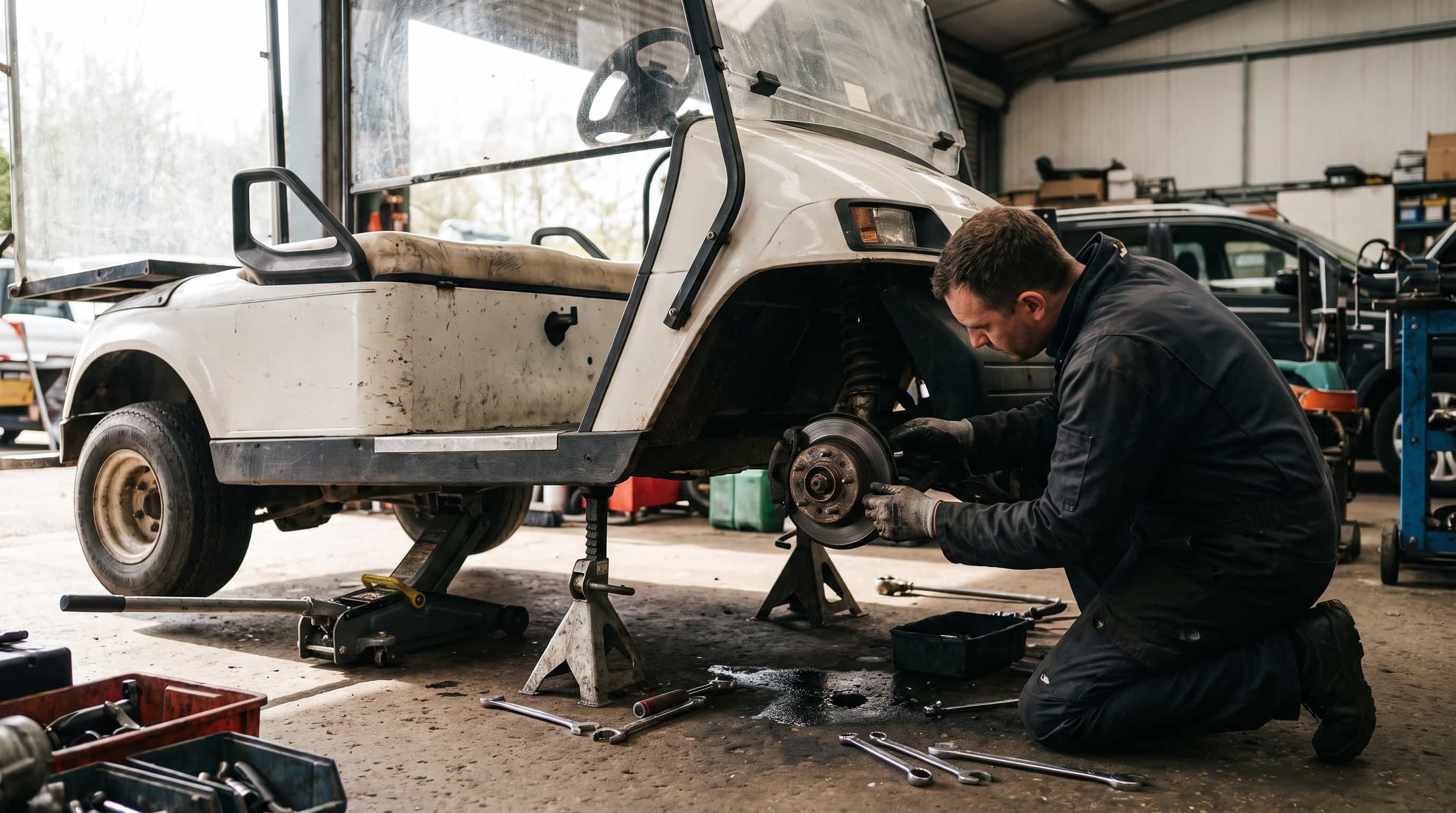
The practical effect falls on maintenance. A machine that does more of its slowing through the drivetrain asks less of its friction brakes, and one that relies on friction brakes asks more of them and less of the electronics. That changes what wears out, what gets inspected and what a service actually consists of. It also changes the diagnostic kit an engineer needs, so ask anybody you plan to use which of the platforms they are set up for, because the answer is not always both.
Details vary by build and specification, so the machine's own manual is the authority on how its brakes and drive are meant to be checked and adjusted. Do not apply a routine learned on one platform to the other and assume it transfers. If the machine has reached you without documentation, ask a dealer for the correct service information before touching anything that is meant to stop it.
Freedom is a specification, not a chassis
Freedom is the name that causes the most confusion, because people go looking for a Freedom chassis and there is not one to find. It is a personal-use specification applied to a golf platform, which is why you will see the name attached to more than one underlying machine. The badge tells you how the buggy was equipped rather than what it is built on, and those are two different questions with two different answers.
What the specification tends to bring is the equipment a private owner wants and a golf club has no use for: lighting, a rear seat arrangement, weather protection, mirrors and trim. Exactly what is included depends on the market and the year, so check the maker's own documentation for the specific machine rather than assuming a list. Sellers use the name loosely, and a buggy advertised as a Freedom may have been assembled from parts over many years.
For a buyer, the useful move is to ignore the name and write down what is actually fitted. Lights that work. A rear seat that folds and locks properly. A screen that is not crazed. Mirrors that stay where they are put. Then decide whether that equipment is what you need, and price the missing pieces before agreeing anything, because retro-fitting is rarely as cheap or as tidy as it sounds in the advert.
Express and carrying more than two
Express is the multi-passenger side of the range, for jobs where two seats are not enough: resorts, holiday parks, large sites, venues and any operation moving small groups regularly. As with most people movers, the number in the model name is the seat count, so the badge answers the first question you would otherwise have to ask. That is genuinely helpful when you are working through a page of adverts written by people who do not know the range.
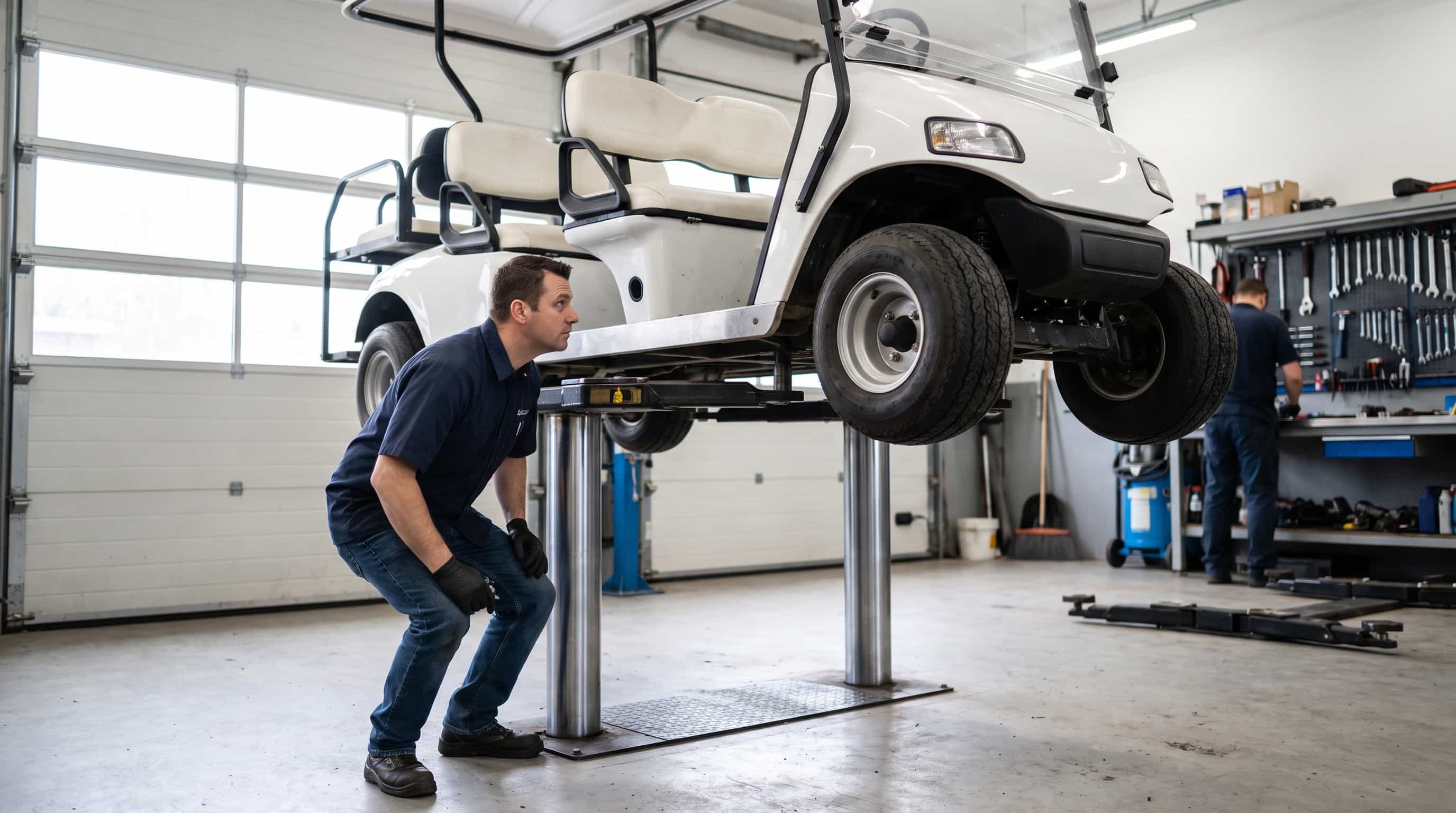
Multi-seat machines work harder than golf buggies and should be inspected accordingly. More weight means more braking, more strain on hills, and faster wear on tyres, bushes and suspension components. Look at the brakes on a slope rather than on the flat, look at tyre age and not only tread, and ask what duty the machine has actually done. A shuttle that has run a site all summer has had a very different life from a buggy used at weekends.
Access is worth checking in person and it is the part most often skipped. Step heights, grab handles and how far somebody has to turn to sit down all matter a great deal if passengers include older guests, families with young children or anyone unsteady on their feet. No photograph in an advert will tell you that, and no specification sheet measures the awkwardness of a step that is slightly too high.
If yours is doing this and the checks here have not settled it, we diagnose and repair buggies, including a callout to wherever it is.
Valor, Liberty and the current range
Valor and Liberty are more recent additions rather than long-established platforms, and both are aimed at buyers who want a current machine rather than an ex-fleet one. What each includes, and which markets each is sold in, varies, so the maker's own current documentation is the place to confirm specification rather than a summary written by anybody else, including this one. Ranges change, and a page can be right when written and wrong a year later.
Buying new or nearly new changes the ownership question rather than removing it. You get factory support, a warranty on the terms the seller offers, and a machine that has not had a decade of hire use behind it. You also get a thinner independent parts trade around a newer line, because pattern parts follow volume and volume takes years to accumulate. Ask what the warranty actually covers, who administers it, and what happens if the supporting dealer changes hands.
None of that is a reason to avoid a newer line. It is a reason to read the paperwork properly and to establish, before you sign, that whoever sells you the machine is also the party who will come out when it stops working. Support that exists on paper and support that arrives on a Friday afternoon in November are not always the same thing, and the difference is worth asking about directly.
What differs to an owner day to day
Across the range, the differences an owner actually notices are physical and ordinary. How the seat lifts to reach the battery compartment. Whether the charge point is protected from weather or sits where a hose will find it. How the body panels come off. Where water collects after a wash down. How the parking brake is operated and whether it holds on a slope with a full load and two bags on the back.
Then there is the battery question, which applies to any of them. Lead-acid packs need their levels checked and topped up with the correct water, and they punish a machine that has been left flat over winter. Lithium packs need no topping up and behave differently in cold weather and on charge. Which is fitted changes the routine, the storage plan and the charger, so establish it before you buy rather than discovering it in January.
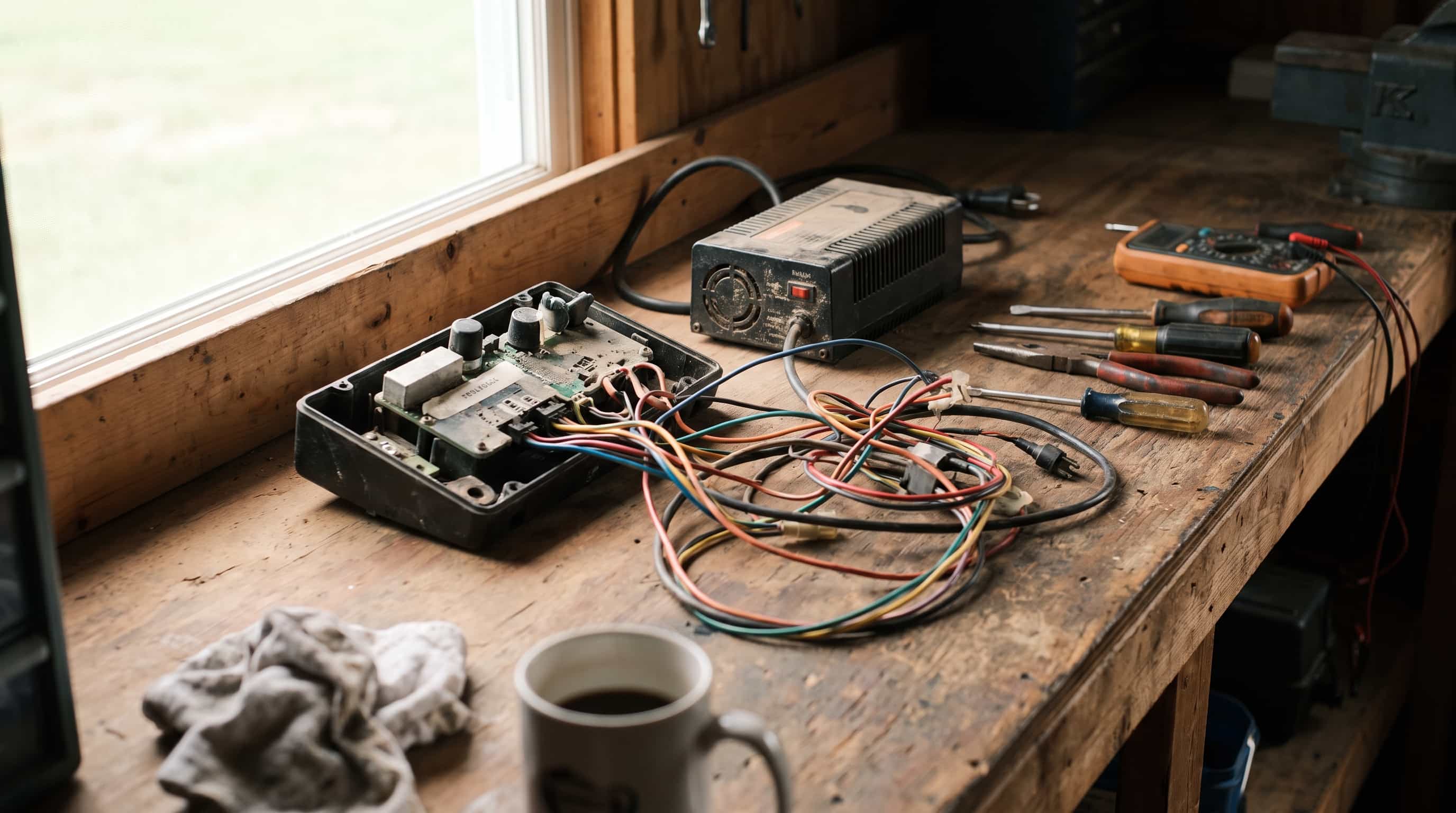
Charging arrangements deserve the same attention. The charger should be the correct one for the pack and for the machine, and it should come with it as part of the deal. On some machines the charger and the buggy communicate with one another, so a substitute unit that physically fits the socket is not automatically the right unit to use. Ask what is supplied and see it working before money moves.
- Ask which platform it is and confirm the answer against the serial plate.
- Ask what battery type is fitted and when the pack was last replaced.
- Confirm the charger is present, correct for the pack and included in the price.
- Drive it from cold, on a slope, with weight aboard, before you agree anything.
Support and buying used in Britain
E-Z-GO has distribution here and an established independent trade around its common platforms, which is the main reason a used one is a reasonable proposition in Britain. The question that decides your ownership is still a local one: whether somebody within a sensible drive works on the platform in front of you, holds the diagnostic tool for it, and can get parts without a wait that leaves the machine standing through your busy season.
Ring an engineer before you buy rather than afterwards. Ask what platforms they cover, what they will not touch, what a callout involves and how they source parts. It takes a few minutes and it is one of the most useful things you can do, because a machine you cannot get serviced is not cheap at any price and becomes an expensive ornament the first time something electrical goes wrong.
Most used machines here are ex-fleet, released when a club renewed. That is a reasonable source: fleet buggies are serviced on a schedule and built to be maintained quickly. They have also worked hard, and the battery pack is the item most often near the end of its life in an otherwise tidy machine. Ask for whatever service history survives, and treat its absence as a point to negotiate on rather than a reason to walk away.
Common questions
- What is the difference between an E-Z-GO TXT and an RXV?
- They are separate golf platforms rather than versions of one machine. TXT is the long-running platform and RXV the later one, and the substantial difference lies in how the drive and braking are arranged. That changes what a service consists of and what diagnostic equipment an engineer needs, more than it changes how the buggy feels to drive. Take the correct service routine from the machine's own manual.
- Is an E-Z-GO Freedom a different model?
- It is a specification rather than a separate chassis. The name describes a golf platform equipped for personal use, with items such as lighting, seating and weather protection that a club fleet machine would not carry. Because the name attaches to more than one underlying platform, ask which platform the machine is actually built on and confirm the answer against the serial plate before ordering any parts.
- How many seats does an E-Z-GO Express have?
- It depends which Express it is. The line covers more than one seat arrangement, and the number in the model name tells you which one you are looking at. If the badging is missing or has been changed, have the serial number decoded by a dealer rather than counting the seats, since seat units and rear bodies get swapped between machines over the years.
- Can I get parts for an older E-Z-GO in the UK?
- For the common platforms, usually. There is an established trade in both original and pattern parts, and independent engineers work on them routinely. Availability is thinner for body parts than for mechanical ones, and thinner again for older or less common builds. Ring a supplier with the serial number and ask them to source one ordinary wearing item before you buy the machine.
- Are E-Z-GO and Club Car parts interchangeable?
- Generally not. Body panels, controllers, axles and brake components are specific to the make and often to the platform within it. A few consumables and general items cross over. Working on the assumption that something will fit because it looks similar is how people end up with a machine in pieces and a part they cannot return, so order against the serial number every time.
- Should I buy a golf fleet machine or a personal one?
- It depends who will be driving it. A fleet platform is built to be serviced quickly and to survive being driven by people who do not own it, which suits clubs, parks, venues and hire use. A personal specification is more pleasant to live with and dearer to put right cosmetically, which suits an owner using it on their own ground for years.
Still not right
We diagnose and repair golf buggies, service them on a plan, and send an engineer out to where the buggy is. Tell us the symptom and we will say what it usually means.